Mar 3, 2014 | News
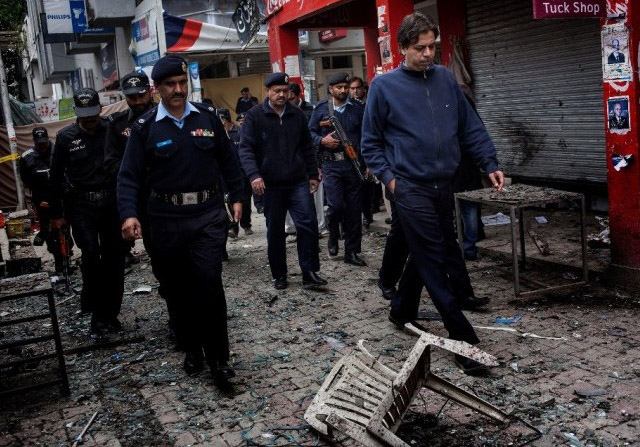
The shooting and bombing at an Islamabad Court today should be condemned as a presumed attack against the judicial officials and the independence of the judiciary in Pakistan, says the ICJ.
The attack resulted in the killing of Additional Sessions Judge Rafaqat Ahmad Khan Awan and at least ten other persons, including several lawyers.
According to reports, armed gunmen forced their way into a court complex in Islamabad, openly firing on judges and lawyers before at least two of the men blew themselves up inside the court complex.
One of the attackers detonated himself outside the door of a judge’s office, while the other targeted the office of the Lawyers’ Union President.
Another gunmen entered Judge Rafaqat Awan’s courtroom, where he shot and killed him.
“An intentional killing of a member of the judiciary can be seen as nothing other than an attack against the independence and impartiality of the judiciary as a whole,” said Sam Zarifi, ICJ Asia Pacific Regional Director.
“In addition to personal tragedy that has befallen the slain victims and their families, this attack and those like it are devastating for the people of Pakistan,” he added. “Courthouses, which should be places where justice is administered, are instead becoming slaughterhouses.”
This is the third armed attack against members of the judiciary in Pakistan in under a year. In March 2013, a judicial compound was attacked in Peshawar, killing four people.
In June 2013, a Sindh High Court judge’s convoy was attacked in Karachi, killing nine people.
As set out in the UN Principles on the Independence of the Judiciary, Pakistan must take steps to protect and ensure the safety of members of the judiciary from threats and violence from any quarter for any reason.
The Beijing Statement of Principles on the Independence of the Judiciary in the LAWASIA region further elaborates that the executive branch must at all times ensure the security and physical protection of judges and their families.
As a State party to the International Covenant on Civil and Political Rights, Pakistan is under a general obligation to ensure the safety of all persons within its territory at all times.
“If judges are under constant fear of violence from insurgent groups, they cannot function as an independent and impartial judiciary – an indispensible requirement for preserving rule of law and democracy,” Zarifi said.
The ICJ calls on the Government of Pakistan to take steps to immediately investigate and bring to justice those persons responsible for the armed attack on the Courthouse.
Contact:
Sam Zarifi, ICJ Asia-Pacific Regional Director, (Bangkok), t:+66(0) 807819002; email: sam.zarifi(a)icj.org
Reema Omer, ICJ Legal Advisor, Pakistan (London), t: +447889565691; email: reema.omer(a)icj.org
Photo credit: MYRA IQBAL
Feb 28, 2014 | News
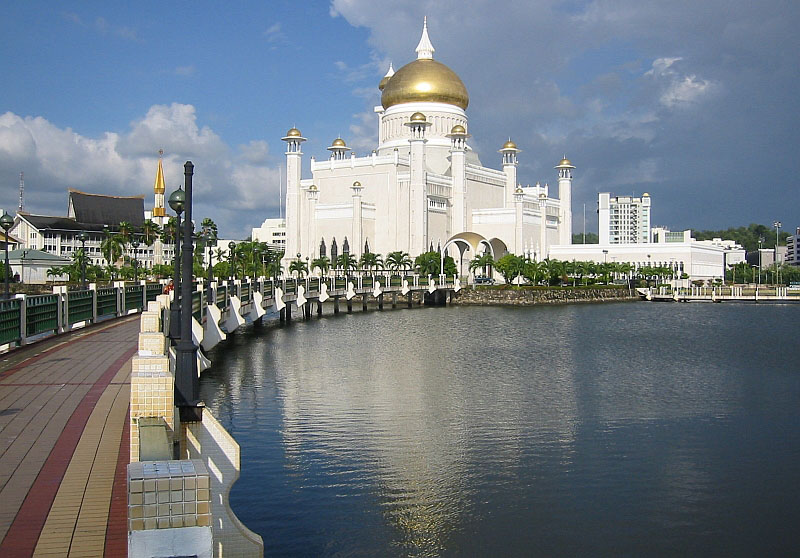
A statement by Sultan Hassanal Bolkiah suggesting that critics of Brunei Darussalam’s new Penal Code may be criminally prosecuted for slander is clearly meant to curb freedom of expression and opinion in the country, the ICJ said.
The ICJ urged the Government of Brunei to ensure full respect for the right of freedom of opinion and expression.
In a speech marking Brunei’s 30th National Day on 23 February 2014, Sultan Hassanal Bolkiah said that social media had been used to express opposition to the implementation of the new Penal Code.
He said that those who use social media to express their opinions against the new Penal Code may be committing offences under the General Offences Chapter of the new law. He reportedly characterized some of this expression as amounting to slander, including of the King and of Ulamas, or Muslim scholars. The Sultan also warned that these critics “cannot continue to be allowed to inflict insults” and that they “can be brought to court.”
“Sultan Hassanal Bolkiah’s statement illustrates that human rights, particularly respect for freedom of opinion and expression, is widely disregarded by the authorities in Brunei,” said Sam Zarifi, ICJ’s Regional Director for Asia and the Pacific.
The ICJ has criticized the new Penal Code for being an affront to human rights and at odds with international standards.
The ICJ reiterates its concern that provisions in the new Penal Code are not in accord with the commitment made by Brunei Darussalam as a member of the Association of Southeast Asian Nations (ASEAN) to promote and protect human rights in the region.
“Free, unhindered debates on issues like the enactment or implementation of a law are important cornerstones of a democratic society,” said Zarifi.
Freedom of opinion and expression is a right that is affirmed in the Universal Declaration of Human Rights and guaranteed under the Convention on the Elimination of All Forms of Discrimination against Women (CEDAW) and the Convention on the Rights of the Child (CRC), to both of which Brunei Darussalam is a party. Under international law, any restrictions or limitations must be exceptional, in accordance with the principles of the proportionality and necessity.
The ICJ urged the Government of Brunei to allow free discussion, particular on matters of public importance such as State law and policies and to fully respect the right to freedom of opinion and expression.
Contact:
Emerlynne Gil, ICJ International Legal Adviser for Southeast Asia, t +66 2 619 8477; email: emerlynne.gil(a)icj.org
Craig Knowles, ICJ Media Consultant, t +66 81 9077653; email:craig.knowles(a)icj.org
Feb 27, 2014
“Everybody talks about the rule of law but they don’t talk about how to support the judicial system to provide the rule of law…”
An opinion piece by Sam Zarifi, ICJ’s Asia-Pacific Regional Director.
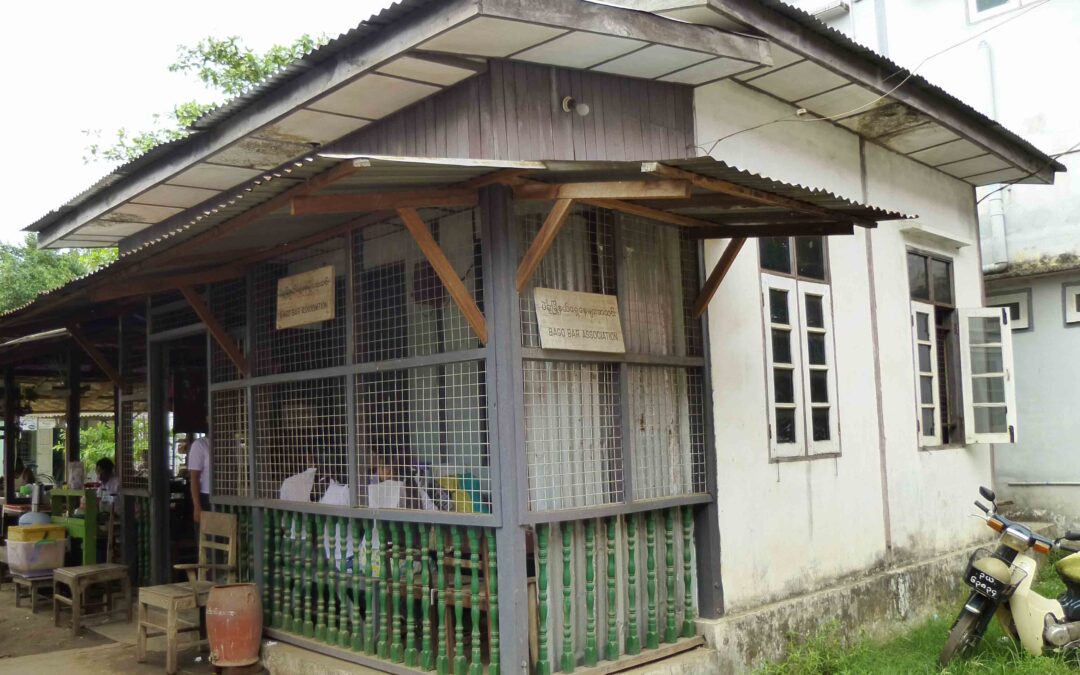
“Everybody talks about the rule of law but they don’t talk about how to support the judicial system to provide the rule of law,” a senior member of Myanmar’s judiciary told the International Commission of Jurists during a meeting in the capital Naypyitaw recently.
Four decades of brutal authoritarian rule systematically weakened the independence and integrity of the legal system. With reforms underway, judges in Myanmar are facing demands to provide justice, accountability, and stability — virtually overnight.
But the Myanmar judiciary simply does not have the resources to meet this demand at present.
As the country prepares for a groundbreaking general election next year, it is important for all political parties and candidates to make clear how they would strengthen the judiciary’s ability to carry out its responsibilities.
It is also crucial for the international community to provide all the help it can.
Everyone in the so-called New Myanmar is calling for the rule of law, including President Thein Sein, opposition leader Aung San Suu Kyi – who is Chair of the Parliamentary Rule of Law and Tranquility Committee — ethnic and religious minority groups, civil society and businesspeople.
But ‘rule of law’ evidently means different things to different people.
Some in Myanmar seem to equate it with ‘greater security.’ Others in Myanmar view rule of law as important for different reasons as the country proceeds down the rocky path of reforms: law and order; economic growth and development; fighting corruption; and fostering good governance.
What is clear is that strengthening the rule of law, regardless of why people invoke the concept, requires an independent judiciary. Whether it’s for fighting corruption, fostering good governance or attracting foreign investment, Myanmar needs judges and lawyers who are able to operate independently and impartially to provide proper jurisprudence and, importantly, change the public’s poor perception of the system.
But a crucial point to remember is that an independent judiciary is not just an instrument for achieving desired social ends. An independent judiciary is the law.
Article 10 of the Universal Declaration of Human Rights says that everyone is entitled to a fair and public hearing by an independent and impartial tribunal. The United Nations General Assembly has for its part unanimously affirmed that ‘human rights, the rule of law and democracy are interlinked and mutually reinforcing’.
International laws and standards also state that governments must prioritize the provision of sufficient resources to ensure the judiciary’s ability to provide independent and impartial tribunals.
Myanmar’s judiciary desperately needs these resources.
Many courthouses lack the most basic facilities. Some are too small to accommodate public audiences, despite the 2008 Constitution guaranteeing the right to a public trial.
At present, judges in Myanmar do not have full access to the necessary cases, laws and international standards.
Furthermore, they are underpaid and treated as basic civil servants instead of as an independent and equal branch of government.
And those in remote areas still face pressure from the military, government officials and powerful local interests.
In its December report “Right To Counsel: The independence of lawyers in Myanmar”, the ICJ found that corruption, which is widespread in almost every sector of the country, also plagues the legal system. Significantly, it also erodes the public’s perception of judicial integrity.
Add to this the unprecedented scrutiny and criticism from a newly liberated and emboldened media, and it is easy to understand why Myanmar judges feel that they are being asked to do the impossible.
There is no question—even inside the judiciary—that there is a lot of room for improvement in the recruitment, training, conduct and integrity of the system. To its credit, the Myanmar judiciary is now trying to adapt to its new environment and the increasing demands placed upon it.
But improving the independence of the judiciary and bolstering the rule of law requires a systematic and concerted effort from the entire government and in particular from the powerful Executive and Legislature branches of the administration.
The Executive and Legislature must assist the Judiciary to become a proper, equal branch of government, able to regulate its own affairs and be accountable for satisfying the public’s demands.
Amidst competing clamor for attention, it is crucial for the Myanmar government, and the many international supporters eager now to assist, to ensure that the Judiciary is granted the independence and resources necessary to improve the rule of law in Myanmar.
The task is daunting, the challenges enormous. But this is the only way to strengthen ‘rule of law’ in the evolving ‘New Myanmar’ and improve the dire human rights situation for everyone living in the country.
Burmese language Version can be downloaded in PDF format here.
Feb 25, 2014
The ICJ urges the Human Rights Council to establish an international commission of inquiry to investigate alleged violations of international human rights and humanitarian law in Sri Lanka.
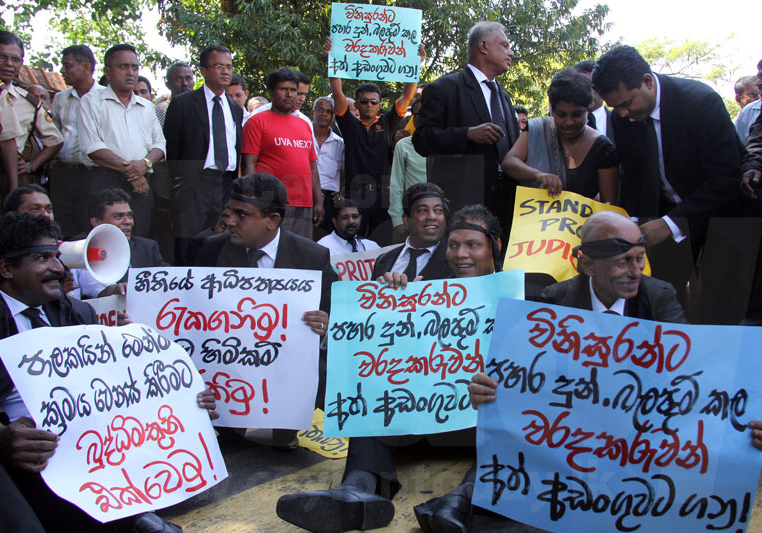
“The Sri Lankan justice system can no longer ensure accountability for human rights violations and war crimes,” said Sam Zarifi, ICJ Asia Pacific Regional Director. “The judiciary has been stripped of its independence and impartiality, and lawyers continue to be intimidated, harassed and subjected to improper interference.”
The ICJ welcomes the UN High Commissioner’s report on Sri Lanka released yesterday.
In the report, Navi Pillay notes with concern that the Government of Sri Lanka has failed to make any significant progress in any of the areas of concern she had highlighted in her oral update to the Human Rights Council in September 2013.
The Government has failed to show any progress towards a credible national investigation process with tangible results, including the prosecution of perpetrators of serious violations of human rights and international humanitarian law; failed to address the serious and ongoing problem of enforced disappearances; failed to set a clear timeline for the disengagement of the military from activities that should be civilian; failed to prosecute a single incident of violence against journalists and human rights defenders; and failed to take measures to address the increasing attacks against religious minorities.
The High Commissioner remarked that ‘national mechanisms [in Sri Lanka] have consistently failed to establish the truth and achieve justice.’
A briefing paper prepared jointly with the International Bar Association published today (see below) explains how ongoing attacks on the judiciary and legal profession have undermined the rule of law and resulted in a general failure of the Sri Lankan justice system to ensure accountability for human rights.
“Judges and lawyers are routinely subjected to intimidation, hindrance, harassment, and improper interference,” Zarifi added. “In the last 18 months, we are aware of at least 10 incidents against judges and lawyers and to date, no one has been prosecuted for these attacks.”
More than a year after the highly politicized impeachment of the 43rd Chief Justice Dr Shirani Bandaranayake, there continues to be no transparent, independent, impartial and fair procedure for the removal or discipline of judges in Sri Lanka.
Pursuant to its legal obligations under the International Covenant on Civil and Politicial Rights, as elaborated on by the UN Basic Principles on the Independence of the Judiciary, Sri Lanka must take measures to ensure the judiciary is protected from improper influences, inducements, pressures, threats and interferences.
The appointment process for the judiciary must be based on integrity and ability and there must be safeguards against judicial appointments for improper motives.
“The 18th Amendment, which endows President Mahinda Rajapaksa unilateral authority to make judicial appointments has cleared the way for a politicized appointments process, where appointments are made on the basis of loyalty and personal patronage rather than seniority, integrity and proven competence,” said Zarifi.
“What we are left with is a judiciary that is no longer capable of achieving justice and ensuring accountability for human rights violations.”
The High Commissioner concluded that in the absence of a credible national process, ‘the international community has a duty to take further steps, which will advance the right to truth for all in Sri Lanka and create further opportunities for justice, accountability and redress.’
The ICJ supports the recommendations in the High Commissioner’s report and calls on the member States of the Human Rights Council to establish an international independent commission of inquiry to investigate allegations of violations of human rights and humanitarian law in Sri Lanka.
Contact:
Sam Zarifi, ICJ Asia Pacific Regional Director, (Bangkok); t: +66 807819002; email: sam.zarifi(a)icj.org
Sheila Varadan, ICJ Legal Advisor, South Asia Programme (Bangkok), t: +66 857200723; email: sheila.varadan(a)icj.org
Background
The United Nations High Commissioner for Human Rights issued its Report pursuant to Human Rights Council Resolution 22/1, which encouraged the Government of Sri Lanka to implement the constructive recommendations of the Lessons Learnt and Reconciliation Commission, to implement the recommendations of the 2013 report of the United Nation High Commissioner for Human Rights on Sri Lanka, as well as conduct an independence and credible investigation into allegations of violations of international human rights and humanitarian law.
At the September 2013 session of the Human Rights Council, the ICJ delivered a statement saying, “We look forward to the presentation of a comprehensive report from the High Commissioner at the 25th session and urge the Council to prepare to take action at that time if the Government continues to fail to take concrete steps to ensure justice and accountability for alleged violations of international human rights law and humanitarian law in Sri Lanka.”
Sri Lanka-Rule of Law undermined-Advocacy-analysis brief-2014 (download Advocacy Note in English pdf)
Sri Lanka-Rule of Law undermined – Advocacy-analysis brief 2014 -Fr (download Advocacy Note in French pdf)
Sri Lanka-Rule of Law undermined – Advocacy-analysis brief 2014-Sp (download Advocacy Note in Spanish pdf)
Sri Lanka-Rule of Law undermined – Advocacy-analysis brief 2014-Ar (download Advocacy Note in Arabic pdf)
Feb 24, 2014 | Events, Training modules
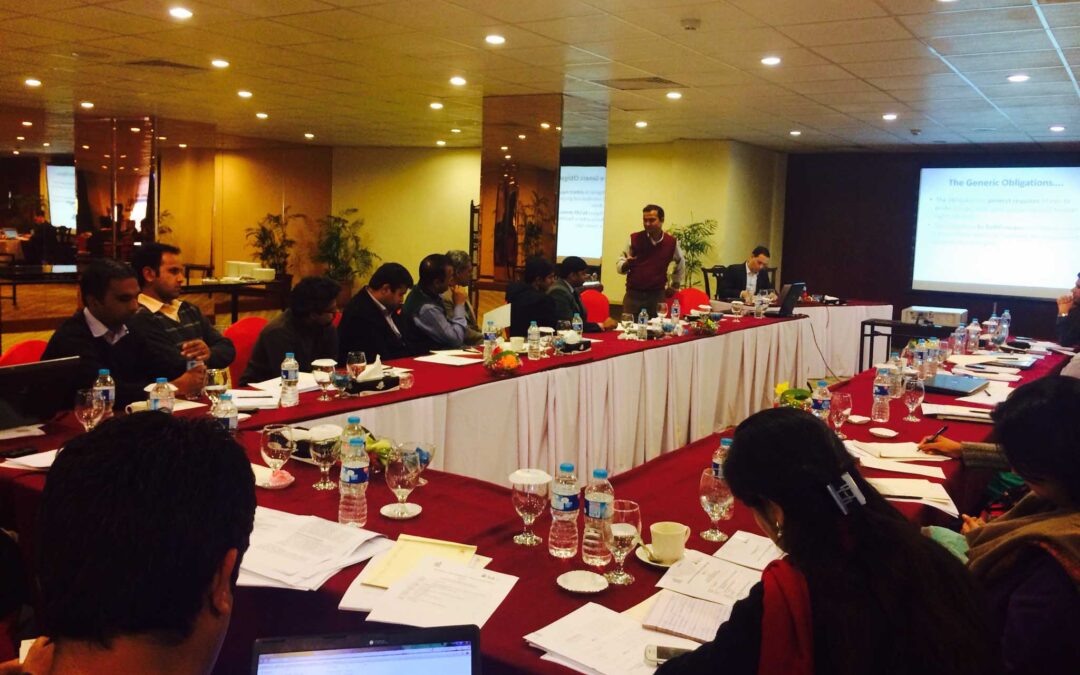
In partnership with the Human Rights Commission of Pakistan (HRCP), the ICJ conducted two-day workshops on NGO engagement with the United Nations, held in Pakistan on 18-19 and 21-22 February 2014.
The workshops, held in Lahore and Islamabad, focused on enhancing the meaningful participation of national NGOs with the UN human rights system. Participants included representatives from civil society working on a wide range of human rights issues, including enforced disappearances, education, violence against women and child rights.
Drawing from experiences of ICJ staff and participants, the workshops considered how international advocacy and engagement with the UN can benefit NGOs and addressed:
- The nature of international human rights law;
- State obligations under international human rights law;
- The UN human rights system;
- The Universal Periodic Review mechanism;
- The UN Special Procedures and the making of individual complaints to them;
- The UN Treaty Bodies, individual complaints and periodic reporting; and
- Documenting human rights violations.
Background materials on the Universal Periodic Review: (ENG) and (URDU)
Background materials on the UN Special Procedures: (ENG) and (URDU)
Background materials on the core functions of the UN Treaty Bodies: (ENG) and (URDU)
BAckground materials on periodic reporting to the UN Treaty Bodies: (ENG) and (URDU)