Dec 14, 2013 | News
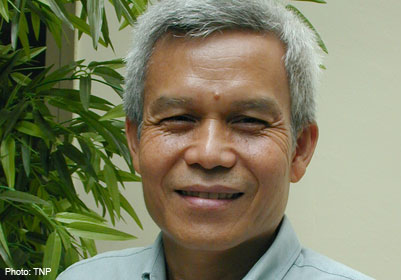
The ICJ today urged the Lao PDR government to reverse its inaction in determining the fate of community activist Sombath Somphone, who was allegedly subjected to enforced disappearance a year ago.
In a legal memorandum on the one-year anniversary of Sombath’s enforced disappearance, the ICJ called on the Lao authorities to fulfill their country’s obligations under international law and carry out a thorough and impartial investigation into his whereabouts.
It also said the government must cooperate with regional and international human rights mechanisms, particularly the ASEAN Intergovernmental Commission on Human Rights (AICHR) and the UN Working Group on Enforced and Involuntary Disappearances.
“It is deplorable that one year after Sombath Somphone was abducted after being stopped by traffic police, the public prosecutor has yet to institute formal
or criminal proceedings into his disappearance’’, said Sam Zarifi, ICJ Asia-Pacific regional director.
“The government of the Lao People’s Democratic Republic must immediately take effective measure to ensure animpartial and thorough investigation and bring justice to those responsible for crimes against Sombath Somphone,” he added.
Sixty-two-year old Sombath Somphone, Lao PDR’s most prominent community development advocate and a Ramon Magsaysay Award winner, was last seen on December 15, 2013, on a road in the capital Vientiane.
Closed circuit Television (CCTV) footage showed him being stopped at a police checkpoint, exiting his vehicle, getting into another vehicle with unidentified men and being driven away. He has not been seen since.
The Lao PDR government has denied any involvement in Sombath Somphone’s abduction. But reports released by police reveal a wholly inadequate investigation that lacks any credible explanation as to his fate or whereabouts.
In January this year, the ICJ called on the AICHR to play a proactive role in the case and to use the opportunity to address issues of enforced and involuntary disappearances in the region. To date, the AICHR has yet to take any meaningful action.
If the AICHR is to have any meaning, it must fulfill its mandate under Article 4, paragraph 1.11 of its Terms of Reference and develop a common position and strategy for tackling the widespread impunity of all acts of enforced disappearances in ASEAN, the legal memorandum said.
“An effective investigation, conducted in accordance with international standards, is essential in order that family members of Sombath Somphone and the public as a whole may discover the truth about his fate and whereabouts, and bring justice and reparation,’’ said Zarifi.
Background
Sombath Somphone is the founder and former director of the Participatory Development Training Center (PADETC), a non-governmental organization that supports holistic education and youth development as well as promoting eco-friendly technologies and micro-enterprises.
In October 2012, Sombath assisted the Lao government and non-governmental organizations convene an Asia-Europe People’s Forum (AEPF). The event was widely attended, drawing 948 participants from Lao PDR as well as other Asian countries.
It was the first time groups publicly criticized human rights abuses in Lao PDR, a Communist-run Southeast Asian country bordering Thailand, Cambodia, Vietnam, Myanmar and China.
The legal memorandum also covers the right of a family member to the right to information in such cases of enforced disappearances pursuant to both international standards as well as domestic laws in Lao PDR.
Recommendations
The key recommendations in the legal memorandum include:
(a) The public prosecutor, to launch a credible, prompt, thorough, impartial and effective investigation into the fate and whereabouts of Sombath Somphone. In the event that the public prosecutor fails to do so, an independent and credible authority should be established to undertake prompt, thorough and impartial investigation, consistent with international standards, into the alleged enforced disappearance as well as allegations of arbitrary detention, torture or ill-treatment;
(b) In furtherance of this investigation, the investigating authority should immediately seek and accept assistance from foreign experts on analysis of forensic evidence; and
(c) The investigating authority should provide relevant material and conclusions from any investigation to Sombath Somphone’s wife, to the extent compatible with the prosecution of the case.
CONTACT:
Sam Zarifi, ICJ Asia-Pacific Regional Director, (Bangkok), t:+66 807819002, e-mail: sam.zarifi(a)icj.org
Craig Knowles, ICJ Media & Communications, (Bangkok), t:+66 819077653, e-mail: craig.knowles(a)icj.org
Lao-Legal Memorandum-annex on the case of Sombath Somphone-advocay-2013 (download in pdf)
Dec 10, 2013
On the occasion of the International Human Rights Day, the ICJ sent an open letter to the three top parties elected in Nepal’s recent election.
The ICJ calls on the Nepali Congress, the Community Party of Nepal (UML) and the United Communist Party of Nepal (Maoists) as well as the members of the other political parties elected to the Constituent Assembly, to work together to end impunity for gross violations of human rights a priority.
Nepal-Letter to Parties and Congress-Advocacy-open letters-2013 (download in pdf)
Dec 10, 2013 | News
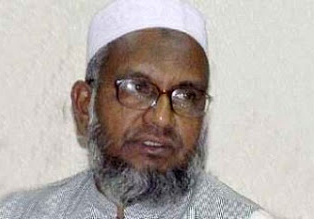
The ICJ urgently calls on Bangladesh President Abdul Hamid to intervene to stop the execution of Abdul Quader Mollah.
The Supreme Court handed down its judgment against Abdul Quader Mollah on 5 December 2013.
The 790-page judgment was sent to the International Crimes Tribunal on 8 December 2013 and a death warrant was issued against Abdul Quader Mollah (photo) on the same day.
It was immediately sent to the Dhaka Central Jail and he may be executed at any time unless President Abdul Hamid or the Supreme Court intervenes.
Last week, the United Nations High Commissioner for Human Rights Navi Pillay issued a statement, expressing her deep concern over the rising levels of political violence in Bangladesh, calling on both sides to ‘’halt their destructive brinkmanship.’’
‘‘In an increasingly volatile situation, executing Abdul Quader Mollah risks pushing the Government towards a state of emergency, placing democracy and rule of law in peril,’’ said Ben Schonveld, ICJ South Asia Director. ‘‘The timing of the Supreme Court’s decision and the Tribunal’s subsequent death warrant raise serious questions about the political motivations behind the ICT process as well as the independence and impartiality of the judiciary.’’
The ICJ is concerned that the International Crimes Tribunal has not adhered to international standards.
As a State party to the International Covenant on Civil and Political Rights, Bangladesh is obligated to guarantee the right to a fair trial to all suspects, which includes special protections for those facing the death penalty.
The ICJ considers the death penalty to constitute a violation of the right to life and the right to be free from cruel, inhuman or degrading punishment.
It calls on the government of Bangladesh to impose a moratorium on the carrying out death sentences with a view to abolition, in compliance with repeated United Nations General Assembly resolutions on the question.
“The use of the capital punishment is particularly egregious in the Abdul Quader Mollah case, given that Parliament retroactively changed the law to enable the Supreme Court to impose a sentence of death on appeal,’’ added Schonveld. ‘‘Retroactively changing laws to influence the outcome in a case not only goes against the prohibition on retroactivity, it undermines the independence of the judiciary and the judicial function.’’
The ICJ urges President Abdul Hamid to intervene to stop the execution of Abdul Quader Mollah.
CONTACT:
Ben Schonveld, ICJ South Asia Director (Kathmandu), t:+97714432651 ; email: ben.schonveld(a)icj.org
Sheila Varadan, ICJ International Legal Advisor, South Asia Programme (Bangkok), t: +66857200723; email: sheila.varadan(a)icj.org
BACKGROUND:
Political violence has continued to escalate in Bangladesh
Abdul Quader Mollah was indicted on six counts of crimes against humanity before the International Crimes Tribunal (ICT). On 5 February 2013, the ICT rendered its verdict, finding him guilty on five counts and acquitting him on the sixth count. The ICT sentenced him to life imprisonment on two counts for his involvement in the Alubdi mass murder and the murder and rape of a family. He was sentenced to 15 years imprisonment on the remaining three counts.
At the time of the verdict, section 21(2) of the International Crimes (Tribunal) Act 1973 did not permit the Prosecution to appeal a sentence to obtain a heavier sentence.
The ICT verdict in the Mollah case sparked widespread protests, drawing tens of thousands of protesters to Shabagh Square, demanding that Mollah be sentenced to death.
Responding to public outcry, on 14 February 2013, the Parliament of Bangladesh drafted an amendment to change Section 21(2) of the International (Crimes) Tribunal Act 1973 to allow Prosecution to appeal a sentence in a conviction to seek a heavier sentence. The amendment was passed on 17 February and deemed to apply retroactively from 14 July 2009.
Acting on the basis of the Amendment to Section 21(2), the prosecution appealed the life sentences given to Mollah, seeking the death penalty. The prosecution also appealed the acquittal handed down. The defence in turn appealed the convictions on the five counts.
On 17 September 2013, the Appellate Division of the Supreme Court issued an oral decision with no reasons overturning the acquittal and entering a conviction; overturning one of the life sentences and imposing a sentence of death; dismissing the appeal made by the defence.
On 5 December 2013, the Appellate Division of the Supreme Court issued its 790-page judgment giving its reasons for overturning the life sentence and handing down the death penalty. The 790-page judgment was forwarded to the ICT-2 on 8 December 2013. The ICT-2 then issued a warrant of death against Abdul Quader Mollah and sent it to the Central Dhaka jail to be executed.
Dec 5, 2013
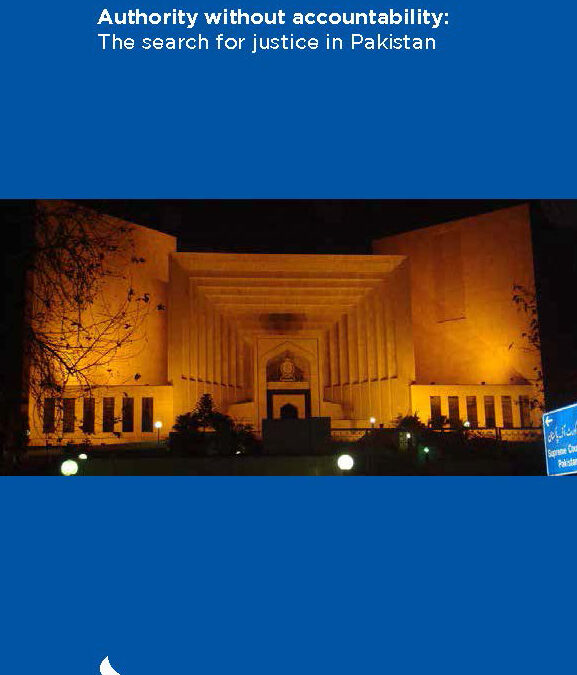
Supreme Court Chief Justice Iftikhar Muhammad Chaudhry finishes his eight-year term on 12 December 2013, leaving the legacy of a robust and assertive Court, as well as some well-founded criticisms of inconsistency in its approach to human rights, the ICJ says in a new report released today.
The ICJ’s 99-page report, Authority without accountability: the search for justice in Pakistan, presents a detailed assessment of the Court’s human rights jurisprudence during Chief Justice Chaudhry’s tenure.
It also provides recommendations to the Court to build on its work and improve its central role as a bulwark for the rights of the Pakistani people and the rule of law.
“The ICJ commends Chief Justice Chaudhry for redefining the Court as an independent institution and closing the door to military rule in Pakistan,” said Sam Zarifi, Asia Director for ICJ. “But there are also concerns about how the Court has exercised its judicial authority in protecting and promoting human rights.”
Under Chief Justice Chaudhry, the Supreme Court has increasingly used its authority to intervene directly in matters of public interest, invoking its “extraordinary jurisdiction’’ under Article 184(3) of the constitution.
The ICJ report shows that the Supreme Court has succeeded, in some cases, to bring accountability to a government and military that have long enjoyed impunity for human rights violations.
“However, the lack of guidelines about how the Court exercises this extraordinary power has led to criticisms about how it decides which cases to hear and, as importantly, which cases to ignore,’’ Zarifi added. “This lack of transparency corrodes the Court’s tremendous achievements and undermines the principles of rule of law that the Court seeks to uphold.”
The report documents some of the Supreme Court’s strides in strengthening the rights of victims to justice and remedy.
The Supreme Court has consistently taken a firm stance against unconstitutional usurpation of power by the military and has effectively held public officials accountable for corruption and abuse of power, it says.
In doing so, the Court has brought Pakistan closer to fulfilling some of its obligations under international human rights law.
“There is still a long way to go before civilian and military authorities in Pakistan are truly brought to justice for human rights violations,” said Zarifi. “But the Supreme Court has certainly made a visible dent in the culture of impunity, spanning decades in Pakistan.”
The ICJ study also sheds light on some inadvertent yet predictable consequences of the expanded use of Article 184(3), which if left unchecked, may weaken the rule of law and independence of the judiciary.
These include an overwhelming increase in case-load, leading to long delays faced by litigants; dispositions in cases that leave affected partied without any remedy or redress; influence on trial courts and interference with the presumption of innocence, blurring of institutional boundaries and undermining separation of powers, and the creation of a two-tier and arbitrary justice system.
“The Court should address these concerns as a matter of priority to ensure its hard-won independence is not undermined by allegations that the highest court of Pakistan is politically motivated,” said Zarifi.
“Under international standards, the judiciary must not only be independent and impartial, it must also be seen to be independent and impartial,” he added. “The absence of any actual or perceived bias is critical to ensure public confidence in the fair administration of justice.”
Some examples of the Supreme Court’s inconsistent use of its extraordinary jurisdiction to promote and protect human rights:
- The Court declared the Contempt of Court Act 2012 (a law that sought to curtail the judiciary’s contempt powers) void in less than two months after it was passed by Parliament. However, the Court has still not acted on a petition, made in 2011, calling for a review of the Actions (in Aid of Civil Power) Regulations, which facilitates enforced disappearances and arbitrary detention.
- In June 2012, the Chief Justice assumed jurisdiction on its own motion (known suo motu notice) of a case involving corruption allegations against his son, Arsalan Iftikhar. By contrast, in the same year the Court did not act when persons belonging to the minority Ahmadiyya community were attacked and their places of worship vandalized and destroyed.
The ICJ reiterates recommendations made in its 2011 Pakistan Mission Report:
- The Supreme Court should exercise its powers under Article 184(3) of the Constitution in a manner that complies with Pakistan’s obligation under international law to promote, protect and respect human rights, maintain rule of law and uphold separation of powers.
- The Court should adopt transparent yet flexible criteria to govern how cases are selected under Article 184(3), and in particular taken up under the Court’s suo motu jurisdiction, taking into account that suo moto procedures are an exception exercise of power.
Contact:
Sam Zarifi, ICJ Asia Pacific Regional Director (Bangkok), t: +66 807819002; email: sam.zarifi(a)icj.org
Reema Omer, ICJ International Legal Advisor for Pakistan (Lahore), t: +923214968434; email: reema.omer(a)icj.org
Pakistan-Authority without Accountability-Executive Summary-Publications-report-2013 (Download executive summary, in pdf)
Pakistan-Authority without Accountability-Publications-report-2013 (Download full report, in pdf)
Pakistan-Retiring Chief Justice-news-press release-2013-urdu (full text in pdf)
Dec 3, 2013 | News, Publications, Reports, Thematic reports
Lawyers continue to encounter impediments to the exercise of their professional functions and freedom of association, as well as pervasive corruption, although they have been able to act with greater independence, says the ICJ in a new report launched today.
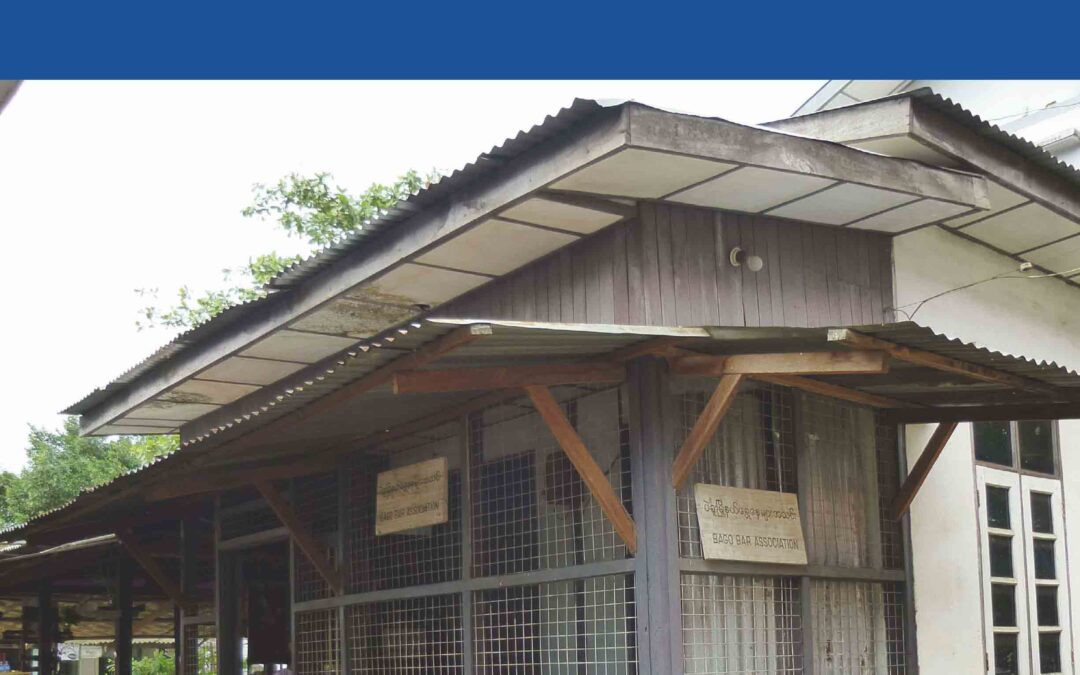
Right to Counsel: The Independence of Lawyers in Myanmar – based on interviews with 60 lawyers in practice in the country – says authorities have significantly decreased their obstruction of, and interference in, legal processes since the country began political reforms in 2011.
“The progress made in terms of freedom of expression and respect for the legal process is very visible,” said Sam Zarifi, ICJ Asia-Pacific director. “But despite the improvements, lawyers still face heavy restrictions and attacks on their independence, which can result in uncertainty and fear, particularly when it comes to politically sensitive issues.”
Systemic corruption continues to affect every aspect of a lawyer’s career and, as a result, is never absent from lawyers’ calculations vis-à-vis legal fees, jurisdictions and overall strategy.
“Corruption is so embedded in the legal system that it is taken for granted,” Zarifi said. “When the public also generally assumes that corruption undermines the legal system, this severely weakens the notion of rule of law.”
“Lawyers in Myanmar, as elsewhere, play an indispensable role in the fair and effective administration of justice,” Zarifi added. “This is essential for the protection of human rights in the country and the establishment of an enabling environment for international cooperation towards investment and development.”
But lawyers in Myanmar lack an independent Bar Council, the report says, noting that the Myanmar Bar Council remains a government-controlled body that fails to adequately protect the interests of lawyers in the country and promote their role in the fair and effective administration of justice.
The ICJ report shows that other multiple long-standing and systemic problems affect the independence of lawyers, including the poor state of legal education and improper interferences on the process of licensing of lawyers.
In its report, which presents a snapshot of the independence of lawyers in private practice in Myanmar in light of international standards and in the context of the country’s rapid and on-going transition, the ICJ makes a series of recommendations:
- The Union Attorney-General and Union Parliament should significantly reform the Bar Council to ensure its independence;
- The Union Attorney-General and Union Parliament should create a specialized, independent mechanism mandated with the prompt and effective criminal investigation of allegations of corruption;
- The Ministry of Education should, in consultation with the legal profession, commit to improving legal education in Myanmar by bolstering standards of admission to law school, law school curricula, and instruction and assessment of students.
Contact:
Sam Zarifi, ICJ Asia-Pacific Regional Director, (Bangkok), t:+66 807819002 e-mail: sam.zarifi(a)icj.org
Craig Knowles, ICJ Media & Communications, (Bangkok), t:+66 819077653, e-mail: knocraig(a)gmail.com
Myanmar-Right to Counsel-publications-report-2013-ENG (download full text in pdf)
MYANMAR-Right to Counsel-Publications-report-2015-BUR (Burmese version in pdf)