
Mar 11, 2013
The ICJ has brought to the attention of the UPR mechanism issues concerning judicial independence, freedom of assembly and association, freedom of expression and security measures in Malaysia.
The ICJ’s submission comes ahead of the consideration of the situation of human rights in Malaysia by the Human Rights Council’s Working Group on the Universal Periodic Review (21 October to 1 November 2013). It includes suggested recommendations to be taken up in the UPR of Malaysia.
Malaysia-ICJ-UPR17-StakeholderSubmission-Legal submission-2013 (full text in PDF)
Malaysia-UPR17-AdvocacyNote-LegalSubmission-2013 (download short advocacy note in PDF)
Malaysia-ICJ-UPR17-ComparisonChart-2013 (full text in PDF)

Feb 28, 2013 | News
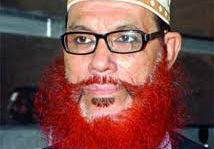 The death sentence handed down by the International Crimes Tribunal today against Delwar Hossain Sayeedi (photo) violates international standards of due process and fair trial, and, if carried out, would violate his right to life, says the ICJ.
“The ICJ wholly condemns the atrocities committed in Bangladesh’s war of liberation in 1971, notably the widespread and systematic use of rape as a form of torture and the unlawful killings. It is paramount that those responsible should be held accountable,” said Sam Zarifi, ICJ Asia Pacific Regional Director. “But even perpetrators of atrocities have rights. They should be brought to justice, not subjected to vengeance.”
Delwar Hossain Sayeedi, vice-president of the Jamaat-e-Islami party, was indicted on 3 October 2011 on 20 charges including genocide and crimes against humanity. He was arrested and brought before the War Crimes Tribunal for the first time on 2 November 2010. He was accused of working with the Al-Badr group during the independence struggle in the early 1970s.
The International Commission of Jurists opposes the death penalty as a violation of the right to life and a form of cruel and inhuman punishment. The United Nations General Assembly has called on all States to establish a moratorium on the death penalty with a view to universal abolition.
Today, crowds gathered outside the courthouse as the verdict was being read, demanding Delwar Hossain Sayeedi be sentenced to death for his role in the atrocities committed in the 1971 war of liberation. Earlier this month, widespread protests erupted across Bangladesh after the Tribunal imposed a life sentence on Abdul Qadar Mollah instead of the death penalty.
“The enormous demonstrations and the unfortunate violence that have accompanied each decision of the ICT demonstrate the passions still enflamed by the crimes of 1971. But it is in everyone’s interest to ensure that the rule of law and the path to justice are not subject to immediate political pressure,” Zarifi added. “The Government’s obligation to bring those responsible for the atrocities committed in 1971 to justice must not outweigh the presumption of innocence and the duty to ensure the security of all persons.”
The ICJ says that the International Crimes Tribunal does not adhere to international standards of a fair trial and due process.
According to the ICJ, there are serious procedure flaws at all stages: pre-trial release has been routinely and arbitrarily denied; witnesses have been abducted and intimidated; there have been credible allegations of collusion between the Government, prosecutors and judges.
On 14 February 2013, a draft amendment was tabled in Parliament, retroactively changing the International Criminal (Tribunals) Act 1973 to enable prosecutors to appeal a life sentence and seek the death penalty.
This amendment came after protests for a death sentence in the 5 February 2013 verdict against Abul Qadar Mollah.
As a State party to the International Covenant on Civil and Political Rights, Bangladesh is obligated to guarantee due process and fair trial rights to all suspects, even those accused of war crimes.
Such obligations include the right to an public hearing before a competent, independent and impartial tribunal; the right to be tried in one’s presence; the right to counsel and the right to a full defence; and the right not to be punished again for an offence for which there has already been a final conviction in accordance with the law.
“Failing to abide by minimum standards of due process will cast doubt on the Tribunal’s findings and undermine victims’ hard-fought battle for justice,” Zarifi said. “The Bangladesh Tribunal is one of very few transitional justice mechanisms that have imposed the death penalty.”
This verdict is the third issued by the tribunal. Earlier this month, Abdul Qader Mollah, the assistant secretary-general of the Jamaat-e-Islami was found guilty and sentenced to life imprisonment for committing crimes against humanity during the 1971 liberation war.
On 21 January, Abul Kalam Azad, a former leading member of the Jamaat-e-Islami party, was tried and convicted in absentia and sentenced to death for crimes committed during Bangladesh’s war of liberation in 1971. He was convicted on six counts of a crime against humanity and one count of genocide.
The government established the Bangladesh International Crimes Tribunal in 2010, after amending the International Crimes (Tribunals) Act 1973. The International Crimes Tribunal has jurisdiction to try crimes against humanity, crimes against peace, genocide, violations of the Geneva conventions and any other crimes under international law.
The ICJ supports the right of victims to seek truth and justice for the atrocities committed in the 1971 Liberation War.
However, any such process must adhere to international human rights standards, including full guarantees for a fair trial.
CONTACT:
Sam Zarifi, ICJ Asia-Pacific Regional Director, t: +66 26198477; email: sam.zarifi(at)icj.org
Sheila Varadan, ICJ Legal Advisor, South Asia Programme, t: +66 857200723; email: sheila.varadan(at)icj.org

Feb 15, 2013 | News
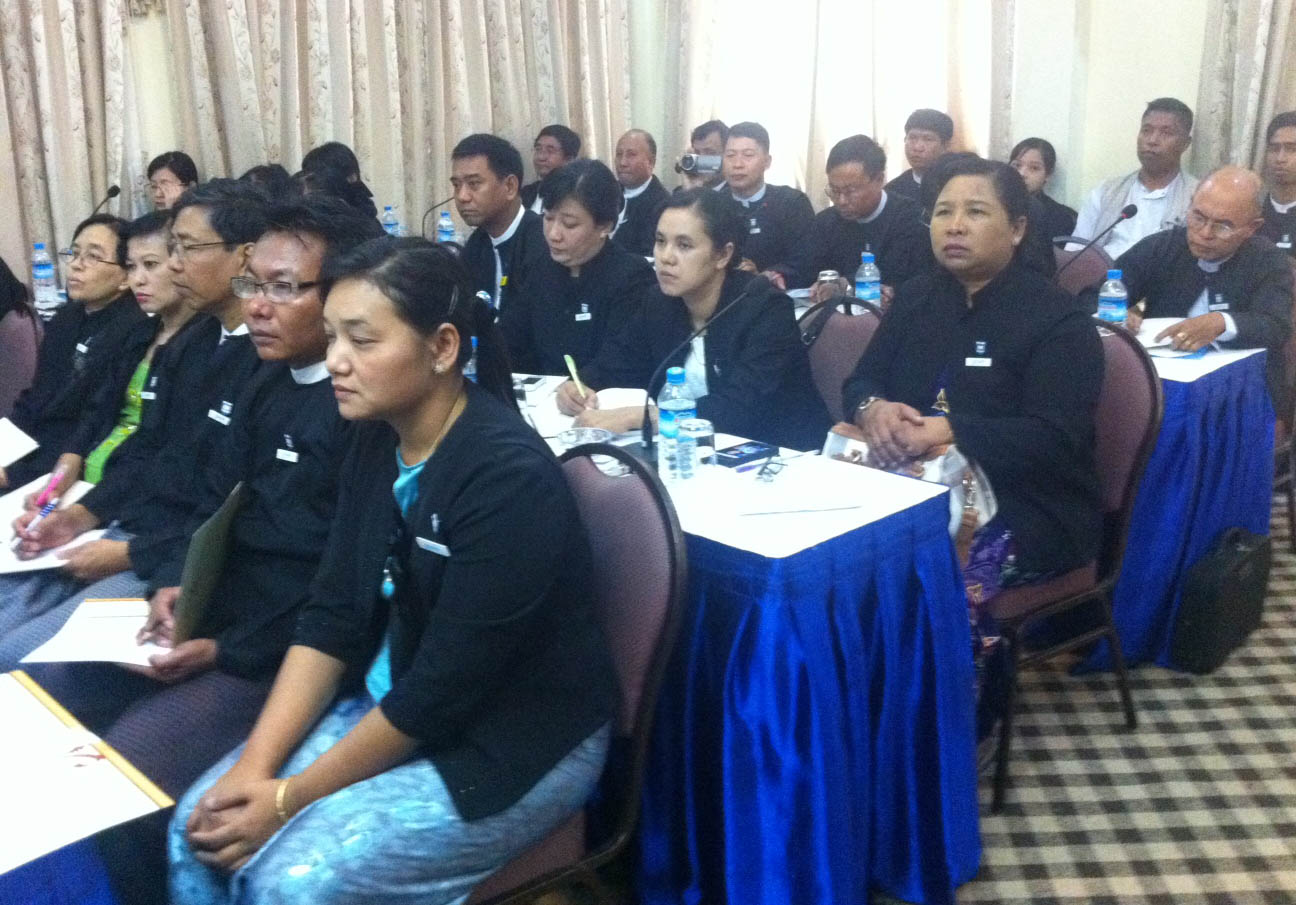 The ICJ, in collaboration with the Office of the Attorney General of the Union of Myanmar, held a two-day academic seminar in Naypyitaw entitled “The Prerogative Writs under the 2008 Constitution of Myanmar”.
At the event, which took place on 14 – 15 February 2013, opening remarks were given by His Excellency Dr. Tun Shin, Attorney General of the Union of Myanmar and Mr. Saman-Zarifi, Regional Director for Asia and the Pacific of International Commission of Jurists, to a total of approximately 40 public prosecutors and judges.
The aim of the seminar was to discuss and contribute to the application of the recently re-introduced prerogative writs, namely, habeas corpus, mandamus, prohibition, quo warranto and certiorari, under Myanmar’s 2008 Constitution which came into force in early 2011.
The seminar allowed ICJ to not only gain a deeper insight into the current writ practices in Myanmar but also permitted the Office of the Attorney General to draw best practices from other countries, such as Australia, Philippines and Malaysia.
The topics addressed during the seminar were the importance of prerogative writs in ensuring justice and upholding the rule of law; specific international standards on the independence of prosecutors and their role in the justice system; how writ cases are handled, challenges faced by the prosecutors and the burden of proof; and the powers of the judiciary to promulgate its own rules to ensure fundamental rights, as in the case of the Supreme Court in Philippines.
Panelists included Justice John Dowd AO QC, former Chairman of the International Commission of Jurists; Justice Adolfo Azcuna, Chancellor of the Philippine Judicial Academy and former Justice of the Supreme Court of the Philippines; and Mr. Andrew Khoo of the Malaysian Bar Council.

Feb 12, 2013
 In an open letter to the Commonwealth Secretary General Kamalesh Sharma, the ICJ is asking to change the venue of the Commonwealth Heads of Government Meeting in November 2013.
Dear Commonwealth Secretary General Kamalesh Sharma,
We, the International Commission of Jurists, enclose an open letter addressed to President Mahinda Rajapakse of Sri Lanka, signed by fifty-six eminent jurists from around the world, condemning the unlawful removal of Chief Justice Bandaranayake and expressing grave concern for the decline of rule of law and independence of the judiciary in Sri Lanka.
We urge you to follow through on your earlier statements and consider changing the venue of the 2013 Commonwealth Heads of Government Meeting as part of the commitment to advance and strengthen adherence to the Commonwealth’s oft-stated values and Principles pertaining to the rule of law.
Removing the Chief Justice through a process declared unconstitutional by the apex court and in contravention of international standards on the independence of the judiciary goes directly against the core principles enunciated in the Singapore Declaration 1971, the Harare Declaration 1991 and the Latimer House Principles on the Three Branches of Government 2003; it flies in the face of the Commonwealth values of promoting and protecting democracy, the rule of law and the independence of the judiciary.
We recall your statement that ‘The Commonwealth’s Latimer House Principle, which govern the relationship between the three branches of government, are the cornerstone of our association’s values.’
The unlawful impeachment process marks a serious acceleration of the general and serious decline in respect for human rights and the rule of law in Sri Lanka, as documented recently in our report Authority without Accountability.
These developments are all the more alarming given the ongoing failure of the Sri Lankan government to respond to domestic and international demands for accountability for serious human rights violations in the country.
In the present climate, allowing Sri Lanka to host the Commonwealth Heads of Government meeting in November 2013 would raise serious questions about the Commonwealth’s commitment to democracy, the independence of the judiciary and the rule of law.
Please do not hesitate to contact us if you have any queries or comments. We thank you in advance for your sensitivity to this important matter.
Sincerely
Wilder Tayler
Secretary-General
The International Commission of Jurists