
Aug 22, 2013 | News
The ICJ called upon the Indian Government to halt the imminent execution of Professor Devinderpal Singh Bhullar.
In August 2001, Professor Bhullar was sentenced to death under the Terrorist and Disruptive Activities (Prevention) Act following his conviction on charges related to the bombing of the All Indian Youth Congress in New Delhi in 1993.
“Those who commit acts of terrorism should be prosecuted before competent, independent and impartial courts that meet international due process standards”, said Ben Schonveld, ICJ’s South Asia Director.
“However, while those responsible for such acts must be held to account, the ICJ opposes the death penalty in all circumstances, without exception as it is an inherently cruel and irreversible punishment that violates the right to life.”
“Furthermore, there are serious questions about whether Professor Bhullar’s trial was in accordance with the requirements of international law”, Schonveld added. “His conviction and death sentence are based solely upon an alleged confession he made in police custody, which he later retracted, claiming it was extracted under torture.”
The ICJ says that the execution of an individual in these circumstances would violate India’s obligations under the International Covenant on Civil and Political Rights to respect the right to life, the right to a fair trial and the absolute prohibition of torture.
In May 2011, President Pranab Mukherjee rejected Professor Bhullar’s petition for clemency. The Supreme Court rejected his earlier plea on 12 April 2013 to commute the sentence to life imprisonment, and upheld its decision on 14 August 2013.
India ended an eight-year moratorium on the death penalty with the executions of Ajmal Kasab on 21 November 2012 and Mohammad Afzal Guru on 9 February 2013.
“The resumption of the death penalty by India is contrary to the global and regional movement towards the abolition of the death penalty”, said Schonveld.
The ICJ reminds that 150 countries worldwide, including 30 states in the Asia-Pacific region, have abolished the death penalty in law or in practice.
The ICJ urges the Indian Government to immediately reinstate the moratorium on the death penalty, with a view to abolishing the death penalty permanently and acceding to the Second Optional Protocol to the International Covenant on Civil and Political Rights on the abolition of the death penalty.
Over the years, the member states of the United Nations have adopted various instruments in support of the call for the worldwide abolition of the death penalty. In 2007, the UN General Assembly adopted a resolution emphasizing that “that the use of the death penalty undermines human dignity” and calling for the establishment of a moratorium on the use of the death penalty “with a view to abolishing the death penalty”.
The resolution was reaffirmed in 2008, 2010, and most recently in December 2012, when and overwhelming majority of 110 UN Member States voted in favor of a worldwide moratorium on executions as a step towards abolition of the death penalty.
Contact:
Ben Schonveld, ICJ South Asia Director, (Kathmandu); t: +977 9804596661; email: ben.schonveld(a)icj.org

Aug 16, 2013
The ICJ and Human Rights Watch wrote an open letter to the government of Pakistan regarding its recently announced decision to resume executions.
Pakistan planned on carrying out its first civilian executions in five years by hanging two convicts between 20-22 August 2013.
The letter emphasizes that the death penalty violates the right to life and constitutes cruel, inhuman and degrading punishment, and urges the government to immediately halt all executions and adopt a moratorium on the death penalty; abolish the death penalty permanently in domestic law; and accede to the Second Optional Protocol to the International Covenant on Civil and Political Rights on the abolition of the death penalty.
CONTACT:
Sam Zarifi, ICJ Asia-Pacific Director, (Bangkok), t: +66 807819002; email: sam.zarifi(a)icj.org
Pakistan-ICJ and HRW -Open letter on the resumption of executions – advocay – 2013 (full text in pdf)

Aug 13, 2013 | News
The ICJ today called on the Nepalese Government to release the body of Tibetan Monk Karma Nyidon Gyasto to the Tibetan community to carry out his last rites in accordance with Nepal’s laws and international obligations.
“We are deeply concerned about this rejection of Nepal’s laws and its international obligations,” said Asia Director Sam Zarifi.
On 5 August 2013, a Tibetan refugee, Karma Nyidon Gyasto self-immolated at the Boudha Stupa, in Kathmandu. He was taken to Tribhuvan University Teaching Hospital, where he was later declared dead. His body is apparently being held in the hospital’s mortuary.
On 12 August 2013, the Tibetan Refugee Welfare Office, registered an application to the Office of the Chief District Officer in Kathmandu to perform funeral rites. The Tibetan Refugee Welfare Office is acting on behalf of Gyatso given the lack of clear legal status of the resident Tibetan refugee community.
This is the second protest by self-immolation in Nepal. The first was in February 2013. In that case the government refused to hand over the body for funeral rites.
The refusal to hand over the body contravenes Nepal’s national laws.
The Interim Constitution, under Article 23 guarantees the right to religion, including the right to practice and perform religious rites.
Furthermore Article 17 provides that every community in Nepal has the right to preserve and promote its culture.
The action also contravenes Nepal’s international obligations.
Article 18 of the International Covenant on Civil and Political Rights (ICCPR) provides for the right to a religion or belief of his choice, and freedom, either individually or in community with others and in public or private, to manifest his religion or belief in worship, observance, practice and teaching.
Furthermore, General Comment No 22 on Article 18 of the ICCPR states that this right includes ritual and ceremonial acts.
Under the Covenant, the Government of Nepal is obliged to respect and ensure the religious and cultural rights of the Tibetan refugee community, who have a legitimate right to receive the body and hold a funeral according to their religion and culture.
CONTACT:
Sam Zarifi, ICJ Asia-Pacific Director, (Bangkok), t: +66 807819002; email: sam.zarifi(a)icj.org

Aug 12, 2013 | News
The ICJ is calling for the immediate release of Adilur Rahman Khan, a prominent Supreme Court lawyer and human rights defender in Bangladesh.
Mr Khan is the Secretary of Odhikar, a Bangladeshi human rights organization that has documented human rights violations allegedly carried out by Bangladeshi security forces.
Plainclothes police officers arrested Mr Khan from his home on 10 August 2013 without an arrest warrant.
“Adilur Rahman Khan is being charged for the lawful exercise of the right to freedom of expression, so Bangladeshi authorities must immediately and unconditionally drop all charges against him and release him,” said Ben Schonveld, ICJ’s South Asia director. “Until the charges are dropped, he must be released on bail.”
Adilur Rahman Khan was charged on 11 August under section 57 of the Information and Communication Technology Act, 2006, for distorting information regarding a police operation on a Hefazat-e Islam rally in May this year.
Odhikar reported that 61 people had been killed in the police crackdown on the rally. The government denied any casualties.
He was not allowed to speak with his family or his lawyers until August 11, when a Magistrate’s Court refused bail and remanded him for a further five days of custodial interrogation.
On August 12, the High Court Division of the Supreme Court stayed the remand order, directing that Mr. Khan be sent back to jail, where he could be interrogated ‘at the gate of the prison.’
“Adilur Rahman Khan’s arrest is illustrative of a deeply worrying government strategy to muzzle and discredit the work of human rights defenders and distract attention from human rights violations,” added Schonveld. “The High Court’s stay of the remand order is a positive development. However, the Bangladesh government must uphold its obligations under domestic and international law to guarantee freedom of expression and allow human rights defenders to carry out their work.”
Article 19 of the International Covenant on Civil and Political Rights (ICCPR), to which Bangladesh is a party, guarantees ‘freedom to seek, receive and impart information and ideas of all kinds, regardless of frontiers, either orally, in writing or in print, in the form of art, or through any other media of his choice.’
The UN Basic Principles on the Role of Lawyers provide that lawyers must be allowed to carry out their work ‘without intimidation, hindrance, harassment or improper interference.’
Further, lawyers shall, in particular, have the right to take part in public discussions of matters concerning the law, administration of justice and the promotion and protection of human rights.
In addition, the UN Declaration on Human Rights Defenders clarifies that States must create an enabling environment for human rights defenders and take all necessary measures to protect human rights defenders ‘against any violence, threats, retaliation, de facto or de jure adverse discrimination, pressure or any other arbitrary action as a consequence of his or her legitimate exercise of his or her rights.’
CONTACT:
Ben Schonveld, ICJ South Asia Director (Kathmandu), t: +977 14432651; email: ben.schonveld(a)icj.org
Sam Zarifi, ICJ Asia-Pacific Director, (Bangkok), t: +66 807819002; email: sam.zarifi(a)icj.org
Aug 2, 2013
An opinion piece by Reema Omer, Legal Adviser for the ICJ.
The Attorney General of Pakistan recently informed the Supreme Court that over 500 persons reported to be ‘missing’ were in the custody of security agencies.
This revelation comes after security agencies had for years denied involvement in cases of enforced disappearances in the country.
Three years ago, Pakistan ratified the International Covenant on Civil and Political Rights (ICCPR), undertaking to safeguard the right to life and liberty, including freedom from arbitrary detention, of its people.
Coupled with a newly restored independent Supreme Court committed to defend human rights, many Pakistanis hoped the ratification would help improve Pakistan’s grave human rights situation.
But the expected improvements have not taken place – in fact, in some cases, the human rights situation has deteriorated. This remains true especially for enforced disappearances, which continue with complete impunity.
Time to take the necessary steps
It is now time for the Supreme Court to take the necessary steps to hold those state agencies (and agents) accountable that have subjected hundreds, if not thousands, of Pakistanis to enforced disappearance.
Under international law, enforced disappearance is the arrest, detention, abduction or any other form of deprivation of liberty by State agents or by persons or groups of persons acting with the authorization, support or acquiescence of the State, followed by a ‘refusal to acknowledge the deprivation of liberty or by concealment of the fate or whereabouts of the disappeared person, which place such a person outside the protection of the law.’
The UN General Assembly has repeatedly described enforced disappearance as ‘an offence to human dignity’ and a grave and flagrant violation of human rights and international law.’
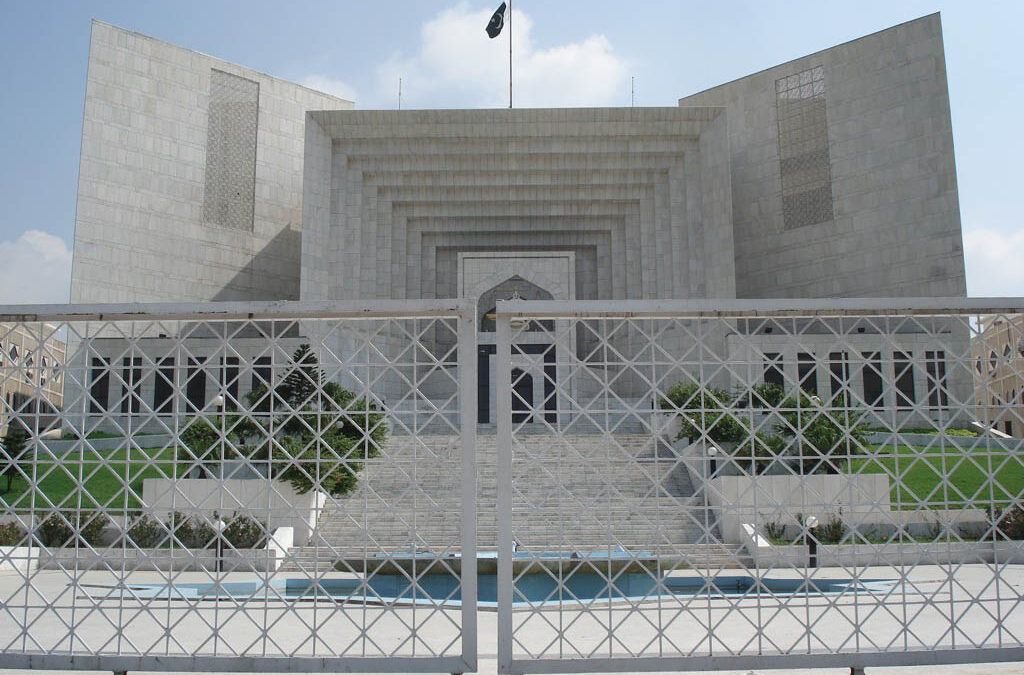
Pakistan’s Supreme Court first assumed jurisdiction of enforced disappearances in December 2005 by taking suo motu notice of a news report. Chief Justice Chaudhry acknowledged evidence that many of the ‘disappeared’ were being held in security agencies’ custody and committed to ‘deliberate on the role of agencies and pass a detailed judgment’ at a later stage.
Seven years later, and following many more remarks on the culpability of security agencies, there are still no judgments, prosecutions, or convictions related to the multiple ‘missing persons’ petitions pending in the Supreme Court.
When questioned about the fate of ‘disappeared’ persons, security agencies either deny knowledge, or in blatant defiance of Court orders, resist releasing those found to be in their custody. A primary tool to facilitate enforced disappearance is the Actions (in Aid of Civil Powers) Regulations 2011 (FATA/PATA Regulations), a law that empowers the military to detain suspected militants indefinitely without presenting them before a court.
Suspects are often kept incommunicado, and denied access to family, legal counsel, and human rights groups.
The Supreme Court’s efforts to assume jurisdiction of human rights violations and trace ‘disappeared’ persons are commendable first steps towards combating impunity for enforced disappearances.
Pakistan’s obligations not met
However, these steps alone do not meet Pakistan’s human rights obligations under international law.
Under International law, States are obligated to prevent human rights violations, and undertake prompt, thorough, independent and impartial investigations where violations take place.
The United Nations Impunity Principles specifically require States to ensure ‘that those responsible for serious crimes under international law are prosecuted, tried and duly punished.’ Obligations under international law are binding on all branches of the State – including the judiciary.
Multiple factors allow impunity for enforced disappearances to continue such as a compromised criminal justice system, inadequate witness protection laws, and the absence of civilian oversight of the military.
The executive authorities must discharge their responsibility to conduct prompt, thorough and impartial investigations into allegations of enforced disappearance, with a view both to determining the fate and whereabouts of ‘missing persons’ and prosecuting those responsible.
The Supreme court can play a more effective role
Pakistan’s independent and assertive Supreme Court has done well to trace ‘missing persons’ and seek a comprehensive strategy on enforced disappearances from the Government.
However, it can play a more effective role in ensuring that ‘disappeared’ persons are either released or, if charged with a recognizable crime, receive a fair trial before an independent and impartial civilian court.
They can also ensure perpetrators for enforced disappearances are brought to account and that victims or their families are able to access a remedy and reparation for the human rights violations they have suffered.
First, the Supreme Court could invalidate sections of the FATA/PATA Regulations that are incompatible with Pakistan’s obligations under national and international human rights law.
Recently, the Court declared the Contempt of Court Act 2012, a law that sought to curtail the judiciary’s contempt powers, void in less than two months after it was passed by Parliament.
However, petitions challenging laws decried by human rights organizations for facilitating enforced disappearances have been pending in the Supreme Court for years with little progress.
Second, the Court could direct and supervise criminal investigations, as well as order institution of criminal proceedings against members of security agencies implicated in enforced disappearances.
The Supreme Court has frequently exercised this authority in corruption cases, but has so far not invoked this power effectively to address enforced disappearances and other violations carried out by agencies of the armed forces.
Third, the Supreme Court could use the wide range of contempt powers at its disposal to compel authorities to implement its orders.
In recent years, the Court has used these powers frequently against journalists, lawyers, and even former Prime Minister Gillani, resulting in his disqualification from office. Security agencies, however, have so far escaped such action despite their failure to follow directions of the Court in cases of enforced disappearances.
Source of hope
At a time when public trust in other State institutions is low, the Supreme Court still remains a source of hope for justice for the thousands of ‘disappeared’ persons and their families.
The Court has recognized the seriousness of the situation. However, it would do well to move beyond merely tracing ‘disappeared’ persons to recovering them and holding perpetrators accountable.
This will bring Pakistan closer to meeting its obligations under international law and be instrumental in combating impunity enjoyed by the security forces for their role in perpetrating human rights violations.