Dec 7, 2012
 In a submission to the Human Rights Committee concerning Indonesia, the ICJ has called for attention to issues of accountability and access to justice, religious tolerance and the freedoms of peaceful assembly and association.
During its session in July 2013, the Human Rights Committee (HRC) will undertake an examination of Indonesia’s initial report under the International Covenant on Civil and Political Rights (ICCPR). Ahead of this, during its session in March 2013, the HRC will prepare and adopt a list of issues. The ICJ’s submission brings to the attention of the Committee issues related to articles 2, 18, 21 and 22 of the ICCPR.
The ICJ’s submission refers to the need for more effective investigation of abuses that impair the ICCPR, including accountability for such abuses, especially as this affects oversight and accountability of intelligence services. The submission also suggests that questions be raised with the Government of Indonesia concerning religious tolerance and the freedoms of assembly and of association as it affects lesbian, gay, bisexual and transgender individuals and organisations.
Indonesia-HRCttee107-LOI-legal submission (2012) (download PDF in English)
Dec 6, 2012 | News
The impeachment process against Chief Justice Shirani Bandaranayake ignores international standards and practice, says the ICJ.
The ICJ urges the government of Sri Lanka to take immediate steps to uphold the independence of the judiciary and adhere to international standards and practice on the removal of judges.
Today, the Chief Justice and her team of lawyers walked out of the impeachment hearing in protest over the denial of a fair hearing.
Protests supporting and opposing the impeachment process erupted on Tuesday 4 December 2012 as the Chief Justice appeared before the Parliamentary Select Committee for the second time.
Over two hundred judges, several hundred lawyers, trade union leaders and a large number of religious dignitaries assembled to show their support for the Chief Justice.
Opposition members of parliament publicaly called on the Government to adhere to principles of fair trial and due process in the impeachment process.
Reportedly the Chief Justice has been denied the right to cross-examine potential witnesses and has not been provided full disclosure of the allegations against her.
The Parliamentary Select Committee has also denied the request for a public hearing and prohibited observers from attending.
“Parliament is pushing ahead with an impeachment process that fails to adhere to fundamental principles of due process and fair trial,” said Sam Zarifi, ICJ Asia Pacific Director. “The Chief Justice’s impeachment is part of a relentless campaign waged by the Rajapaksa Government to weaken the judiciary. An independent judiciary is the principle check on the exercise of executive and legislative powers – vital to the functioning of a healthy democracy.”
As recalled by the United Nations Special Rapporteur on the independence of judges and lawyers in a statement last month, international standards require that judges be removed only in exceptional circumstances involving incapacity or gross misconduct.
A cornerstone of judicial independence is that tenure of judges be secure.
“Any process for removal must comply with all of the guarantees of due process and fair trial afforded under international law, notably the right to an independent and impartial hearing,” Zarifi added.
The United Nations Human Rights Committee, in its 2003 concluding observations on Sri Lanka, expressed concern that the procedure for removing judges under Article 107 and the complementary Standing Orders of Parliament was not compatible with Article 14 of the International Covenant on Civil and Political Rights.
The Parliamentary Select Committee, presiding over the impeachment hearings is composed exclusively of members of parliament, the majority of which are drawn from the Government coalition. No members of the judiciary are permitted to sit on the Select Committee.
Comparatively in India, an impeachment hearing is presided over by a three-member committee comprised of a Supreme Court justice, a Chief Justice of any High Court and an eminent jurist.
In South Africa, a judge may only be removed after a hearing by the Judicial Service Commission, a body composed of members of the judiciary.
In Canada, all removal proceedings are conducted by the Judicial Council, a body composed of 38 chief and associate chief justices of the superior courts and chaired by the Chief Justice of Canada.
The United Nations Special Rapporteur on the independence of judges and lawyers warned against the misuse of disciplinary proceedings as a reprisals mechanism against independent judges.
The timing of the impeachment motion raises questions. The impeachment motion was initiated just days after the Chief Justice ruled against the Government on a controversial bill – the Divi Neguma Bill – before Parliament.
If the bill passed, the Minister of Economic Development (who is also the President’s brother Basil Rajapakse) would have had control over a fund of 80 billion Sri Lankan rupees (611 million USD).
Attacks on the judiciary have been escalating in recent months. In July 2012, Government Minister Rishad Bathiudeen threatened a Magistrate in Mannar and then allegedly orchestrated a mob to pelt stones at the Mannar courthouse.
In early October, the ICJ condemned the physical assault on the secretary of the Judicial Service Commission, Manjula Tillekaratne.
In early November, the ICJ issued a report, Sri Lanka’s Crisis of Impunity, documenting how the erosion of state accountability and judicial independence, has led to a crisis of impunity in Sri Lanka.
The ICJ calls on the Government of Sri Lanka to take active measures to promote the independence of the judiciary and rule of law by adhering to international standards and practice in impeachment hearings.
Contact:
Sam Zarifi, ICJ Asia-Pacific Regional Director, (Bangkok), t:+66(0) 807819002; email: sam.zarifi@icj.org
Sheila Varadan, ICJ Legal Advisor, South Asia Programme (Bangkok), t: +66 857200723; email: sheila.varadan@icj.org
Nov 21, 2012 | News
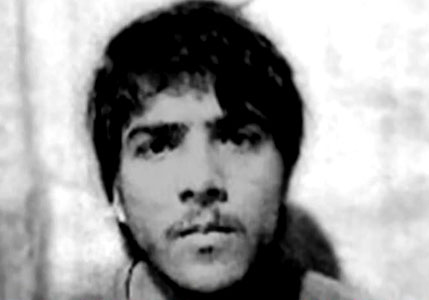
The ICJ condemned today the execution of Ajmal Amir Kasab and called on India to immediately reinstate a moratorium on the death penalty.
“This is the second execution in South Asia in less than a week, marking a resurgence of capital punishment in the region,” said Sam Zarifi, Asia Director for the ICJ.
The ICJ condemned Pakistan’s execution of soldier Muhammad Hussain on Wednesday 15 November 2012.
Ajmal Kasab was executed by hanging in the early hours on Wednesday morning amid great secrecy.
The execution comes just a day after India voted against a United Nations General Assembly (GA) draft resolution, adopted by the GA’s Third Committee, calling for a moratorium on the use of the death penalty.
Over one hundred United Nations member States supported the draft resolution, an increase from previous United Nations General Assembly Resolutions passed in 2007, 2008 and 2010. The resolution will be taken up by the GA in December.
“India is one of a dwindling number of States voting against the resolution and still retaining the death penalty,” Zarifi added. “The death penalty violates the right to life and the inherent dignity of the person.”
More than 150 of 192 United Nations member States have either abolished the death penalty or do not practice it.
“There is no doubt that Kasab’s crimes were heinous, causing immeasurable suffering, but putting him to death is a significant step backwards for India, ending its eight-year hiatus on executions,” Zarifi said.
CONTACT:
Sheila Varadan, ICJ Legal Advisor, South Asia Programme, t: +66 857200723; email: sheila.varadan(at)icj.org
Sam Zarifi, ICJ Asia-Pacific Regional Director, t: +66 26198477; email: sam.zarifi(at)icj.org
Background:
Ajmal Kasab, a 25-year old Pakistani national, was sentenced to the death for his role in the Mumbai terrorist attack in 2008. The Supreme Court confirmed Ajmal Kasab’s death sentence on 29 August 2012, upholding the judgment of the Bombay High Court on 21 February 2011 and the sentence handed down by a lower court in May 2010.
On 18 September 2012, Kasab sent a four-line handwritten mercy plea to the President of India. The Maharashtra Home Ministry recommended rejecting the mercy plea on 24 September 2012 and Governor of Maharashtra, K Sankaranarayan, advised the same on 29 September 2012. The Union Government rejected the mercy plea on 23 October 2012. The President rejected the mercy plea in early November 2012.