Mar 15, 2013 | Advocacy, Non-legal submissions
The ICJ today called on the Government of Sri Lanka to reconsider its rejection of key UPR recommendations on accountability and judicial independence and integrity.
In an Interactive Dialogue to consider the adoption of the outcome document on the Universal Periodic Review of Sri Lanka, the ICJ pointed to the urgent need for the Government to fully implement its legal obligations and commitment to initiate credible and independent actions to ensure justice, equity, accountability and reconciliation. Also pointing to the impeachment of the Chief Justice of Sri Lanka and attacks against the judiciary, the ICJ urged the Government to accept recommendations to strengthen and ensure judicial independence and the integrity of the judiciary.
The statement was made during the Human Rights Council’s 22nd regular session (25 February to 22 March 2013) under Item 6 (Universal Periodic Review), following the review of Sri Lanka in by the Council’s Working Group on the UPR.
SriLanka-HRC22-Item6-UPRSriLanka-NonLegalSubmission-2013 (download full statement in PDF)
SriLanka-UPR-StakeholderSubmission-LegalSubmission-2012 (go to webpage on the ICJ’s submission on the UPR of Sri Lanka)

Mar 14, 2013 | Advocacy, Non-legal submissions
The ICJ today called on the Government of Pakistan to reconsider its rejection of UPR recommendations on the death penalty and enforced disappearances.
Expressing deep regret over recent events in Pakistan reversing a de facto moratorium on the imposition of the death penalty in the country, the ICJ called on the Government to accept UPR recommendations to adopt an official moratorium with a view to abolishing the death penalty in law. The ICJ also called on Pakistan to accede to the Second Optional Protocol to the ICCPR and to ratify the International Convention for the Protection of All Persons from Enforced Disappearances.
The statement was made during an Interactive Dialogue on the adoption of the UPR of Pakistan (Item 6 of the Council’s agenda) during the 22nd regular session of the Human Rights Council (25 February to 22 March 2013).
Pakistan-HRC22-Item6-NonLegalSubmission-2013 (download full statement in PDF)
Pakistan-UPR-StakeholderSubmission-LegalSubmission-2012 (go to webpage on the ICJ’s submission on the UPR of Pakistan)
Mar 14, 2013 | News
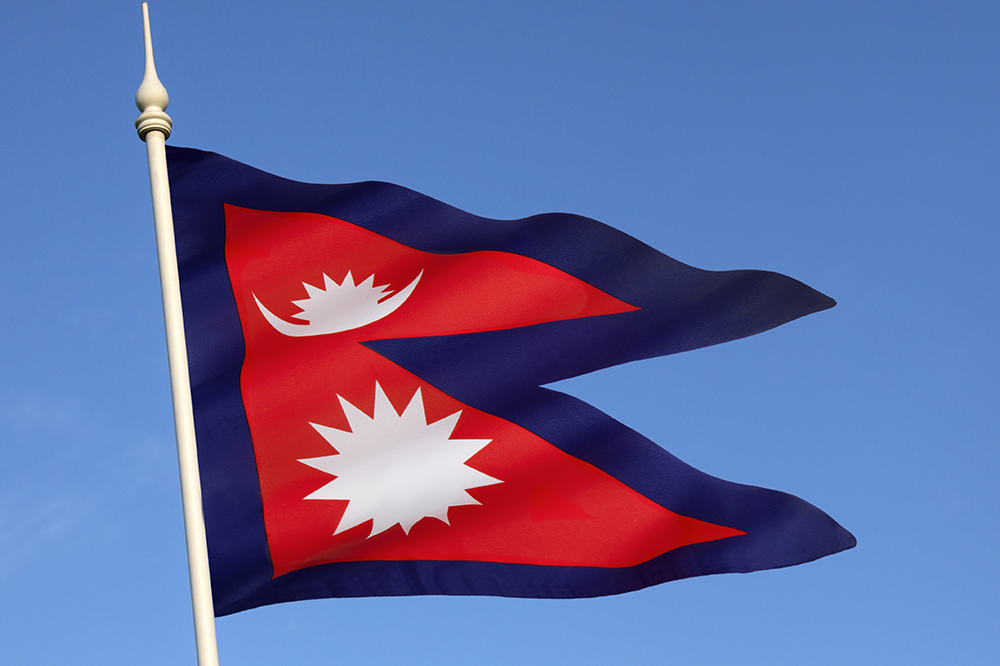
 Chief Justice Khil Raj Regmi should not keep his position on the Supreme Court after he was appointed today as the country’s interim prime minister so as to preserve the independence of the judiciary and the rule of law.
“The Supreme Court under the leadership of Chief Justice Khil Raj Regmi, has demonstrated a strong commitment to upholding the rule of law and protecting human rights in Nepal,” said Ben Schonveld, ICJ’s South Asia Director in Kathmandu. “To preserve the Nepali judiciary’s hard-won independence, the Chief Justice should step down from his post as soon as he assumes his position at the top of the Executive Branch.”
The Chief Justice Khil Raj Regmi was appointed as Chairperson of the Council of Ministers – effectively the country’s Prime Minister – today.
The country’s four key political parties agreed on an arrangement whereby Chief Justice Khil Raj Regmi will refrain from participating in his duties as Chief Justice of the Supreme Court while exercising powers of the Prime Minister conferred by the Interim Constitution, in brokering an election of the Constituent Assembly.
After the election is held, the agreement provides that the Chief Justice will resume his power and regular duties as Chief Justice.
In the interim, the senior-most judge of the Supreme Court will act as Chief Justice.
“Appointing the serving Chief Justice to act as Chairperson of the Council of Ministers throws the country into uncharted constitutional waters,” Schonveld added. “This agreement obliterates the line between the executive and the judiciary.”
A petition challenging the constitutional validity of the Agreement is currently before the Supreme Court.
The interim Constitution of Nepal guarantees the independence of the judiciary and the separation of powers.
Article 106 bans sitting and retired judges from assuming any appointment in government service apart from a role in the national human rights commission.
To enable the Chief Justice’s appointment as Prime Minister, the President under the recommendation of the Council of the Ministers amended several provisions of the Interim Constitution, including Article 106.
These amendments were made in contravention of the requirements of the Interim Constitution, which calls for a mandatory two-thirds majority of Parliament.
Under international law and standards, including the United Basic Principles on the Independence of the Judiciary, States are required to ensure an independent judiciary at all times.
Under the Bangalore Principles on Judicial Conduct, judges must be free, and be seen to be free, from inappropriate connections with the executive and legislative branches of government.
The Beijing Statement of Principles on the Independence of the Judiciary stresses the importance of the independence of the judiciary in a free society observing the rule of law.
Judges must uphold the integrity and independence of the Judiciary by avoiding impropriety and the appearance of impropriety in all of their activities.
CONTACTS:
Ben Schonveld, ICJ South Asia Director, (Kathmandu); t: 977 9804596661; email: ben.schonveld(at)icj.org
Govinda Bandi Sharma, ICJ Senior Legal Advisor, Nepal (Kathmandu), t: +977 9851061167; email: govinda.sharma(at)icj.org
Sheila Varadan, ICJ Legal Advisor, South Asia Programme (Bangkok), t: +66 857200723; email: Sheila.varadan(at)icj.org
Photo by Bikash Dware
Mar 12, 2013
The ICJ today called on the Human Rights Council to establish a Council-mandated Commission of Inquiry on accountability in Sri Lanka for gross violations of international human rights law and serious violations of international humanitarian law.
The ICJ delivered its statement today during the General Debate under Item 4 of the Council’s agenda (human rights situations that require the Council’s attention) as part of the Human Rights Council’s 22nd regular session (25 February to 22 March 2013).
Also noting the deteriorating situation of human rights and the rule of law in Sri Lanka, the ICJ pointed to the inaction of the Government of Sri Lanka as showing that it is unwilling to comply with its international obligations to undertake prompt, independence and effective investigations into credible allegations of gross violations of international human rights law and serious violations of international humanitarian law.
SriLanka-HRC22-Item4GD-LegalSubmission-2013 (download full statement in PDF)
Mar 11, 2013
The ICJ has brought to the attention of the UPR mechanism issues concerning judicial independence, freedom of assembly and association, freedom of expression and security measures in Malaysia.
The ICJ’s submission comes ahead of the consideration of the situation of human rights in Malaysia by the Human Rights Council’s Working Group on the Universal Periodic Review (21 October to 1 November 2013). It includes suggested recommendations to be taken up in the UPR of Malaysia.
Malaysia-ICJ-UPR17-StakeholderSubmission-Legal submission-2013 (full text in PDF)
Malaysia-UPR17-AdvocacyNote-LegalSubmission-2013 (download short advocacy note in PDF)
Malaysia-ICJ-UPR17-ComparisonChart-2013 (full text in PDF)