
Attacks on Justice 2005: Malaysia
The Malaysian government frequently asserts that the judiciary is free from external control, pressure or influence.

The Malaysian government frequently asserts that the judiciary is free from external control, pressure or influence.

The aftermath of the May 2000 coup continues to affect political life in Fiji.
Following elections in 2001, a dispute over the composition of the Cabinet under the constitution’s power-sharing rules, which was submitted to the High Court, remains unresolved.
Within the High Court, a major crisis has been raging between judges, mainly as a consequence of the Chief Justice’s involvement in advising the illegal military government following the 2000 coup. Access to justice is a problem, with Fijians experiencing long delays, especially in Lautoka. The death penalty was abolished in 2002.
Fiji-Attacks on Justice 2005-Publications-2008 (full text, PDF)

Against a backdrop of inter-communal violence and the worsening of law and order in the region, the police have reportedly been carrying out abuses, including against detainees, while enjoying impunity.
While the Supreme Court and National Court are generally considered to be independent of the government, local and village courts have often been subject to severe pressure, resulting in justice being severely compromised.
Prosecutors, who are underpaid, are open to corruption, which continues to be of concern generally in political and public bodies.
Papua New Guinea-Attacks on Justice-Publication-2008 (full text, PDF)

The Republic of Maldives suffers from a weak judicial system which functions as a branch of the executive.

A rigorous reform program begun as a result of the 1999 National Judicial Reform Conference, including the establishment of an adversarial system for criminal cases, has led to better public perception of judicial integrity.
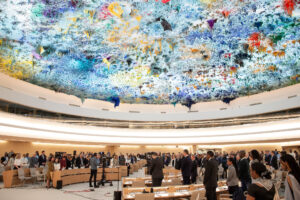 HRC61: ICJ Statement on attacks against the rule of law and independent legal professionals — highlighting situations in Afghanistan and Guatemala
 Iran/United States/Israel: Unlawful attacks must cease
 The Use of Anti-Terrorism Courts to Suppress Dissent in Venezuela
 South Sudan: Extend UN Investigations Amid Deteriorating Human Rights Crisis