Sep 11, 2009 | News
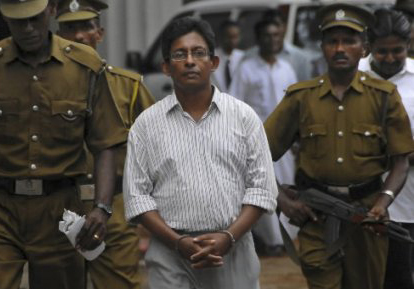
The ICJ released today its Trial Observation Report on proceedings before the Colombo High Court in the prosecution of J.S. Tissainayagam, a Tamil journalist.
On 31 August 2009, Mr Tissainayagam was convicted under anti-terrorism laws and sentenced by Judge Deepali Wijesundara to 20 years “rigorous imprisonment.”
SriLanka-journalist-news-2009 (full text, PDF)

Sep 3, 2009
Security practices and legislation, including related provisions of the Interim Constitution, criminal law and procedures, are outdated and contradict many international human rights standards to which Nepal is a party.

Sep 3, 2009
Centuries of entrenched practices of discrimination and exclusion of disadvantaged groups in Nepal have led to a demand to bring about greater inclusion, and ensure greater justice through a human rights framework.
These aspirations of Nepali people were voiced during the Jana Andolan II, as well as were reflected in the Comprehensive Peace Agreement 2006, and the Interim Constitution 2007. ICJ report discusses the advantages of constitutionalisation of economic, social and cultural rights as fundamental rights in the highest law of the land, thereby upholding its commitment to realizing all human rights of all Nepali people, as well as serve as an effective means to ensure social justice for all Nepali people.
Nepal_Economic, Social and Cultural Rights and The New Constitution_Themetic Report_2009 [Full text PDF]

Aug 20, 2009 | News
The ICJ has released a letter urging the Government of Nepal to strengthen the proposed Bill on Crime and Punishment of Disappearances to bring it into line with International Human Rights standards.
Nepal-ICJ call for amendments to bill on disappearences-Press Release-2009 (full text, PDF)
Nepal-Recommendation Letter to Peace Minister-Open letters-2009 (full text, PDF)

Aug 17, 2009 | News
The ICJ condemns the Yangon North District Court’s decision to convict Aung San Suu Kyi for violating the order of her house arrest.
The court sentenced the Nobel Peace Prize laureate to three years imprisonment with hard labour, commuted to 18 months house arrest by Senior General Than Shwe, Chair of Myanmar’s State Peace and Development Council (SPDC).
Myanmar-ICJ Condemns Continued Detention of Daw Aung San Suu Kyi-Press release-2009 (full text, PDF)