
Nov 25, 2008 | News
The ICJ is urging the Constituent Assembly to adopt a series of amendments to ensure compliance of the Bill on Disappearances Act with human rights obligations.
The proposed Disappearances Bill would criminalize the act of enforced disappearance, establish a commission to investigate past cases from 1996-2006, and provide for prosecution of perpetrators and reparations for victims. However, these laudable steps could be undermined in practice by weaknesses in certain provisions.
Nepal-The ICJ urges human rights amendments-Press releases-2008 (full text, PDF)
Nepal-ICJ letter to speaker-Open letters-2008-Eng (full text, PDF)
Nepal-ICJ letter to speaker-Open letters-2008-Nep (full text, PDF)

Oct 1, 2008
This legal memorandum assesses whether recent amendments to provisions regarding the use of hearsay evidence in Thailand’s Criminal Procedure Code are compatible with international fair trial standards. The ICJ is concerned that the amendments reduce important safeguards required to protect individuals from unfair trials.
Thailand-hearsay evidence-legal submission-2008-eng (full text in English, PDF)
Thailand-hearsay evidence-legal submission-2008-tha (full text in Thai, PDF)
Sep 29, 2008 | News
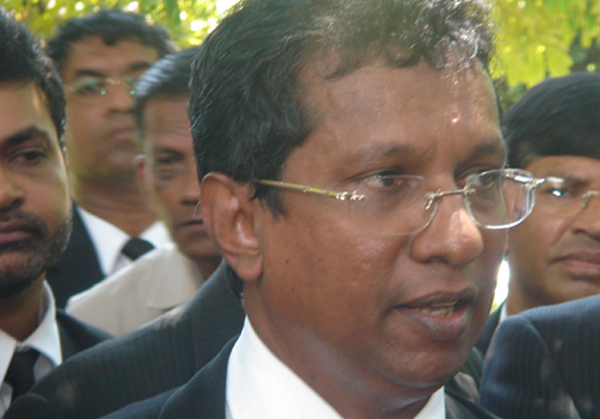
The ICJ strongly condemns the grenade attack on 27 September against prominent Sri Lankan human rights lawyer, J.C Weliamuna.
The ICJ calls on the Government of Sri Lanka to launch a prompt, independent, impartial and transparent investigation.
Sri Lanka-Attack against human rights lawyer threatens rule of law-Press releases-2008 (full text, PDF)

Aug 19, 2008 | News
ICJ regional ASEAN colloquium reaffirms independence of judges and lawyers.
“Ensuring independence and accountability of judges, lawyers and prosecutors is of fundamental importance in strengthening justice and the rule of law in the ASEAN region. The ICJ is delighted to host this high-level regional event in cooperation with the Office of the President of the Supreme Court of Thailand,” said Roger Normand, ICJ Asia-Pacific Director.
The high-level panel members exchanged views and comparative national experience on the application of international principles. The panel included judges from the Supreme Court and Administrative Court of Thailand, the Supreme Courts of the Philippines and Lao PDR, and representatives of the Office of the Attorney-General of Thailand and Lawyers Council of Thailand. The proceedings were observed by over 70 Thai judges, legal academics and other representatives of the Thai legal community.
Thailand-ICJ regional ASEAN colloquium reaffirms independence of judges and lawyers-Press releases-2008 (full text, PDF)

Aug 15, 2008
The Malaysian government frequently asserts that the judiciary is free from external control, pressure or influence.