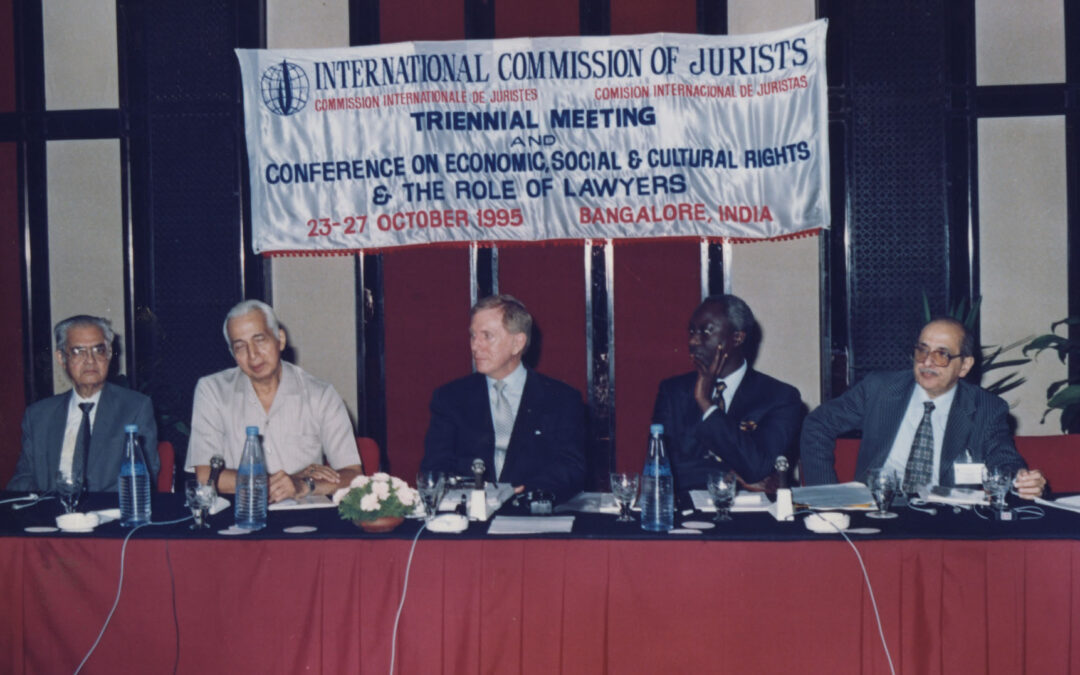
Bangalore Declaration and Plan of Action
Between 23-25 October 1995, the ICJ, in conjunction with the Commission’s triennial meeting, convened in Bangalore, India, a conference on economic, social and cultural rights and the role of lawyers.

Between 23-25 October 1995, the ICJ, in conjunction with the Commission’s triennial meeting, convened in Bangalore, India, a conference on economic, social and cultural rights and the role of lawyers.

A mission of the International Commission of Jurists (ICJ) visited India and Pakistan, and both the Indian and Pakistani controlled sections of the State of Jammu and Kashmir, from 16 to 30 August 1993.
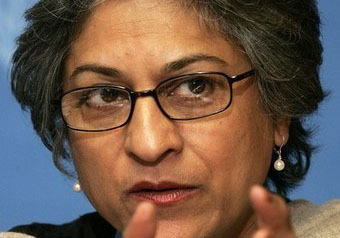
The ICJ’s Centre for the Independence of Judges and Lawyers intervened today with the Government of Pakistan, expressing its deep concern over the recent attack on Advocate Asma Jahangir.

The Seminar was organised by the ICJ in collaboration with the Fiji Women’s Rights Movement.

This report is an output based on the several consultation and seminar workshops organised by the ICJ and its Nepales section to assess the existing state of legal aid and legal literacy in the country.
This report aims to account for the situation in respect of legal aid scheme including the Twinning Programme implemented by the Nepal Bar Association in cooperation with the Norwegian Bar Association.
The report consists of six chapters. The first chapter outlines conceptual framework of legal aid with reference to
the place of legal aid in the international instruments. It also pinpoints some drawbacks of the court-oriented legal aid
system. The second chapter suggests for an emphasis on legal resources capability development as an alternate
approach to legal aid and legal literacy. The third, fourth and fifth chapters of the report takes a look at the evolution and existing system of legal aid in Nepal. The role of law campus, lawyers, Nepal Bar Association is briefly reviewed. The concluding chapter provides a list of suggestions and recommendations in the domain of legal aid and legal literacy scheme in Nepal.
Nepal-legal aid legal literacy scheme-report-1994-eng (full text in English, PDF)
 Joint Letter: Urgent diplomatic action to halt further executions in eastern Libya
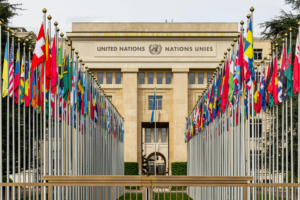 Czech Republic: UN Committee on the Rights of the Child finds that immigration detention of children violated the prohibition of arbitrary detention and ill-treatment
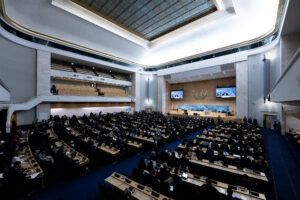 UN Human Rights Council once again navigates troubled waters to protect human rights in crisis situations, despite global setbacks.
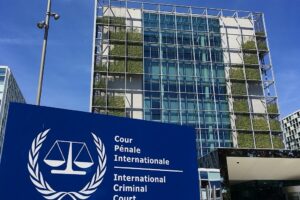 Joint statement: States Must Act Now to Protect the International Criminal Court from Unlawful US Sanctions