Sep 14, 2020 | Advocacy, Non-legal submissions
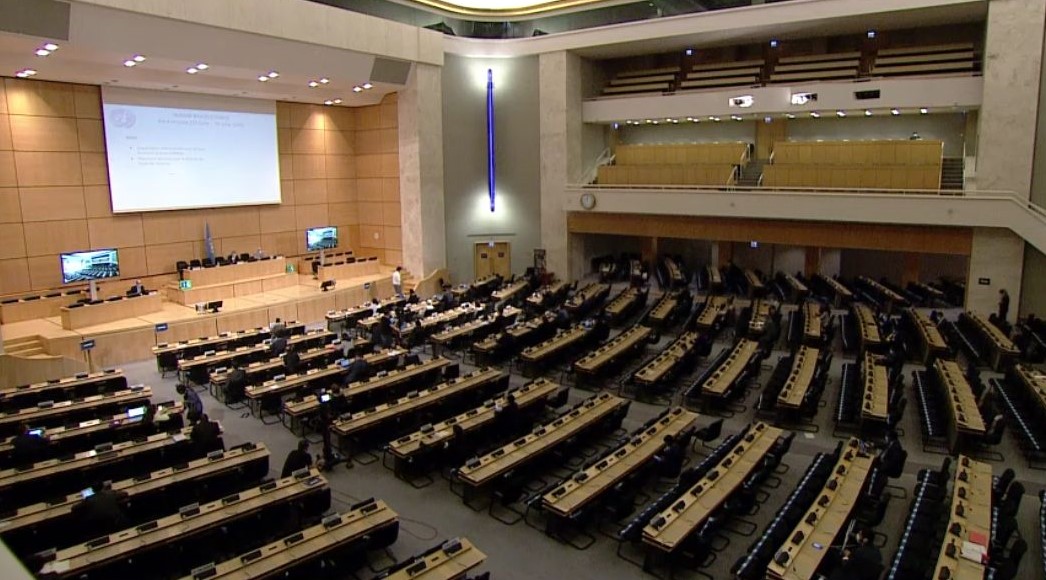
In a statement to the UN Human Rights Council in Geneva, the ICJ has welcomed the report of the Independent Investigative Mechanism for Myanmar (IIMM)
The oral statement was delivered in an interactive dialogue with the IIMM, and read as follows:
“The ICJ salutes the Mechanism in setting up the necessary infrastructure for its operation despite the challenges brought about by the COVID-19 pandemic. Given the lack of genuine and independent domestic investigation and prosecution of serious human rights violations in Myanmar, the efficient establishment of the Mechanism is welcomed.
The ICJ shares its concern over the Government of Myanmar’s lack of cooperation with the Mechanism. The ICJ recalls Myanmar’s obligation to ensure accountability for serious human rights violations occurring in Myanmar, including, but not limited to, the acts against ethnic Rohingya that were the subject of the report of the Government-appointed Independent Commission of Enquiry.
Given the Mechanism’s mandate to gather and preserve evidence of any serious human rights violations committed in Myanmar from 2011 to the present, the ICJ underscores the need to investigate the widely reported accounts of killings, serious physical injury, mass displacement and destruction of property in various parts of Rakhine and Chin states in the context of the ongoing conflict between Myanmar and the Arakan Army. The Myanmar Government still refuses to hold a ceasefire despite the onset of the COVID-19 pandemic in Rakhine. The parties to the conflict must be held accountable for any violation of international human rights and humanitarian law.
The ICJ would like to ask: how can States and inter-governmental organizations strengthen support for the mandate?”
For more information, contact: Kingsley Abbott, kingsley.abbott(a)icj.org
Sep 14, 2020 | News
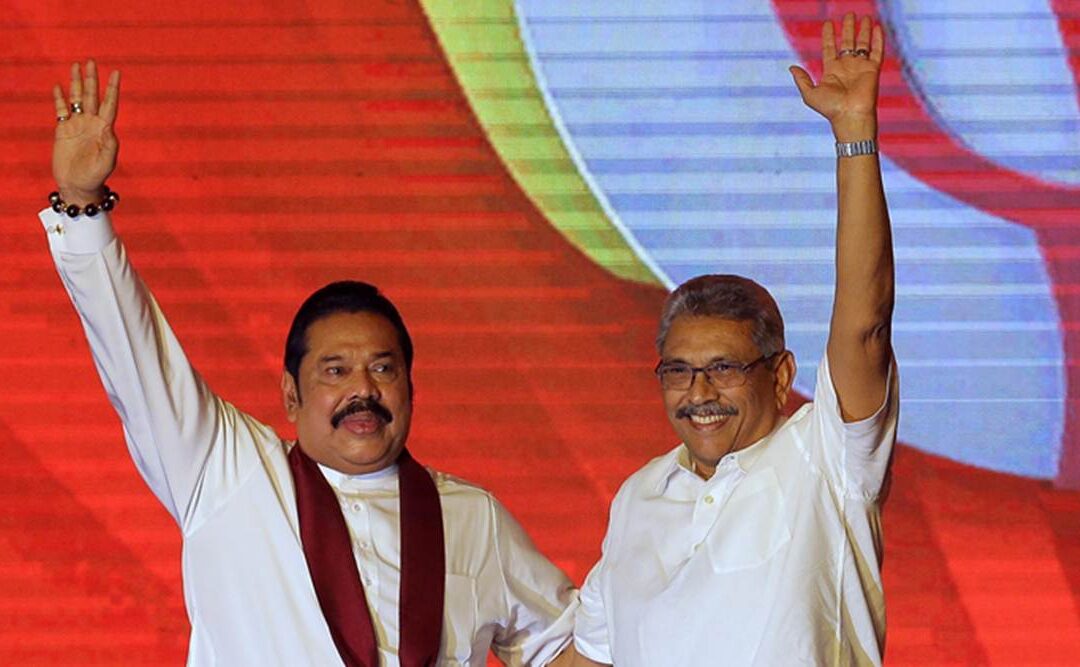
The Sri Lankan parliament should reject the Sri Lankan Government’s efforts to amend the country’s constitution to provide unfettered powers to the President while encroaching on the powers of the legislature and infringing upon the independence of the judiciary, said the ICJ today.
“The proposed 20th Amendment, which bestows an already powerful executive president with additional powers with no effective checks on him, essentially placing him above the law,” said Sam Zarifi, ICJ’s Secretary General. “These amendments would tilt the balance of State power heavily on the side of the executive and in particular on a single person.”
The proposed 20th Amendment to the Constitution bill rolls back most of the reforms brought about by the 19th Amendment to the Constitution, the passage of which the UN Human Rights Council welcomed as “promoting democratic governance and oversight of key institutions”.
The 19th amendment, adopted in 2015, had imposed certain limits to the Executive President’s authority and powers, including in respect of terms of the office of President, the capacity to dissolve Parliament and to fast-track legislation. It also removed the blanket immunity the President enjoyed from legal proceedings. Critically, it had established a Constitutional Council which restrained the President’s discretion in appointing key governmental actors including in the judiciary, the Attorney General and the Inspector General of Police.
The ICJ notes that the 20th amendment appears to reproduce much of the regressive features of the old 18th amendment, which the 19th amendment had been brought about to correct.
“Sri Lanka’s Executive branch has a poor record of respecting human rights and the rule of law, and the 19th Amendment was an effort to impose the checks and balances necessary for the rule of law,” said Sam Zarifi. “The constitutional changes being proposed would take the country back to the dark days of Executive impunity.”
“We are particularly concerned that these changes would undermine the independence of the judiciary, as the President would have unfettered discretion to appoint the superior judiciary, including the Chief Justice, the President and Judges of the Court of the Appeal, and to control the Judicial Service Commission,” said Sam Zarifi.
The JSC is the body entrusted with the power to appoint, promote, transfer exercise disciplinary control and dismiss judicial officers of the subordinate courts. The changes would also grant the President the power to nominate members of the Judicial Service Commission (JSC) other than its Chairman which is ex officio, the Chief Justice.
The UN Basic Principles on the Independence of the Judiciary states that “Any method of judicial selection shall safeguard against judicial appointments for improper motives.”
Under international standards and recommendations of the UN Special Rapporteur on the Independence of the Judiciary, appointments to the judiciary should not be vested solely with the executive.
A judicial appointment process which gives the President full discretion would inevitably result in the significant erosion of the independence and impartiality of the Sri Lankan judiciary.
Moreover, several checks placed on the President’s powers by the 19th Amendment have also been removed while giving him greater legal immunity. The President would also be granted sole power to appoint the cabinet, assign to himself any cabinet portfolio and been given unfettered discretion in relation to the appointment and dismissal of the Prime Minister. The President would also retain the power to dissolve the Parliament within one year.
Contact
For questions and clarifications: Osama Motiwala, Communications Officer – osama.motiwala(a)icj.org
Sep 14, 2020 | Advocacy, News
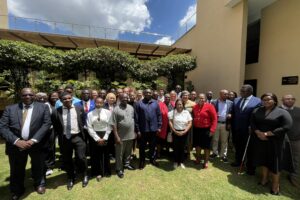
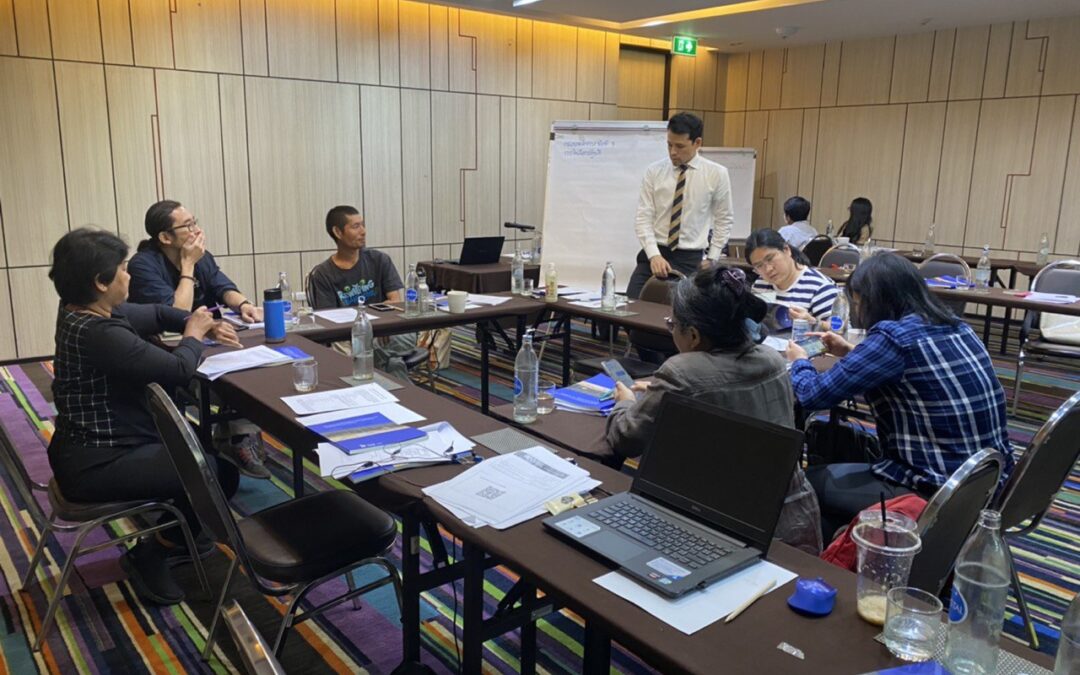
On 13 September 2020 the ICJ hosted a workshop on the impacts on economic, social and cultural rights associated with the development of Special Economic Zones (SEZs) in Thailand. Lawyers, members of civil society organizations and academics from across Thailand attended the Workshop.
The event began with an introduction to ICJ’s report – the Human Rights Consequences of the Eastern Economic Corridor and Special Economic Zones in Thailand – and outlined the deficiencies in the legal and regulatory framework governing economic development in Special Economic Zones and the Eastern Economic Corridor.
During the group discussions, participants were introduced to the international laws and standards that are applicable in the context of Thailand and can be applied to allegations of human rights violations and negative environmental impacts. They were urged to use these standards for their advocacy work.
These included economic, social and cultural rights contained in the International Covenant on Economic, Social and Cultural Rights (ICESCR), to which Thailand is a State party and other internationally recognized principles, including:
- Right to an adequate standard of living and housing under article 11 of the ICESCR, General Comments 4 and 7 of the Committee on Economic Social and Cultural Rights and the Basic Principles and Guidelines on Development-Based Evictions and Displacement – which stress the need to provide adequate legal protection from forced eviction, due process, alternative accommodation, and access to an effective remedy of those that are affected by eviction orders;
- Human rights obligations that are exercised in relation to the environment, such as obligation to facilitate public participation in decision making related to the environment, and duties to protect human rights defenders and to conduct the prior assessment of the possible environmental impacts of proposed projects and policies; and
- Rights to and at work under article 6 to 8 of the ICESCR, General Comment No. 19 and 23 of the Committee on the Economic, Social and Cultural Rights, and several ILO Conventions, particularly regarding rights abuses suffered by migrant, seasonal and subcontracted workers, as well as restrictions on freedom to join and form trade unions.
At the conclusion of the Workshop, participants exchanged views on strategies and collaboration for action to mitigate potential impacts of the Special Economic Zones and the Eastern Economic Corridor and to advance the protection of economic, social and cultural rights.
Further reading
Thailand: laws governing development of Eastern Economic Corridor and Special Economic Zones fail to adequately protect human rights – ICJ report
Thailand: ICJ hosts discussion on human rights consequences of Special Investment Zones
ICJ and Chiang Mai University discuss Special Economic Zones in Myanmar and Thailand
Sep 11, 2020 | News
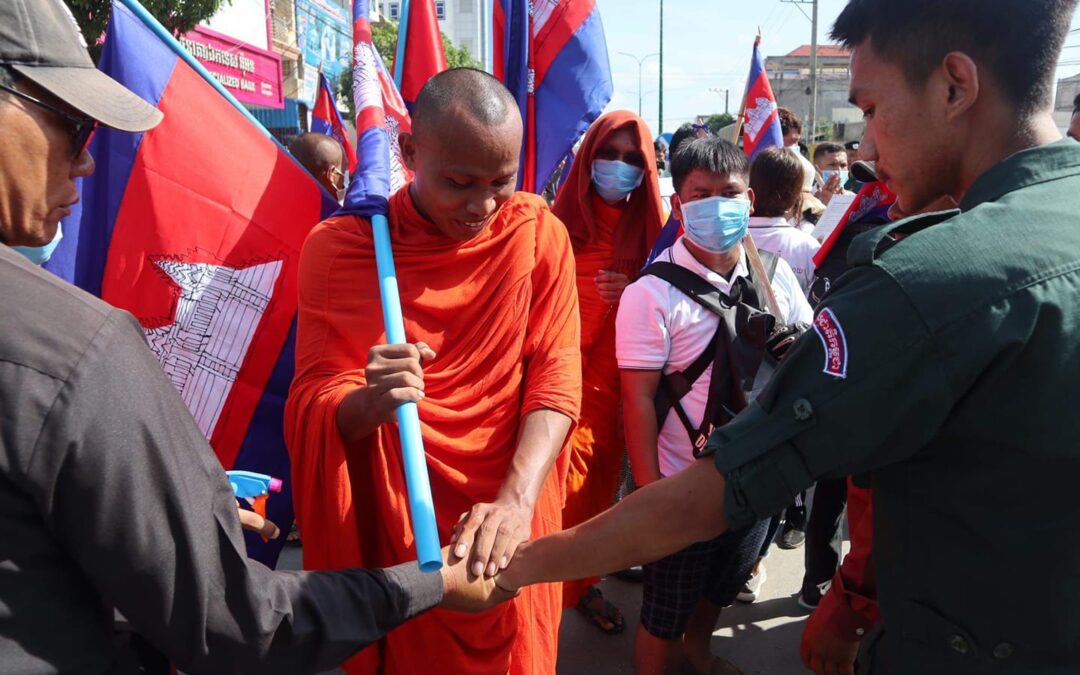
Today, the ICJ condemned an ongoing and heightened crackdown on civil society activists and human rights defenders in Cambodia, and called on the Royal Government of Cambodia (“RGC”) to cease arbitrary arrest and other harassment of individuals for merely exercising their human rights and fundamental freedoms.
From end-July to early this week, at least eleven activists have been arrested and detained on spurious charges in an invigorated attempt by authorities to silence critical dissent in the country.
“The Cambodian authorities in recent days have ratcheted up their abuse of domestic laws to target human rights defenders and perceived critics of the government. We fear that without a robust international response, the situation will only deteriorate further,” said Kingsley Abbott, ICJ Senior Legal Adviser.
“They are now targeting youth in particular, in an apparent bid to curtail their use of social media to amplify dissatisfaction with the ruling regime. Instead of attacking them, the government needs to stop and listen to their people,” he added.
Several arrests have been linked with the detention of prominent union leader, Rong Chhun. On 31 July, Rong Chhun, President of the Cambodian Confederation of Unions, was arrested at his home in suspected retaliation for comments he had made alleging loss of community land in relation to demarcation of the Cambodian-Vietnamese border. He was thereafter charged with “incitement to commit a felony or disturb social security,” under articles 494 and 495 of the Criminal Code. He is currently in detention in Phnom Penh’s Correctional Centre 1.
On 13 August, Hun Vannak and Chhouen Daravy, founding members of the Khmer Thavrak youth activist group, were arrested in relation to a rally they had held outside Phnom Penh Municipal Court in support of Rong Chhun. Daravy was reportedly slapped, then grabbed and hit before being pushed into a vehicle during her arrest. Security officials also reportedly beat and kicked at people in the rally to disperse the crowd, injuring about ten individuals.
On 6 September, Buddhist monk Venerable Koet Saray and Mean Prommony, Vice-president of the Khmer Student Intelligent League Association, were arrested in apparent connection with a rally they had been organizing to call for Rong Chhun’s release. On 7 September, Khmer Thavrak activists Tha Lavy and Eng Malai were arrested. Tha Lavy was arrested on arriving at a protest at Freedom Park. Eng Malai was arrested the day she had left the UN Office of the High Commissioner for Human Rights’ Cambodia office, where she had raised her security concerns.
Simultaneous arrests of environmental rights activists and a rapper evidence a wider crackdown beyond the case of Rong Chhun. On 4 September, three members of environmental rights group Mother Nature Cambodia, Thun Ratha, Long Kunthea and Phuong Keorasmey were arrested. They were thereafter charged with incitement under articles 494 and 495 of the Criminal Code. On the same day, rapper Kea Sokun was arrested in Siem Reap province and similarly charged with incitement, in apparent connection with a popular song he had released on YouTube, concerning land at the Cambodian-Vietnamese border.
On 7 September, the Ministry of Interior issued a statement denouncing Khmer Thavrak and Mother Nature Cambodia as unauthorized organizations, calling on the responsible authorities to prosecute them.
The ICJ is concerned that the groups are being targeted for allegedly operating without being registered in accordance with the Law on Associations and Non-Governmental Organizations. The requirements under this law are non-compliant with international law and standards that protect human rights and fundamental freedoms, as the ICJ has previously pointed out. The law impermissibly restricts the ability of civil society members to exercise their rights to freedom of association and expression.
The ICJ recalls the responsibility of Cambodia, as expressly stated in the UN Human Rights Defenders Declaration, to “take all necessary measures to ensure the protection by the competent authorities of everyone, individually and in association with others, against any violence, threats, retaliation, de facto or de jure adverse discrimination, pressure or any other arbitrary action as a consequence of his or her legitimate exercise of the rights referred to in the present Declaration.” These rights include, among others, freedoms of expression, opinion, peaceful assembly, association and political participation.
“Far from protecting these rights, the government has been systematically violating them,” said Abbott.
“The recent arrests signal yet another sign of further regression that needs to be called out by the international community, including by partners, missions, UN agencies and financial institutions.”
On 7 September, the UN Special Rapporteur on Cambodia expressed concerns about the recent arrests and also highlighted that she “has been closely following reports that seven different CSOs have been searched or informed of pending visits by the authorities since last week.” Similarly, over the past few days, the UN Special Rapporteur on Human Rights Defenders has expressed concern about the crackdown, stating “peaceful protest is not a crime”.
Contact
Kingsley Abbott, Senior Legal Adviser, ICJ Global Redress & Accountability Initiative e: kingsley.abbott(a)icj.org
See also
ICJ and 31 organizations jointly urge Governments to call for respect of human rights in Cambodia, 22 July 2020
Cambodia: State of Emergency bill violates the rule of law’, 8 April 2020
Misuse of law will do long-term damage to Cambodia, 26 July 2018
‘Cambodia: deteriorating situation for human rights and rule of law (UN statement), 27 June 2018
‘Cambodia: the ICJ condemns Senate’s approval of draft Law on Associations and NGOs, 24 July 2015
Sep 9, 2020
The ICJ has joined more than 300 other NGOs in urging the UN to establish a specific mechanism to systematically monitor and report on human rights violations by China.
The joint NGO letter follows a similar call made by 50 United Nations experts, and highlights human rights violations across China, including in Hong Kong, Tibet, and Xinjiang, as well as suppression of information in the context of the Covid-19 pandemic, and attacks on human rights defenders.
The joint letter also expresses concern about the global reach of China’s censorship, threats, surveillance, and misuse of UN processes to deny NGOs accreditation, attack UN experts, and undermine country resolutions at the UN Human Rights Council.
The text of the letter and the list of signatories is available here.