Sep 8, 2020
The Commission of Inquiry on Enforced Disappearances (COIED) has wholly failed to address entrenched impunity, leaving victims and their loved without any redress, the ICJ said in a briefing paper released today.
Pakistan’s Federal Government constituted the COIED in March 2011, with a mandate to, among other things, “trace the whereabouts of allegedly enforced disappeared persons” and “fix responsibility on individuals or organizations responsible.” While the Commission has “traced” the whereabouts of “missing persons” in a number of cases, there has been no apparent effort made to fix responsibility for this heinous crime.
“This Commission has failed in holding even a single perpetrator of enforced disappearance responsible in its nine years,” said Ian Seiderman, ICJ’s Legal and Policy Director.
“A Commission that does not address impunity, nor facilitate justice for victims and their families, can certainly not be considered effective.”
Hundreds, if not thousands, of people continue to be “missing” in Pakistan following their apparent arrest or abduction by or with complicity of the state. The UN Working Group on Enforced Disappearance has described a “culture of entrenched impunity” regarding the practice.
Despite the COIED’s failure in meeting its given objectives, its mandate was extended multiple times without any consultation with victims’ groups as to whether or under what conditions its operations should be continued. Its present mandate is set to expire on 14 September 2020.
This briefing paper provides an assessment of the performance of the COIED since its formation. It also evaluates the legal framework under which the Commission operates in light of international law and standards.
Some of the concerns about the Commission highlighted in the paper include:
- Lack of structural and functional independence
- No transparent criteria or process for the selection of commissioners
- Questions about the impartiality of the Commission’s Chairperson
- Flawed definition of enforced disappearance
- Limited scope of inquiry
- Inadequate victim and witness protection
- Failure to hold perpetrators accountable
- No public report on its work
Enforced disappearances are crimes under international law. All States have an obligation to promptly, thoroughly, impartially and effectively investigate allegations of enforced disappearance to bring those responsible to justice.
“The Government has used the Commission to deflect criticism and claim it is serious about addressing enforced disappearances,” added Seiderman.
“In reality, however, the COIED has led to a compromised inquiry process where investigations do not lead to accountability, nor do they result in proper and adequate reparation for victims.”
In light of the above, the ICJ has called on the Government not to extend the tenure of the existing COIED. Rather, the Government should hold real and meaningful consultations with all concerned stakeholders – including victims’ groups and human rights organizations – on the need for a new statutory commission that meets international standards.
The ICJ has also made a number of recommendations to the Government of Pakistan to provide for accountability for enforced disappearances; prevent them from occurring in the future; and provide reparations for victims and their families.
Contact
Ian Seiderman: ICJ’s Legal and Policy Director, e: ian.seiderman(a)icj.org
Reema Omer: ICJ’s Senior Legal Advisor, South Asia e: reema.omer(a)icj.org, +447889565691
Additional information
The WGEID has received 1144 cases of allegations of enforced disappearances from Pakistan between 1980 and 2019, of which some 731 remained unclarified as of May 2019.
The COIED has received 6752 cases since March 2011. Out of the these, 4642 cases have been “disposed of” for various reasons, and 2110 cases are still pending.
Download
Pakistan-Commission of Inquiry-Advocacy-Analysis Brief-2020-ENG (PDF)
Sep 8, 2020 | Advocacy, News
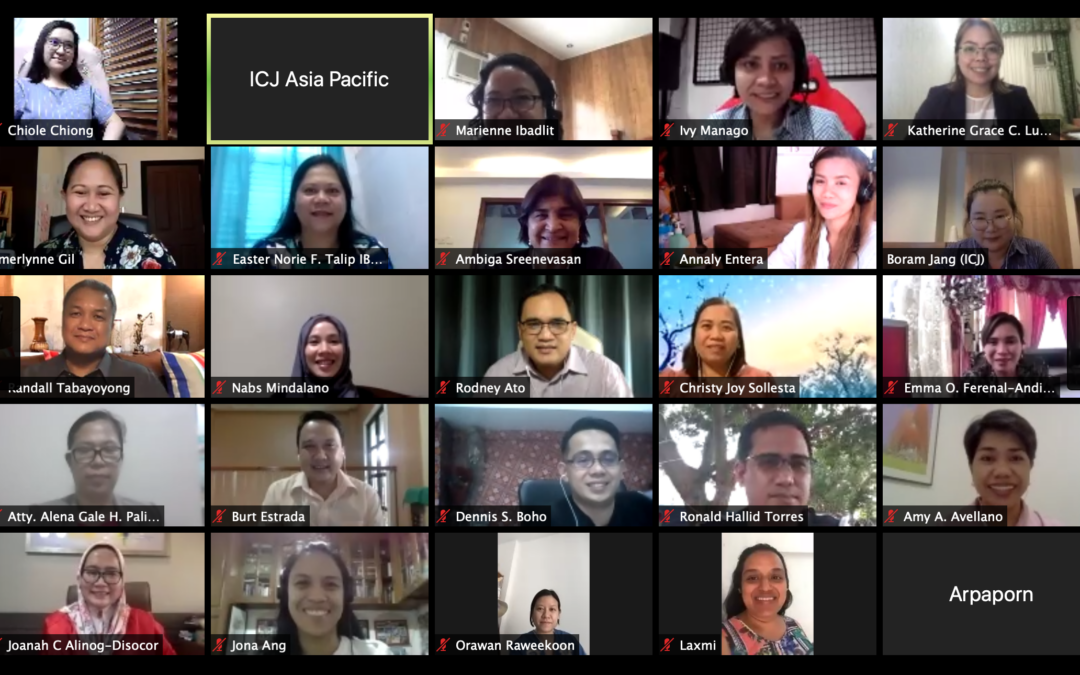
On 29 August and 5 September, the ICJ collaborated with the Integrated Bar of the Philippines (IBP) to hold a webinar series for legal aid providers in the Philippines on eliminating gender discriminatory attitudes and behaviors towards women.
Members of IBP’s legal aid committees from the Eastern and Western Mindanao Regions participated in these webinars, focused on gender stereotypes and discriminatory practices that exist in the legal profession and in the work of legal aid providers who directly engage with women when they seek justice.
Dato Ambiga Sreenevasan, ICJ’s Commissioner from Malaysia, addressed the promotion and protection of women’s human rights in the context of the legal profession: “While conditions for women have improved, there is still work to be done to achieve equality between men and women in the legal profession. At the entry level, things appear to be going well, but we must look also at women’s opportunities throughout their legal career and question why it is the case that some areas are still male-dominated.”
Mikiko Otani, ICJ’s Commissioner from Japan and a member of the UN Committee on the Rights of the Child, spoke about how gender stereotypes and gender discrimination hinder women from accessing justice. “The Bar should be at the forefront of advocating for improvement in legal structures that would help eliminate gender discrimination,” she said.
The Philippines had previously featured as one of the top ten performers in addressing gender disparities, as measured by the World Economic Forum’s Global Gender Gap Index. However, it has recently fallen to rank 16th out of 153 countries. Emerlynne Gil, ICJ Senior International Legal Adviser, acknowledged various measures adopted by the Philippines to implement the Convention on the Elimination of All Forms of Discrimination Against Women (CEDAW), such as the adoption of the Anti-Violence Against Women and Children Act and the Magna Carta for Women. She noted, however, that the Philippines still must do a great deal more.
“The existing culture of impunity and lack of effective remedies for women to access the justice system are just some of the difficult challenges the country faces that prevent it from achieving this goal,” Emerlynne Gil said.
The webinar series also featured a discussion on specific challenges faced by women when accessing justice during the COVID 19 pandemic and in the context of the “drug war” in the Philippines. The lawyers discussed their role and also that of the Bar as an institution to immediately identify and eliminate these gender stereotypes to ensure their clients’ right to access to justice.
Judge Amy Alabado Avellano, a Regional Trial Court judge in the Philippines led this discussion. Attorney Burt Estrada, IBP Executive Vice President, and Attorney Marienne Ibadlit, former IBP Governor for Western Visayas, also held a dialogue with the lawyers on how the IBP as a professional association for lawyers in the Philippines could contribute towards enhancing access to justice for women in the country.
Contact
For questions and clarifications, please contact Ms. Emerlynne Gil, Senior International Legal Adviser, t: +662 619 8477 (ext. 206); e: emerlynne.gil(a)icj.org.
Sep 1, 2020 | News
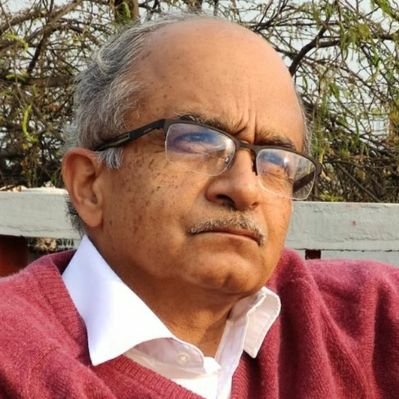
The ICJ today expressed its concern regarding the 31 August 2020 and 14 August 2020 decisions of the Indian Supreme Court to convict prominent human rights lawyer Prashant Bhushan for criminal contempt of court, on the basis of two twitter posts in which the lawyer criticized the performance of the Indian judiciary.
While the Court only imposed a symbolic fine of one rupee, rather than imprisonment, the ICJ considers that the conviction appears to be inconsistent with international standards on freedom of expression and the role of lawyers.
The ICJ stressed that the ruling risks having a chilling effect on the exercise of protected freedom of expression in India and urged a review of the laws and standards on criminal contempt as applied by the Indian courts.
The two tweets published by Prashant Bhushan referred to the Chief Justice of India riding an expensive motorbike belonging to a BJP leader “when he keeps the SC in Lockdown mode denying citizens their fundamental right to access justice” and asserted that the Supreme Court and the last four Chief Justices of India had contributed to how, in his view, “democracy has been destroyed in India even without a formal Emergency”
The Court in its 31 August judgment held that the tweets were a serious attempt to “denigrate the reputation of the institution of administration of justice” which, it said, is “capable of shaking the very edifice of the judicial administration and also shaking the faith of common man in the administration of justice.”
The Court considered that its ruling was consistent with freedom of speech and expression under Article 19 of the Indian Constitution, saying that it will have to balance its exercise of power to punish for contempt for itself (Article 129) with freedom of speech and expression.
The ICJ is concerned, however, that the conviction appears inconsistent with international law on freedom of expression as guaranteed by the International Covenant on Civil and Political Rights (Article 19, ICCPR) to which India is a party.
While some restrictions of freedom of expression are permitted by international standards, a particularly wide scope must be preserved for debate and discussion about such matters as the role of the judiciary, access to justice, and democracy, by members of the public, including through public commentary on the courts.
Any restrictions must be strictly necessary and proportionate to meet a legitimate purpose, such as protecting public order or the rights and reputations of others.
“There is a general concern that the protection of freedom of expression is rapidly eroding in India,” said Ian Seiderman, ICJ Legal and Policy Director.
“We have seen this recently around the COVID 19 crisis in relation to the imprisonment of human rights defenders, on draconian charges of sedition, rioting and unlawful assembly for protesting against the Citizenship (Amendment) Act.”
“While the Indian Supreme Court has over the years generally been an institution that has served to advance human rights in India and globally, we fear it now may be perceived as silencing criticism and freedom of expression by invoking outdated criminal contempt laws,” Seiderman added.
The ICJ joins the 1800 Indian lawyers in calling for the Supreme Court “to review the standards of criminal contempt”, emphasizing that the law is overbroad and should be aligned with international law and standards on the limited scope for restrictions on freedom of expression and criminal contempt.
“Prashant Bhushan is a lawyer and lawyers being part of the legal system have a ring-side view and understanding of the state of the court. Convicting a leading lawyer for contempt for expressing his views in this manner may have a chilling effect on lawyers, in particular considering his involvement in many public interest litigation cases,” said Mandira Sharma, ICJ South Asia Senior Legal Adviser.
Contact
Ian Seiderman – ICJ Legal and Policy Director; e: ian.seiderman(a)icj.org , t: +41 22 979 38 00
Matt Pollard – ICJ Senior Legal Adviser, Director, ICJ Centre for the Independence of Judges and Lawyers; e: matt.pollard(a)icj.org, t: +41 79 246 54 75
Download
India-Criminal-Contempt-of-Court-Press-Release-2020-ENG (PDF, with additional background information)
Aug 30, 2020 | Advocacy, News
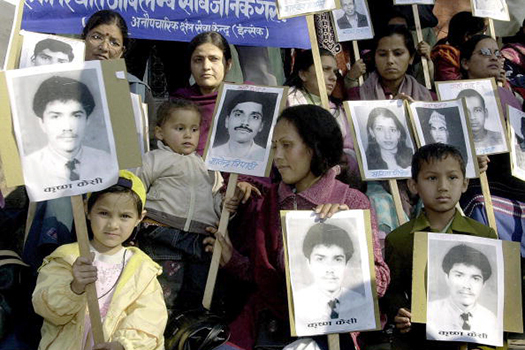
While commemorating the International Day of the Disappeared 2020, the ICJ and 47 other national and international organizations and groups of victims, in Nepal, call on the responsible authorities to undertake immediate steps towards reinvigoration of the transitional justice (TJ) process, adopting a transparent and consultative process.
On this occasion, the victims’ groups and human rights organizations in Nepal commend the patience and resilience shown by the family members of those subjected to enforced disappearance during the 10-year-long internal armed conflict from 1996-2006. They have worked tirelessly advanced the TJ process (Truth, Justice, Reparation and Institutional Reform) in Nepal for more than a decade through their peaceful struggle, despite many difficult hurdles.
In 2015 the Supreme Court found several sections of the Truth and Reconciliation Commission (TRC) Act, including the one empowering the commissions to offer amnesty and facilitate mediation/reconciliation between victims and perpetrators, including those involved in gross human rights violations, to be unconstitutional and non compliant with Nepal’s international obligations. More recently, on 26 April 2020 the Court rejected the petitions of the Government to review and revise the 2015 decision.
To date, the Government has not initiated any effort to amend the law as per these decisions. Rather, it has been misusing these Commissions in a manner that has prevented victims from accessing remedies through the regular criminal justice system and has made no efforts to strengthen these Commissions to delivery their mandates effectively. Two years back, Nepal recognized enforced disappearance as a distinct crime for the first time when enacting a new Penal Code. While this step is commendable, these legal provisions have not ensured justice for victims, the police typically refuse to investigate cases from the conflict period,arguing that they come under the jurisdiction of the TJ mechanisms.
Despite civil society’s repeated calls to appoint the Commissioners after amending the TRC Act following wider consultations with victims and civil society, the Government recently appointed Commissioners under the same Act that the SC had deemed flawed five years ago. Moreover, the Government has not addressed the repeated calls and concerns regarding the political interference and lack of transparency in the appointment of the Commissioners and the overall TJ process.
Human rights organizations and many victims groups have lost confidence in and stopped supporting to these Commissions.
The undersigned organizations call upon the Government of Nepal:
- To ensure the Commissions provide for, rather than delay and deny, truth and justice to
victims;
- Start fresh consultations to amend its law in compliance international human rights law
and Supreme Court directives, including by removing of amnesty for the perpetrators
provisions;
- Appoint a new set of commissioners under the revised Act that respects victims basic right
to truth and justice;
- Immediately ensure the social, cultural, economic, psychological and legal support
suffered by the victims and families of enforced disappearance as part of victims’ rights
to reparation;
- Revise the Penal Code to bring it in line with international standards. As a minimum, this
should include:
- amending the definition of enforced disappearances to bring it in line with Nepal’s international obligations and the Convention on the Protection of All Persons from Enforced Disappearance
- revising the penalty for enforced disappearance in the Penal Code to make it proportionate to the gravity of the crime
- removal of the statute of limitations for enforced disappearance cases
- Ratify International Convention for the Protection of All Persons from Enforced Disappearances Punishment.
Download
Full joint-statement with detailed information in English and Nepali. (PDF)
Contact
Ian Seiderman: ICJ Legal and Policy Director, e: ian.seiderman(a)icj.org
Mandira Sharma: ICJ Senior Legal Adviser, e: mandira.sharma(a)icj.org

Aug 27, 2020
The ICJ has joined a call by more than 60 organizations urging the UN Human Rights Council to create an independent international investigative mechanism on the human rights situation in the Philippines, at its upcoming session in September.
The call comes in an open letter to all member and observer States at the Council.
The ICJ and other organizations express grave concern over ongoing extrajudicial executions and other serious human rights violations in the context of the “war on drugs” in the Philippines. They note that these abuses continue to be fueled by incitement to violence and discrimination by the highest levels of government, with near-total impunity.
The letter urges delegations to ensure that the United Nations Human Rights Council responds robustly to the recent report on the situation in the Philippines by the UN High Commissioner for Human Rights when it convenes for its upcoming 45th session in September.
Specifically, the organizations call for adoption of a resolution establishing an independent international investigative mechanism on extrajudicial executions and other human rights violations committed in the Philippines since 2016, with a view to contributing to accountability.
Establishing such a mechanism would, the letter notes, be in line with clear calls by the UN High Commissioner for Human Rights, a group of Special Procedures, the Commission on Human Rights of the Philippines, and national and international civil society.
The letter can be downloaded in PDF format here: UN-HRC45-OpenLetter-Philippines-2020