Apr 21, 2020 | News
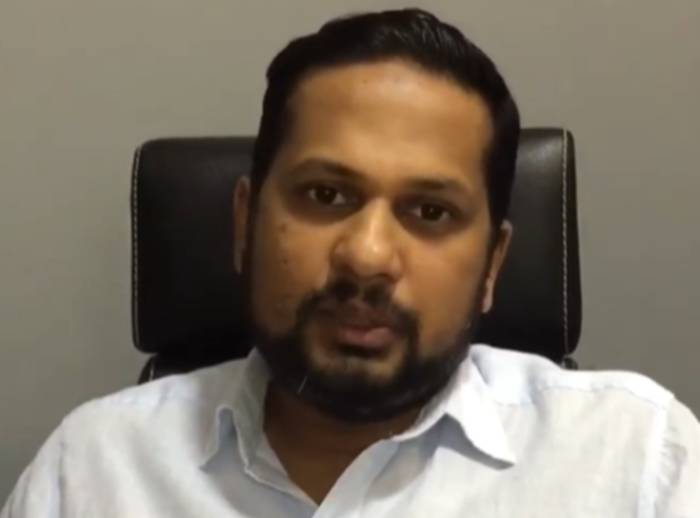
The ICJ called upon the Sri Lankan authorities to respect human rights in the conduct of their investigation of the 2019 Easter Sunday bombings, including ensuring that investigations into the alleged involvement of Sri Lankan lawyer, Hejaaz Hizbullah, are conducted in accordance with due process and fair trial guarantees under international law.
Specifically, the authorities must specify the charges against him, grant him full and immediate access to a lawyer, and investigate the circumstances of his arrest for potential rights violations.
Sri Lankan Lawyer Hejaaz Hizbullah was arrested by the Criminal Investigation Department of the Police (CID) on April 14, 2020 pursuant to the Prevention of Terrorism Act (PTA) and has since been kept in detention. No reasons were provided at the time of the arrest. During a media briefing, a police spokesperson stated that he was arrested as a result of the evidence found against him during investigations into the 2019 Easter Sunday bombings. The ICJ understands that no remand or detention orders authorising his continued detention have been served even after the lapse of 72 hours as required by Sections 7 and 9 of the PTA. Moreover, Hizbullah was only granted limited access to legal counsel on April 15 and 16, under the supervision of a CID official, who had insisted that the conversation be in Sinhala, in breach of attorney-client privilege. Legal access has been denied at least since April 16, 2020.
“No one questions the government’s need and obligation to investigate the horrendous Easter Sunday attacks, but these investigations must be conducted in a way that is consistent with international law and the Sri Lankan Constitution,” said Frederick Rawski, ICJ Asia-Pacific Director. “Not serving Hizbullah a remand order as required by law, and denying him full and confidential access to legal counsel is unacceptable and in violation of international standards on the right to liberty.”
A Habeas Corpus petition was filed by Hizbullah’s father on April 17 seeking his release from detention, and demanding that he be given access to his attorneys. According to the application, five persons posing as officials of the Ministry of Health entered his home and interrogated him, after placing him in handcuffs. They demanded access to two of his case files, recorded a statement from him and subsequently took him into custody at the Criminal Investigation Department.
“By allowing warrantless entry, search of premises and the arrest of persons, the Prevention of Terrorism Act violates basic due process guarantees under international law,” added Rawski. “This legal provision is one of many problematic provisions of the PTA. The ICJ reiterates it calls for the PTA to be repealed, and replaced with an a law that conforms with Sri Lanka’s international human rights obligations.”
According to Article 9 of the International Covenant on Civil and Political Rights, “anyone who is arrested shall be informed, at the time of arrest, of the reasons for his arrest and shall be promptly informed of any charges against him.” Article 14 entitles anyone charged of a criminal offence “to have adequate time and facilities for the preparation of his defence and to communicate with counsel of his own choosing”. Similar guarantees are enshrined under Article 13 of the Sri Lankan Constitution.
The UN Basic Principles on the Role of Lawyers provide that, “Governments shall further ensure that all persons arrested or detained, with or without criminal charge, shall have prompt access to a lawyer, and in any case not later than forty-eight hours from the time of arrest or detention.”
The ICJ has consistently called for the repeal of the Prevention of Terrorism Act, which has been used to arbitrarily detain suspects for months and often years without charge or trial, facilitating torture and other abuse. The ICJ reiterated its call for the repeal and replacement of this vague and overbroad anti-terror law in line with international human rights standards and Sri Lanka’s international obligations.
Contact
Frederick Rawski, ICJ Asia-Pacific Director, t: +66 64 478 1121; e: frederick.rawski(a)icj.org
Apr 18, 2020 | News
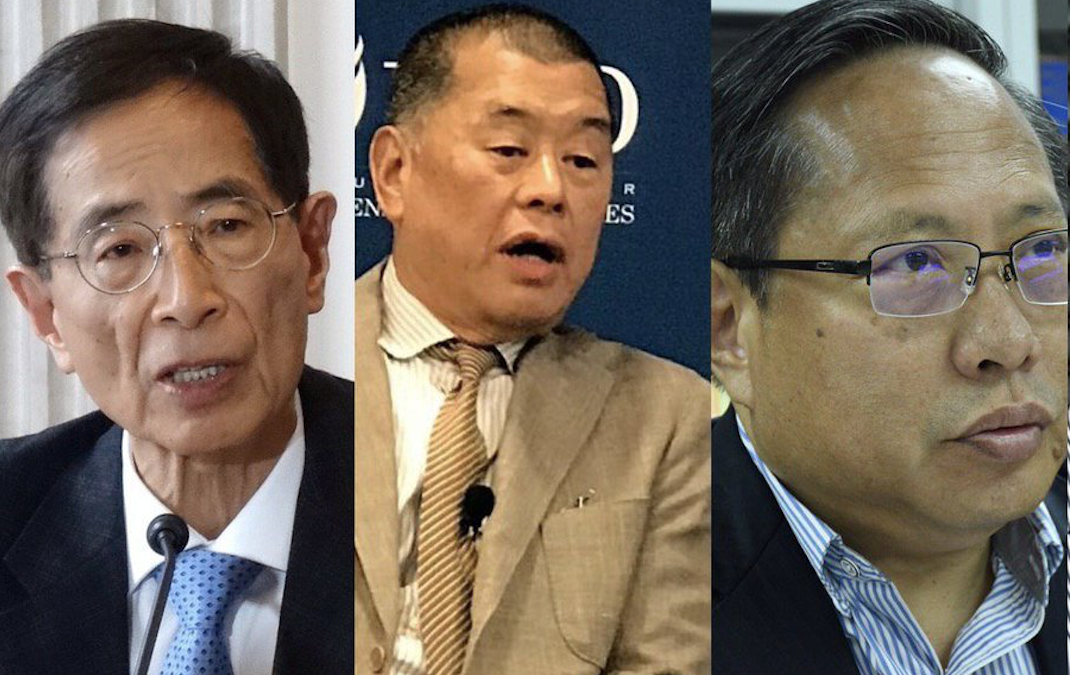
Today the ICJ joined other legal organizations in condemning the arrest of 15 pro-democracy figures in Hong Kong for organizing and taking part in ‘unauthorized assemblies’ in 2019. The arrests demonstrate the continued assault on the freedom of expression and the right to assembly in Hong Kong.
The joint statement reads:
The international legal community is seriously concerned by the arrest of 15 veteran pro-democracy figures in Hong Kong on Saturday 18 April 2020. In what appears to be a further clampdown on civil liberties and democracy following the 2019 protests, which began over the introduction of a controversial extradition bill, those arrested today include senior figures in the pro-democracy movement. These include lawmakers, party leaders and lawyers such as the democratic politician and legislator, Martin Lee QC who was also involved in the drafting of the Basic Law, the media owner, Jimmy Lai, and the barrister, Dr Margaret Ng. In October of last year, Margaret Ng and Martin Lee were jointly awarded the International Bar Association’s Human Rights Award for their lifelong defence of freedom, democracy and the rule of law.
The arrests are purported to be based on suspicion of organising and taking part in ‘unauthorised assemblies’ on 18 August, 1 October and 20 October 2019, pursuant to the Hong Kong SAR Public Order Ordinance. No explanation has been reported for the apparent delay between those protests and the timing of today’s arrests. The leaders of the Hong Kong pro-democracy movement have long argued for their rights to peaceful assembly and protest to be exercised without the need for consent from the authorities.
The right to peaceful protest is protected under the Joint Declaration and the Basic Law. As part of the ‘One Country, Two Systems’ policy, the Hong Kong Basic Law guarantees freedoms that are not available to those in mainland China until 2047. Hong Kong residents are guaranteed the rights to ‘freedom of speech, of the press and of publication; freedom of association, of assembly, of procession and of demonstration’. Article 21 of the International Covenant on Civil and Political Rights (“ICCPR”) provides that “[t]he right of peaceful assembly shall be recognised.” The Basic Law expressly preserves the ICCPR as applicable to the Hong Kong Special Administrative Region. The State has a duty to protect and facilitate such protest, and the Public Order Ordinance must be implemented in conformity with Hong Kong’s obligations under the ICCPR.
Following growing concerns of eroding civil liberties and the rule of law in Hong Kong, the 2019 protests have been unprecedented in their scale and reach and have led to physical violence by authorities, as well as a regrettable violent response by a minority of demonstrators. Excessive crowd dispersal techniques have been used by the authorities, including the dangerous use of tear gas, water cannons, firing of rubber pellets, pepper spray and baton charges by the police to disperse pro-democracy demonstrations, and there is reliable evidence of violence upon arrest. No proper investigation into excessive force has taken place and indeed calls from the international community, including the United Nations High Commissioner of Human Rights, have been rejected.
Today’s arrests demonstrate the continued assault on the freedom of expression and right to assembly in Hong Kong. Indeed, we are gravely concerned that the arrests of senior lawyers and legislators who set out to protect human rights in a non-violent and proportionate manner, and pursuant to both rights granted in both domestic and international legal frameworks, represent an assault on the rule of law itself. The United Nations Human Rights Committee has repeatedly expressed concern that charges of ‘unlawful assembly’ against peaceful protesters in Hong Kong risks violating human rights. The arrest of a prominent media owner also sends a chilling message to those whose journalism is vital to a free society.
It is critical that authorities do not use their powers to encroach on fundamental human rights, and it is vital that legal systems continue to protect citizens from any abuse of power which may otherwise be unseen during the COVID-9 crisis in which the international community is submerged..
We strongly urge the Hong Kong authorities to immediately release the 15 individuals arrested and drop all charges against them. Moreover, we call on the authorities to discontinue such politicised and targeted prosecutions immediately and urge the Hong Kong government instead to engage in constructive dialogue with the leaders of the pro-democracy movement to foster a climate in which their legitimate concerns over democracy and human rights can be met.
To download the statement with more information and list of organizations, click here.
Apr 17, 2020 | News
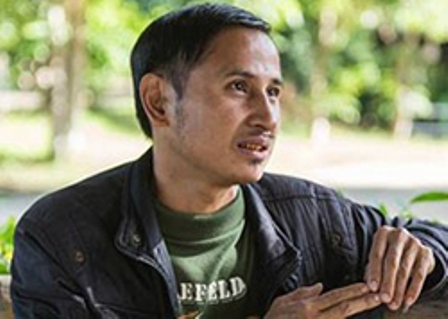
On the sixth anniversary of the apparent enforced disappearance of Karen activist, Pholachi “Billy” Rakchongcharoen, the ICJ repeated its calls for Thailand to bring those responsible to justice and apply appropriate penalties that take into account the extreme seriousness of the crime.
On 23 December 2019, after the Thai Ministry of Justice’s Department of Special Investigation (DSI) in September had located bone fragments which they identified as likely belonging to Billy, eight charges, including premeditated murder and concealing the body, were brought against four officials of Kaeng Krachan National Park, with whom Billy was last seen. However, in January 2020, public prosecutors suddenly dropped seven murder-related charges against the four accused on the basis that there was insufficient evidence to take the cases to trial.
“It is disturbing that after six years the prosecutors could not move forward with the prosecution because the authorities failed to gather evidence to identify the perpetrator for Billy’s murder despite the discovery of bone fragments,” said Frederick Rawski, Asia Regional Director of the ICJ. “Thai authorities should, pursuant to its international legal obligations, continue to gather other direct and circumstantial evidence to prosecute and punish perpetrator with appropriate penalties.”
The four suspects are now facing only a minor charge for failing to exercise their official functions because they released Billy instead of handing him over to the police after they took him into custody in April 2014 for collecting wild honey in the park.
“Thailand needs to implement legislation criminalizing enforced disappearance without delay so that prosecutors have the appropriate tools to prosecute those responsible, and are not forced to bring charges for crimes of lesser gravity,” he added.
Download the statement with detailed background information in English and Thai.
Contact
Frederick Rawski, ICJ Asia-Pacific Director, t: +66 64 478 1121; e: frederick.rawski(a)icj.org
Further reading
Thailand: discovery of “Billy’s” remains should reinvigorate efforts to identify perpetrator(s)
Thailand: continuing delay in the enactment of the draft law on torture and enforced disappearance undermines access to justice and accountability
Apr 16, 2020 | News
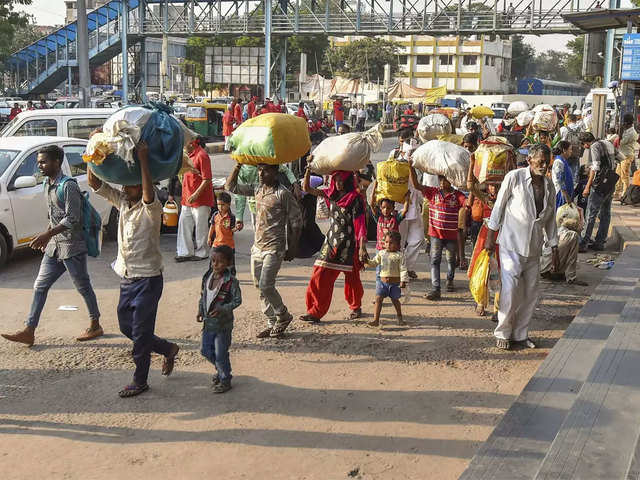
The ICJ today called on the Indian Government to take effective measures to mitigate the disproportionate impact of the lockdown on internal migrant workers and guarantee the right to a minimum adequate standard of living to all, in line with India’s international obligations and Indian law.
The call comes just as India announced its second lockdown period starting April 15, 2020, extending the prior 21-day lockdown period, 2020, to 40 days. On March 29, 2020, the Government had also issued a circular prohibiting movement of migrant workers and an order stating that migrant workers be given food and shelter. It banned evictions of all migrant workers for a month.
“While the measures taken by the Government so far are important, they have proved inadequate. The Government’s efforts need to be targeted towards internal migrant workers and respond to the multiple layers of discrimination and risks they face,” said Maitreyi Gupta, ICJ India International Legal Advisor.
The announcement of the second lockdown has led to thousands of migrant workers in Mumbai and Surat protesting this decision and demanding the right to return home. It came soon after more than 500,000 migrant workers and their families attempted to travel distances of hundreds of kilometers on foot to return to their homes after the first lockdown period was announced on March 24, 2020. This massive internal displacement has led to the deaths of 22 internal migrant workers and their family members, including seven children.
The ICJ called on the Indian authorities to ensure that any restrictions on freedom of movement of migrant workers, protected under international law, is strictly necessary and proportionate and does not result in other human rights violations.
The ICJ is particularly concerned by civil society and media reports indicating that some internal migrants have not eaten for several days and are at the brink of starvation, while others have started rationing their meals to one meal a day.
“The situation of internal migrant workers in India is wholly unacceptable. If their urgent needs are not addressed in a way that respects their human rights, it will only serve to compound the current crisis,” said Frederick Rawski, ICJ Asia-Pacific Director. “We call on the Indian Government to take all necessary measures to bring an end to this deplorable situation.”
The UN High Commissioner for Human Rights Michelle Bachelet on April 2, 2020 also expressed concern at the “plight of India’s internal migrants” and said “more needs to be done as the human tragedy continues to unfold before our eyes”.”
The UN Committee on Economic, Social and Cultural Rights has already called on States to implement “targeted programmes to protect the jobs, wages and benefits of all workers,” and take measures to ensure the “extraordinary mobilization of resources to deal with the COVID-19 pandemic”.
The ICJ urged India to take to all necessary measures to fulfill its obligations to protect the right to adequate standard of living of all internal migrant workers and other vulnerable populations. This includes ensuring access to quality health systems and facilities; minimum essential food; adequate shelter; sanitation and potable water; and timely information.
To download the statement with background information, click here.
Contact
Maitreyi Gupta, ICJ India Legal Adviser, t: +91 77 560 28369 e: maitreyi.gupta(a)icj.org
Frederick Rawski, ICJ Asia-Pacific Director, t: +66 64 478 1121; e: frederick.rawski(a)icj.org
Apr 10, 2020 | News
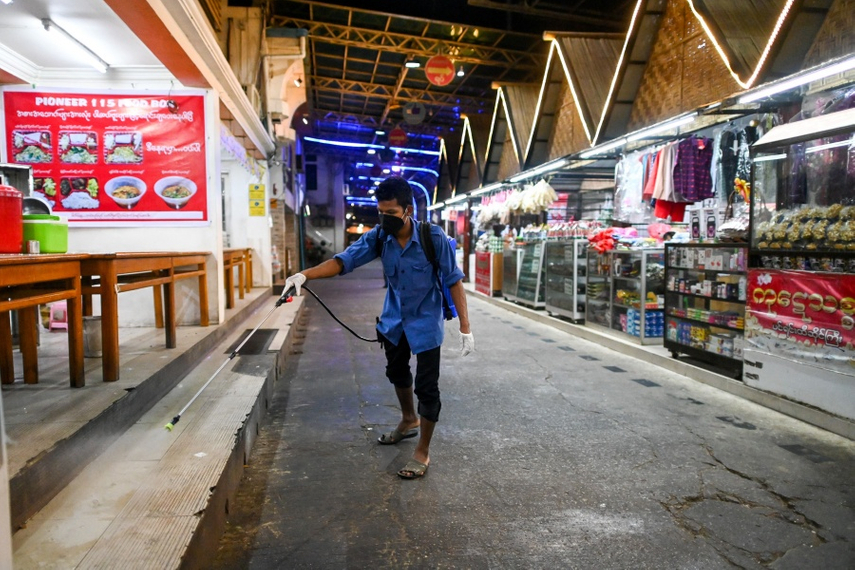
The ICJ today called upon the Myanmar government to ensure that everyone in the country, particularly those from communities affected by conflict, has access to critical information about COVID-19. This call includes putting an immediate end to restrictions on internet access in Rakhine and Chin States.
The ICJ said that there must not be undue restrictions on the right of people to seek and impart such information, in line with international law and standards protecting the right to freedom of expression and information.
“Access to information is absolutely essential for the protection of communities, especially their right to health during the COVID-19 outbreak,” said Frederick Rawski, ICJ Director for Asia and the Pacific. “This is especially true in areas of Myanmar affected by conflict. The wholesale blocking of internet access in Rakhine and Chin States, including access to websites of popular ethnic media outlets, has no justifiable basis in international law and will only serve to undermine efforts to mitigate the spread of the virus.”
On 26 March 2020, the Minister of Transport and Communications stated in a media interview that despite the COVID-19 pandemic, the internet shutdown in Rakhine and Chin States would not be lifted until hate speech, misinformation and the conflict with the Arakan Army are addressed. The Minister’s statement appears to defy the UN Secretary-General’s appeal for a global ceasefire as well as the respective statements of members of Myanmar’s diplomatic community and of several ethnic armed organizations, including the Arakan Army, to cease hostilities in light of the COVID-19 pandemic. On 9 April 2020, the UN Special Rapporteur on Myanmar called for the same.
Instead, on 30 March 2020, pursuant to section 77 of the Telecommunications Law, the Ministry of Transport and Communications (MoTC) ordered major telecommunications networks to take down hundreds of websites on the dubious ground of containing misinformation. The MoTC did not disclose the full list of websites ordered to be blocked as well as the factual and legal basis that justified issuing the order. Under Section 77, the MoTC can direct a telecommunications provider to suspend services in the event of an “emergency situation.” It is not clear whether the misinformation relates to COVID-19 or if the pandemic is the pretext for the order.
As of 1 April 2020, media outlets of the Rakhine and Karen ethnic communities were among the websites to which access was blocked from major telecommunications providers. Access to Voice of Myanmar’s website, whose editor-in-chief had faced charges under Myanmar’s Counter-Terrorism Law until 9 April 2020 for publishing an interview with the Arakan Army, was also blocked.
The ICJ has previously expressed concern at the Myanmar Government’s use of the Telecommunications Act to justify an internet shutdown in the context of the conflict in Rakhine State. This practice does not comply with human rights law and standards. The Act itself is fundamentally flawed and must be amended. Among other defects, the Act does not define the scope of an “emergency situation.”
“Keeping these overbroad restrictions in place in the midst of the COVID-19 pandemic puts the government in violation of international law. It is also counterproductive to the goal of stopping the spread of the virus and minimizing its impact on the country’s most vulnerable populations,” said Rawski.
Download the statement in Burmese here.
Contact:
Frederick Rawski, ICJ Asia-Pacific Regional Director, e: Frederick.rawski(a)icj.org
Related work:
Event: ICJ hosts workshop on fair trial rights for Myanmar’s ethnic media
Report: Curtailing the Right to Freedom of Expression and Information in Myanmar
Statement: States must respect and protect rights in fighting COVID-19 misinformation