Apr 27, 2020
An opinion piece by Emerlynne Gil, ICJ Senior Legal Adviser, Global Access to Justice and ASEAN
The Philippine government is one of the many around the world struggling to respond to the severe public health crisis brought about by the spread of the COVID-19 virus. To date, the Philippines is one of the countries with the highest COVID-19 related deaths in Southeast Asia.
Like a number of others around the world, the Philippine government responded to this pandemic by declaring a state of public health emergency and imposed limitations to rights such as the freedom of movement and freedom of expression. When the state of public health emergency was declared by President Duterte, there were fears that this might cause the further erosion of the rule of law and democracy in the country.
A state of emergency per se is not inconsistent with international human rights law. The human rights paradigm, which has sometimes been perceived by its critics as being too idealistic and lacking the practicality of being widely applicable in the real world, is actually quite pragmatic and envisions situations like the one we are facing now.
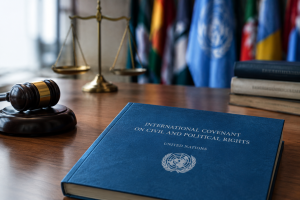
Situations necessitating the limitation of certain rights are anticipated under international human rights law. The International Covenant on Civil and Political Rights (ICCPR), to which the Philippines is a party, provides for the possibility of limiting certain rights in the interests of public health, and, in the most extreme cases, derogating from certain rights during declared states of emergency, to the extent strictly necessary to meet a threat to the life of the nation.
As part of the emergency measures, the Philippine government imposed a nationwide lockdown, which severely limits the freedom of movement of everyone in the country. The right to freedom of expression is also limited since the law that was passed declaring the emergency imposes a punishment of imprisonment of two (2) months or a fine of not more than 1 million pesos (approximately US$19,600) on persons found to have been “spreading false information regarding the COVID-19 crisis on social media and other platforms”.
The rights to freedom of movement and freedom of opinion and expression are two of the rights that may be limited under international law, but there are still parameters that must be followed when applying limitations. They must be established by law, are necessary, proportionate and non-discriminatory. This means that only the least restrictive measure must be applied. The limitations on these rights must be interpreted strictly in favor of the right always, and should not be construed so as to defeat the essence of the right involved. Furthermore and very important in the Philippines context, the limitations should not be abused or applied in an arbitrary manner.
Ever since the lockdown started in the Philippines, there have been reports of how this severe limitation of movement by the population is being abused by government authorities, especially to harass activists and those allegedly connected to armed rebel groups. For instance, Felipe Levy Gelle Jr., reported several visits in his home from the military, after the lockdown started. Felipe Levy Gelle Jr., a member of a human rights group in Negros, is among those who called for the investigation into the death of Benjamin Ramos, a lawyer who assisted the families of the nine farmers murdered in Sagay City on 20 October 2019.
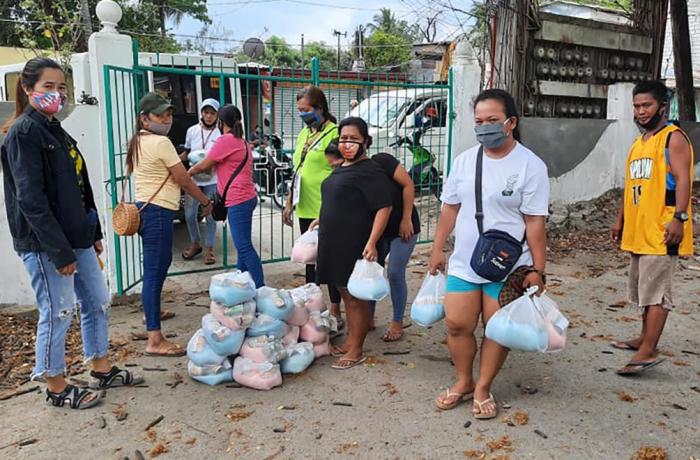
Local government officials, who have been tasked to implement the rules on community quarantine, are also abusing their powers during the emergency. There are credible reports according to which local officials have subjected people to ill-treatment on those who violate lockdown rules. For instance, a barangay captain in the province of Pampanga was reported to have forced LGBT individuals to do lewd acts in public and in some parts of Manila, those who violate lockdown rules are kept in dog cages.
These forms of “punishment” are definitely degrading as they are extremely humiliating and are aimed to debase a person beyond that which is usual. The prohibition against torture or cruel, inhuman or degrading treatment or punishment is absolute and is not subject to limitation or derogation, even in times of emergency.
On the right to freedom of opinion and expression, there have been reports of several activists and journalists who have been either threatened or harassed by the authorities for criticizing publicly the government’s response to the COVID-19 crisis. For instance, barangay officials threatened to press libel charges against a student journalist, Joshua Molo, for the views he expressed online regarding the government’s response to the COVID-19 crisis. By going after those who express critical views of the government and its response to the crisis, authorities are casting a chilling effect on freedom of expression, stimulating self-censorship and possibly impeding information that may be crucial in effectively addressing this crisis. Indeed, the right to freedom of expression may be limited during times of emergency, but the limitations on this right should not be interpreted so as to defeat the right itself.
If the Philippine authorities are genuinely concerned about the rampant disinformation on the COVID-19 crisis, the best way to address this is counter-speech and social dialogue. It is within the spirit of democracy and rule of law to foster a culture of public dialogue where everyone can freely and without fear of reprisal, talk about and debate issues emerging from this crisis.
President Duterte’s language and rhetoric during his regular press conferences do not help the situation where the entire country is struggling under this state of emergency. The manner by which he is addressing this public health crisis is no different from how he continues to pursue his murderous “war on drugs”. In one of his speeches, instead of discouraging the use of force and calling for peaceful de-escalation of tensions during protests through dialogue and negotiation, he told police to unlawfully shoot protesters who “cause trouble” during this emergency. Instead of calming the nation and giving clear direction on how the government must work in a lawful and rights compliant manner during this crisis, his speeches cause further anxiety and confusion among the people.
Moreover, instead of letting public health professionals take the lead in addressing this crisis, President Duterte appointed military officers to implement the National Action Plan on curbing the spread of COVID-19. This shows that the Duterte administration still intends to rely on brute force and opaque decision-making processes to manage this crisis, instead of leaning on sound public health policies and transparent governance.
The Philippines is facing a long and difficult path in getting to the other side of this public health emergency. What is clear right now is that more human rights violations will not help the country. The survival of the nation will depend on protecting the rights of the people and holding on fiercely to the principles of democracy and the rule of law.
To download the Op-Ed, click here.
This article was first published on the Inquirer, available at: https://opinion.inquirer.net/129202/human-rights-in-a-public-health-emergency

Apr 27, 2020 | News
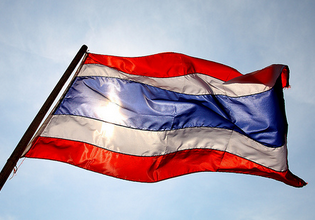
Today, the ICJ and Lawyers’ Rights Watch Canada (LRWC) jointly submitted a legal brief (amicus curiae) to the Court of Appeal in criminal defamation proceeding against Thai journalist Suchanee Rungmuanporn (Cloitre).
The journalist is being charged after making a post on Twitter highlighting labour rights violations by Thammakaset Company Limited. The post detailed an order by Thailand’s Court of Appeal for Specialized Cases for Thammakaset to provide compensation to its 14 former employees from Myanmar, with the word “slavery” included in the post. This inclusion is the basis for defamation claim.
On 24 December 2019, Suchanee was sentenced to two years’ imprisonment by Lopburi Provincial Court.
The intervention reviews the nature and scope of Thailand’s international legal obligations relating to the right to freedom of expression. It makes clear that the imposition of harsh penalties such as imprisonment has a “chilling effect” on the exercise of freedom of expression, which Thailand is bound to protect pursuant to its international legal obligations. It particularly undermines the work of journalists and human rights defenders seeking to bring to light these violations and whose activities must be protected.
The brief underscores that under international law and standards, criminal sanction involving imprisonment must never be imposed for defamation.
Criminal defamation, under sections 326 of the Criminal Code, carries a maximum sentence of one year of imprisonment, a fine of up to 20,000 Baht (approx. USD 640) or both. Section 328 criminalizes defamation “by means of publication” with up to two years’ imprisonment and a fine of up to 200,000 Baht (approx. USD 6,400).
This case is one of 36 cases brought by Thammakaset against several individuals who have expressed views and conducted advocacy on or released information relating to labour rights violations alleged to have been committed by Thammakaset. These include criminal defamation complaints against human rights defenders, including Mr. Nan Win, Ms. Sutharee Wannasiri, Ms. Ngamsuk Rattanasatiean, Ms. Angkhana Neelapaijit, Ms. Puttanee Kangkun, and Ms. Thanaporn Saleephol.
Download
Legal brief (amicus curiae) to the Court of Appeal in Thai and English.
Apr 24, 2020 | News
On 24 April 2020, the ICJ, Thai Lawyers for Human Rights (TLHR) and the Cross Cultural Foundation (CrCF) made a joint supplementary submission to the UN Human Rights Committee on Thailand’s implementation of its human rights obligations under the International Covenant on Civil and Political Rights (ICCPR).
In their submission, the ICJ, TLHR and CrCF detailed their concerns in relation to Thailand’s failure to implement the Committee’s recommendations, including the ongoing human rights shortcomings of the country’s Constitutional and legal framework; the continued lack of domestic legislation criminalizing torture, other ill-treatment and enforced disappearance; and reports of torture and other ill-treatment. In addition, the three human rights organizations expressed concern over the use of the Emergency Decree on Public Administration in Emergency Situation to combat the COVID-19 outbreak, and measures imposed under the Decree that may constitute a blanket restriction on fundamental freedoms, including the rights to free expression, opinion, information, privacy and freedom of assembly and association, with no opportunity for the courts to review these extraordinary measures.
The organizations’ submission also describes human rights concerns with respect to the following:
Constitution and legal framework
- Head of the NCPO Order No. 22/2561; and
- Head of the NCPO Order No. 9/2562
Extrajudicial killings, enforced disappearances and torture
- continued lack of domestic legislation criminalizing torture, other ill-treatment and enforced disappearance;
- reports of extrajudicial killings, torture, other ill-treatment, enforced disappearances, and the progress and results of investigations;
- the application of security-related laws; and
- threats and reprisals against persons working to bring to light cases of alleged torture, ill–treatment and enforced disappearance.
Download
Thailand-UN-Human-Rights-Committee-Supplementary Submission-2020-ENG (English, PDF)
Thailand-UN-Human-Rights-Committee-Supplementary Submission-2020-THA (Thai, PDF)
Background
On 23 March 2017, during its 119th Session, the Human Rights Committee adopted its Concluding Observations on the second periodic report of Thailand under article 40 of the ICCPR.
Pursuant to its rules of procedure, the Committee requested Thailand to provide a follow up report on its implementation of the Committee’s prioritized recommendations made in paragraphs 8 (constitution and legal framework) 22 (extrajudicial killings, enforced disappearances and torture) and 34 (conditions of detention), within one year of the adoption of its Concluding Observations – i.e., by 23 March 2018.
On 18 July 2018, Thailand submitted its follow-up report to the Committee. The report was published on 9 August 2018.
On 27 March 2018, the ICJ, TLHR and CrCF made a joint follow-up submission to the UN Human Rights Committee. However, since then, there have been several developments that the three organizations wish to bring to the attention of the Committee through this supplementary submission.
The UN Human Rights Committee will review Thailand’s implementation of the prioritized recommendations during its 129th Session, in June/July 2020.
Further reading
ICJ and TLHR, Joint submission to the UN Human Rights Committee, 13 February 2017
ICJ, TLHR and CrCF, Joint follow-up submission to the UN Human Rights Committee, 27 March 2018
Apr 22, 2020 | Advocacy, News
The ICJ based on the consultations with the participants of the Regional Forum of Lawyers held in Dushanbe, Tajikistan, published recommendations on the Independence of Legal Profession and Role of Lawyers in Justice Systems of the Central Asian States.
The recommendations draw attention of State and non-State actors in the Central Asian countries to the urgency in ensuring in law and practice the independence of the lawyers’ professional associations and individual lawyers.
“Lawyers play a critical role in strengthening the rule of law and protection of human rights in the justice systems of all countries of the world, including in Central Asia,” Temur Shakirov, ICJ Senior Legal Adviser said.
“We hope that these recommendations, which are based on consultations and international law and standards on the role of lawyers, will contribute to strengthening the independence lawyers and Bar Associations in Central Asia”.
The recommendations, apart from the lawyers’ communities themselves, are addressed to national professional associations of lawyers, Parliaments, and Governments, and specifically Ministries of Justice that continue in some countries of Central Asia to exercise formal and informal influence over the national Bar Association, including by imposing control in regard to access to the profession and disciplinary proceedings.
“The ICJ calls on these institutions to adopting urgent and effective measures legal and policy measures to safeguarding lawyers’ ability to carry out their professional duties in an atmosphere free from any other improper interference, institutional or personal, in each of the countries of the Central Asian region,” Shakirov added.
Background:
On 9 November 2018, the ICJ facilitated the Regional Forum on the Independence in Justice Systems of the Central Asian States in Dushanbe, Tajikistan. This was the first regional event hosted by the Union of Lawyers of Tajikistan, a professional association of lawyers that was established in 2014. The Forum brought representatives of the National Bar Associations of the Republic of Kazakhstan, the Kyrgyz Republic, the Republic of Tajikistan and the Republic of Uzbekistan. The event was also supported by Legal Policy Research Centre (LPRC), a think tank from Almaty, Kazakhstan, that works on the reform of legal profession in the region.
The participants of the Forum highlighted the continuing and renewed attempts to undermine the independence of the professional associations of lawyers in countries of Central Asia, including targeted disbarment and harassment of individual lawyers for fulfilment of professional duties towards their clients. The participants also discussed the emerging practice of the establishment of specialized bodies for the protection of the rights of lawyers within the professional associations of lawyers to counter negative trends in Central Asian countries, affecting the legal profession.
Recommendations, in PDF: Central Asia-Recommendations-Advocacy-2020-ENG
Apr 21, 2020 | News
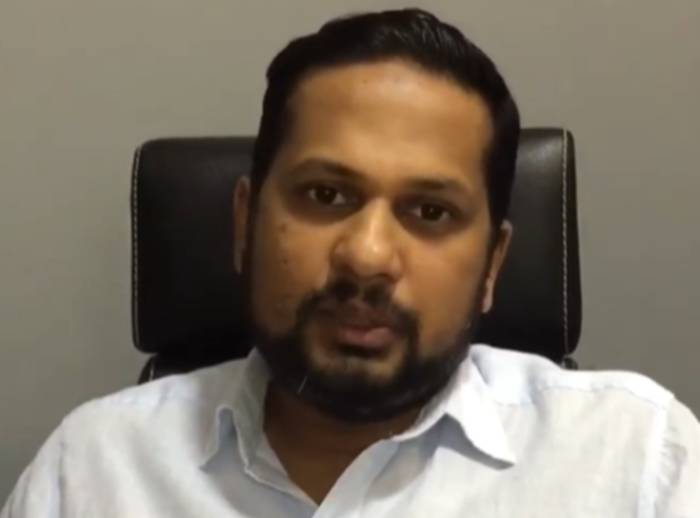
The ICJ called upon the Sri Lankan authorities to respect human rights in the conduct of their investigation of the 2019 Easter Sunday bombings, including ensuring that investigations into the alleged involvement of Sri Lankan lawyer, Hejaaz Hizbullah, are conducted in accordance with due process and fair trial guarantees under international law.
Specifically, the authorities must specify the charges against him, grant him full and immediate access to a lawyer, and investigate the circumstances of his arrest for potential rights violations.
Sri Lankan Lawyer Hejaaz Hizbullah was arrested by the Criminal Investigation Department of the Police (CID) on April 14, 2020 pursuant to the Prevention of Terrorism Act (PTA) and has since been kept in detention. No reasons were provided at the time of the arrest. During a media briefing, a police spokesperson stated that he was arrested as a result of the evidence found against him during investigations into the 2019 Easter Sunday bombings. The ICJ understands that no remand or detention orders authorising his continued detention have been served even after the lapse of 72 hours as required by Sections 7 and 9 of the PTA. Moreover, Hizbullah was only granted limited access to legal counsel on April 15 and 16, under the supervision of a CID official, who had insisted that the conversation be in Sinhala, in breach of attorney-client privilege. Legal access has been denied at least since April 16, 2020.
“No one questions the government’s need and obligation to investigate the horrendous Easter Sunday attacks, but these investigations must be conducted in a way that is consistent with international law and the Sri Lankan Constitution,” said Frederick Rawski, ICJ Asia-Pacific Director. “Not serving Hizbullah a remand order as required by law, and denying him full and confidential access to legal counsel is unacceptable and in violation of international standards on the right to liberty.”
A Habeas Corpus petition was filed by Hizbullah’s father on April 17 seeking his release from detention, and demanding that he be given access to his attorneys. According to the application, five persons posing as officials of the Ministry of Health entered his home and interrogated him, after placing him in handcuffs. They demanded access to two of his case files, recorded a statement from him and subsequently took him into custody at the Criminal Investigation Department.
“By allowing warrantless entry, search of premises and the arrest of persons, the Prevention of Terrorism Act violates basic due process guarantees under international law,” added Rawski. “This legal provision is one of many problematic provisions of the PTA. The ICJ reiterates it calls for the PTA to be repealed, and replaced with an a law that conforms with Sri Lanka’s international human rights obligations.”
According to Article 9 of the International Covenant on Civil and Political Rights, “anyone who is arrested shall be informed, at the time of arrest, of the reasons for his arrest and shall be promptly informed of any charges against him.” Article 14 entitles anyone charged of a criminal offence “to have adequate time and facilities for the preparation of his defence and to communicate with counsel of his own choosing”. Similar guarantees are enshrined under Article 13 of the Sri Lankan Constitution.
The UN Basic Principles on the Role of Lawyers provide that, “Governments shall further ensure that all persons arrested or detained, with or without criminal charge, shall have prompt access to a lawyer, and in any case not later than forty-eight hours from the time of arrest or detention.”
The ICJ has consistently called for the repeal of the Prevention of Terrorism Act, which has been used to arbitrarily detain suspects for months and often years without charge or trial, facilitating torture and other abuse. The ICJ reiterated its call for the repeal and replacement of this vague and overbroad anti-terror law in line with international human rights standards and Sri Lanka’s international obligations.
Contact
Frederick Rawski, ICJ Asia-Pacific Director, t: +66 64 478 1121; e: frederick.rawski(a)icj.org