Nov 25, 2016 | Multimedia items, News, Video clips
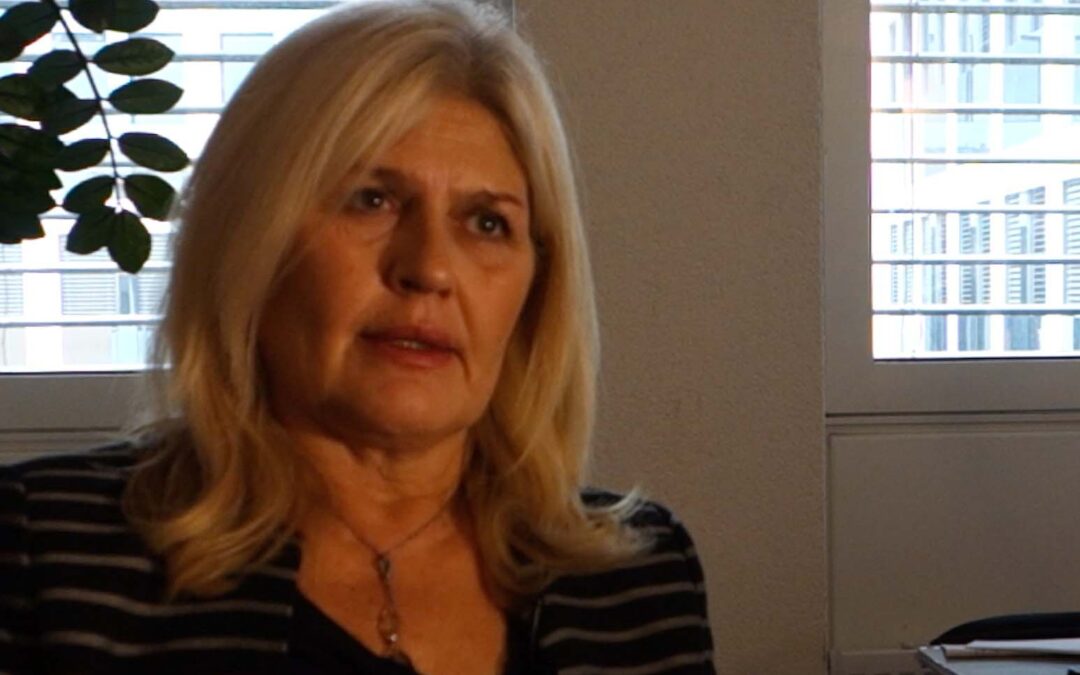
The ICJ has launched a new women’s rights defenders profile series, beginning with ICJ Commissioner and Justice of the Supreme Court of Serbia, Radmila Dragicevic-Dicic.
The monthly profile series, introducing the work of ICJ Commissioners and Honorary Members on women’s rights, has been launched to coincide with the International Day to Eliminate Violence against Women and the first day of the 16 Days of Activism Against Gender-Based Violence Campaign.
The Judges Association of Serbia was established by Radmila and others in 1997, during the regime of Slobodan Milosevic. The Association was formed under the slogan ‘I do not agree’ in opposition to the misuse of the judiciary. Many women were involved in this fight against corruption and in protection of the independence of the judiciary.
In the year 2000, shortly before the fall of Milosevic, Radmila was one of fifteen judges that were dismissed because of their opposition to the repressive regime; although she was quickly reinstated following the elections that took place later that year.
During the civil war period in the 1990s, violence against women grew significantly and domestic violence was rampant in Serbia. Radmila, and other women in the judiciary, worked on issues of organized crime and human trafficking and they were brave to do so as the State couldn’t guarantee their security.
Radmila spoke of women’s continued obstacles in accessing justice and the important of protecting victims of violence. She commented that some States still lack the facilities, resources, personnel and awareness to provide adequate protection for victims.
Human trafficking continues to be one of the biggest problems that affects women, not only in Europe but globally. Justice Dragicevic-Dicic said it was beneficial for those working on women’s rights to share their experiences and learn from one another. Although the motivations and circumstances of women trafficked in different parts of the world may vary, all these women are subject to the same kinds of violence.
In the Serbian constitution, human trafficking is categorized as a crime against humanity and is taken very seriously, although this was not always the case.
Radmila spoke of one case she presided over that helped her to understand what it meant to be a victim. The case concerned two Ukrainian students who had dreamt of going to work in Germany to earn some money for their families but were trafficked into prostitution. She said that this case helped her to understand that anyone can be a victim.
It is everyone’s right to have dreams and to be naïve but no-one has the right to violate your rights. Radmila works to raise awareness amongst other judges that their role is not to judge the victims but those that have exploited them.
There remains a number of issues for victims of trafficking that Justice Dragicevic-Dicic highlighted, including ensuring the non-punishment, safety and protection of victims as well as addressing their access to compensation. Even where the offender isn’t known, victims are still entitled to the full rights of a victim within criminal proceedings.
The judiciary and independent organizations, like the Association of Serbian Judges and the International Commission of Jurists, have an important role in protecting the rights of women. Radmila explained that this can be done through promoting international standards, ensuring that victims are made visible and ensuring that States understand their responsibilities and obligations.
Judicial education on gender-based violence is important, not just in countries undergoing transitional periods, but for all countries where regional and/or international standards have been developed.
Radmila advised anyone interested in defending women’s rights that this work can be done from any position or microsystem that an individual or group is operating in, providing they take the time to educate themselves and build awareness. What is important is that as many people as possible come together to promote and protect women’s rights. Progress can be made, even if this is little by little.
“Sometimes you think you are doing little and you feel hopeless”, said Radmila, “but then I always say if you put a little seed somewhere then it will grow, after you leave, in one year, two years it’s always worth it.”
Watch the video interview:
The series of profiles introducing the work of ICJ Commissioners and Honorary Members on women’s rights was launched on 25 November 2016 to coincide with the International Day to Eliminate Violence against Women and the first day of the 16 Days of Activism Against Gender-Based Violence Campaign.

Nov 24, 2016
In April and July this year, the ICJ and four other NGOs filed two sets of written submissions with the Constitutional Court of Romania in the case of Coman Relu Adrian, Hamilton Robert Clabourn and Association Accept v. General Inspectorate for Immigration and Ministry of Home Affairs.
The case concerns the Romanian authorities’ refusal to recognize either de facto or de jure the same-sex marriages of migrant EU citizens with third-country nationals.
In their original original third-party intervention of April 2016, the ICJ, the AIRE Centre, ECSOL, FIDH and ILGA-EUROPE argued that such refusal violates relevant EU law and the European Convention on Human Rights.
In their supplementary intervention, filed in July 2016, the five NGOs made additional written submissions to the Constitutional Court of Romanian in light of the judgment by the European Court of Human Rights in the case of Taddeucci and McCall v. Italy of 30 June 2016.
romania-cc-joint-amicus-re-third-country-national-spouse-legal-submissions-april-2016-eng
romania-cc-joint-amicus-re-third-country-national-spouse-legal-submissions-july-2016-eng
Nov 18, 2016 | Новости, Событие, Статьи
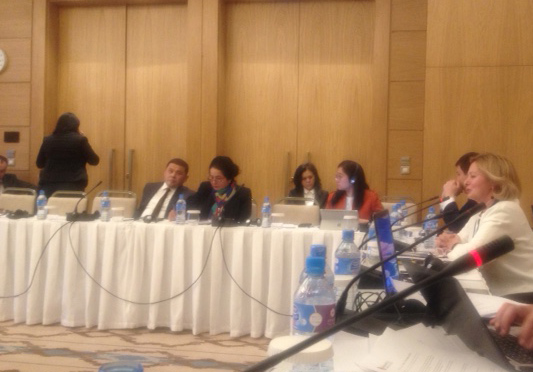
Сегодня МКЮ проводит круглый стол в Ташкенте, Узбекистан, на тему «Сравнительные перспективы судебной этики».
Мероприятие проходит в рамках Форума экспертов Центральноазиатского форума, организованного Организацией по сотрудничеству и безопасности в Европе (ОСБЕ) в Ташкенте в этом году.
На этом мероприятии будут обсуждаться международные стандарты и национальные стандарты судебной этики в Узбекистане и в других странах.
Участники обсудят вопросы независимости, беспристрастности и подотчетности судебных органов и дисциплинарных механизмов.
Выступающими на мероприятии являются судья Кетил Лунд (фото), комиссар МКЮ и бывший судья Верховного суда Норвегии, судья Татьяна Андреева, профессор права и бывший судья Высшего арбитражного суда Российской Федерации, а также представитель судебной системы Узбекистана.
В мероприятии примут участие юристы и эксперты из стран Центральной Азии.
uzbekistan-side-event-tashkent-events-agenda-2016-rus (повестка дня на русском, PDF)
Nov 18, 2016 | Agendas, Events, News
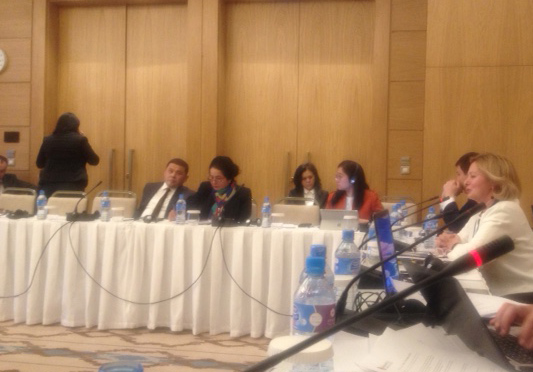
Today, the ICJ holds a round table discussion in Tashkent, Uzbekistan on “Comparative Perspectives on Judicial Ethics”.
The event takes place as part of the Central Asian Forum Expert Forum organized by the Organisation for Cooperation and Security in Europe (OSCE) in Tashkent this year.
International standards, and national standards of judicial ethics in Uzbekistan in other countries will be discussed at the event.
Participants will discuss questions of judicial independence, impartiality and accountability and disciplinary mechanisms.
Speakers at the event include Justice Ketil Lund (photo), an ICJ Commissioner and a former judge of the Supreme Court of Norway, Justice Tatiana Andreyeva, professor of law and a former Judge of the High Arbitration Court of the Russian Federation, as well as a representative of the Uzbekistan judiciary.
Legal practitioners and experts from across the Central Asian region will attend the event.
uzbekistan-side-event-tashkent-events-agenda-2016-rus (Agenda in Russian, PDF)

Nov 14, 2016 | Доклад миссии установления фактов, Доклады, Публикации
В докладе, МКЮ обнаруживает, что системные недостатки в адвокатуре в Азербайджане подорвали ее независимость, что привело к преследованию независимых юристов и мешает им играть свою роль в защите прав человека.
В новом докладе Беззащитные защитники: Системные проблемы адвокатуры Азербайджана, опубликованном сегодня на трех языках, заключают, что внутренние проблемы в организации юридической профессии подрывают ее независимость.
Доклад находит, что Ассоциация адвокатов не действует как самоуправляющийся институт адвокатов, который защищает независимость профессии или поддерживает высокие этические нормы.
Его вспомогательные органы не избираются своевременно, и Ассоциация адвокатов не использует инструменты саморегулирования, которые она имеет в своем распоряжении.
У его членов есть серьезные недостатки в прозрачности и подотчетности.
В докладе определены проблемы в процедуре квалификации юристов, которые страдают от отсутствия объективных критериев оценки и привели к большой нехватке юристов в стране.
Дисциплинарная процедура является особенно слабым местом для юристов и злоупотребляется как средство преследования адвокатов.
В докладе представлены многочисленные случаи преследования юристов, что противоречит международному праву и международным стандартам в отношении независимости юридической профессии.
В нем содержатся рекомендации по решению этих проблем на основе анализа международных норм и стандартов в области прав человека.
В нем также подчеркивается, что независимость и роль юристов должны соблюдаться всеми правительственными учреждениями: исполнительными, законодательными и судебными и всеми государственными органами.
В докладе рекомендуется, чтобы Ассоциация адвокатов пересмотрела свою роль управления профессией и должна начать, через процесс консультаций, реформирование, основанное на принципе независимости и высоких этических стандартах профессии.
Процесс квалификации должен обеспечить наличие достаточного числа юристов для соблюдения принципа доступа к правосудию и эффективного средства правовой защиты от нарушений прав человека.
В отношении дисциплинарной процедуры, она должна быть справедливой, объективной и должна быть направлена на поддержку независимости адвокатов в Азербайджане; она не должна использоваться ни для каких целей, кроме обеспечения высоких профессиональных стандартов, честности и независимости адвокатов.
Доклад доступен на русском и азербайджанском:
azerbaijan-systemic-problems-legal-prof-publications-reports-mission-reports-2016-rus (Русский, PDF)
azerbaijan-systemic-problems-legal-prof-publications-reports-mission-reports-2016-aze (Азербайджанский, PDF)