Nov 18, 2016 | Agendas, Events, News
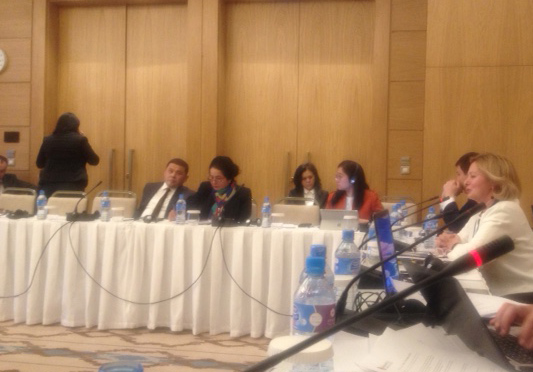
Today, the ICJ holds a round table discussion in Tashkent, Uzbekistan on “Comparative Perspectives on Judicial Ethics”.
The event takes place as part of the Central Asian Forum Expert Forum organized by the Organisation for Cooperation and Security in Europe (OSCE) in Tashkent this year.
International standards, and national standards of judicial ethics in Uzbekistan in other countries will be discussed at the event.
Participants will discuss questions of judicial independence, impartiality and accountability and disciplinary mechanisms.
Speakers at the event include Justice Ketil Lund (photo), an ICJ Commissioner and a former judge of the Supreme Court of Norway, Justice Tatiana Andreyeva, professor of law and a former Judge of the High Arbitration Court of the Russian Federation, as well as a representative of the Uzbekistan judiciary.
Legal practitioners and experts from across the Central Asian region will attend the event.
uzbekistan-side-event-tashkent-events-agenda-2016-rus (Agenda in Russian, PDF)

Nov 14, 2016 | Доклад миссии установления фактов, Доклады, Публикации
В докладе, МКЮ обнаруживает, что системные недостатки в адвокатуре в Азербайджане подорвали ее независимость, что привело к преследованию независимых юристов и мешает им играть свою роль в защите прав человека.
В новом докладе Беззащитные защитники: Системные проблемы адвокатуры Азербайджана, опубликованном сегодня на трех языках, заключают, что внутренние проблемы в организации юридической профессии подрывают ее независимость.
Доклад находит, что Ассоциация адвокатов не действует как самоуправляющийся институт адвокатов, который защищает независимость профессии или поддерживает высокие этические нормы.
Его вспомогательные органы не избираются своевременно, и Ассоциация адвокатов не использует инструменты саморегулирования, которые она имеет в своем распоряжении.
У его членов есть серьезные недостатки в прозрачности и подотчетности.
В докладе определены проблемы в процедуре квалификации юристов, которые страдают от отсутствия объективных критериев оценки и привели к большой нехватке юристов в стране.
Дисциплинарная процедура является особенно слабым местом для юристов и злоупотребляется как средство преследования адвокатов.
В докладе представлены многочисленные случаи преследования юристов, что противоречит международному праву и международным стандартам в отношении независимости юридической профессии.
В нем содержатся рекомендации по решению этих проблем на основе анализа международных норм и стандартов в области прав человека.
В нем также подчеркивается, что независимость и роль юристов должны соблюдаться всеми правительственными учреждениями: исполнительными, законодательными и судебными и всеми государственными органами.
В докладе рекомендуется, чтобы Ассоциация адвокатов пересмотрела свою роль управления профессией и должна начать, через процесс консультаций, реформирование, основанное на принципе независимости и высоких этических стандартах профессии.
Процесс квалификации должен обеспечить наличие достаточного числа юристов для соблюдения принципа доступа к правосудию и эффективного средства правовой защиты от нарушений прав человека.
В отношении дисциплинарной процедуры, она должна быть справедливой, объективной и должна быть направлена на поддержку независимости адвокатов в Азербайджане; она не должна использоваться ни для каких целей, кроме обеспечения высоких профессиональных стандартов, честности и независимости адвокатов.
Доклад доступен на русском и азербайджанском:
azerbaijan-systemic-problems-legal-prof-publications-reports-mission-reports-2016-rus (Русский, PDF)
azerbaijan-systemic-problems-legal-prof-publications-reports-mission-reports-2016-aze (Азербайджанский, PDF)

Nov 14, 2016
In a new report published today in three languages, the ICJ finds systemic weaknesses in the legal profession in Azerbaijan have undermined its independence, leading to harassment of independent lawyers and preventing them from playing their role in the protection of human rights.
The report Defenseless Defenders: Systemic Problems in the Legal Profession of Azerbaijan concludes that the internal problems in the organization of the legal profession undermine its independence.
It finds that the Bar Association does not act as a self-governing institution of lawyers that protects the independence of the profession or upholds high ethical standards.
Its subsidiary bodies are not elected in a timely manner and the Bar Association does not use the tools of self-regulation which it has at its disposal.
There are serious failings of transparency and accountability to its members.
The report identifies problems in the qualification procedure for lawyers which suffers from a lack of objective criteria for evaluation and has resulted in an acute shortage of lawyers in the country.
The disciplinary procedure is a particularly weak point for the legal profession and is abused as a means of harassment of lawyers.
The report documents multiple cases of harassment of lawyers, contrary to international law and international standards on the independence of the legal profession.
It makes recommendations to address these problems, based on an analysis of international human rights law and standards.
It also emphasizes that the independence and role of lawyers must be respected by all institutions of government: executive, legislative and judicial, and by all public authorities.
The report recommends that the Bar Association should reconsider its role of the governance of the profession, and should initiate, through a consultation process, a reform based on the principle of independence and high ethical standards of the profession.
The qualification process should ensure that there is a sufficient number of lawyers to uphold the principle of access to justice and an effective remedy for violations of human rights.
In regard to the disciplinary procedure it must be fair, objective and should aim to support the independence of lawyers in Azerbaijan; it should not be used for any purposes other than ensuring high professional standards, integrity and independence of lawyers.
The report is available in Azeri, English and Russian and can be downloaded below.
azerbaijan-systemic-problems-legal-prof-publications-reports-mission-reports-2016-eng (English, PDF)
azerbaijan-systemic-problems-legal-prof-publications-reports-mission-reports-2016-rus (Russian, PDF)
azerbaijan-systemic-problems-legal-prof-publications-reports-mission-reports-2016-aze (Azeri, PDF)
Nov 14, 2016
The ICJ has published a translation of its Practitioner’s Guide N°1 International Principles on the Independence and Accountability of Judges, Lawyers and Prosecutors.
This is the first comprehensive analysis of the existing standards and compilation of universal and regional instruments published in Turkmen.
The Guide outlines the roles to be played by a strong legal profession, an independent judiciary and an impartial and objective prosecuting authority.
Part one of this guide provides an analysis of the law and concrete examples drawn from international practice. Part two includes relevant global and regional standards on the topic.
References to international decisions, reports, texts of treaties and other international standards allow the Guide to be used as a reference book by legal practitioners and policy makers.
Turkmenistan-PG N°1-Publications-Practitioners’ Guide Series-2016-TKM (full guide in Turkmen, PDF)
Nov 11, 2016 | Agendas, Events
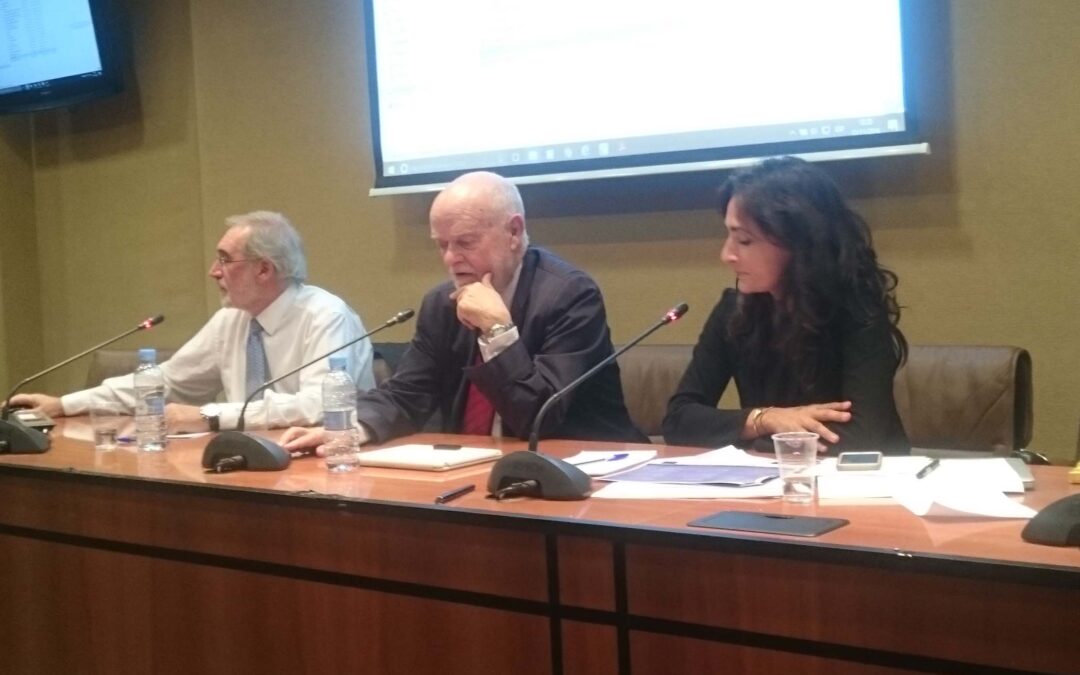
The ICJ and Foundation Raices are holding a training on the rights of migrant children and on accessing international human rights mechanisms from 11 to 12 November in Madrid (Spain).
The training aims to support the strategic use of national and international mechanisms to foster children’s access to justice.
The training will focus on accessing the international mechanisms in order to protect and promote the rights of migrant children, the child’s right to be heard and related procedural rights, the best interests of the child, age assessment and the presumption of minority.
Trainers will include representatives of the ICJ and Foundation Raices, as well as experts from the Committee on the Rights of the Child, the Spanish Constitutional Court and the office of the Spanish Ombudsman.
The training is based on draft training materials prepared by the ICJ (to be published in the second half of 2017) and the ICJ Practitioners Guide no. 6: Migration and International Human Rights Law.
The training is organized as part of the FAIR project co-funded by the Justice and Equality Programme of the EU and OSIFE.
Download the agenda of the training here:
spain-fair-training-events-agenda-2016-eng (in PDF)




