Apr 17, 2012 | Advocacy, Cases, Legal submissions
The ICJ and Amnesty International presented a third party intervention in the case El Masri v. the Former Yugoslav Republic of Macedonia before the Grand Chamber of the European Court of Human Rights.
In the third party intervention, the ICJ and AI outlined developments on the principle of non-refoulement, on enforced disappearances, on the international law of state responsibility and on the right to truth.
Macedonia-written submission-legal submission-2012 (full text in English, PDF)
Mar 20, 2012
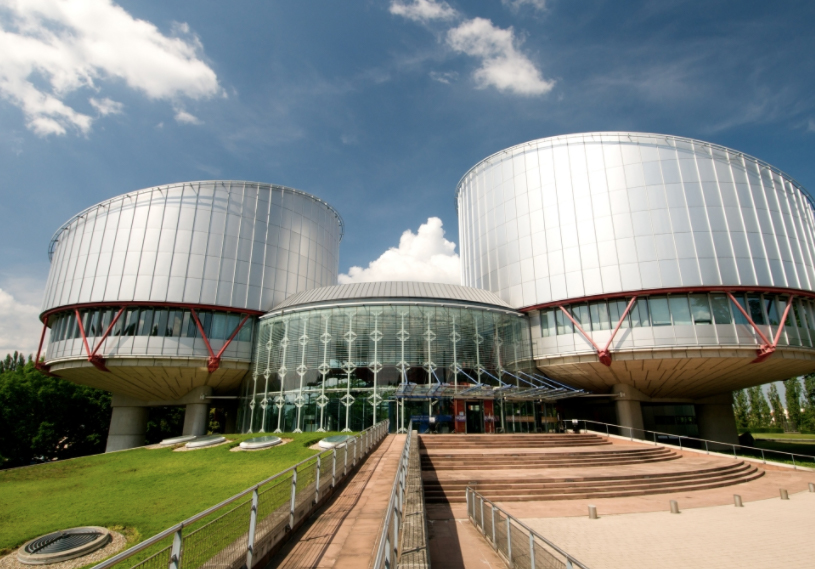
The ICJ and other human rights groups have commented the second draft of the Brighton Declaration on the Future of the European Court of Human Rights.
Amnesty International, the AIRE Centre, the European Human Rights Advocacy Centre (EHRAC), the Helsinki Foundation for Human Rights (HFHR), Human Rights Watch, INTERIGHTS, the International Commission of Jurists (ICJ), JUSTICE and REDRESS commented on the continuing negotiations on the draft of the Brighton Declaration on the Future of the European Court of Human Rights. While welcoming many of the proposals in the Draft Declaration, designed to improve national implementation of the ECHR and to enhance the effectiveness of the Court, the NGOs express concern at two proposals on admissibility and codification of the principles of subsidiarity and margin of appreciation, that could seriously undermine the effectiveness of the European Court of Human Rights in protecting the Convention rights.
Europe-BrightonDeclaration-Submission-2012 (download the NGOs’ comments)

Feb 23, 2012 | Публикации
 В этой публикации МКЮ представлен систематический обзор международного права и стандартов, и законодательства Узбекистана, касающихся справедливого судебного разбирательства и надлежащего судебного разбирательства в уголовном деле.
Международные стандарты справедлибых судебных разбирательств и уголовный процесс в Узбекистане, публикация МКЮ по стандартам справедливого судебного разбирательства с конкретным сосредоточинием на стране, обеспечивает систематический обзор международного права и стандартов, и законодательства Узбекистана, касающихся справедливого судебного разбирательства и надлежащего судебного разбирательства в уголовной сфере. Его основными источниками являются международное право, стандарты и юриспруденция, разработанные органами по защите прав человека на универсальном и региональном уровнях, а также национальное уголовное законодательство Узбекистана. Это первая попытка обеспечить всесторонний анализ уголовного процесса и судебного разбирательства в отношении Узбекистана и региона, и это первое такое сравнительное исследование национальных процедур и международных стандартов, касающихся справедливого судебного разбирательства.
Uzbekistan-fair trial standards-publication-2012-rus

Feb 10, 2012 | News
The ICJ condemns the conviction pronounced today by the Supreme Court of Spain against Judge Baltasar Garzón, who will be banned from the judicial office for a period of 11 years.The International Commission of Jurists (ICJ) condemns the conviction pronounced today by the Supreme Court of Spain against Judge Baltasar Garzón, who will be banned from the judicial office for a period of 11 years.

Feb 9, 2012
 The ICJ and Interights submitted a third-party intervention in this case.
In the case of Vejdeland and Others v Sweden, the European Court of Human Rights unanimously held that the conviction of the four applicants for “agitation against a national or ethnic group” was not contrary to Article 10 of the European Convention. The applicants had distributed leaflets at a school about the negative influence of “homosexual propaganda” in education and stating that “homosexuality has a morally destructive effect on the substance of society.” The ICJ and Interights argued that sexual orientation should be treated in the same way as categories such as race, ethnicity and religion, which are commonly covered by hate speech and hate crime laws, because sexual orientation is fundamental to a person’s sense of self and is used as a marker of group identity. The Court agreed, stressing that “discrimination based on sexual orientation is as serious as discrimination based on race, origin or colour.” The interference pursued a legitimate aim, that of protecting the reputation and rights of others, and was necessary in a democratic society. There was therefore no violation.
Case Vejdeland Sweden-Judgment-2012 (full text in English, PDF)
Case Vejdeland Sweden-legal submission-2012 (full text in English, PDF)