Aug 21, 2012 | News
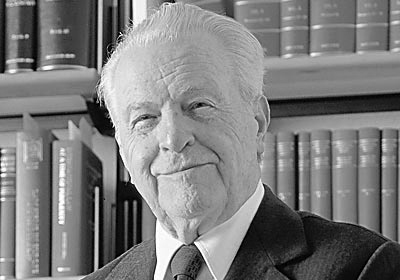 It is with great sadness that the International Commission of Jurists received the news of the passing of Dr. Jean-Flavien Lalive. He was one of the pillars of our organisation in its early days.
Dr. Lalive was involved in the work of the ICJ for over fifty years. As the Secretary-General from 1958 to 1961, Dr. Lalive played a vital role in establishing our organization in the international human rights community. He is especially noted for bringing the ICJ closer to the United Nations, both in terms of the organization’s political relationships and our physical location. Under his leadership, the ICJ gave more pronounced support for the international standards and enforcement procedures advocated by the UN. He was also responsible for moving the ICJ Secretariat’s headquarters from The Hague to Geneva, where it remains to this day.
While at the ICJ, Dr. Lalive continued to direct the organization’s efforts towards the search for universal procedural and substantive safeguards required for the proper administration of justice, while seeking to encompass the world’s different legal traditions. At the ICJ’s Congress in New Delhi in 1959, Dr. Lalive helped to define principles of the Rule of Law and Human Rights. The Declaration of Delhi, in particular, was to prove a seminal instrument in shaping the Rule of Law, with its conception of the Rule of Law as “a dynamic concept for the expansion and fulfillment of which jurists are primarily responsible and which should employed…to safeguard and advance [human] rights.”
Dr. Lalive later served as an Honorary Member of the ICJ, supporting the work of our organization at conferences and missions over many decades.
Dr. Lalive was an outstanding jurist and an exceptional advocate for human rights and the Rule of Law. He will be truly missed both by our organization and the wider human rights community.

Aug 20, 2012
 Joanne Cassar, who was assigned male at birth, legally changed her birth certificate to female in full compliance with Maltese national law. However, she was denied permission to marry her boyfriend.

Aug 12, 2012
 Taddeucci, a national of Italy, and McCall, a national of New Zealand, are an unmarried same-sex couple who moved together to Italy to be close to Taddeucci’s family. But McCall was denied a residency visa.
The visa was denied on the grounds that he was neither a “spouse” nor a family member of an Italian citizen. The Italian courts refused to recognize their relationship, forcing the couple to leave Italy in order to be able to live together.
They applied to the European Court, arguing that their rights to non-discrimination and to the enjoyment of family life had been violated.
The ICJ, ILGA-Europe and NELFA submitted a joint third party intervention arguing that conditioning residency on marital status constitutes discrimination on the basis of sexual orientation, given that in many countries same-sex couples are denied access to marriage, and that unmarried couples are families regardless of formal legal status. As families, their relationship should be leally recognised and protected by the state.
Italy-Taddeucci_&_McCall_v_Italy-legal submission-2012-Eng (text in PDF)
Jul 3, 2012 | Events
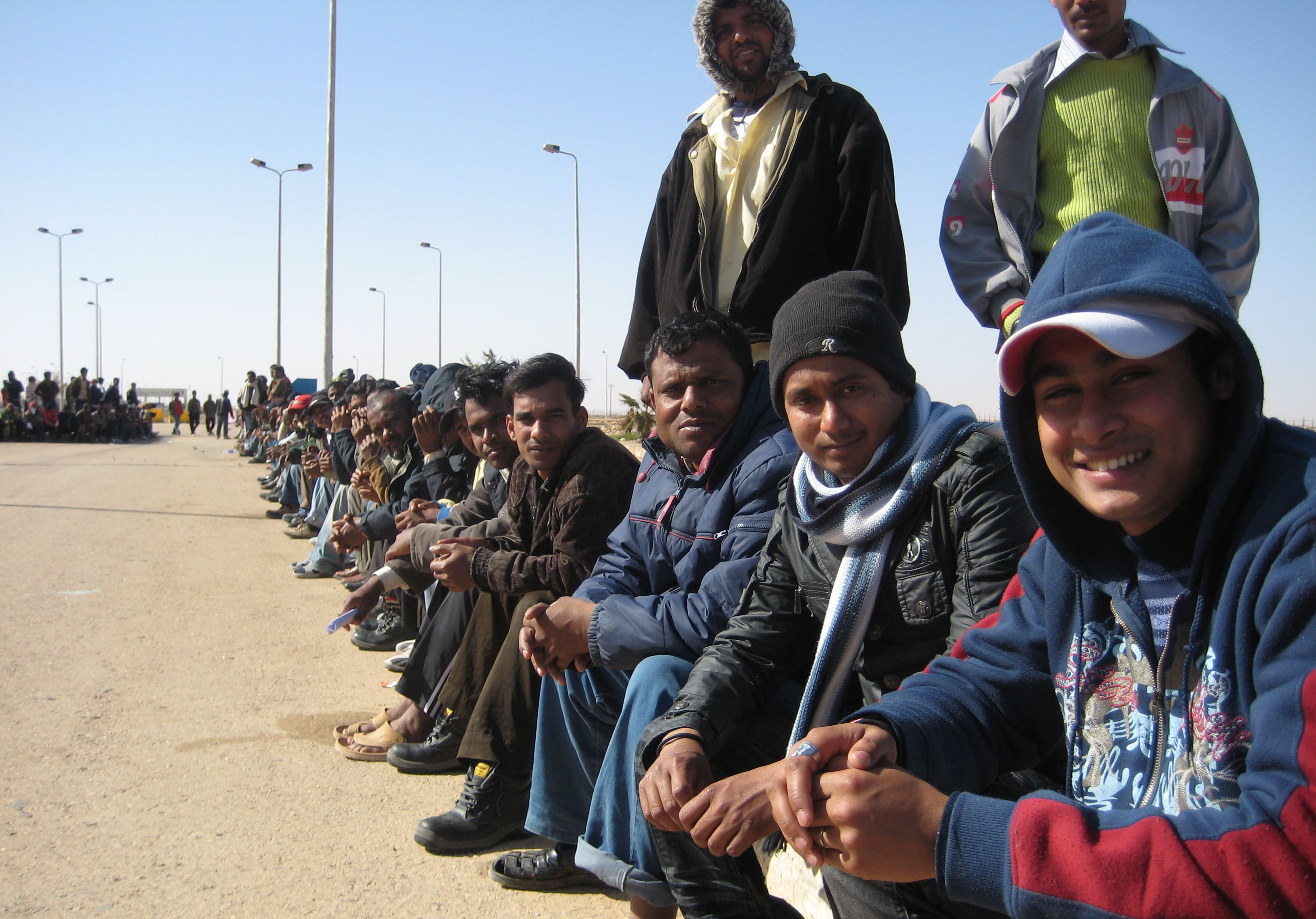 On 3-4 July, the ICJ and UNHCR organised a workshop for lawyers across Europe on the principle of non-refoulement and the right to an effective remedy.
 The workshop, which took place at the European Court of Human Rights’ premises, focussed on the Strasbourg Court’s jurisprudence and on the practice and procedure related to interim measures before the court.
Europe-ICJUNHCRtraining-agendaICJ-2012 (download the agenda of the workshop)
Photo credit: © Stabilisation Unit/DFID (the DFID has no involvement in nor does support this event)

Jun 25, 2012 | Advocacy, Non-legal submissions
 The ICJ drew attention on various issues related migrants and asylum seekers.