
Judges play an indispensable role in preventing, redressing, and ensuring accountability for human rights atrocities, such as torture and enforced disappearance.
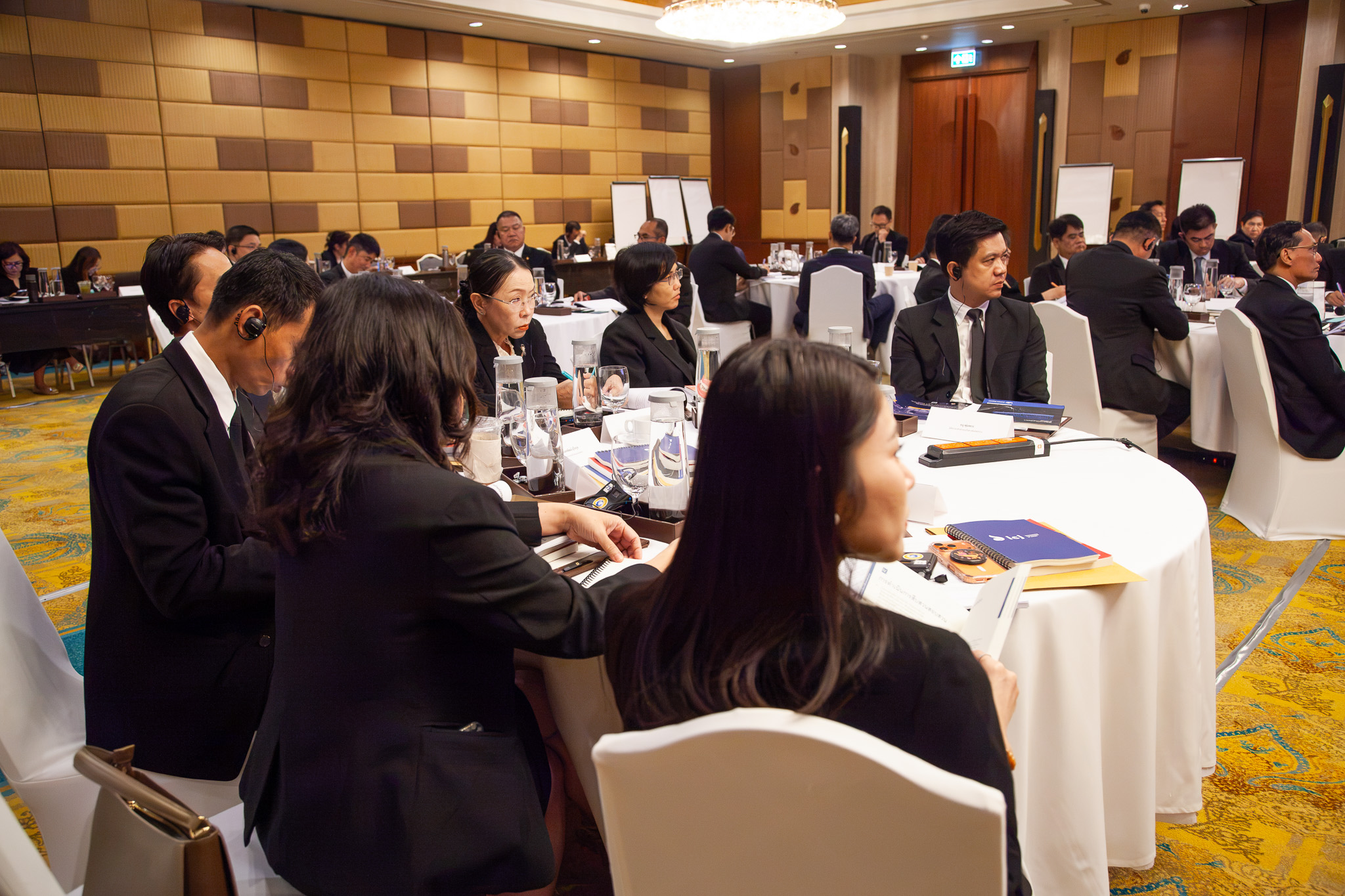
With a view to ensuring that judges in Thailand are optimally effective in this role, the International Commission of Jurists (ICJ), together with Thailand’s Court of Justice and the UN Office of the High Commissioner for Human Rights (OHCHR), held four regional judicial dialogues between August and September 2026.
Some 104 judges from six regions in Thailand took part in the dialogues on implementing the Prevention and Suppression of Torture and Enforced Disappearance Act B.E. 2565 (2022) (the Act) in line with international law and standards.
Issues considered
Participants considered the Act’s two-track jurisdictional structure and the distinct roles courts may play within it. Courts hear petitions for preventive and remedial measures to stop ongoing violations and they have the responsibility to adjudicate principal prosecutions. The Act assigns principal cases to the civilian Anti-Corruption and Misconduct Criminal Court, even where the offender would otherwise fall under military jurisdiction. This is a welcome element of the Act, as the use of military jurisdiction in such cases would contravene international standards. Although it departs from usual law and practice in Thailand, it has since been upheld by the Court of Jurisdictional Disputes.
Participants also examined Section 12, which ensures the Act applies without exception by barring any such excuse as on war, political instability, or states of emergency to justify torture or enforced disappearance. They discussed its implications for the southern border provinces, where a state of emergency has been in force for more than two decades.
Turning to how the Act operates in practice, participants examined certain requirements, such as mandatory audio-visual recording of arrests and detailed custody records (Sections 22–23), broader definitions of “State official” and “victim” than in other legislation (Sections 3 and 11), and command responsibility (Section 42). They also reviewed emerging case law under the Act, including the recent Supreme Court Judgment No. 2559/2569 concerning torture by police, where the Court substantially increased the compensation awarded, including a significant amount for psychological harm.
To help judges address interpretive questions not yet settled by Thai courts, presenters introduced international and comparative jurisprudence from regional courts and UN treaty bodies. This covered the definition of torture and cruel, inhuman or degrading treatment, and the absolute and non-derogable character of the exclusionary rule and of the principle of non-refoulement. It also covered the functional approach to who can be a perpetrator, which extends State responsibility to private actors exercising State functions.
Participants identified several key opportunities for judges to intervene actively in torture cases. These included verifying custody records and ordering medical assessments proactively, rather than only on request, and assessing evidence of physical and psychological torture holistically. Participants also highlighted the importance of requiring the State to explain injuries sustained in custody, and of excluding information as evidence where it has been derived by torture or ill-treatment, including coerced confessions.
Regarding enforced disappearance, participants addressed its continuing nature, including the implications for statutes of limitation and for applying the Act to disappearances that began before it entered into force. They described how foreign and regional courts have treated enforced disappearance as a continuing crime, which has allowed investigations to continue over decades and to overcome amnesty laws and limitation periods. They also described how forensic science and DNA analysis have enabled victims to be identified long after the events.
Participants further examined the distinct but interrelated obligations to search for a disappeared person and to investigate criminally. They stressed that courts should press for a genuine search—with the participation of relatives—rather than mere procedural compliance.
Recognizing that disappearances increasingly cross borders, participants also discussed the growing challenge of transnational repression in Southeast Asia. They considered universal jurisdiction and Thailand’s own bases for jurisdiction.
The Dialogues were held with the support from the European Union Delegation to Thailand.
Background
The dialogues were held in Chiang Mai on 13–14 August 2026 for judges from Regions 5 and 6 (northern and central provinces). They continued in Hat Yai on 20–21 August for Region 9 (southern border provinces), in Udon Thani on 3–4 September for Regions 3 and 4 (northeastern provinces), and in Phuket on 10–11 September for Region 8 (upper southern provinces).
Since entering into force in 2023, the Act has generated a growing number of complaints, but comparatively few have reached the courts. As of 8 May 2026, the Ministry of Justice’s Rights and Liberties Protection Department had received 195 complaints: 66 of torture, 63 of ill-treatment, 24 of enforced disappearance and 42 involving more than one type of violation. Only 13 had resulted in prosecution orders, with several others pending. As of 13 July 2026, 53 cases had reached the courts nationwide, including both principal prosecutions and petitions asking courts to use their protective powers under the Act.
Opening remarks delivered by:
- Cynthia Veliko, Regional Representative of the Office of the United Nations High Commissioner for Human Rights in South-East Asia
- Jutamas Vongsivavilas, President of the Court of Appeal Region 9 (Hat Yai)
- Mandira Sharma, ICJ Regional Director for Asia and the Pacific
- Permsak Saisithong, President of the Court of Appeal Region 8 (Phuket)
- Visut Klinphon, President of the Court of Appeal Region 5 (Chiang Mai)
- Wichian Aphiratanamontri, President of the Court of Appeal Region 4 (Udon Thani)
Presenters included:
- Gabriella Citroni, Chairperson, UN Working Group on Enforced or Involuntary Disappearances, and Adjunct Professor at the University of Milano-Bicocca
- Leonardo Filippini, Federal Prosecutor, Public Prosecutor’s Office of Argentina, and Professor of Law and Director of the Human Rights Centre, Faculty of Law, University of Buenos Aires
- Pattaranit Yawdam, Human Rights Officer, OHCHR
- Pratubjit Neelapaijit, Acting Head of the Thailand Team, OHCHR
- Sanhawan Srisod, Senior Legal Adviser, ICJ
- Thanarat Thangthong, Chief Justice of the Central Criminal Court for Corruption and Misconduct Cases
Further reading
Contacts
Sanhawan Srisod, Senior Legal Adviser, Legal and Policy Office, e: sanhawan.srisod@icj.org
Saovanee Kaewjullakarn, Associate Legal Adviser, ICJ Asia and the Pacific Programme, e: saovanee.kaewjullakarn@icj.org



