Jul 5, 2021 | Events, News
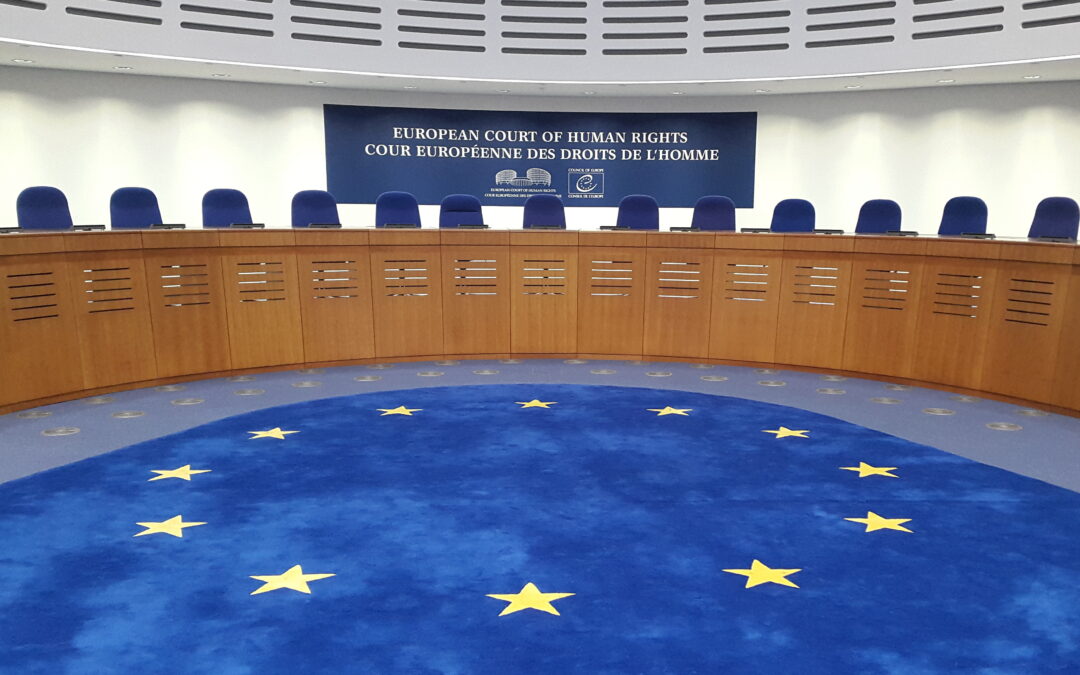
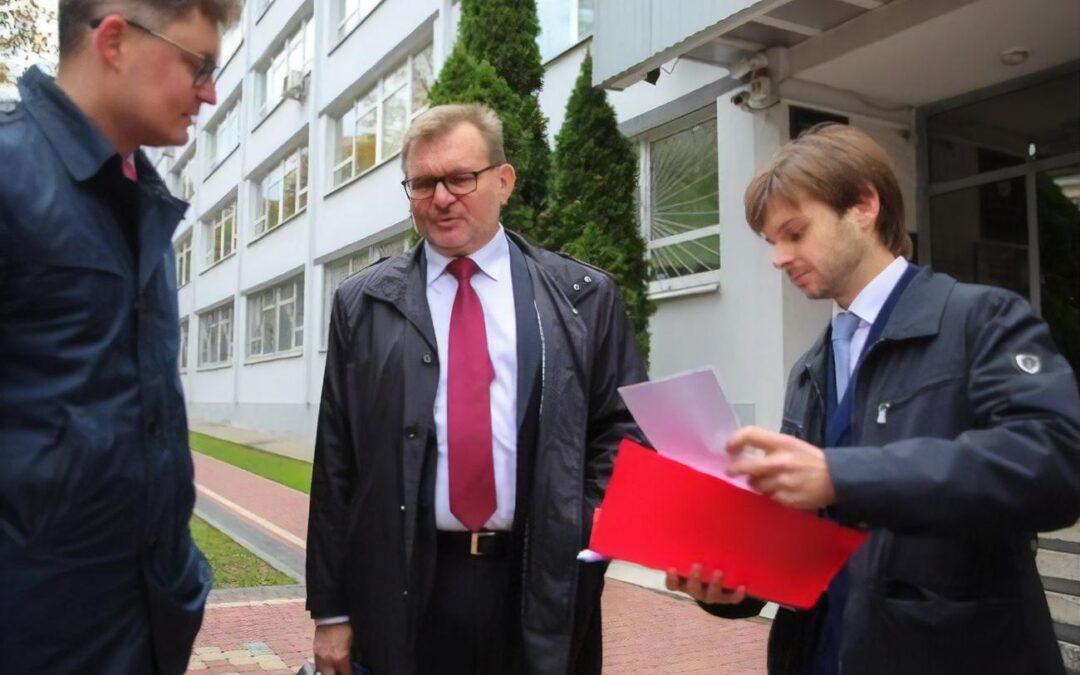
The International Commission of Jurists (ICJ), together with the American Bar Association Center for Human Rights (ABA CHR), the Lawyers for Lawyers (L4L), the International Bar Association Human Rights Institute (IBAHRI), and Polish Helsinki Foundation for Human Rights (HFHR) are co-organizing a side event during the 47th UN HR Council session, on July 6th, at 15:00 CEST/ 9 am EST.
Jul 1, 2021 | News, Web Stories
Turkey should reverse its withdrawal from the Council of Europe’s Convention on preventing and combating violence against women and domestic violence (the “Istanbul Convention”), the International Commission of Jurists (ICJ) said today.
Jun 21, 2021 | Agendas, Events, News
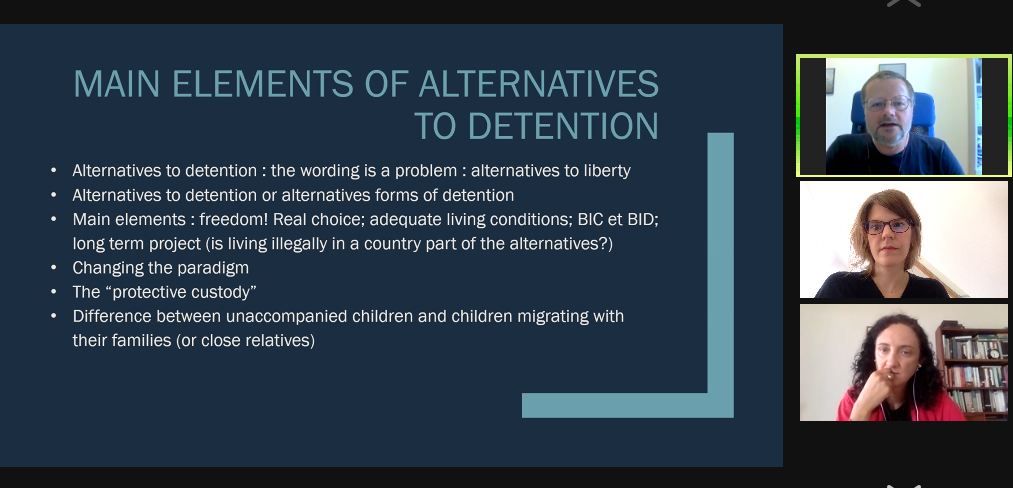
Children should never be detained in immigration context. Immigration detention of children is never in their best interests and is not justifiable, said experts during a transnational workshop on Alternatives to detention vs. alternative forms of detention of migrant children held by the International Commission of Jurists (ICJ) and partners on June 17 and 18.
“Instead of detaining children, case management should be used instead, and a community assistance and placement model should be used for families and children as an effective alternative to detention. Unaccompanied children should be placed within the mainstream care system,” Karolína Babická, legal adviser at the ICJ said.
During the workshop experts and practitioners from seven EU countries and international experts explored good and bad practices of alternatives to detention. In particular, the principle of the ‘best interests of the child’ was discussed as well as procedures for age assessment, and specific alternative arrangements for the care of children in migration, such as the return houses in Belgium, and regular reporting.
The group further explored ways to include unaccompanied migrant children in the mainstream child-care system rather than under the management of immigration authorities. The case-management and community placement model by the International Detention Coalition (IDC) was discussed in detail.
It was agreed that children must have access to procedural rights, including the right to be heard and to participate, access to information and to legal assistance and legal aid, access to interpretation, effective remedy and a guardian. Best interest of the child assessments as well as age assessment must be done through a rights-based approach, following child-friendly procedures and safeguards.
Any alternatives to detention applied by states should be monitored and regularly evaluated to ensure these do not constitute alternative forms of detention.
The workshop took place as part of the CADRE project and will be followed by second and third workshop as well as by on-line conferences and national trainings during the second year of duration of the project.
See the agenda here: Agenda CADRE Transnational workshop_17-18 June_final

Jun 18, 2021 | News
European Union affairs ministers should put the governments of Hungary and Poland on notice that there is no place for attacks on the rule of law in the EU and step up scrutiny of their human rights-abusive policies, the International Commission of Jurists (ICJ), Amnesty International, Human Rights Watch, the International Federation for Human Rights (FIDH), the Open Society European Policy Institute (OSEPI) and Reporters Without Borders (RSF) said today.
Ministers from EU member states meeting in the General Affairs Council session on June 22, 2021 will discuss the situations in Poland and Hungary under the Article 7 procedure. Article 7 is the mechanism provided for in the EU treaty to hold accountable governments whose actions threaten the bloc’s rule of law, human rights, and democratic principles.
“The EU should respond to the critical situation in Hungary and Poland by using the powers available to it under Article 7 TEU to defend human rights and the rule of law. We hope that EU Ministers will finally send a strong signal to Poland and Hungary next week that undermining these values cannot be accepted,” said Róisín Pillay, Director of the ICJ Europe and Central Asia Programme.
Resuming hearings on the situations in Hungary and Poland under Article 7 is a strong signal from the Council that violations of EU principles will not go unnoticed within the Union, the organizations said. But EU ministers have a responsibility to make up for the time lost and show readiness to take further action as the situations in both countries continue to deteriorate.
Read the full statement here: euart7june17-ENG-2021
Further information:
The European Commission invoked Article 7 in December 2017 for the first time since its creation in response to the dramatic erosion of judicial independence in Poland by the Law and Justice (PiS) Party government. But the EU Council, consisting of the member states, has not held a formal hearing regarding the situation since September 2018.
The European Parliament triggered article 7 in September 2018 for Hungary because of the repeated deliberate attacks on democratic institutions and human rights by the Fidesz-led government, but the Council has not convened a hearing on the matter since December 2019. EU officials contended that discussions related to Article 7 could not take place during the Covid-19 pandemic, allegedly because EU ministers could not meet in person during this period.
While EU action has stalled Poland’s government has continued to strengthen its grip on the judiciary. Many judges and prosecutors have faced arbitrary disciplinary proceedings for speaking up against problematic judicial reforms. The government has used a politically compromised Constitutional Tribunal to bypass parliamentary objections to its efforts to undermine independent institutions and erode rights across the board. The concerns over the functioning of the Tribunal include, in particular, mishandling of cases by its president and unlawful change in the composition of the already designated hearing benches.
In October 2020, at the behest of the Polish government, the Constitutional Tribunal severely undermined access to sexual and reproductive rights for women in Poland by extending the existing ban on abortion to include cases of “severe and irreversible fetal defect or incurable illness that threatens the fetus’ life”. In April, the government used the same tribunal to discontinue the mandate of the country’s human rights Ombudsman, despite the delays in the appointment of a successor. The government is also using the Constitutional Tribunal to seek decisions on the validity of the Istanbul Convention on preventing violence against women and to try to undermine the binding nature of decisions by the EU Court of Justice on Polish law.
In Hungary, the government used the Covid-19 pandemic as a pretext to intensify its attacks on the rule of law and public institutions, increase executive power, and limit human rights, including the rights to freedom of expression, information and peaceful assembly. Hungary finally abided by the June 2020 EU Court decision by repealing a 2017 law forcing civil society organizations receiving over 20,000 EUR per year in foreign funds to register as foreign-funded. But at the same time the government introduced a new bill requiring the national State Audit Office to conduct annual financial inspections of civil society organizations that report more than around 55,000 EUR, with the risk that it could create a new method to demonize and obstruct the work of watchdog groups. The draft bill leaves untouched the controversial 2018 law criminalizing groups giving assistance to asylum seekers.
In July 2020, the editor-in-chief of Hungary’s largest online independent daily, Index.hu, was fired as a result of a financial takeover of the company controlling its revenues by a person with close links to the country’s ruling party. In September, the Media Council, a broadcast regulator tied to the executive after controversial changes passed early in the decade, revoked the frequency for the independent Budapest radio station Klubradio, forcing it off the air. On June 9, the European Commission opened a new legal proceeding against Hungary on the basis that the decision to take Klubradio off the air was discriminatory and non-transparent.
Civil society groups in Poland, Hungary and elsewhere in the EU have criticized the European Council and European Commission for failing to uphold the bloc’s founding values of respect for human rights and the rule of law in countries that breach them.
In December, the EU established a new mechanism conditioning EU funding upon respect for the rule of law, but both the European Commission and the Council have succumbed to Hungary and Poland’s blackmailing and announced they would not start enforcing the measure until autumn. On June 10, the European Parliament took the European Commission to Court if it further delays the implementation of the mechanism.
European ministers should continue to convene regular hearings on the situations in Poland and Hungary and take all steps available under Article 7 to hold both governments to account for violating the EU’s core values. These should include adopting specific rule-of-law recommendations that Poland and Hungary’s governments should carry out by a set deadline and, absent any concrete steps toward compliance, work toward the required four-fifth vote to determine that there is a clear risk of a serious breach of the values protected by the EU treaty. Such a determination would open up the possibility of sanctions that the Council could adopt, by unanimity, to react to this breach.
For more information please contact:
Karolína Babická, +32475462067, karolina.babicka@icj.org