Feb 13, 2020 | Artículos, Incidencia, Noticias
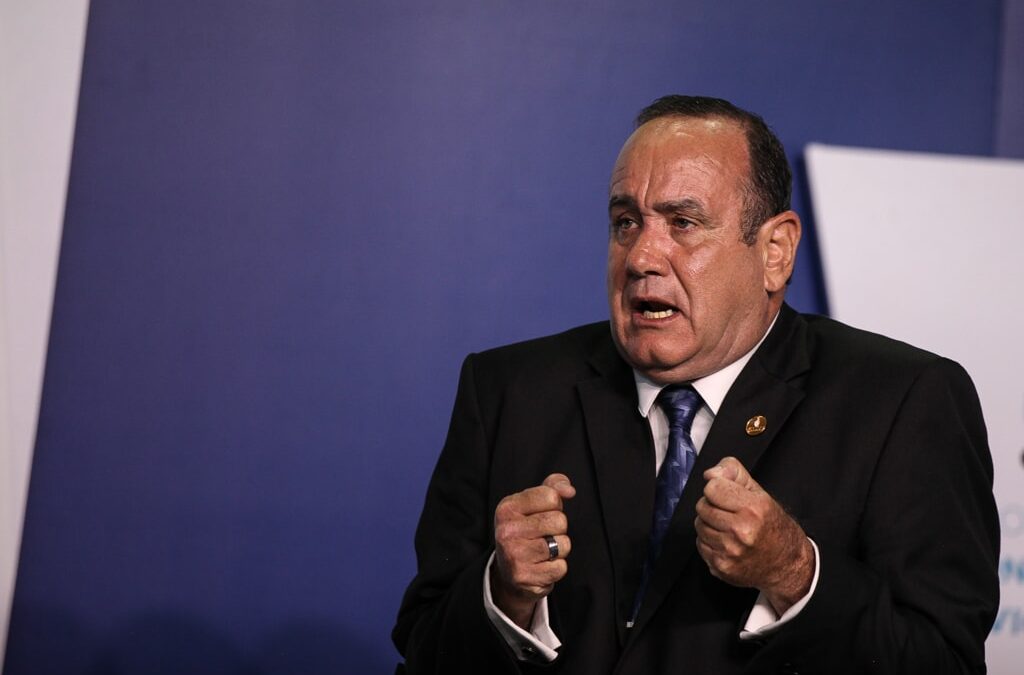
La CIJ pide al Presidente Giammattei que vete la ley que contiene las reformas al Decreto del Congreso de la República 4-2020 que regula el funcionamiento de las organizaciones no gubernamentales.
Desde el año 2019, el Congreso de la República viene tratando de implementar una agenda legislativa “regresiva”, que socava el respeto de los derechos humanos.
En este caso, se trata de una ley que afecta el derecho constitucional de Libertad de Asociación, así como otros derechos que la CIJ en Centro América ha desarrollado en la carta correspondiente.
Además, el Congreso ha intentado reformar la Ley relacionada con el Programa Nacional de Resarcimiento para incluir la posibilidad de otorgar amnistía a quienes cometieron crímenes graves.
Por otro lado, la Ley relativa a la Familia, de llegar a aprobarse afectaría los derechos de la comunidad LGBTI en Guatemala.
También ha intentado aprobar reformas a la Ley de Orden Público, sin tomar en cuenta los principios de la Seguridad Democrática.
Estas son sólo algunas de las leyes, que forman parte de la agenda legislativa regresiva en materia de derechos humanos.
Feb 13, 2020 | News
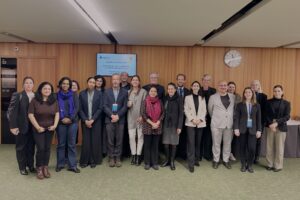
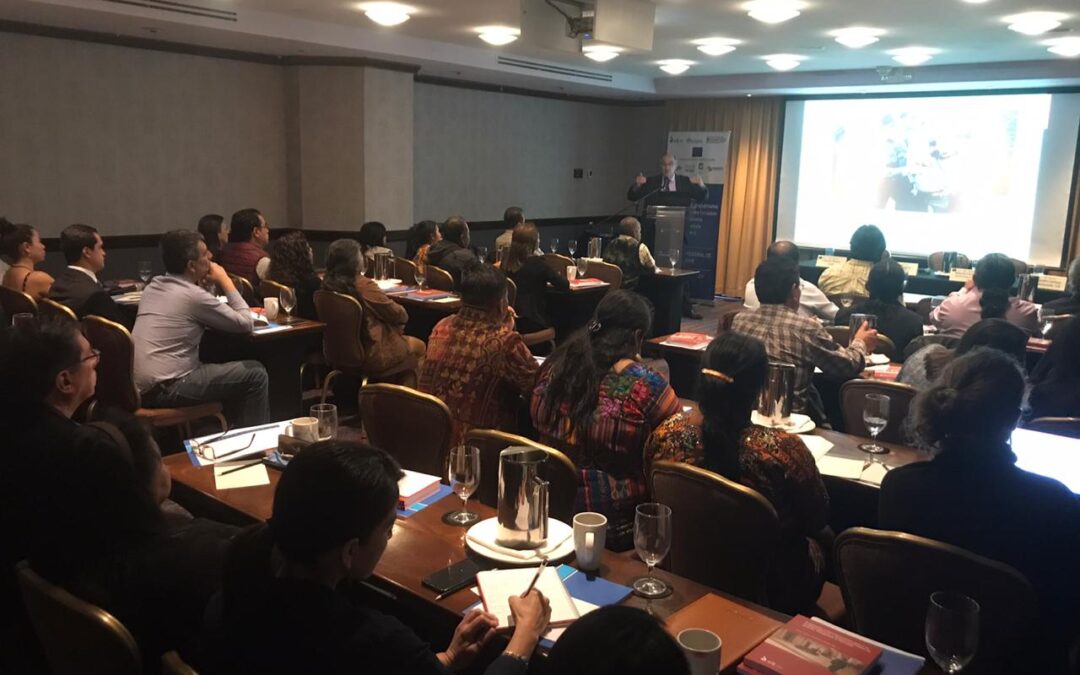
The ICJ convened two workshops in Guatemala City from 11 to 13 February for more than 30 lawyers and more than 30 representatives of victims’ organizations on the international law and standards that apply to the investigation of unlawful death and enforced disappearances.
The workshops were conducted as part of the project under the ICJ’s Global Accountability Initiative entitled, Promoting justice for extrajudicial killings and enforced disappearances in Colombia, Guatemala and Peru, and supported by the EU European Instrument for Democracy and Human Rights (EIDHR). The project promotes accountability of perpetrators and access to effective remedies and reparation for victims and their families in cases of extrajudicial killings and enforced disappearances.
The workshop for lawyers was inaugurated by the President of the Board of Lawyers of Guatemala, Ovidio Orellana. The workshop with representatives of victims organizations was inaugurated by the Chief of Cooperation of the European Union Alberto Cortezón.
Participants in the workshops emphasized that the Guatemalan public authorities must respect and effectively impolement the the revised Minnesota Protocol on the Investigation of Potentially Unlawful Death, and that there was a need to reinforce advocacy strategies for the respect of the Protocol by the Guatemalan Human Rights Institutions.
The Presidential Commission on Human Rights (COPREDEH) and the Ombudsman´s Office participated during the workshop with victims’ organizations. They committed themselves to take the necessary actions to incorporate into their work the principles and content of the Minnesota Protocol, as a complementary tool to other conventions and binding law.
Contacts:
Ramón Cadena, Regional Director of ICJ’s Central America Office, email: ramon.cadena@icj.org
Kingsley Abbott, Senior Legal Adviser & Coordinator of the ICJ’s Global Accountability Initiative, email: kingsley.abbott@icj.org
Carolina Villadiego Burbano, ICJ Legal and Policy Adviser, Latin America, and Regional Coordinator of the Project, email: carolina.villadiego@icj.org
Dec 6, 2019 | News
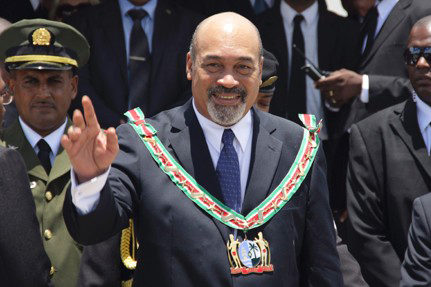
Today, the ICJ has taken note of the 29 November 2019 conviction by the military and civilian chambers of a Court Martial (“the Court”) in Suriname of President Desiré Delano Bouterse and acquittal of others for crimes under international law relating to events that had taken place in December 1982 in Suriname.
The Court imposed a 20-year sentence of imprisonment on Bouterse, albeit it did not order an arrest warrant to be issued against him.
Bouterse and his co-accused faced charges of torture and murder — by means of extra-judicial executions – of 15 people – lawyers, journalists, soldiers, businessmen, academics and a trade union leader – who had been openly critical of the regime at the time, following a military coup led by Bouterse.
Bouterse, who remains the country’s President, was abroad when the Court delivered its verdict; he returned to Suriname two days later.
The ICJ is concerned at apparent efforts to circumvent the Court’s verdict. Since his conviction, Bouterse has made statements amounting to a deliberate undermining of the judicial process and rule of law, such as calling on the court to “come and get me”.
The ICJ further takes note that there is a possibility of appeal and calls on all parties to respect the rule of law and to allow the legal system to run its course, in accordance with international fair trial standards, without further delays, threats or other forms of executive interference.
Background to the 29 November 2019 verdict
The trial against Bouterse and his alleged accomplices began in 2007. On 19 July 2010, Desiré Delano Bouterse was elected President of Suriname, taking up office on 12 August 2010. On 4 April 2012, the country’s Parliament adopted an amendment to the 1989 Amnesty Law in existence at the time, which had the effect of granting an amnesty to President Bouterse and others in relation to any wrongdoing in connection with the December 1982 events. This led to a decision by the Court to suspend the trial of Bouterse and his co-accused indefinitely pending the establishment of the constitutionality or otherwise of the 1989 Amnesty Law. As the ICJ noted in its report of 29 May 2012, which followed an ICJ mission to the country to observe the trial, there were a number of unresolved questions regarding the legality of the 1989 Amnesty Law, including its incompatibility with Suriname’s international law obligations.
Since its initial mission in 2012, the ICJ has frequently expressed concern at the persistent delays in the proceedings. Eventually, in June 2016, the Court declared the 1989 Amnesty Law unconstitutional, and ordered the proceedings’ resumption; however, delays continued to beset the proceedings. On 2 August 2016, the Inter-American Commission on Human Rights expressed its deep concern about the then ongoing delays in the resumption of the trial. Eventually, by early 2017, the Court decided to have the charges put to the accused and ordered the prosecutor to read them out in court.
Persistent efforts by Bouterse to use his authority to have the trial declared a threat to national security or a danger to the country’s economic stability were unsuccessful, and the trial resumed, albeit with continued delays, prompting the ICJ to issue a further statement in May 2017 calling for the resumption of the trial without further delay.
Eventually, in June 2017, the public prosecutor issued his full list of charges against President Bouterse, accompanied by a request of a sentence of imprisonment of no less than 20 years on conviction, thereby moving to the trial phase proper of the proceedings.
Download
Suriname-Bouterse case-news-press release-2019-DUT (PDF available in Dutch)
Nov 26, 2019 | Comunicados de prensa, Noticias
Las finalistas del Premio Martin Ennals 2020 son tres mujeres excepcionales – Huda Al-Sarari, Norma Ledezma y Sizani Ngubane – reflejo del lugar preponderante que actualmente ocupan las mujeres en la defensa de los derechos humanos. La CIJ es miembro del jurado.
En Yemen, Huda Al-Sarari denuncia la existencia de prisiones secretas y numerosos casos de tortura.
En México, Norma Ledezma lucha contra los feminicidios y casos de desaparición.
En Sudáfrica, Sizani Ngubane promueve el acceso de las mujeres a la educación y a la tierra.
Tres mujeres candidatas: un estreno
El Premio Martin Ennals recompensa cada año a defensores o defensoras de los derechos humanos procedentes del mundo entero que se distinguen por su profundo compromiso, un compromiso que a menudo pone en peligro su vida.
Para la edición de 2020, el jurado ha elegido por primera vez como candidatas a tres mujeres que defienden los derechos fundamentales de sus comunidades en contextos delicados.
«La Fundación Martin Ennals se enorgullece de rendir homenaje al valiente trabajo de tres mujeres. La selección de nuestro jurado para el Premio Martin Ennals 2020 refleja el importante impulso mundial de individuos que, sea cual sea su género, trabajan por el respeto de los derechos humanos, y de los derechos de las mujeres en particular», señala Isabel de Sola, directora de la Fundación Martin Ennals.
«Las finalistas del Premio Martin Ennals 2020 trabajan en continentes distintos, pero las tres tienen en común su resistencia, su determinación, su enorme rigor y, por último, el impacto positivo y concreto de su trabajo», subraya Hans Thoolen, presidente del jurado.
Las finalistas
En Yemen, en un conflicto que causa estragos desde 2005, Huda Al-Sarari, abogada yemení, ha desvelado la existencia de varios centros de detención secretos en los que se han cometido las peores violaciones de derechos humanos: torturas, desapariciones e incluso ejecuciones sumarias.
En Sudáfrica, las mujeres se enfrentan a una discriminación que se traduce en una violencia de género muy extendida. En las comunidades rurales, las mujeres a menudo se ven expropiadas de sus tierras, y se las priva de la educación y del acceso a la justicia. Sizani Ngubane fundó una organización de más de 50.000 mujeres procedentes de zonas rurales del país y desde hace más de 40 años lucha con éxito para que se reconozcan sus derechos.
En México, con el Estado de derecho desmoronándose, la población civil paga el elevado precio de la violencia y la impunidad generalizadas. Las mujeres son las principales víctimas de ese desmoronamiento: cada año se cometen más de 3.500 feminicidios. Norma Ledezma, madre de una de las víctimas, se dedica a acompañar a las familias del estado de Chihuahua en su acceso a la justicia.
Los finalistas han sido seleccionados por las organizaciones representadas en el jurado: la CIJ, Amnesty International, Human Rights Watch, Human Rights First, International Federation for Human Rights, World Organisation Against Torture, Front Line Defenders, EWDE Germany, International Service for Human Rights y HURIDOCS.
Velada de entrega del Premio, el 19 de febrero de 2020 El Premio Martin Ennals 2020 será otorgado a una de las tres finalistas el 19 de febrero de 2020 durante una velada pública y retransmitida en livestream. El evento es organizado por la Ciudad de Ginebra que, fiel a su compromiso en favor de los derechos humanos, respalda el Premio desde hace numerosos años.
Contacto
Olivier van Bogaert, Director de comunicación de la CIJ, miembro del jurado, t: +41 22 979 38 08 ; e: olivier.vanbogaert(a)icj.org
Universal-MEA2020bios-News-2019-SPA (biografías completas de las finalistas, en PDF)
Nov 26, 2019 | News
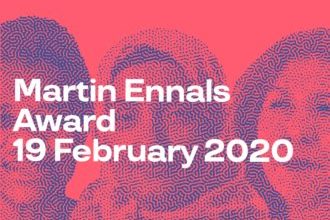
Three exceptional women – Huda Al-Sarari, Norma Ledezma and Sizani Ngubane – are the finalists for the 2020 Martin Ennals Award, a demonstration of the leading position now occupied by women in the defence of human rights. The ICJ is member of the MEA Jury.
In Yemen, Huda Al-Sarari has exposed and challenged the existence of secret prisons and many cases of torture.
In Mexico, Norma Ledezma is fighting against femicides and disappearances.
In South Africa, Sizani Ngubane is fighting for access for women to education and to land.
Three women nominated: a first
Each year, the Martin Ennals Award rewards human rights defenders from around the world who distinguish themselves by their strong commitment to promoting human rights – often at the risk of their own lives.
In 2020, for the first time the Jury nominated three women who defend the fundamental rights of their communities in sensitive contexts.
“The Martin Ennals Foundation is proud to recognize the courageous work of three women. For the 2020 edition, our Jury’s choice reflects the ever-greater global impetus of individuals – whatever their gender – who are committed to respect for human rights and women’s rights in particular,” said Isabel de Sola, Director of the Martin Ennals Foundation.
“The finalists for the 2020 Martin Ennals Award work on different continents, but all three have in common their resilience, determination, a tremendous rigour and, finally, the positive and concrete impact of their work,” added Hans Thoolen, Chairman of the Jury.
In Yemen, where the conflict has been ongoing since 2005, Huda Al-Sarari, a Yemeni lawyer, unveiled the existence of several secret detention centres where the worst violations of human rights were committed: torture, disappearances or even extrajudicial executions.
In South Africa, women face discrimination, the worst expression of which is widespread gender violence. In rural communities, they frequently have their land expropriated and are deprived of access to education and justice. Sizani Ngubane founded an organization of more than 50,000 women from rural areas in her country and has fought successfully for over 40 years for the recognition of their rights.
In Mexico, the civil population is paying a high price for the weakness of the rule of law which is underpins widespread violence and impunity. Women are the primary victims, with more than 3,500 femicides committed each year. Norma Ledezma, who is the mother of one of the victims, puts all her energy into supporting families seeking access to justice in the state of Chihuahua.
The finalists were selected by a jury made up of representatives of ten of the world’s leading human rights organizations: the ICJ, Amnesty International, Human Rights Watch, Human Rights First, International Federation for Human Rights, World Organisation Against Torture, Front Line Defenders, EWDE Germany, International Service for Human Rights and HURIDOCS.
The 2020 Martin Ennals Award will be given to one of the three finalists on 19 February 2020 at a livestreamed public ceremony. The event is hosted by the City of Geneva which, as part of its commitment to human rights, is a longstanding supporter of the Award.
Contact
Olivier van Bogaert, Director Media & Communications, ICJ representative in the MEA Jury, t: +41 22 979 38 08 ; e: olivier.vanbogaert(a)icj.org
Chloé Bitton, Communications Manager, Martin Ennals Foundation, t +41 22 809 49 25 e: cbitton(a)martinennalsaward.org
Universal-MEA2020bios-News-2019-ENG (full bios of finalists, in PDF)
Universal-MEA2020bios-News-2019-ARA (full story and bios of finalists in Arabic, PDF)