Jul 24, 2018 | News
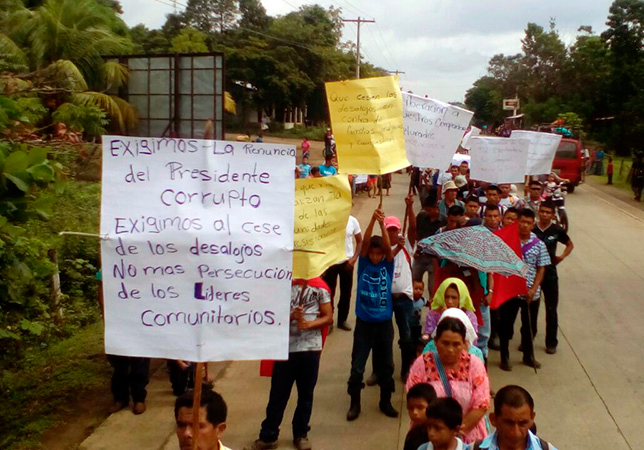
For many years, human rights defenders in Izabal have been the victims of persecution because of their opposition to the Phoenix nickel mining project.
This project has been operated by the Guatemalan Nickel Company (CGN), formally owned by Hudbay and now owned by the Solway Group.
“The ICJ expresses its deep concern about the persecution of human rights defenders opposing to nickel mining operations that are causing serious environmental damage and irreparable harm to the Lake of Izabal.
The local communities’ peaceful resistance contrasts with the violent repression that they face,” Ramon Cadena, Director of the Central American Office of the ICJ, said today.
Ramon Cadena added: “the Guatemalan government must urgently put an end to the criminalization and persecution of community leaders, journalists and all human rights defenders in the Department of Izabal.
Internal disciplinary measures should be taken against judges who through their acts contribute to the persecution of persons exercising their legitimate rights and freedoms.
The State should provide reparations for the harm and prejudice caused to human rights defenders by the public authorities. Furthermore, the International Commission against Corruption and Impunity in Guatemala (CICIG) should fully investigate these acts.“
Eduardo Bin Poou, Vice-President of the Izabal Fishers’ Association was recently detained and falsely accused without any evidence that he had committed any crime.
Last year, on 27 May 2017, Carlos Maas Coc, a leader of the Fishers’ Association was assassinated, and another fisherman, Alfredo Maquín Cocul, was wounded and these crimes remain in impunity today.
From 18-20 July, 2018, the ICJ carried out a visit to the Department of Izabal. On 19 July, the ICJ observed the hearing when the case against Jerson Xitumul, a community journalist, was dismissed for lack of evidence of any wrongdoing, at the Court for Criminal, Narcotics and Environmental Offences in Puerto Barrios.
The ICJ then held a meeting with the Izabal Fishers’ Association and on 20 July, the ICJ interviewed the Vice President of the same Association, Eduardo Bin Poou, arbitrarily detained in the Puerto Barrios prison.
The ICJ is deeply concerned by the role that judges in the Department of Izabal have played in the criminalization of human rights defenders.
Judge Edgar Aníbal Arteaga López has often abused his office by imposing exemplary punishments against human rights defenders.
This judge has handed down arbitrary sentences against journalists, fishermen, community leaders, land rights’ defenders and all those opposed to the nickel operations or who defend community rights in the Department.
For example, because of the arbitrary actions of Judge Arteaga, the community leader, Abelardo Chub Caal, remains in detention although there is no evidence that he has committed any crime.
There are other cases including that of Maria Magdalena Cuc Choc, from the Chabilchoch community, who was detained on 17 January 2018 in Puerto Barrios.
The single Judge for Criminal Proceedings, Narcotics and Environmental Offences in Puerto Barrios, Ana Leticia Peña Ayala, despite the evidence, absolved the retired Colonel Mynor Ronaldo Padilla González (former chief of security for the CGN nickel company) of all charges and ordered his immediate liberty.
During the court case, the Judge Peña Ayala prohibited the public and journalists from entering the court room for so-called “security reasons”, so that most of the proceedings were carried out behind closed doors. With this ruling, the assassination of Adolfo Ich remains in impunity and those responsible have not been punished.
In this same case, Germán Chub was left quadriplegic and the circumstances of the attack against him have never been resolved.
In the hearing on 19 July in the case of Jerson Xitumul, without any justification, Judge Arteaga also prohibited the presence of journalists and international and national observers in the court room.
Both judges flagrantly violated the principle of public hearings established in the Guatemalan Penal Code. A formal complaint was submitted to the Auxiliary of the Human Rights Attorney of the Department of Izabal concerning the actions of Judge Arteaga on 19 July.
The ICJ has stated on a number of occasions that the Guatemalan authorities have persecuted human rights defenders by charging them with crimes of land appropriation or aggravated land appropriation.
In this way, the Guatemalan authorities seek to criminalize the legitimate right to resist, enshrined in article 45 of the Guatemalan Constitution, accusing environmental human rights defenders and others of crimes such as incitement to crime, illegal detention, threats, damages, illicit meetings and marches and other acts. In practice, the State is penalizing the legitimate exercise of the rights of expression and association.
Jul 22, 2018 | News
The Supreme Court’s election of a person who is not suitable for the position of substitute judge on the Constitutional Court is deeply concerning for the sound administration of justice and the effective application of the rule of law, the ICJ said today.
Ramon Cadena, the Director of the Central American office of the ICJ added: “with this election, the SCJ has contributed to deepening the crisis in the judicial system and it will affect the little credibility that the Guatemalan people still retain in the justice system.”
The position of substitute judge on the Constitutional Court (CC) had become vacant when the former substitute judge was appointed Attorney General by the President, Jimmy Morales.
The eight judges of the SCJ who voted in favour of the substitute judge of the CC did not comply with international norms and standards on the administration of justice.
The Basic Principles on the Independence of the Judiciary state that “Persons selected for judicial office shall be individuals of integrity and ability with appropriate training or qualifications in law.”
The ICJ has been able to verify that the SCJ judges elected a person who:
- in 2010 was dismissed as Attorney General by the CC shortly after assuming office because the person was deemed not suitable;
- openly opposes the International Commission against Corruption and Impunity (ICCIG) despite the good work that the Commission undertakes to address corruption and impunity;
- in 2010, after assuming the office of Attorney General was accused of intervening in cases concerning corruption and impunity and impairing evidence in these cases.
The ICJ recalls that the CC stated that the acts carried out by Congress on 11 September 2017 were susceptible of causing “irreparable harm to the justice system”.
The ICJ considers that the election by the SCJ of the substitute judge to the CC should also be considered an act of irreparable harm to the justice system.
The ICJ therefore urges the CC to once again protect the rule of law in Guatemala.
Jul 22, 2018 | Artículos, Noticias
La reciente elección del magistrado suplente de la Corte de Constitucionalidad, llevada a cabo por la Corte Suprema de Justicia (CSJ), pone en grave riesgo la justicia constitucional y su imparcialidad.
En efecto, días atrás, la Corte Suprema de Justicia eligió al magistrado suplente de la Corte de Constitucionalidad (CC), puesto que había quedado vacante luego de que la magistrada suplente anterior, fuese electa como Fiscal General por el Presidente de la República.
Los ocho magistrados de la CSJ que votaron a favor del profesional electo como magistrado suplente de la Corte de Constitucionalidad, no han observado las normas y estándares internacionales en materia de administración de justicia.
Los Principios Básicos relativos a la Independencia de la Judicatura estipulan que “Las personas seleccionadas para ocupar cargos judiciales serán personas íntegras e idóneas y tendrán la formación o las calificaciones jurídicas apropiadas.”
No obstante, la CIJ ha podido constatar que los magistrados de la CSJ nombraron a una persona:
a) que en el año 2010, fue destituido como Fiscal General por la propia Corte de Constitucionalidad cuando recién había asumido el cargo, por haber sido considerado una persona no idónea para ocupar tan importante cargo;
b) que abiertamente ha estado en contra de la presencia de la Comisión Internacional contra la Impunidad (CICIG) en el país, a pesar del buen trabajo que ha realizado dicha comisión en la lucha contra la impunidad y la corrupción;
c) que en el 2010, ya en su calidad de Fiscal General y luego de asumir el cargo, fue acusado de afectar casos relacionados con la lucha contra la corrupción e impunidad y de intervenir y afectar la prueba existente en dichos casos.
Por ello, en esta elección, la CIJ tiene hondas y legítimas preocupaciones sobre la verdadera voluntad de la Corte Suprema de Justicia de: a) tramitar un genuino y necesario proceso de depuración del Sistema de Justicia; y b) de apoyar las reformas constitucionales que vendrían a fortalecer el Sistema de Justicia.
Además, con esta elección, la CSJ ha contribuido a profundizar la crisis del Sistema de Justicia; su decisión viene a afectar la poca credibilidad que la población guatemalteca aún tiene en el Sistema de Justicia.
Debemos recordar que los actos del Congreso de la República del 11 de septiembre de 2017, llevaron a la Corte de Constitucionalidad a catalogarlos como actos susceptibles de causar “un daño irreparable a la justicia” en Guatemala.
Es opinión de la CIJ, que la elección del magistrado suplente de la Corte de Constitucionalidad, llevada a cabo por la Corte Suprema de Justicia, también debe ser considerada como una forma de causar un daño irreparable a la justicia.
Por ello, la CIJ tiene la esperanza de que la Corte de Constitucionalidad protegerá, una vez más, el Estado de Derecho en Guatemala.
Ramón Cadena, Director para Centro América de la CIJ expresó: “El acto de la Corte Suprema de Justicia de elegir a una persona que no es idónea para el cargo de magistrado suplente de la Corte de Constitucionalidad, resulta altamente preocupante para una recta administración de justicia y la vigencia efectiva del Estado de Derecho en Guatemala”.
Jul 5, 2018 | Incidencia
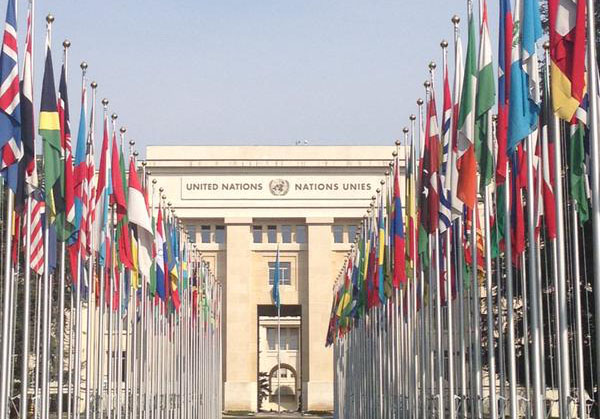
Declaración conjunta de la CIJ y 91 otras organizaciones durante un debate general en el Consejo de Derechos Humanos de la ONU.
“Una espiral que parece no tener fin”: así es como un grupo de expertos de la ONU, incluyendo los Relatores Especiales sobre alimentación, vivienda y pobreza extrema, categorizaron la situación en Venezuela en enero de este año.
También es el título de un informe presentado por la Oficina del Alto Comisionado el pasado 22 de junio, que pinta un cuadro devastador de detenciones arbitrarias y ejecuciones extrajudiciales, junto con una severa escasez de alimentos y medicinas esenciales.
Una madre venezolana, entrevistada por la Oficina del Alto Comisionado, dijo:
“Tengo una bebé que llora y llora porque no puedo darle de comer. La leche infantil cuesta tres millones de bolívares y mi esposo solo gana 1,2 millones al mes. (…) Los vecinos me han dicho que si no voto por el Gobierno me quitarán la comida, el bono en efectivo y la casa. Controlan la autoridad electoral, y por eso saben por qué partido votas”.
El Consejo de Derechos Humanos de la ONU no puede mirar hacia otro lado. Venezuela está descendiendo en espiral hacia una crisis humanitaria y de derechos humanos que requiere una respuesta urgente.
La arremetida contra opositores continúa. El pueblo ha perdido, en promedio, 11 kilos en 2017.
La mayoría de los venezolanos se van a dormir con hambre, y según ACNUR, más de 1.5 millones de venezolanos han huido del país, por razones que incluyen persecución política, violencia y la crisis humanitaria.
El resultado es un incremento de 2000% en solicitudes de asilo registradas en Latinoamérica desde 2014, y cientos de miles que permanecen en situación irregular, lo que aumenta su vulnerabilidad.
La declaración conjunta pronunciada hoy por Perú en nombre de 53 países se suma a las expresiones internacionales de preocupación.
El Consejo de Derechos Humanos también debe alzar su voz y abordar las violaciones de derechos humanos que sufre el pueblo venezolano, y que son cometidas por un miembro de este Consejo.
Instamos al Alto Comisionado a seguir informando sobre la situación en Venezuela y esperamos que la declaración conjunta de hoy lleve a una investigación internacional, que es indispensable y ya ha sido solicitada por el Alto Comisionado.
Acceso a la Justicia
Acción Solidaria
ACCSI Acción Ciudadana Contra el SIDA
Action for Solidarity
African Centre for Democracy and Human Rights Studies
ALAPLAF
Ana Belloso
ASOADNA
Asociación Civil Fuerza, Unión, Justicia, Solidaridad y Paz (FUNPAZ)
Aula Abierta
Canada Venezuela Democracy Forum
Cátedra de Derechos Humanos de la Universidad Centrooccidental Lisandro Alvarado
Center for Justice and International Law
Centro de Acción y Defensa por los Derechos Humanos – Cadef
centro de Derechos Humanos de la Universidad Metropolitana (CDH-UNIMET)
Centro de Derechos Humanos, Universidad Católica Andrés Bello
Centro de Documentación en Derechos Humanos “Segundo Montes Mozo S.J.” (CSMM)
Centro de Formación para la Democracia (CFD Venezuela)
Centro de Justicia y Paz – CEPAZ
Centro de Promoción y Defensa de los Derechos Sexuales y Reproductivos – PROMSEX
Centro para la Paz y los DDHH de la Universidad Central de Venezuela
Centro para la Paz y los DDHH Universidad Central de Venezuela
Centro Regional de derechos Humanos y Justicia de Genero: Corporación Humanas
Cisfem
CIVICUS
Civilis Derechos Humanos
Clínica Jurídica de Migrantes y Refugiados de la Universidad Diego Portales
Codevida
Comisión de Derechos Humanos de la Facultad de Ciencias Jurídicas y Políticas de la Universidad del Zulia
Comisión de Derechos Humanos de la Federación de Colegios de Abogados de Venezuela del Estado Tachira
Comisión para los Derechos Humanos del estado Zulia, Codhez
Comisión para los Derechos Humanos y la Ciudadanía (CODEHCIU)
COMITE POR UNA RADIOTELEVISIÓN DE SERVICIO PÚBLICO
Conectas Direitos Humanos
Convite AC
Coordinadora Nacional de Derechos Humanos
Defensa y Justicia Carabobo
Defiende venezuela
Dejusticia
Epikeia, Observatorio Universitario de Derechos Humanos
Espacio Público
EXCUBITUS derechos humanos en educacion
FADNNA
Federación interamericana de Abogados capitulo Venezuela seccional Anzoategui
Foro Penal
Franciscans International
Fundacion Aguaclara
Fundación Espacio Abierto
FUNDACION ETNICA INTEGRAL
Fundación Niños, Niñas y Adolescentes
Fundación para el Debido Proceso (DPLF)
Fundamujer
Humano Derecho Radio Estacion
Human Rights Watch
Iniciativa Por Venezuela
Institute on Race, Equality and Human Rights
International Commission of Jurists
International Movement Against All Forms of Discrimination and Racism (IMADR)
International Service for Human Rights
Ipys Venezuela
Juventud Unida en Acción
Laboratorio de Paz
Madres de Soacha (Colombia)
María Estrella de la Mañana
Maria Eugenia
Misión Scalabriniana Ecuador
Monitor Social A.C. (Venezuela-Edo. Nva Esparta)
Movimiento Vinotinto
Mulier
Observatorio de Derechos Humanos de la Universidad de Los Andes
Observatorio Venezolano de Conflictividad Social (OVCS)
Observatorio Venezolano de la Salud
Organización StopVIH
PADF Honduras
Padres organizados de Venezuela
Paz y Esperanza
Pedro Luis Echeverria
PEDRO NIKKEN
Prepara Familia
Promoción Educación y Defensa en DDHH (PROMEDEHUM)
Revista SIC del Centro Gumilla
Robert F Kennedy Human Rights
Seguridad en Democracia (SEDEM)
Sin Fronteras IAP
Sinergia, Red Venezolana de Organizaciones de la Sociedad Civil
Thais Parra
Transparencia Venezuela
UCV
Una Ventana a la Libertad
Unión Afirmativa de Venezuela
Union Vecinal para la Participación Ciudadana A.C
West African Human Rights Defenders Network
World Organisation Against Torture (OMCT)
Jul 5, 2018 | Advocacy, Non-legal submissions
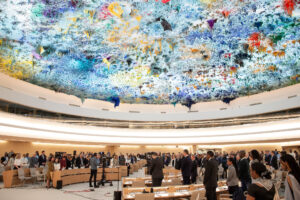
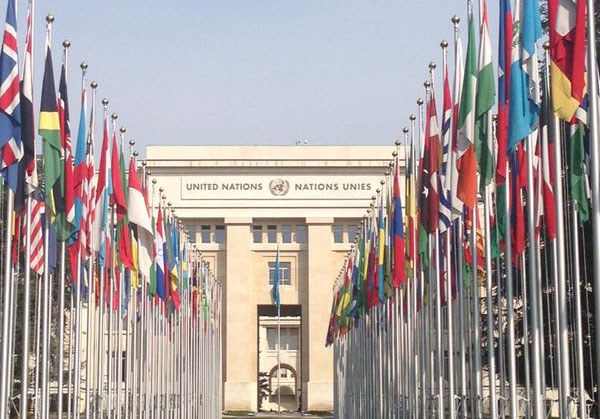
The ICJ today joined 91 other NGOs in calling on the UN Human Rights Council to act in response to the downward spiral for human rights in Venezuela.
The joint statement was delivered on behalf of the group by Human Rights Watch during a general debate (check against delivery).
“Spiralling downwards with no end in sight”: That’s how a group of UN Special Procedures, including the Special Rapporteurs on health, adequate housing, extreme poverty and food categorized Venezuela in January of this year. This is also the title of a report released by the OHCHR on June 22, which paints a devastating picture of arbitrary detentions and extrajudicial killings coupled with a severe shortage of food and basic medicines.
One Venezuelan mother interviewed by OHCHR said: “I have a little baby that cries and cries because I can´t feed her. The baby’s milk formula costs 3 million Bolivars and my husband only makes 1.2 million a month. (…) My neighbours told me that if I don’t vote for the Government they will take the food, the cash bonus and my house from me. They control the electoral authority, so they know for which party you vote.”
The UN Human Rights Council can no longer look away. Venezuela has spiralled into a human rights and humanitarian crisis that demands urgent action. The crackdown on dissent continues. The population has lost an average of 11 kilos in 2017. Most Venezuelans go to bed hungry, and according to the UNHCR, more than 1.5 million Venezuelans have fled the country, for reasons including political persecution, violence, and the ongoing humanitarian crisis. As a result, a 2,000 percent increase in asylum applications has been recorded across Latin America since 2014, and hundreds of thousands remain in an irregular situation, which increases their vulnerability.
Today’s joint statement delivered by Peru on behalf of 53 States adds to the chorus of international concern. The Human Rights Council also needs to step up and address the human rights violations suffered by the Venezuelan people at the hands of a member of this Council. We encourage continued reporting by the High Commissioner, and hope that today’s joint statement paves the way for the international investigation that the High Commissioner has called for and which is so desperately needed.
Acceso a la Justicia
Acción Solidaria
ACCSI Acción Ciudadana Contra el SIDA
Action for Solidarity
African Centre for Democracy and Human Rights Studies
ALAPLAF
Ana Belloso
ASOADNA
Asociación Civil Fuerza, Unión, Justicia, Solidaridad y Paz (FUNPAZ)
Aula Abierta
Canada Venezuela Democracy Forum
Cátedra de Derechos Humanos de la Universidad Centrooccidental Lisandro Alvarado
Center for Justice and International Law
Centro de Acción y Defensa por los Derechos Humanos – Cadef
centro de Derechos Humanos de la Universidad Metropolitana (CDH-UNIMET)
Centro de Derechos Humanos, Universidad Católica Andrés Bello
Centro de Documentación en Derechos Humanos “Segundo Montes Mozo S.J.” (CSMM)
Centro de Formación para la Democracia (CFD Venezuela)
Centro de Justicia y Paz – CEPAZ
Centro de Promoción y Defensa de los Derechos Sexuales y Reproductivos – PROMSEX
Centro para la Paz y los DDHH de la Universidad Central de Venezuela
Centro para la Paz y los DDHH Universidad Central de Venezuela
Centro Regional de derechos Humanos y Justicia de Genero: Corporación Humanas
Cisfem
CIVICUS
Civilis Derechos Humanos
Clínica Jurídica de Migrantes y Refugiados de la Universidad Diego Portales
Codevida
Comisión de Derechos Humanos de la Facultad de Ciencias Jurídicas y Políticas de la Universidad del Zulia
Comisión de Derechos Humanos de la Federación de Colegios de Abogados de Venezuela del Estado Tachira
Comisión para los Derechos Humanos del estado Zulia, Codhez
Comisión para los Derechos Humanos y la Ciudadanía (CODEHCIU)
COMITE POR UNA RADIOTELEVISIÓN DE SERVICIO PÚBLICO
Conectas Direitos Humanos
Convite AC
Coordinadora Nacional de Derechos Humanos
Defensa y Justicia Carabobo
Defiende venezuela
Dejusticia
Epikeia, Observatorio Universitario de Derechos Humanos
Espacio Público
EXCUBITUS derechos humanos en educacion
FADNNA
Federación interamericana de Abogados capitulo Venezuela seccional Anzoategui
Foro Penal
Franciscans International
Fundacion Aguaclara
Fundación Espacio Abierto
FUNDACION ETNICA INTEGRAL
Fundación Niños, Niñas y Adolescentes
Fundación para el Debido Proceso (DPLF)
Fundamujer
Humano Derecho Radio Estacion
Human Rights Watch
Iniciativa Por Venezuela
Institute on Race, Equality and Human Rights
International Commission of Jurists
International Movement Against All Forms of Discrimination and Racism (IMADR)
International Service for Human Rights
Ipys Venezuela
Juventud Unida en Acción
Laboratorio de Paz
Madres de Soacha (Colombia)
María Estrella de la Mañana
Maria Eugenia
Misión Scalabriniana Ecuador
Monitor Social A.C. (Venezuela-Edo. Nva Esparta)
Movimiento Vinotinto
Mulier
Observatorio de Derechos Humanos de la Universidad de Los Andes
Observatorio Venezolano de Conflictividad Social (OVCS)
Observatorio Venezolano de la Salud
Organización StopVIH
PADF Honduras
Padres organizados de Venezuela
Paz y Esperanza
Pedro Luis Echeverria
PEDRO NIKKEN
Prepara Familia
Promoción Educación y Defensa en DDHH (PROMEDEHUM)
Revista SIC del Centro Gumilla
Robert F Kennedy Human Rights
Seguridad en Democracia (SEDEM)
Sin Fronteras IAP
Sinergia, Red Venezolana de Organizaciones de la Sociedad Civil
Thais Parra
Transparencia Venezuela
UCV
Una Ventana a la Libertad
Unión Afirmativa de Venezuela
Union Vecinal para la Participación Ciudadana A.C
West African Human Rights Defenders Network
World Organisation Against Torture (OMCT)