
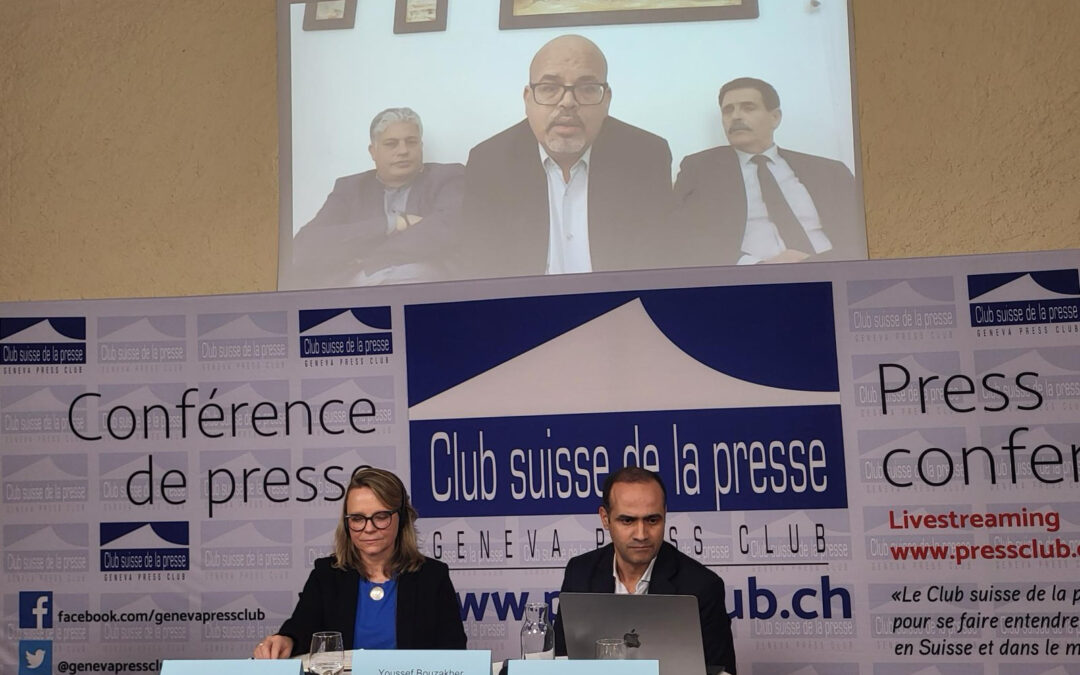
Complaint to the UN Human Rights Committee: Tunisia Must Answer for Attacks on Judicial Independence
Geneva, 12 February 2024. Today, with the support of the International Commission of Jurists (ICJ) and Human Rights in Practice, Judge Youssef Bouzakher, President of the dissolved High Judicial Council (HJC) and one of the 57 judges and prosecutors...
Gaza: Israel must implement Provisional Measures ordered by the International Court Of Justice
The ICJ welcomes today’s near-unanimous Order of the International Court of Justice (the Court) in the case of South Africa v. Israel, indicating provisional measures under the 1948 Genocide Convention (the Convention).
“Through this Order, the world’s highest judicial authority has acknowledged that there is a risk of genocide being committed in Gaza,” said Said Benarbia, MENA Programme Director of the International Commission of Jurists. “It is now incumbent on Israel to implement the provisional measures – as well as its obligations under the United Nations Charter – as a matter of urgency.”
In its Order delivered orally in The Hague following oral submissions by South Africa and Israel on 11 and 12 January 2024 respectively, the Court found it had prima facie jurisdiction over the case and indicated six (6) provisional measures.
The Court ordered that Israel: (1) take all measures within its power to prevent the commission of all acts within the scope of Article II(a)-(d) of the Convention; (2) ensure with immediate effect that its military does not commit any acts described in the first order; (3) take effective measures to prevent the destruction and ensure the preservation of evidence related to allegations of acts within the scope of Article II and Article III of the Convention; and (4) report to the Court on all measures taken to give effect to the Order within one month of the Order.
The Court also ordered that Israel take all measures within its power to prevent and punish the direct and public incitement to commit genocide against people in Gaza, and enable the provision of urgently needed basic services and humanitarian assistance. The Court also reminded all parties of their obligations under international humanitarian law, and called for the release of hostages.
The ICJ notes that at the provisional measures stage, the Court does not determine the merits of the case. It therefore has yet to make a determination whether Israel has committed, sanctioned, or incited genocide in violation of the Genocide Convention. A hearing on the merits will be held at a later stage. Furthermore, the role of the Court is to establish the legal responsibility of States, not individuals, in accordance with international law. The determination of the responsibility of any individuals that might be responsible for genocide would fall to the International Criminal Court (ICC), which is presently investigating allegations of international crimes committed by both parties.
This unequivocal call by the Court – a principal organ of the United Nations – for Israel to take all effective measures to prevent the commission of genocide highlights the crucial importance of swift and decisive action by the international community to: i) as previously urged by the International Commission of Jurists, ensure an immediate ceasefire and ensure the release of hostages, and ii) cease aid or assistance to Israel that may facilitate the commission of acts that may amount to genocide or undermine all States’ obligations under the Convention to prevent genocide.
“As the number of Palestinians killed in Gaza since 7 October surpasses 25,000 and continues to mount, the need for international cooperation to enforce these legally binding provisional measures cannot be overstated”, added Banarbia. “Respect for international law, including the Genocide Convention and its preventive function, demands no less”.
Notwithstanding the Order, the ICJ reiterates that individuals from all parties to the conflict, including Israel and Hamas, must be held criminally accountable for any violations of international criminal law committed since 7 October and all States should refrain from providing assistance to any party to the conflict that may amount to complicity in such criminal acts, including by imposing an arms embargo. The ICJ also urges States to support the work of the ICC and the Independent Commission of Inquiry, and, where possible, exercise universal jurisdiction over crimes under international law.
Contact:
Said Benarbia, Director, ICJ Middle East and North Africa Programme, email: said.benarbia@icj.org
Katherine Iliopoulos, Legal Adviser, ICJ Middle East and North Africa Programme, email: katherine.iliopoulos@icj.org
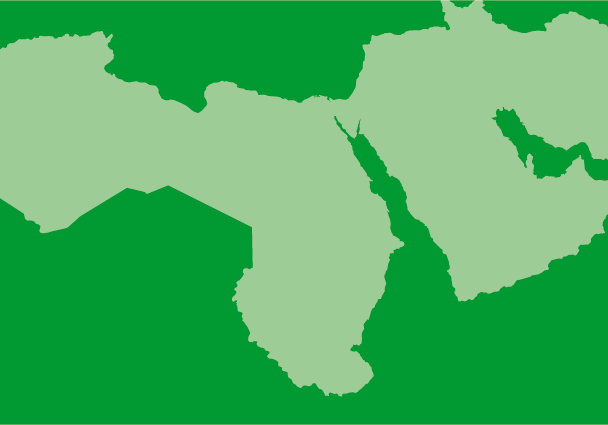
Israel/Palestine: Authorities must end impunity for Israeli settler violence
With 2023 being the deadliest year on record for Palestinians in the West Bank, the International Commission of Jurists (ICJ) condemns the rampant violent attacks by Israeli settlers, almost all of which are backed or tolerated by the Israeli authorities.
“The Israeli authorities must take immediate action to bring a halt to these violent attacks, some of which have led to the forced displacement of Palestinians,” said Said Benarbia, ICJ MENA director. “Those who are responsible for the attacks must be brought to justice with criminal sanctions commensurate to the gravity of the offences.”
Such incidents have dramatically escalated since the renewal of hostilities on 7 October, when Hamas launched unlawful attacks against Israeli civilians, which led to an indiscriminate and disproportionate response by Israeli forces in Gaza. Between 7 October and 27 December 2023, settler attacks against Palestinians in the West Bank led to the killing of at least seven adults and one child. The perpetrators have thus far enjoyed near complete impunity for the apparently unlawful killing and injury of Palestinians, with only two settlers arrested in relation to the attacks and no indictments filed.
Under international humanitarian law and human rights law, Israel, as the occupying power, has an obligation to ensure the safety and protection of the population of the West Bank and the rest of the Occupied Palestinian Territory. Moreover, under human rights law, including under the International Covenant on Civil and Political Rights, Israel has an obligation to protect the population against human rights violations, including their rights to life and security of person, and to prevent such violations, in particular by addressing incitement to hostility or violence.
OHCHR reported that between 7 October and 27 December 2023, Israeli settlers perpetrated at least 367 violent attacks against Palestinians, which caused the displacement of 1208 members of West Bank herding communities, including 586 children. Overall, 2023 was the deadliest year for Palestinians in the West Bank with the number of settler attacks against Palestinian civilians rising to an average of seven per day. In Zanuta village alone, armed Israeli settlers, some in Israeli Army reservist uniforms, forced 150 Palestinians from their homes. The Israeli Defence Forces have generally failed to intervene to prevent and stop violent acts against Palestinians, allowing Israeli settlers to seemingly exploit international preoccupation with events in Gaza to escalate efforts to forcibly remove Palestinians from their homes in the West Bank.
International law prohibits the forced displacement of persons lawfully present in an area by coercion or expulsion, without grounds permitted under international law. In addition, under international law, State-backed or tolerated Israeli settlers’ violence against civilian residents of the Occupied West Bank may amount to “an intentional and severe deprivation of fundamental rights contrary to international law by reason of the identity of the targeted group or collectivity.” This conduct may amount to the crimes against humanity of “deportation or forcible transfer of population” and “persecution”, respectively, if committed knowingly as part of a widespread or systematic attack against the Palestinian population.
The ICJ urges the Israeli government to take immediate and effective measures to prevent and stop settlers from perpetrating further crimes against the residents of the West Bank, to protect the civilian population from unlawful attacks, investigate all instances of settler violence and, when evidence so warrants, to bring those purportedly responsible to justice.
The ICJ also calls for the Israeli government to cease actions liable to further enable settlers to commit additional acts of unlawful violence against Palestinians, including by halting the implementation of its policy to expand settlements, the enforcement of laws facilitating the expropriation of Palestinian property by settler organizations, the unregulated supply of arms to settler communities, and official statements that risk being interpreted as calls for the eradication of Palestinian communities.
Finally, the ICJ calls on the International Criminal Court to investigate these criminal acts as potential war crimes and crimes against humanity that fall under the Rome Statute, and, where warranted, initiate prosecutions of those responsible.
Background
Israel’s establishment of settlements in Palestinian territory occupied since 1967 constitutes a flagrant violation of international humanitarian law. UN experts have also denounced the ongoing forced eviction of Palestinian families in East Jerusalem through the promulgation of discriminatory law that “helps settler organizations expropriate Palestinian properties.” International humanitarian and human rights law prohibit the unlawful seizure of private property and pillaging on occupied territory.
In February 2023, the newly formed Israeli government signed a coalition agreement that seeks to formally extend and annex settlements in the occupied West Bank, and establishes civilian administration for Israeli settlers in illegal West Bank settlements. The ICJ considers the settlement policy outlined in the coalition agreement to be manifestly unlawful under international law, paving the way for the further unlawful entrenchment of discriminatory and acquisitive Israeli practices towards Palestinian communities, while also being liable to incite further settler violence. In this regard, the UN Special Committee to Investigate Israeli Practices noted “a direct correlation between the policies of the Israeli government, as articulated in its coalition agreement, and Israeli practices on the ground,” noting that “settler attacks have increased on average from two a day in 2022 to three a day in 2023.”
Contact
Said Benarbia, Director, ICJ Middle East and North Africa Programme, t: +41-22-979-3800; e: said.benarbia(a)icj.org
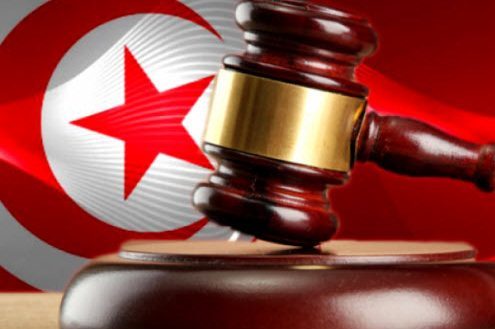
Tunisia: Zied Elheni’s guilty verdict another chilling attack on media and free speech
The ICJ firmly condemns the criminal conviction and sentencing of journalist and columnist Zied Elheni to a six-month suspended sentence of imprisonment on 10 January 2024 on spurious charges — an act of clear retaliation for Zied Elheni’s legitimate exercise of his right to freedom of expression, including to criticize government members.
“This guilty verdict is part and parcel of an escalation in attacks on journalists and another concrete illustration of the Tunisian authorities’ authoritarian drift and of their drive to restrict the legitimate exercise of the right to freedom of expression and to silence independent voices in the country,” said Said Benarbia, ICJ Middle East and North Africa programme director. “These attacks violate media freedom and the right of the public to freely access information and have a chilling effect on free speech,” he added.
On 28 December 2023, Zied Elheni was summoned to appear before the Fifth Central Cybercrime Brigade of the Aouina National Guard, a few hours after he had made a statement critical of the Minister of Commerce on Radio IFM. On the same day, the public prosecutor at the Tunis First Instance Tribunal decided to remand Elheni in custody on suspicion of offences under article 24 of Decree-Law 54; his detention was extended by 48 hours on 30 December.
On 1 January, the public prosecutor at the Tunis First Instance Tribunal charged Elheni with “harming or disturbing third parties through public telecommunications networks,” under article 86 of the Telecommunications Code, and remanded him in custody pending trial. On 10 January, Elheni was tried before the Criminal Chamber of the Tunis First Instance Tribunal and convicted of the charges.
In June 2023, Elheni was arrested and questioned by the Fifth Central Cybercrime Brigade of the Aouina National Guard in a distinct case, following a statement he had made on the radio in which he had criticized the authorities’ arbitrary reliance on the crime of offending the President of the Republic under article 67 of the Criminal Code. He was later released and there have been no further developments in this case.
The ICJ calls on the Tunisian authorities to quash Elheni’s conviction and sentence under article 86 of the Telecommunications Code and to drop all charges against all journalists currently being prosecuted solely for the legitimate exercise of their journalistic duties and the peaceful exercise of their right to freedom of expression, and to immediately cease all practices that impede the independent work of journalists.
Background
There has been a growing pattern of prosecutions against journalists since July 2021 in Tunisia. Monia Arfaoui and Mohamed Boughalleb were prosecuted in March and April 2023 based on Decree-Law 54, in relation to their work as investigative journalists. Noureddine Boutar, journalist and director of Mosaique FM, was also arrested and placed in pre-trial detention in February 2023 in relation to criminal proceedings based on “State security-related” charges aimed to crack down on government critics, before being released on bail in May 2023. The charges against him, however, are still pending.
Contact
Said Benarbia, Director, ICJ Middle East and North Africa Programme, t: +41-22-979-3800; e: said.benarbia(a)icj.org
Recent News
 Myanmar: As armed conflict rages and military rule continues, critical measures can be taken towards eventual justice and accountability for victims of Enforced Disappearance10 Sep 2026
 HRC63: ICJ Raises Alarm over Repression in Tunisia and Arbitrary Detention in El Salvador09 Sep 2026
 HRC63: ICJ Calls for Protection of Lawyers and Accountability in Myanmar07 Sep 2026
 More than fifty years on: enforced disappearance, the families who named it, and the reframing of international protection26 Aug 2026