Mar 12, 2021 | News
Non-governmental organizations (NGOs) from around the world expressed their strong support today for a joint declaration by UN member states condemning the human rights situation in Egypt which was delivered at the UN Human Rights Council.
In the declaration governments expressed “deep concern” for widespread human rights violations committed with impunity by the Egyptian authorities.
The joint declaration, signed by 31 states and delivered by Finland at the Council’s 46th session highlighted “restrictions on freedom of expression and the right to peaceful assembly, the constrained space for civil society and political opposition.” It also condemned the use of counter-terrorism laws to punish peaceful critics.
“The March 12 declaration ends years of a lack of collective action at the UN Human Rights Council on Egypt, despite the sharply deteriorating human rights situation in the country,” said Bahey Hassan, Director of the Cairo Institute for Human Rights Studies. “Countries should continue to make it clear to the Egyptian government that it will no longer have a carte blanche to arbitrarily imprison, torture or violate the right to life or unlawfully kill people.”
More than 100 NGOs from around the world wrote to UN member states in early 2021, warning that the Egyptian government is attempting to “annihilate” human rights organizations and eradicate the human rights movement in the country through sustained, widespread, and systematic attacks.
The organizations had asked UN member states to adopt a resolution establishing a monitoring and reporting mechanism on Egypt. The declaration delivered on March 12 is a significant step and should be followed up by concrete action toward achieving this goal, the organizations said. The declaration was on the Council’s agenda under Item 4, which provides a space to raise concerns about grave and systematic human rights violations, including country-specific situations.
The last joint declaration on the human rights situation in Egypt at the Human Rights Council was delivered by Iceland and co-signed by 26 countries in March 2014.
Since that time the human rights situation in Egypt has deteriorated dramatically. The Egyptian authorities have virtually obliterated almost all space for free expression, peaceful assembly, and association. Under President Abdel Fattah al-Sisi’s rule security forces, with the complicity of prosecutors and judges, have arrested, detained or prosecuted thousands, including hundreds of human rights defenders, religious minorities’ rights activists, peaceful protesters, journalists, academics, artists, politicians and lawyers.
Many have been forcibly disappeared, tortured or otherwise ill-treated, and detained for months or years in inhumane conditions without trial. Those detained are regularly held on the basis of unfounded terrorism-related charges. If referred to trial individuals are often convicted in grossly unfair proceedings before military courts and through mass trials. Many have been sentenced to death and executed after unfair trials that have relied on statements likely obtained through torture. The authorities have also used morality and debauchery laws to arrest and detain women influencers, sexual violence survivors and witnesses, and LGBTI individuals and activists.
The UN Working Group on Arbitrary Detention has found that arbitrary detention is a systematic problem in Egypt. The UN Committee against Torture said in 2017 following an inquiry on Egypt that the facts gathered by the committee “lead to the inescapable conclusion that torture is a systematic practice in Egypt.”
“Today’s declaration sends a clear message to the Egyptian authorities that the world will no longer turn a blind eye to their relentless campaign to crush peaceful dissent. The authorities must take urgent action to comply with their obligations under international law, starting by releasing the thousands of men and women arbitrarily detained, protecting those in custody from torture and other ill-treatment, and ending the crackdown on peaceful activism, ” said Kevin Whelan, Amnesty International representative to the UN in Geneva.
In the March 12 joint declaration governments called for “accountability and an immediate end of impunity” for abuses. Governments also called on Egypt to cease “abuses of due process,” the excessive use of “extended pre-trial detention,” and “the practice of adding detainees to new cases with similar charges after the legal limit for pre-trial detention has expired.”
Governments that have joined the declaration, led by Finland, include: Australia, Austria, Belgium, Bosnia and Herzegovina, Bulgaria, Canada, Costa Rica, Czech Republic, Denmark, Estonia, France, Germany, Iceland, Ireland, Italy, Latvia, Liechtenstein, Lithuania, Luxembourg, Montenegro, the Netherlands, New Zealand, North Macedonia, Norway, Slovenia, Spain, Sweden, Switzerland, the United Kingdom, and the United States of America. Other governments can join the declaration until two weeks after the end of the current Human Rights Council session.
“Bringing the human rights situation in Egypt to the attention of the Human Rights Council and properly addressing these abuses is of fundamental importance to ensure Egypt’s long-term stability and the dignity of its people,” said John Fisher, Geneva Director at Human Rights Watch.
The Co-signing organizations to this statement include:
Amnesty International, Arab Network for Knowledge and Human Rights (ANKH), Artists at Risk (AR), Association of juridical studies on Immigration (ASGI), The Cairo Institute for Human Rights Studies (CIHRS), le Comité de Vigilance pour la Démocratie en Tunisie, Committee for Justice, Democracy for the Arab World Now (DAWN), DIGNITY – Danish Institute Against Torture, The Egyptian Front for Human Rights, Egyptian Human Rights Forum, EuroMed Rights, The Freedom Initiative, Freedom House, Human Rights Watch (HRW), humanrights.ch, International Federation for Human Rights (FIDH), The International Commission of Jurists (ICJ), International Service for Human Rights (ISHR), MENA Rights Group, Minority Rights Group International, MTÜ Andalus Institute for Tolerance and anti-Violence Studies, The Project on Middle East Democracy (POMED), Réseau des Organisations de la Société Civile pour l’Observation et le Suivi des Elections en Guinée, PEN International, People in Need, Robert F. Kennedy Human Rights, Tunisian Coalition to Abolish the Death Penalty
Download
Press release in English and Arabic.
Q&A in English.
Contact
Said Benarbia, International Commission of Jurists (Geneva) – said.benarbia@icj.org
Jeremie Smith, Cairo Institute for Human Rights Studies (Geneva) – jsmith@cihrs.org
Neil Hicks, Cairo Institute for Human Rights Studies (New York) – nhicks@cihrs.org
John Fisher, Human Rights Watch (Geneva) – fisherj@hrw.org
Amr Magdi, Human Rights Watch (Berlin) – magdia@hrw.org
Kevin Whelan, Amnesty International (Geneva) – kevin.whelan@amnesty.org
Sara Hashash, Amnesty International (London) – Sara.Hashash@amnesty.org
Rasmus Grue, Christensen, DIGNITY – Danish Institute Against Torture – rgc@dignity.dk
Antoine Madelin, International Federation for Human Rights (Paris), amadelin@fidh.org
Mohammed Soltan, The Freedom Initiative – Soltan@thefreedomi.org
Mar 9, 2021 | News
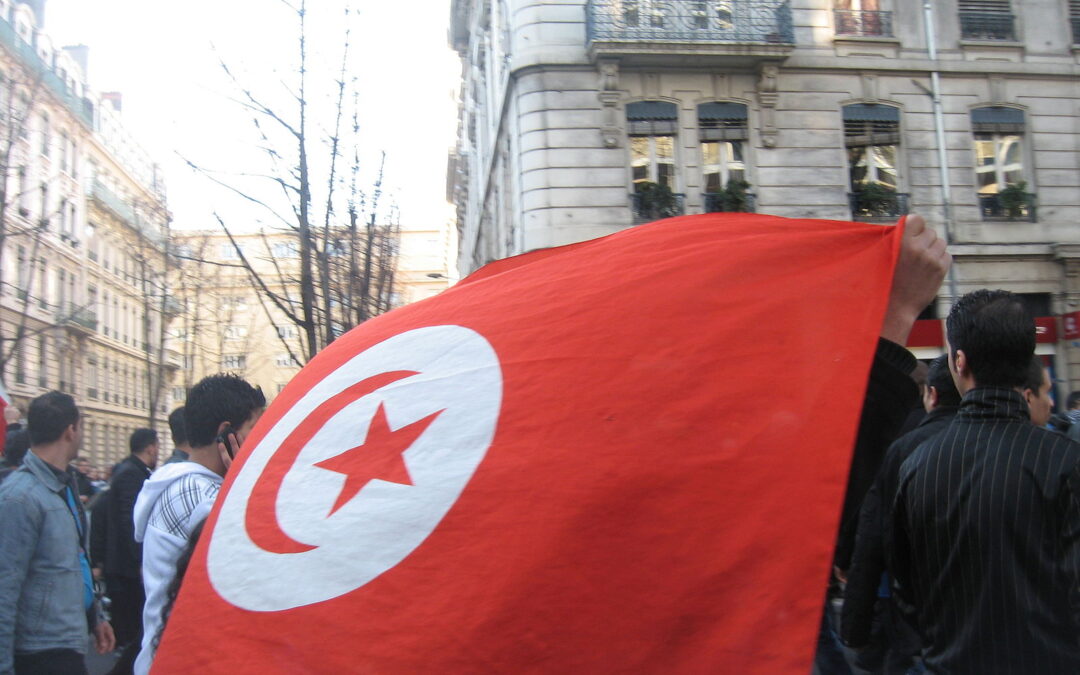
Tunisian authorities must respect the rights to freedom of expression, association and peaceful assembly, and stop the systematic targeting of protesters, lawyers and civil society activists, said the ICJ today.
البيان الصحفي باللغة العربية مرفق أدناه
Since the outbreak of social justice protests on 15 January 2021, Tunisian security forces have systematically targeted protesters, including minors, lawyers and civil society activists.
Over the last weeks, reports of abuses at the hands of the Tunisian security forces have included: hundreds of arbitrary arrests; deaths in custody in disputed circumstances; physical assaults; rape and death threats; and refusing detainees access to legal counsel. While to date more than half of the people arrested since the beginning of the protests have been released, only a few prosecutions arising from the security forces’ systematic campaign of arrests have taken place, and hundreds of people are still in custody awaiting to be brought before a judge. According to the information available to the ICJ, individuals are being prosecuted under different charges, including “insulting the police” and “abuse of morals”.
“The systematic targeting of peaceful protesters and the other abuses that we have witnessed in recent weeks are clear instances of the wider impunity that Tunisian security forces have continued to enjoy over decades,” said Said Benarbia, the ICJ’s MENA Programme Director
“The Tunisian authorities should immediately halt these practices by reforming the country’s security legislation and open independent and impartial investigations into these abuses.”
To date, Tunisia has failed to adopt a comprehensive reform of its security legislation in line with the Constitution and the country’s obligations under international human rights law and standards.
As reported on multiple occasions, investigations into reports of human rights violations by Tunisian security forces have rarely led to successful prosecutions of perpetrators in the past. Moreover, while since 2018 prosecutions arising from police abuses committed under the previous regime have started before the Specialized Criminal Chambers, numerous obstacles continue to affect the progress of trials, and no verdict has been delivered to date.
“It is time for the Tunisian authorities to abide by the Constitution and international human rights law and standards and commit to a complete end to the security forces’ oppressive practices,” Benarbia added.
“Only by undertaking a full review of Tunisia’s security laws and bringing perpetrators of human rights violations to justice will the country be able to break this cycle of abuses and ensure full respect for fundamental freedoms and human rights.”
Contact
Said Benarbia, Director, ICJ Middle East and North Africa Programme, t: +41-22-979-3817; e: said.benarbia(a)icj.org
Valentina Cadelo, Legal Adviser, ICJ Middle East and North Africa Programme, e: valentina.cadelo(a)icj.org
Asser Khattab, Research and Communications’ Officer, ICJ Middle East and North Africa Programme, e: asser.khattab(a)icj.org
Download
Press release in English and Arabic.
Mar 9, 2021 | Advocacy, Non-legal submissions
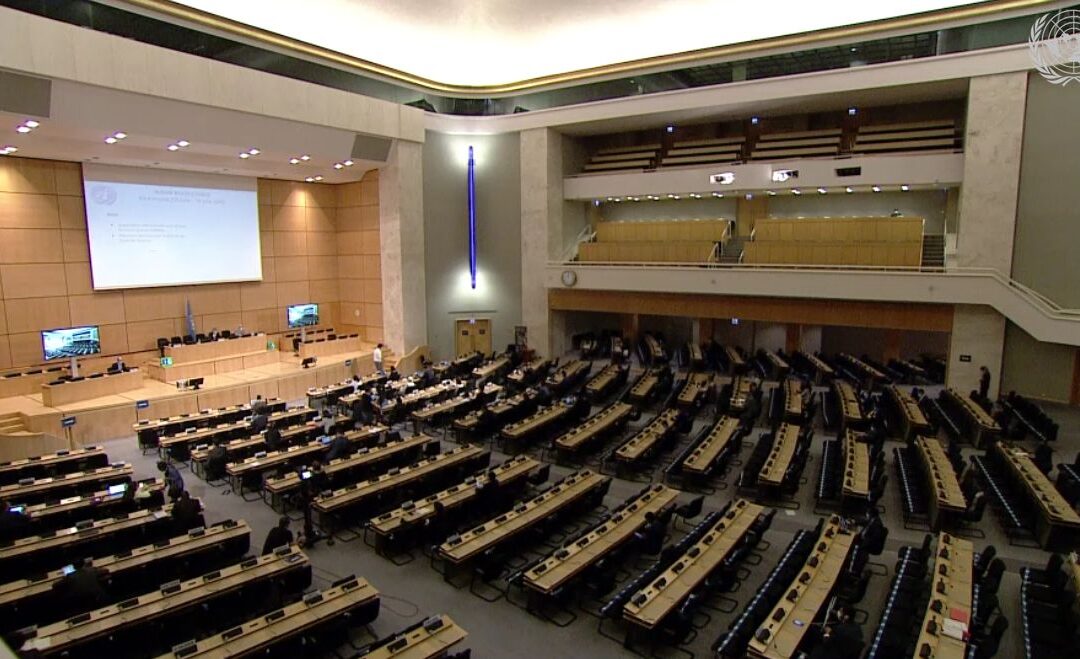
Today, the ICJ joined an oral statement at the UN Human Rights Council denouncing attacks on lawyers occurring in Iran.
The statement was delivered by IBAHRI on behalf also of ICJ, Lawyers for Lawyers, Lawyers’ Rights Watch Canada and The Law Society, during the interactive dialogue with the UN Special Rapporteur on the ISlamic Republic of Iran.
The statement reads as follows:
“The International Bar Association’s Human Rights Institute (the IBAHRI), the International Commission of Jurists (the ICJ), Lawyers for Lawyers, Lawyers’ Rights Watch Canada, and The Law Society express deep concerns at the arbitrary arrests and detention of lawyers and others sentenced to exorbitant prison terms for legitimately carrying out their professional activities. We draw special attention to the cases of lawyers Nasrin Sotoudeh and Amirsalar Davoodi, who remain imprisoned and were excluded from Covid-19 prisoner release programmes.
Their imprisonment means that access to justice for citizens in Iran is restricted. We are alarmed by the widespread violation of fair trial guarantees, including the denial of access to a lawyer of one’s own choosing, as well as the recent application of the death penalty in Iran. We also condemn Iran’s non-compliance with international standards on conditions of detention and reports of torture of those critical of the regime.
We urge the Iranian authorities to:
- Immediately and unconditionally release Nasrin Sotoudeh, Amirsalar Davoodi and other lawyers who remain in prison after conviction in an unfair trial;
- Pending release, ensure compliance with international standards on conditions of detention;
- Ensure that lawyers and others can carry out their profession free from undue interference, including judicial harassment;
- Establish an immediate moratorium on the death penalty, pending abolishment; and
- Comply with its international legal obligations in respecting, guaranteeing, and protecting human rights.”
Find the statement here: Iran-UN-JointStatement-Lawyers-Advocacy-NonLegal-HRC46-2021-ENG
Contact:
Massimo Frigo, ICJ UN Representative, e: massimo.frigo(a)icj.org, t: +41797499949
Mar 4, 2021 | News
Israeli and Palestinian authorities should immediately grant the International Criminal Court unhindered access to Palestinian territory to investigate alleged crimes under international law committed by all parties to the conflict, the International Commission of Jurists said today.
The International Criminal Court’s prosecutor yesterday announced the initiation of an investigation into “war crimes [that] have been or are being committed in the West Bank, including East Jerusalem, and the Gaza Strip.”
“Israel, the United States and other States must refrain from any efforts undermining the Office of the Prosecutor and the integrity of its investigation,” said Said Bearbia, ICJ’s MENA programme director. “Rather, they should comply with universally recognized norms on the independence and impartiality of judges and prosecutors.”
The ICJ calls on all states and concerned organizations to cooperate fully with and provide any necessary assistance to Office of the Prosecutor in carrying out its investigation.
The Israeli and Palestinian authorities, in particular, should grant the Office of the Prosecutor and its members unhindered access to all Palestinian territory without delay, and allow them to visit sites, meet and speak freely and privately with victims and witnesses, and access any relevant documentation or records.
It is critical that the ICC’s investigators and prosecutors, like any other investigators and prosecutors, should be able to perform their professional functions independently, impartially, diligently and without intimidation, hindrance, harassment or improper interference.
“The ICC investigation offers a unique opportunity to begin addressing the structural impunity that prevails over past and ongoing crimes under international law in Palestine,” Benarbia added. “It’s a crucial initial step in the realization of the victims’ rights to justice, truth and reparations.”
On 5 February 2020, the ICC decided it can assert its jurisdiction over serious crimes alleged to have occurred in the State of Palestine since 13 June 2014.
On 16 March 2020, the ICJ submitted amicus curiae observations in support of the Court’s territorial jurisdiction.
Find the Press Release in Arabic here: PalestineIsrael-PR-ICC-ARA2-2021
Contact:
Said Benarbia, Director, ICJ Middle East and North Africa Programme; t: +41 22 979 3817 e: said.benarbia(a)icj.org
Asser Khattab, Research and Communications Officer, ICJ Middle East and North Africa Programme, asser.khattab@icj.org
Mar 2, 2021 | News
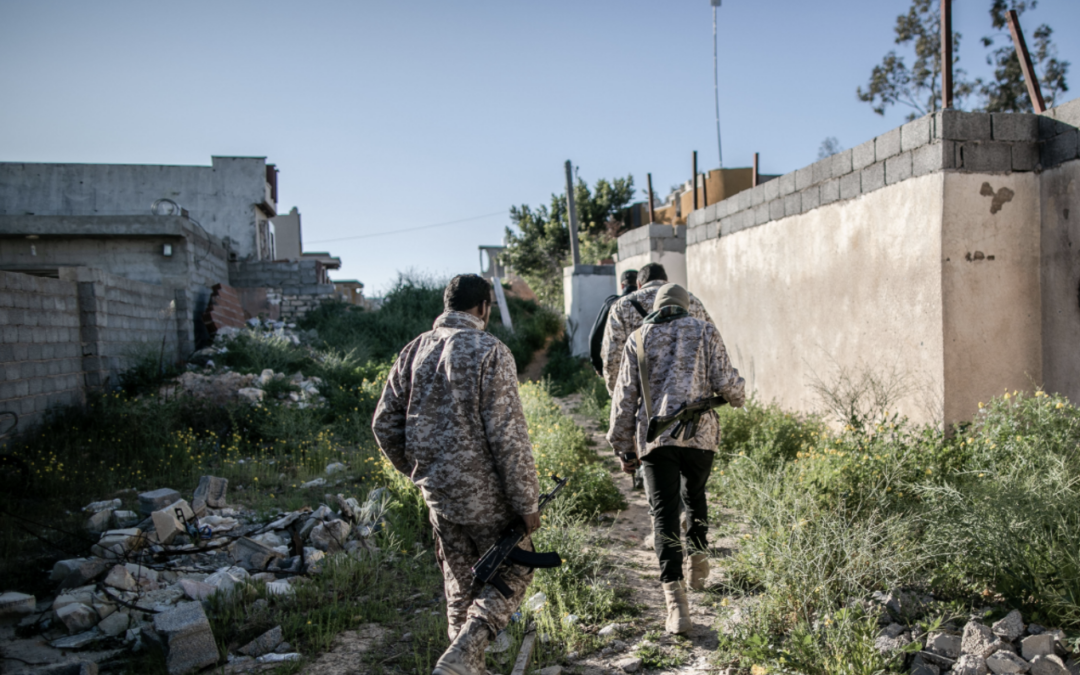
Justice and accountability in Libya can only be achieved if activists and lawyers fully engage with and support the UN Independent Fact-Finding Mission on Libya (FFM) in documenting and collecting evidence of serious violations in the country, the ICJ said today.
To facilitate such engagement, the ICJ’s Question and Answer (Q&A) published today provides guidance for Libyan and international civil society actors on:
- the role and mandate of the FFM;
- the FFM’s relationship with other accountability mechanisms, such as the International Criminal Court (ICC);
- what the FFM may be expected to achieve; and
- how to engage with the FFM.
“The success of the FFM’s mandate rests largely on its ability to establish the facts about and collect evidence of violations and abuses of international human rights and humanitarian law perpetrated in Libya.”
“We urge lawyers, activists and civil society actors to fully support the FFM in achieving these objectives and bringing about the accountability that has so far eluded Libya.”
– Said Benarbia, the ICJ’s MENA Programme Director.
The FFM was established by the UN Human Rights Council on 22 June 2020 through resolution 43/39. Its mandate includes:
- Establishing facts and circumstances of the human rights situation throughout Libya;
- Collecting and reviewing relevant information;
- Documenting alleged violations and abuses of international human rights law and international humanitarian law, including any gendered dimensions of such violations and abuses; and
- Preserving evidence with a view to ensuring that perpetrators be held accountable.
While the FFM cannot conduct criminal investigations or prosecute individuals, the evidence preserved may be used by Libyan judicial authorities, the ICC, and third countries exercising universal jurisdiction.
The FFM has issued a call for submissions of relevant information and materials, the deadline for which is 30 June 2021.
Contact
Said Benarbia, Director, ICJ Middle East and North Africa Programme; t: +41 22 979 3817, e: said.benarbia(a)icj.org
Vito Todeschini, Legal Adviser, ICJ Middle East and North Africa Programme; t: +216 53 334 679, e: vito.todeschini(a)icj.org
Asser Khattab, Research and Communications Officer, ICJ Middle East and North Africa Programme; e: Asser.Khattab(a)icj.org
Download
Q&A on the UN International Fact-Finding Mission in English and Arabic.
Press Release in English and Arabic.