Sep 29, 2020 | Advocacy, Non-legal submissions
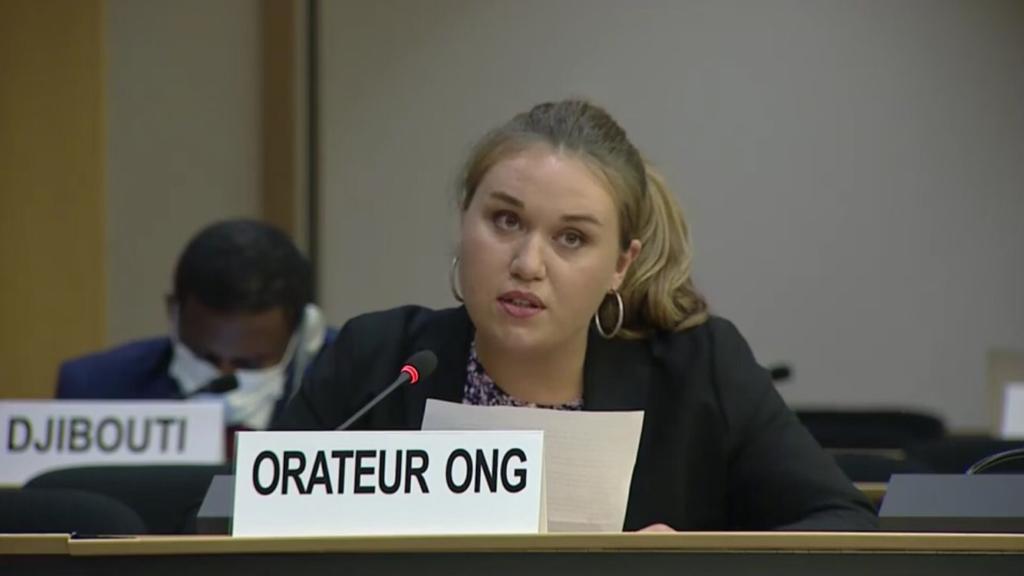
At the Human Rights Council, the ICJ today highlighted the problem of abuse of counter-terrorism laws to perpetrate reprisals against those who cooperate with the UN, including particularly by Egypt.
The oral statement was delivered in a general debate on human rights bodies and mechanisms (item 5), and read as follows:
“Madame President,
The International Commission of Jurists (ICJ) welcomes the report of the Secretary General on Cooperation with the United Nations, its representatives and mechanisms in the field of human rights (A/HRC/45/36). The ICJ particularly concurs with its conclusion that reprisals perpetrated through abuse of national security and counter-terrorism laws and measures continue at alarming levels (para 131), and that such abuse also frequently occurs in the context of broader repressive environments for civil society or dissent (para 132).
While the report documents such abuses in a number of countries, the pattern of abuse of such laws by the government of Egypt presented in the report should be of particular concern to this Council (paras 65 to 70, Annex I paras 40 to 51, Annex II paras 44 to 53).[1] Further relevant cases from Egypt continue, including shortly before this session began.
These reprisals resonate with broader patterns of abuse of counter-terrorism and national security laws in Egypt, including for instance targeting lawyers, which are also severely exacerbated by the lack of independence of the judiciary in Egypt, particularly in the special terrorism court circuits.
Madame President, these patterns of abuse only further illustrate and underscore civil society’s concern with the role Egypt seeks for itself on issues of terrorism and human rights at the Council. In that regard, we reiterate our concerns about the pending report of the Advisory Committee, responding to the request it received under the last Egypt-led separate resolution on “the effects of terrorism” (resolution 34/8) to report on “the negative effects of terrorism on the enjoyment of all human rights and fundamental freedoms, with a particular focus on economic, social and cultural rights, including as a result of diverting foreign direct investment, reducing capital inflows, destroying infrastructure, limiting foreign trade, disturbing financial markets, negatively affecting certain economic sectors and impeding economic growth.”
The Human Rights Council should not, Madame President, countenance such attempts to divert and dilute its limited resources and attention away from the most acute issues on this theme from a human rights perspective: preventing and responding to violations in countering terrorism and a human-rights based approach to victims of terrorism.”
[1] Underlying documents in a number of cases mentioned in A/HRC/45/36 reveal further links to abuses of counter-terrorism and national security laws: see e.g. A/HRC/39/31 para 38 and Annex I paras 32-35; A/HRC/27/38, para 24; A/HRC/36/31 para 33 and Annex I, para 34; and A/HRC/39/31 Annex II, paras 17-18, 21.
Sep 29, 2020
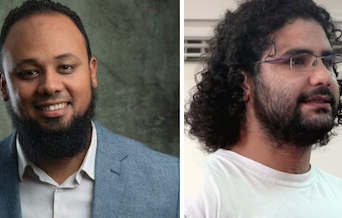
The ICJ and six other international non-governmental organisations call on the Egyptian authorities to immediately and unconditionally release human rights defenders Mohamed El-Baqer and Alaa Abdel Fattah, who were arbitrarily arrested and detained a year ago today.
In the context of a massive crackdown on Egyptian civil society, the ongoing arbitrary detention of Mohamed El-Baqer and Alaa Abdel Fattah, and the continuous renewal of their pre-trial detention is paradigmatic of the systematic repression, acts of intimidation and prosecution used against human rights defenders and all dissenting voices in the country.
On September 29, 2019, Mohamed El-Baqer, human rights lawyer and Director of Adalah Center for Rights and Freedoms, was arrested at the State Security Prosecution premises in Cairo while he was attending an investigation session with his client Alaa Abdel Fattah, who had been arrested earlier in the morning of that same day.
Mohamed El-Baqer and Alaa Abdel Fattah were subsequently accused under Criminal Case 1356 of 2019 by State Security Prosecution and ordered 15 days of preventive detention under vague and unfounded charges that have been broadly used to criminalise all those that dare to defend human rights in Egypt: “belonging to a terrorist group”, “funding a terrorist group”, “spreading false news undermining national security” and “using social media to commit publishing offenses”.
Their place of detention remained unknown until October 1, 2019, when the prison authorities informed their families that they were detained in Tora High Security prison 2, which is known for its very poor conditions of detention.
One year on from their arrest, Mohamed El-Baqer and Alaa Abdel Fattah’s right to due process has been continuously violated through countless and unjustified renewals of their preventive detention by both the Supreme State Security Prosecution and Cairo Criminal Court.
While in prison both have been denied access to books, time in the prison yard, access to a radio, warm clothes during the winter, a mattress, and fresh air within their cells.
Moreover, on August 31, 2020, Mohamed El-Baqer was informed of new charges brought against him under a new criminal case, which include fabricated accusations of “joining an illegal organisation” and “being part of a criminal agreement with the purpose of committing a terrorist act from inside the prison”. The State Public Prosecution ordered 15 days of pre-trial detention against him.
The ongoing arbitrary detention of Mohamed El-Baqer and Alaa Abdel Fattah is part of a clear human rights crackdown which Egypt has been suffering from in recent years. Authorities have increasingly employed repressive tactics such as prolonged pre-trial detention, enforced disappearance, torture, and judicial harassment to silence all critical voices, including through unfounded investigations for national security and counter-terrorism related charges.
Our organisations recall that in the aftermath of the outbreak of popular protests across Egypt in September 2019, several other human rights defenders have been arrested, including women human rights defenders Mahienour El-Massry, Esraa Abdel Fattah and Solafa Magdy, who as of today all remain detained under similar trumped-up terrorism charges and spreading false news.
We the undersigned strongly condemn the ongoing arbitrary detention and judicial harassment of Mohamed El-Baqer, Alaa Abdel Fattah, Mahienour El-Massry, Esraa Abdel Fattah, Solafa Magdy as well as other human rights defenders, which aim at punishing them for their legitimate human rights activities.
Given the poor detention conditions in the country’s detention facilities, the high risk of contracting COVID-19, and the totally unacceptable deprivation of their liberty, we reiterate our call on the Egyptian authorities to immediately and unconditionally release them as well as all other human rights defenders arbitrarily detained in Egypt. We further urge the authorities to immediately put an end to the abusive use of anti-terrorism charges to criminalise human rights defenders in the country.
Signatories:
Cairo Institute for Human Rights Studies (CIHRS)
DIGNITY – Danish Institute Against Torture
EuroMed Rights
International Commission of Jurists (ICJ)
International Federation for Human Rights (FIDH), in the framework of the Observatory for the Protection of Human Rights Defenders
International Service for Human Rights (ISHR)
World Organisation Against Torture (OMCT), in the framework of the Observatory for the Protection of Human Rights Defenders
Sep 28, 2020 | Events, News
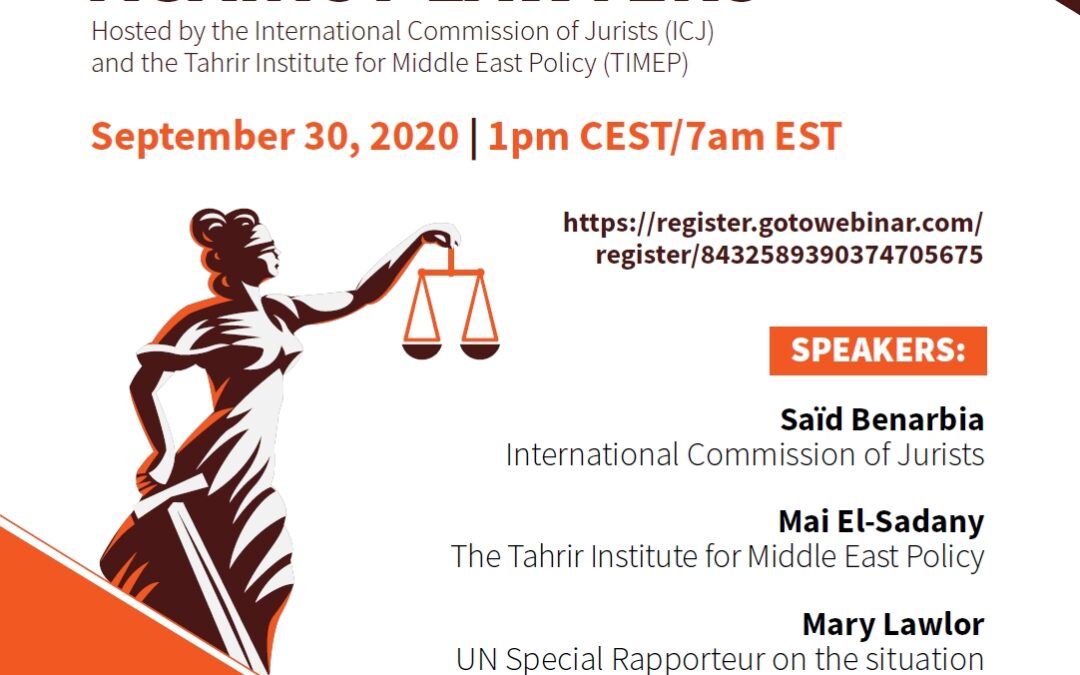
Join this panel discussion with ICJ, the Tahrir Institute, and the UN Special Rapporteur on human rights defenders, Wednesday 30 September 2020, 13:00.
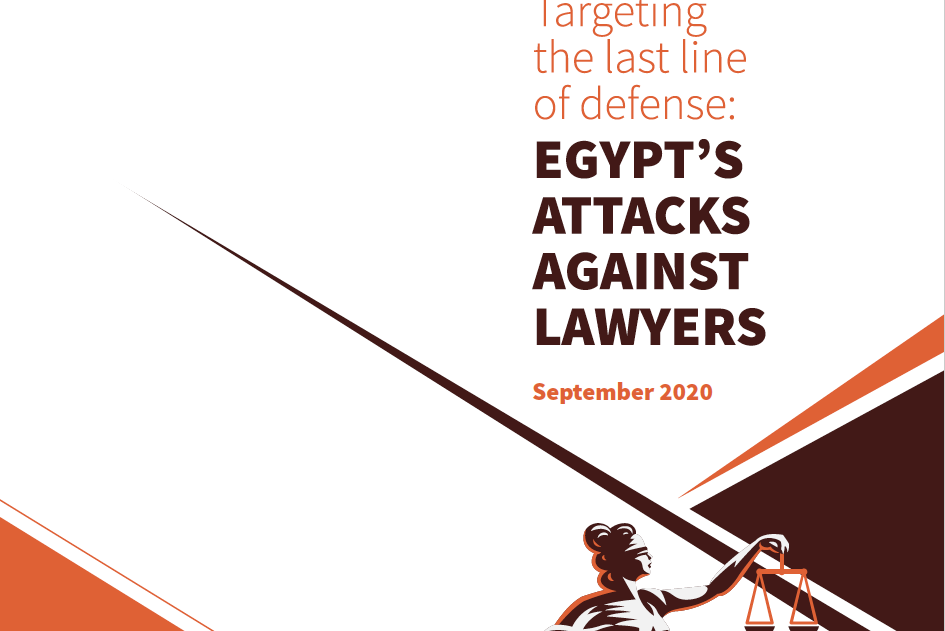
Targeting the Last Line of Defense:
Egypt’s attacks against lawyers
A Virtual Side Event to the Human Rights Council 45th Session
Wednesday 30 September 2020, 13:00 – 14:30 (Geneva time)
The International Commission of Jurists (ICJ) and the Tahrir Institute for Middle East Policy (TIMEP) cordially invite you to join this online side event, including the UN Special Rapporteur on human rights defenders, this coming Wednesday.
The ICJ and TIMEP will present their joint report Targeting the last line of defense: Egypt’s attacks against lawyers. The report documents systematic targeting of lawyers through arbitrary arrests and detention, physical assaults, torture and enforced disappearances, as well as politicized criminal proceedings under counter-terrorism and other overbroad laws.
In the report, the ICJ and TIMEP call on the Egyptian authorities to immediately end their crackdown on lawyers and to unconditionally release all lawyers who are detained or convicted solely on the basis of the peaceful exercise of their human rights and/or the legitimate discharge of their professional duties.
Speakers:
- Mary Lawlor, UN Special Rapporteur on the situation of human rights defenders
- Saïd Benarbia, International Commission of Jurists
- Mai El-Sadany, The Tahrir Institute for Middle East Policy
Register for the event here:
https://attendee.gotowebinar.com/register/8432589390374705675.
For more information contact: un(a)icj.org
Sep 25, 2020 | Advocacy, Non-legal submissions
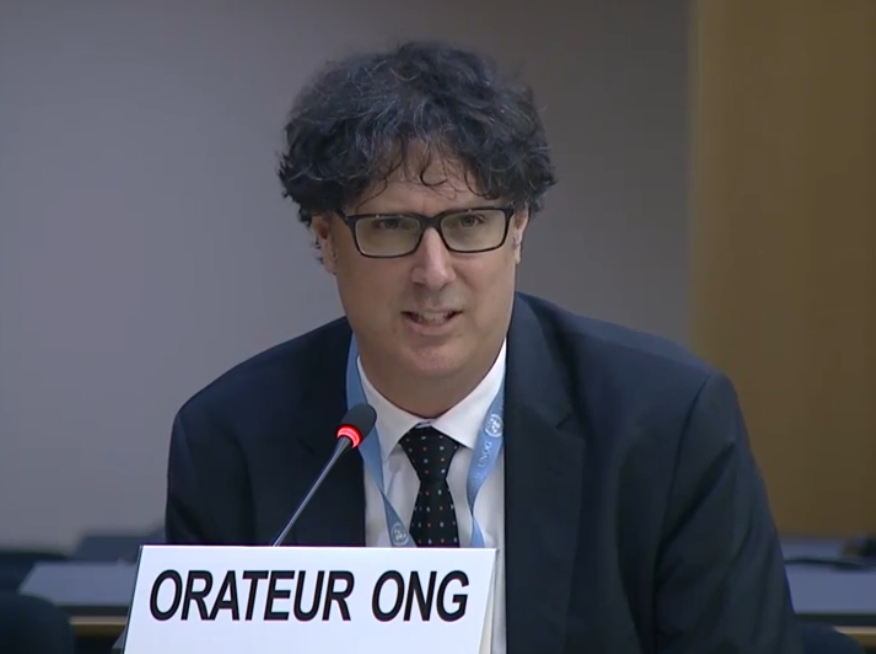
Today at the UN Human Rights Council, the ICJ together with the Tahrir Institute for Middle East Policy, drew attention to ongoing attacks on the independence and role of lawyers in Egypt.
The ICJ made the oral statement during the general debate on country situations of concern, speaking on behalf also of the Tahrir Institute for Middle East Policy. The statement read as follows:
“The International Commission of Jurists (ICJ) and the Tahrir Institute for Middle East Policy draw the Council’s attention to the continuing deterioration of the situation for human rights and the rule of law in Egypt.
Today our organizations published a new report, Targeting the Last Line of Defense: Egypt’s Attacks against Lawyers, to be followed by a virtual side event on 30 September.
As the last line of defense against the government’s sustained and broad crackdown on human rights and fundamental freedoms, Egypt’s lawyers have been increasingly and systematically targeted by authorities. Since 2018, at least 35 lawyers have been arrested and arbitrarily detained for their legal defense work and exercise of fundamental freedoms.
Lawyers have been subject to arbitrary arrest and detention, physical assault, torture and other ill-treatment, and enforced disappearances, as well as unfounded and politicized criminal proceedings based on charges under grossly overbroad criminal laws on “terrorism,” “spreading false news,” and “misusing social media.” Arrests of lawyers spiked in the wake of the September 2019 protests. Arrests continue despite the risk of a COVID-19 outbreak in detention facilities.
The ICJ and Tahrir Institute call on Egyptian authorities to end these violations of the rights and role of lawyers, to take measures to protect the independence of the Bar Association, and to amend all relevant legal frameworks in line with Egypt’s constitution and international human rights law and standards.
Thank you.”
The full statement can be downloaded (PDF) here: UN-Advocacy-Egypt-HRC45-2020
For more information, contact: un@icj.org