Feb 25, 2021 | News
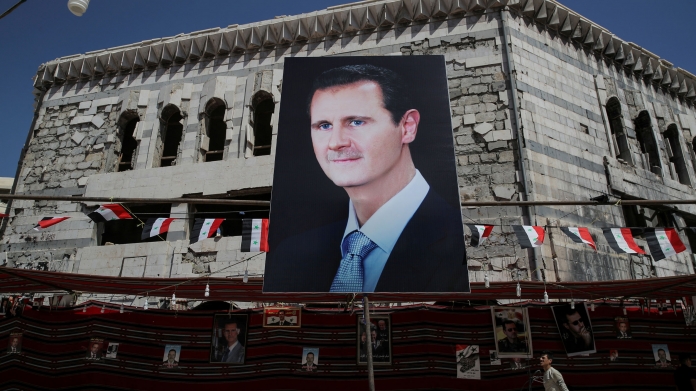
The verdict of the Higher Regional Court in Koblenz, Germany, convicting a former Syrian official of crimes against humanity, is a significant breakthrough in the fight against impunity for the crimes committed in Syria over the last 10 years, the ICJ said today.
“For the first time since the beginning of the Syrian regime’s bloody, rampant and relentless repression, a Syrian official has finally been held to account for his participation in the regime’s crimes,” said Said Benarbia, Director of the ICJ’s MENA Programme. “While this may seem a small token for victims, it is a resounding warning for other Syrian officials that justice may soon catch up with them.”
On 24 February 2021, Eyad A. was found guilty of aiding and abetting crimes against humanity, including torture and arbitrary deprivation of liberty, and sentenced to four and a half years in prison. Among other things, his conviction is related to the detention of at least 30 Syrians after anti-government demonstrations erupted in March 2011.
“This is an important step in the fight for justice for victims and survivors of gross human rights violations in Syria,” said Bernabia.
Eyad A. was prosecuted together with Anwar R., the former director of investigations at Branch 251 — a Syrian intelligence branch in Damascus notorious for subjecting detainees to systematic torture and other ill-treatment.
Anwar R. was charged with supervising the systematic torture of over 4,000 people, which resulted in the death of 58 people between 2011 and his defection in 2012. His trial is still ongoing.
The proceedings against Eyad A. and Anwar R. were conducted under the principle of universal jurisdiction, which allows Germany and other States to prosecute an accused person for serious crimes under international law, even when such crimes have been committed abroad and neither the victims, nor the accused are nationals of that country.
“States must act individually and collectively to fill the accountability gap in Syria,” added Benarbia. “They must support United Nations accountability mechanisms, including the IIIM, and seek out, prosecute and punish those responsible for the atrocities committed in the country.”
Contact
Said Benarbia, Director, ICJ Middle East and North Africa Programme, t: +41-22-979-3817; e: said.benarbia(a)icj.org
Asser Khattab, Research and Communications Officer, ICJ Middle East and North Africa Programme, e: asser.khattab(a)icj.org
Download
Syria-Impunity-Statement-2021-ENG (in English)
Syria-Impunity-Statement-2021-ARA (in Arabic)
Feb 19, 2021 | News
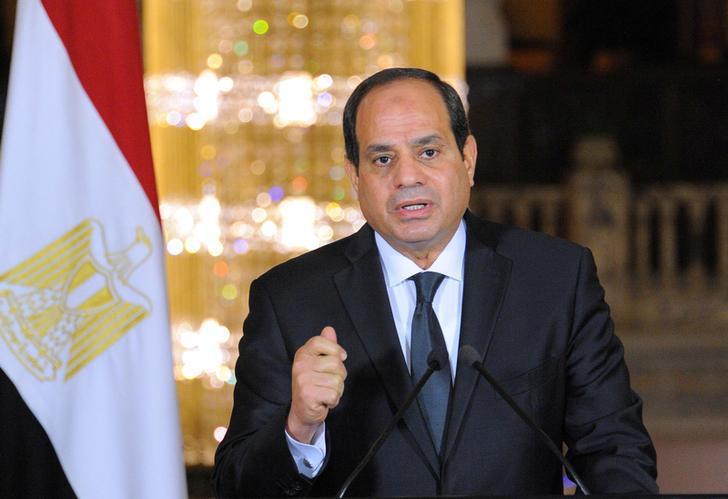
The Egyptian authorities’ targeting of families in Egypt of activists and human rights defenders living abroad has been escalating, demonstrating a clear pattern of intimidation and harassment, 22 Egyptian, regional, and international organizations said today.
Since August 2020, the authorities have targeted the families of four critics who live in the United States, as well as one in Turkey, one in Germany, and one in the United Kingdom.
These cases are among dozens reported in recent years. The authorities try to intimidate critics with unlawful home raids, arbitrary arrests, enforced disappearances, and prolonged detention of family members without trial or charges.
“The Egyptian families of dissidents abroad have been increasingly caught in President al-Sisi’s government web of oppression,” said Joe Stork, deputy Middle East and North Africa director at Human Rights Watch. “President al-Sisi should immediately rein in his security forces and end these hostage-like arrests.”
On February 13, 2021, the authorities raided the homes of six members of the extended family of Mohamed Soltan, a US-based human rights advocate. Soltan, the director of the Freedom Initiative, an independent human rights group, and two other sources with direct knowledge of the arrests told Human Rights Watch that security agents arrested two of his cousins, Mostafa Soltan and Khairi Soltan, at their homes in the Menoufiya governorate. The two sources also said security authorities arrested a third relative of Soltan’s, Mahmoud Yousri al-Naggar.
Officers told another cousin to turn himself in once a cast on his broken leg was removed. Three of Soltan’s other cousins whom officers wanted to arrest were not at home during the raids; their families were told that the cousins were wanted by the National Security Agency. Those detained were interrogated mainly about Mohamed Soltan and his activities. On the evening of February 17, authorities released Mostafa and Khairi, following their detention and interrogation by National Security officers, the two sources said.
Security agents had previously arrested five of the six targeted cousins in June 2020 and detained them without trial until shortly before Joe Biden won the US presidential election in November. Soltan has been a prominent target of Egyptian government and pro-government media defamation campaigns because of his human rights work, most recently because of his organization’s support for the establishment of the Egypt Human Rights Caucus in the US House of Representatives.
The authorities disappeared Soltan’s already-jailed father, Salah Soltan, on June 15, 2020, when officers escorted him from Wadi al-Natrun prison to an unknown destination. Since that time, the authorities have refused to provide his family and lawyers information about his whereabouts. Soltan said that Egyptian intelligence agents in Washington, DC have harassed him with “bump-ins” at the local mall, at a Freedom Initiative’s Egypt advocacy event, which Human Rights Watch and the Project on Middle East Democracy co-sponsored in March 2019, and with threatening phone calls, telling him that he should “be careful” for his father’s sake. Soltan said he reported all incidents to the US authorities and his lawyers immediately.
Aly Hussein Mahdy, a University of Illinois at Chicago graduate student and video blogger with over 400,000 followers on Facebook, was ridiculed by a pro-government TV outlet on January 17. Between January 28 and February 2, National Security officers raided the homes of several of his family members in Alexandria and arrested his father, uncle, and cousin because of his videos, Mahdy told Human Rights Watch.
“They raided the home at dawn,” Mahdy said in a Facebook video on February 11. “They took my father from his wife and my younger siblings, terrifying them. They messed up the whole house and stole everything they found.” He told Human Rights Watch that his family has not been able to learn the whereabouts of the three family members arrested.
Download
Egypt-Arrests-Joint-Press-Release-2021-ENG (full statement in English)
Egypt-Arrests-Joint-Press-Release-2021-ARA (full statement in Arabic)
Contact
Asser Khattab, Research and Communications’ Officer, ICJ Middle East and North Africa Programme, e: asser.khattab(a)icj.org
Feb 18, 2021 | Advocacy, News, Publications
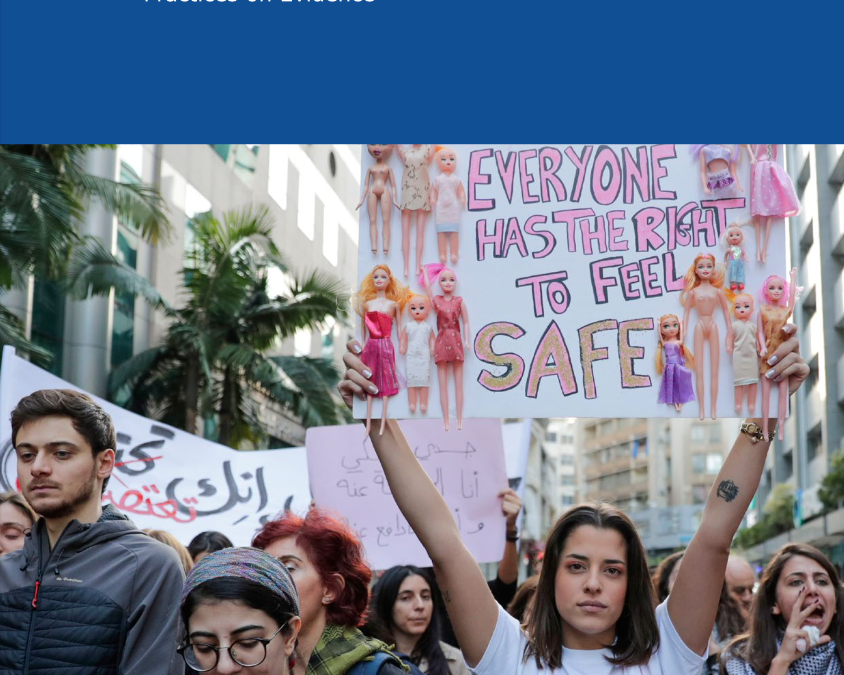
In a memorandum released today, the ICJ published guidance and recommendations aimed at assisting Lebanon’s criminal justice actors in addressing significant gaps in evidentiary rules, practice and procedures undermining the investigation, prosecution and adjudication of sexual and gender-based violence (SGBV) crimes in the country.
The 42-page memorandum, Sexual and Gender-based Violence Offences in Lebanon: Principles and Recommended Practices on Evidence (available in English and Arabic), aims to advance accountability and justice for SGBV, and is especially designed for investigators, prosecutors, judges and forensic practitioners.
“Criminal justice actors are indispensable to eradicating harmful practices and curbing entrenched impunity for SGBV in Lebanon,” said Said Benarbia, Director of the ICJ’s Middle East and North Africa Programme.
“Rather than buying into false, stereotyped narratives that impugn survivors’ credibility and call into question their sexual history, the criminal justice system must adopt and enforce gender-sensitive, victim-centric evidence-gathering procedures that put the well-being of SGBV survivors at the forefront.”
The memorandum provides criminal justice actors with guidance and recommendations on the identification, gathering, storing, admissibility, exclusion and evaluation of evidence in SGBV cases, as well as on their immediate applicability in practice, pending consolidation and reform of Lebanon’s existing legal framework and procedures for the investigation, prosecution and adjudication of SGBV offences.
“Lebanon’s legal framework fosters and perpetuates a systematic denial of effective legal protection and access to justice for women survivors of SGBV,” said Benarbia. “The justice system must counter harmful gender stereotypes and attitudes rooted in patriarchy, which continue to undermine survivors’ right to effective remedies.”
The memorandum’s release is particularly timely given the escalation of SGBV witnessed since the outbreak of the COVID-19 pandemic.
The memorandum builds on previous research undertaken by the ICJ in this area, including Gender-based violence in Lebanon: Inadequate Framework, Ineffective Remedies and Accountability for Sexual and Gender-based Violence in Lebanon: Guidance and Recommendations for Criminal Justice Actors.
Download
Lebanon-GBV-Memorandum-2021-ENG (Memorandum in English)
Lebanon-GBV-Memorandum-2021-ARA (Memorandum in Arabic)
Lebanon-GBV-Web-Story-2021-ARA (Web story in Arabic)
Lebanon-GBV-Web-Story-2021-ENG (Web story in English)
Contact:
Said Benarbia, Director, ICJ Middle East and North Africa Programme, t: +41-22-979-3817; e: said.benarbia(a)icj.org
Asser Khattab, Research and Communications’ Officer, ICJ Middle East and North Africa Programme, e: asser.khattab(a)icj.org
Feb 17, 2021 | News
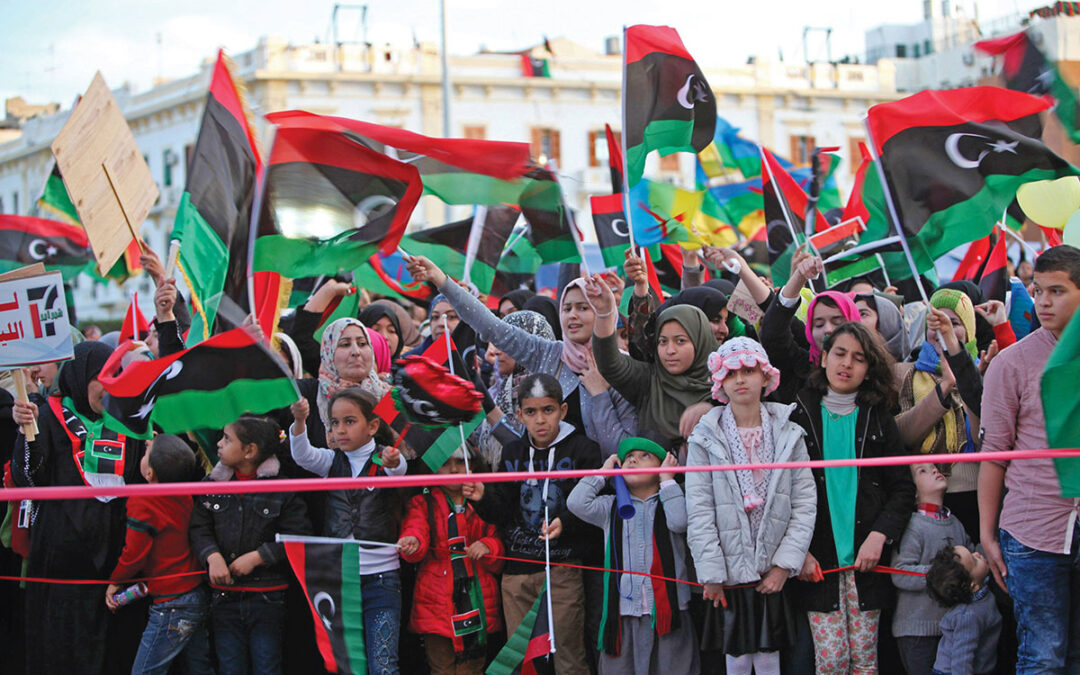
17 February 2021 marks the tenth anniversary of the Libyan revolution.
Back then, protestors had taken to the streets calling for an end to Gadhafi’s authoritarian rule: a regime beset by the commission of widespread and systematic gross human rights violations, including arbitrary arrest and detention; enforced disappearances; torture and other ill-treatment; the oppression of women, minority groups, political dissidents and government critics; and the curtailment of freedom of expression, association and assembly.
Libyans who supported the 2011 revolution hoped it would usher in a nascent democracy and present an opportunity to address the country’s bleak legacy. A decade on, however, the pursuit of justice and accountability remains unfulfilled, and the cycle of impunity unbroken, as a multitude of State actors and armed groups continue to perpetrate crimes under international law, including against thousands of migrants, refugees, asylum seekers and stateless persons.
Attacks against human rights defenders, lawyers and activists, including extrajudicial executions, enforced disappearances and torture, are pervasive, particularly so against women. The post-2011 period has also witnessed an increasingly brutal crackdown on civil society, journalists and bloggers, in addition to the violent suppression of peaceful protests through excessive use of force and arbitrary arrests.
Against a backdrop in which domestic accountability efforts are hindered by cycles of violence, weak and ineffective law enforcement agencies, and by the arbitrary exercise of policing and detention powers by armed groups, international efforts to fight impunity in the country are underway. The Office of the Prosecutor of the International Criminal Court (ICC) is currently investigating some of the crimes under international law committed after 2011, including war crimes committed in the context of armed conflicts. However, certain individuals against whom ICC arrest warrants have been issued, including Mahmoud Al-Werfalli, remain at large.
In June 2020, the UN Human Rights Council established an International Fact-Finding Mission (FFM) tasked with investigating violations and abuses of international human rights law and international humanitarian law committed by both State and non-State actors in Libya since 2016. The FFM’s work will be key in addressing impunity in the country and will complement national efforts to address the accountability vacuum.
The country’s interim executive, selected by the Libyan Political Dialogue Forum on 5 February 2020, and any future elected government must put the peoples’ demands for justice and accountability at the forefront. In particular, the Libyan authorities must commit to implementing a transitional justice process, neglected so far, that could genuinely pursue accountability, and guarantee full participation of victims and the public in the process, and thereby realize the right to truth and reparations of the victims of past and ongoing human rights violations and abuses.
To this end, the International Commission of Jurists and the Defender Center for Human Rights call on the Libyan authorities to:
- Guarantee freedom of assembly, association and expression of all persons, and protect human rights defenders, activists and journalists from reprisals and unwarranted prosecutions;
- Protect all persons from arbitrary arrest and detention, extrajudicial executions, torture and other ill-treatment, and enforced disappearances;
- Effectively investigate and prosecute crimes under international law, and ensure that no amnesty, immunity or statute of limitations apply to such crimes;
- Reform the security sector to ensure effective civilian oversight over security and armed forces;
- Set up a concrete plan to disband and disarm all militias and armed groups;
- Guarantee the independence of the judiciary, the respect of international fair trial standards, and refrain from trying civilians before military tribunals;
- Protect refugees, asylum seekers, stateless persons and migrants in line with international law;
- Ensure that the right to an effective remedy and adequate reparations are granted to victims of human rights violations;
- Cooperate fully with the ICC and support their efforts to obtain custody of any suspects;
- Provide the FFM with full support and access to victims, witnesses and any other interested persons throughout Libya’s territory.
Download
Libya-Impunity-Joint-Statement-2021-ENG (English)
Libya-Impunity-Joint-Statement-2021-ARA (Arabic)
Contact
Said Benarbia, Director, ICJ Middle East and North Africa Programme, t: +41-22-979-3817; e: said.benarbia(a)icj.org
Asser Khattab, Research and Communications’ Officer, ICJ Middle East and North Africa Programme; e: Asser.Khattab(a)icj.org
Feb 10, 2021 | News
The ICJ and the Lebanese Center for Human Rights (CLDH) are deeply concerned about the role of the military in the arrest, detention and referral for prosecution by military courts of dozens of civilians in Tripoli.
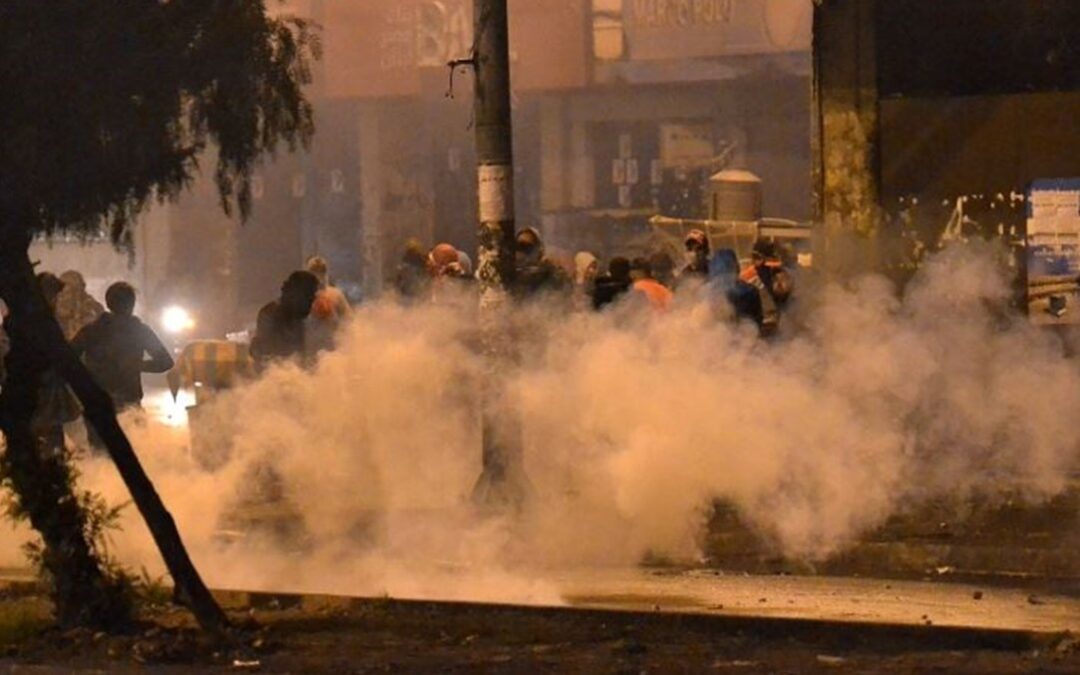
The military’s crackdown has taken place in the context of ongoing protests in the city against a dire economic situation exacerbated by the nation-wide lockdown imposed by the government with the stated intention of combatting the COVID-19 pandemic.
“Under the Rule of Law, the military has no business policing demonstrations, detaining protesters or prosecuting civilians,” said Said Benarbia, the ICJ’s Middle East and North Africa Programme Director. “Instead of addressing the legitimate grievances of those protesting, the Lebanese government is using the military to silence dissenting voices by arresting and sending protestors for trial before military tribunals.”
While the military reported the arrest of five individuals on 27 January, five on 29 January and another 17 on 31 January, for, among other things, allegedly engaging in “rioting,” “vandalism” and “obstruction of civil defence,” other sources suggest at least 58 civilians were arrested by the military in connection with the above-mentioned protests in Tripoli. The whereabouts of many detainees remained undisclosed for days following their arrest. According to lawyers, the military’s Office of Public Prosecution has referred at least 14 individuals to a military Investigating Judge.
The ICJ and CLDH call on the Lebanese authorities to ensure that the military plays no role in policing the ongoing protests and in other law enforcement functions that are properly the sole responsibility of civilian law enforcement agencies. The military courts’ jurisdiction, in particular, must be confined exclusively to the commission of military offences by military personnel and, in turn, totally exclude the possibility of prosecuting civilians, as well as cases involving the perpetration of human rights violations by military personnel.
Referrals by the military’s Office of Public Prosecution follow an increasing, worrying trend of trying those involved in anti-government protests before military courts, which are neither independent nor impartial, and whose procedures do not comply with international fair trial standards.
“Lebanon’s military tribunals have a grim history of unfair trials and politicized proceedings against those suspected of opposing the government,” said Fadel Fakih, CLDH’s Executive Director. “If faith in the Lebanese justice system is to be restored, the jurisdiction of military tribunals must be fully reformed,” he added.
In a 2018 briefing paper entitled “The Jurisdiction and Independence of the Military Courts System in Lebanon in Light of International Standards,” the ICJ called on the Lebanese authorities to enhance the independence and impartiality of military courts, ensure the fairness of their procedures, and restrict their jurisdiction to cases involving members of the military for military offences.
Contact
Said Benarbia, Director of the ICJ Middle East and North Africa Programme, t: +41 22 979 38 17; e: said.benarbia(a)icj.org.
Fadel Fakih, Director of the Lebanese Center for Human Rights, t +961 81 065 041; e: ffakih(a)cldh-lebanon.org
Download
Lebanon-Military-Courts-COVID19-Press-Release-2021-ENG.pdf (English)
Lebanon-Military-Courts-COVID19-Press-Release-2021-ARB.pdf (Arabic)