Nov 5, 2019 | News
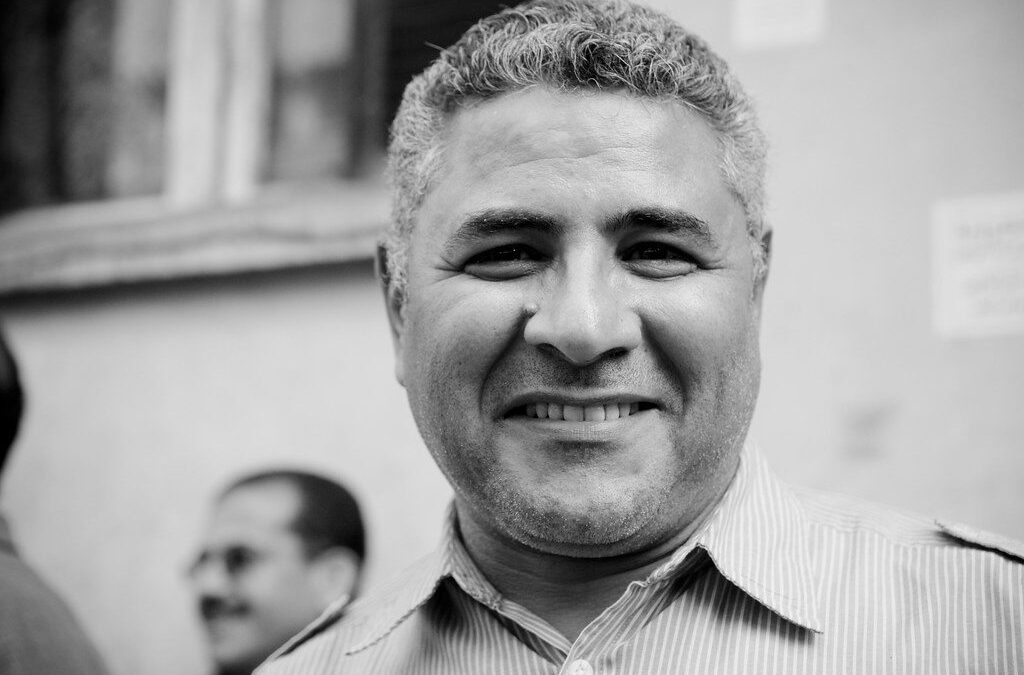
The ICJ today condemned the physical assault and acts of threats and intimidation taken against its Commissioner Gamal Eid, a prominent Egyptian lawyer and human rights defender.
The ICJ called on the Egyptian authorities to investigate the attacks and bring those responsible to justice. They should also take effective measures to ensure that Gamal Eid and other lawyers and human rights lawyers are protected.
Amidst the ongoing crackdown on human rights defenders and the arrest of more 4,000 individuals since recent anti-corruption protests began, Gamal Eid has been subjected to a sustained campaign of intimidation and harassment.
Two armed men in civilian clothes physically assaulted him on October 10, stole his cellphone and tried to seize his laptop. The assault resulted in injuries to his arm and leg and several cracks in his ribs.
Prior to this assault, Eid’s car was stolen on 30 September and he has repeatedly received anonymous phone calls and messages ordering him to “stop and behave.”
The ICJ believes these attacks to be related to Eid’s work as a lawyer and to his human rights activities, and are part of a pattern by the Egyptian military and government to silence people suspected of opposing them, including those documenting and reporting on the ongoing crackdown on human rights and fundamental freedoms.
“Instead of resorting to cynical, thuggish tactics to silence Gamal Eid, Egypt’s military and government must act to ensure his safety and physical integrity,” said Said Benarbia, Director of ICJ’s Middle East and North Africa Program.
“ They must also ensure that lawyers and human rights defenders are able to carry out their work free of fear, harassment or intimidation,” he added.
In the context of the recent protests against President El-Sisi, the Egyptian security forces have arbitrarily detained at least 16 lawyers in relation to the exercise of their professional functions, including Mahienour El-Massry and Mohamed El-Baqer.
Amr Imam, a lawyer and colleague of Gamal Eid at Arabic Network for Human Rights Information was also arrested on 16 October 2019.
The threats to, attacks against, and arbitrary detention of Egyptian lawyers and human rights defenders are in contravention with Egypt’s obligations under international law, and run counter to the UN Basic Principles on the Role of Lawyers and the UN Declaration on Human Rights Defenders, which respectively provide that lawyers and human rights defenders must be able to carry out their professional functions and work without hindrance, harassment, intimidation, or improper interference.
Contact:
Said Benarbia, Director of ICJ’s Middle East and North Africa Program, t: +41 22 979 38 17 ; e: said.benarbia(a)icj.org
Egypt-Gamal Eid-News-press releases.2019-ARA (Arabic version, in PDF)
Nov 5, 2019 | News
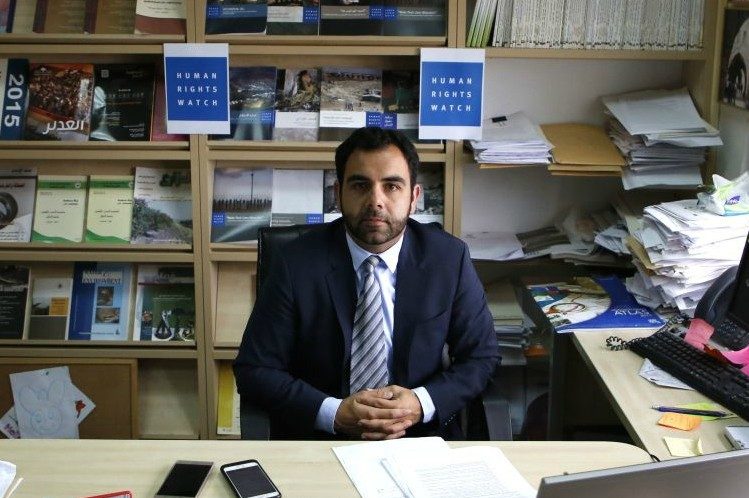
Today, the ICJ called on the Israeli Government to reverse its decision to deport Omar Shakir, the Human Rights Watch (HRW) Israel and Palestine Director, and ensure that he, HRW, and other human rights defenders are able to carry out their human rights work without intimidation.
The ICJ fears that the decision will have a chilling effect on human rights defenders in the country, who the Israeli authorities are bound to protect and not intimidate or persecute.
The deportation decision is based on a 2017 amendment to the “Entry into Israel Law”, which allows authorities to deny foreigners a permit for entry to and residence in Israel “if he or she, or the organization or the body for which he or she operates, has knowingly published a public call to engage in a boycott against the State of Israel or has made a commitment to participate in such a boycott.”
An appeal against the deportation decision was rejected by the Jerusalem District Court in April 2019, and by Israel’s Supreme Court today.
Israel’s Supreme Court seems to have accepted the Government’s claim that Shakir’s work at HRW, which entailed calling on businesses to cease operating in Israeli settlements in the West Bank, as required by international law, constitutes a call for the boycott of Israel.
The ICJ noted that the move to deport Omar Shakir constitutes an unjustifiable infringement on his right to freedom of expression, guaranteed by article 19 of the International Covenant on Civil and Political Rights. As a State party to the Covenant, Israel has an obligation to respect and protect this right.
The Human Rights Committee already expressed its concern with regard to Israel’s anti-boycott legislation and called on the Israeli authorities to “ensure that individuals fully enjoy their rights to freedom of expression and association and that any restrictions on the exercise of such rights comply with the strict requirements of article 19.”
The deportation would also contravene the UN Declaration on Human Rights Defenders, which affirms the duty of States to promote and facilitate the work of human rights defenders, while scrupulously protecting their fundamental freedoms.
Oct 29, 2019
The ICJ, together with 22 other civil society organizations and individuals, called on speakers at the United Arab Emirates’ World Tolerance Summit to be held on 13 and 14 November 2019 to withdraw from the event.
“The Summit, which purportedly aims to “strengthen the UAE’s position as a model of co-existence and cultural tolerance around the world,” effectively serves to conceal the UAE’s dismal human rights record,” the ICJ says.
The Emirati government has systematically repressed the exercise of fundamental human rights, including the exercise of freedom of expression by human rights defenders and other critical voices, and has committed other violations of international human rights law, including arbitrary arrests and detention, enforced disappearances, torture and ill-treatment and denial of the right to a fair trial.
As determined by the UN Group of Eminent Experts on the situation of Human Rights in Yemen, the UAE bears significant responsibility for many of the violations of international human rights law and international humanitarian law in the conflict in Yemen, including unlawful killings arising from direct and indiscriminate attacks against civilians and those resulting from restrictions on humanitarian aid, as well as enforced disappearances, torture and extrajudicial killings.
UAE-Tolerance Summit-Advocacy-open letters-2019-ENG (full text of open letter in English, PDF)
UAE-Tolerance Summit-Advocacy-open letters-2019-ARA (full text of open letter in Arabic, PDF)
Oct 25, 2019 | News
Today the ICJ condemned the response of Lebanese security forces to predominantly peaceful protests that erupted across Lebanon on 17 October following the government’s attempt to introduce a daily tariff on voice calls made through applications such as WhatsApp.
The ICJ called on the Lebanese authorities to respect and protect the right of protestors to peaceful assembly and freedom of expression; to refrain from using unlawful force to disperse protests and ill-treatment of protestors and; to effectively investigate and ensure accountability for any abuses committed in connection with the protests.
Security forces in Lebanon have employed excessive and unlawful force against protestors, amid nationwide dissent over Lebanon’s worsening economic crisis.
NGOs and video footage circulating on news and social media platforms document a number of disproportionate measures used to disperse crowds and quell the unprecedented protests, including by firing tear gas, beating protestors and forcefully removing them from their peaceful sit-ins.
“The Lebanese authorities must ensure the effective investigation and prosecution of all abuses committed in the context of these protests by State or Non-state actors, including the arbitrary use of force, arrests and ill-treatment,” said Said Benarbia.
With respect to the use of force, the Lebanese authorities are bound by international law and standards, which stipulate that the use of force by law enforcement officials is only permissible when it is a last resort, is strictly necessary and is used to the extent required for the performance of their duty.
Attacks by armed groups affiliated with the Amal Movement and Hezbollah have also been reported by local organizations and media.
At least 15 protesters were injured in Nabatieh and six persons in Riad al-Solh and admitted to hospital. Additional violent attacks on protesters, allegedly attributed to the Amal Movement, also took place in the city of Soor.
Background
The protests purportedly broke out in response to years of rampant corruption, unemployment and poverty.
By 18 October, protests were characterized by calls to oust governmental authorities perceived as Lebanon’s ruling elite, including the president, government and legislative authority, and fundamental change to the sectarian political system.
In an attempt to diffuse the increasingly tense situation and appease protestors, Prime Minister Saad Hariri announced the adoption of a raft of economic reforms on 21 October.
Anti-government protests however, which have now entered their ninth consecutive day, have gained considerable momentum.
Lebanon is a party to the International Covenant on Civil and Political Rights and the Arab Charter on Human Rights. Both of these treaties require the State to guarantee and protect the rights to freedom expression and freedom of assembly and freedom from torture and other cruel, inhuman or degrading treatment or punishment, including through the unlawful use of force.
Lebanon-Protests-News-web story (story in Arabic, PDF)
Oct 24, 2019
The ICJ and other NGOs today sent an open letter to all State delegations in New York, urging them to uphold the protection of human rights while countering terrorism, in forthcoming negotiations on resolutions at the UN General Assembly.
The open letter urges all States to restore the focus of relevant General Assembly resolutions on human rights while countering terrorism, including the human rights of victims of terrorism.
In particular, it calls for States to reject efforts by Egypt and others to dilute, distract or distort this focus by introducing the overbroad concept of “effects of terrorism on all human rights” which seems primarily concerned with the impacts of terrorism more generally on macro-economic conditions, government budgets, and foreign industry and investment, as well as duplicating text from elsewhere in the UN system prescribing particular counter-terrorism measures.
While these may be valid topics for the UN to address in other discussions or fora, the ICJ and other NGOs feel strongly that the limited resources and attention within the UN allocated to the specific focus on human rights while countering terrorism, including human rights of victims of terrorism, should not be lessened or weakened by bringing in such other issues which are only remotely, if at all, linked to human rights. Indeed, the ICJ and other NGOs believe the longer term aim of such efforts is in fact to undermine the work of the UN Special Rapporteur on the promotion and protection of human rights and fundamental freedoms while countering terrorism.
The open letter can be download in full in PDF format here: UN-Advocacy-OpenLetter-TerrorismHumanRights-2019
For more background, see here and here.
The ICJ has published a compilation on human rights of victims of terrorism available to download in PDF format here.