Dec 21, 2018 | Multimedia items, News, Video clips
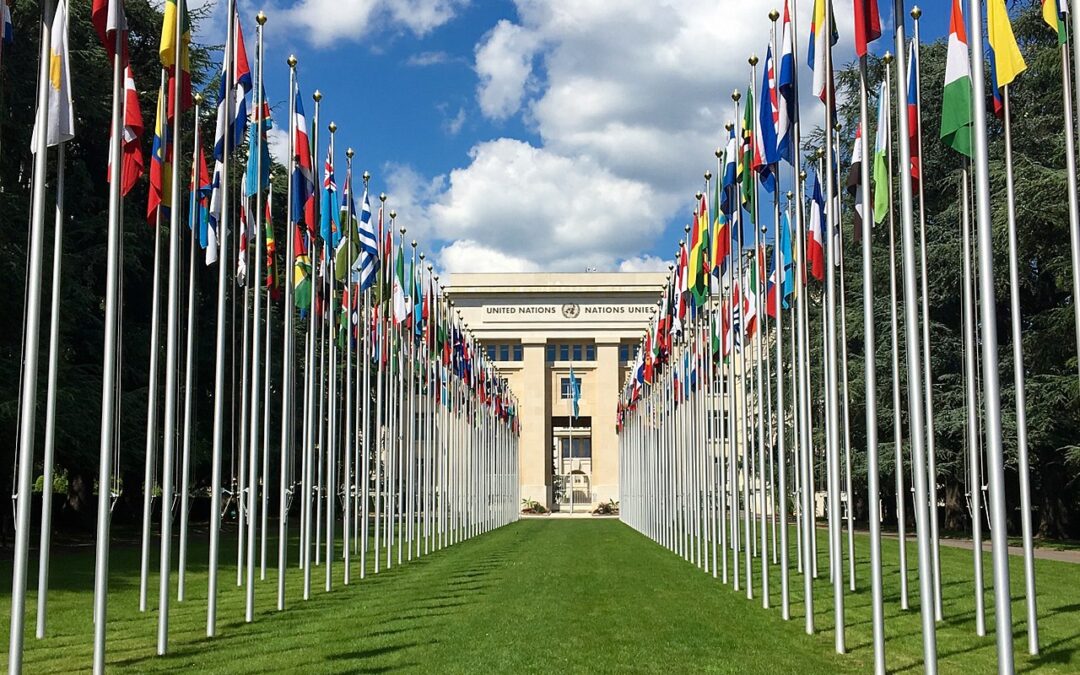
The ICJ invited a number of women lawyers to Geneva to participate in a training workshop and gain practical experience of UN human rights mechanisms as part of a project supported by the German Mission to the United Nations in Geneva.
One group of women came to Geneva in June during the 38th session of the UN Human Rights Council and 70th session of the Committee on the Elimination of Discrimination against Women, and the other group came in September to coincide with the 39th session of the Human Rights Council.
During the week long training workshops participants learned about the international human rights mechanisms available to tackle issues of women’s access to justice and gained hands-on exposure to the operation of these mechanisms in practice.
Participants spoke about the impact that the CEDAW Convention has had in their domestic legislation.
Donia Allani a lawyer and lecturer at the Faculty of Legal, Political and Social Sciences of Tunis, discussed the impact of CEDAW in shaping legislation in Tunis to eliminate violence against women and facilitate access to justice but noted that women still faced stigmatization.
Donia Allani commented, however, that UN mechanisms could be improved to ensure that all activists and feminists can access these mechanisms without fear of reprisals.
Uzbek lawyer Sabina Saparova, also spoke of the impact that international law and standards can have domestically. She explained that Uzbekistan’s ratification of the CEDAW Convention provided an international commitment to incorporating equality between men and women into its legal structure. Recently the president of Uzbekistan initiated the first steps toward the adoption of a law on the prevention of domestic violence.
Dec 20, 2018 | News
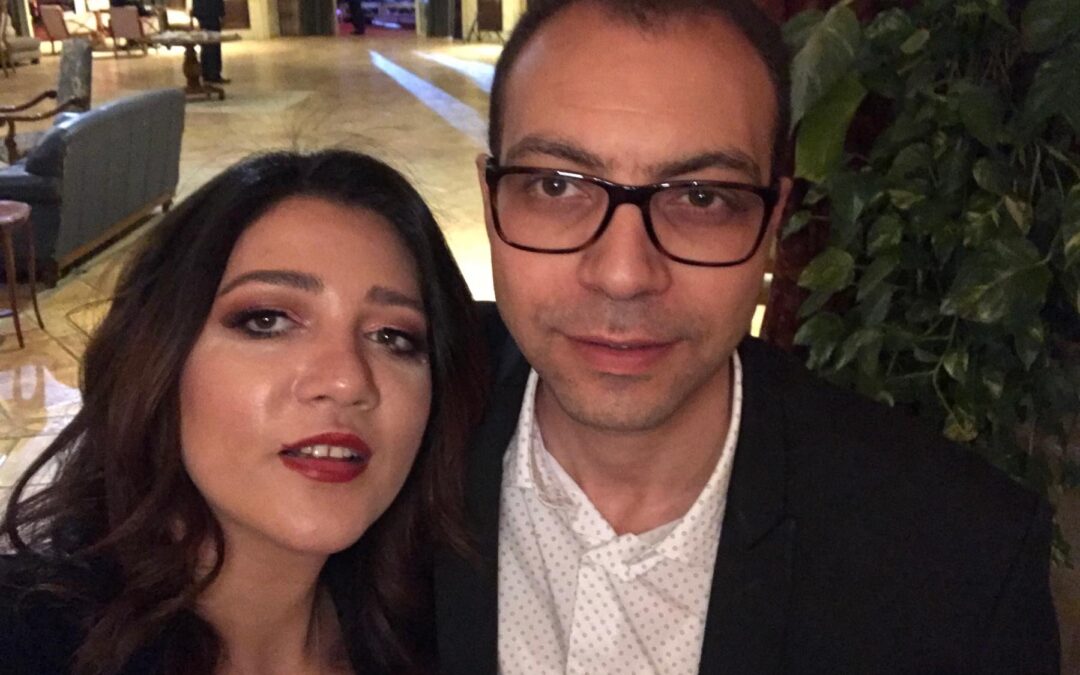
Today the ICJ called for appropriate measures to ensure justice in the case of Amal Fathy, an Egyptian human rights defender who was sentenced to two years’ imprisonment following her conviction for criticizing the Egyptian authorities’ inadequate response to rampant sexual harassment on social media.
On 30 December, Cairo’s Misdemeanor Court of Appeal will decide on Amal Fathy’s appeal against the conviction. The ICJ stresses that Fathy’s conviction and her prolonged arbitrary detention violate her rights to freedom of expression and to liberty protected under Egyptian and international law.
On 29 September 2018, the Maadi Misdemeanor Court convicted Fathy of “broadcasting false information harmful to national security;” “publishing online material that insults public decency;” and the public “use of foul language.” The charges were in reaction to her posting a video on Facebook criticizing the Egyptian authorities for failing to protect women against sexual harassment and for the poor quality of public services.
The Court sentenced Amal Fathy to two years’ imprisonment for the first two charges and fined her 10,000 Egyptian Pounds (US$558) for the latter, and set bail at 20,000 Egyptian Pounds (US$1115) pending her appeal.
Amal Fathy is said to be suffering from acute stress and depression as a result of her detention.
“Amal Fathy was charged and convicted for exercising her human right to freely express herself, which she exercised by calling on the Egyptian authorities to meet their obligation to protect the population from gender-based violence and commenting on the effectiveness of the services they provide. This is hardly a threat to national security or insult to public decency,” said Said Benarbia, Director of ICJ’s Middle East and North Africa Programme. “We hope the Court will recognize the charges are completely without legitimacy.”
Amal Fathy was detained from the time of her arrest on 11 May 2018 and following her conviction, despite posting bail. Her ongoing detention was based on charges issued by the Supreme State Security Prosecution on 12 May 2018 in a second case (Case No. 621/2018), including “membership in a terrorist organization,” “the use of the internet to promote ideas and beliefs calling for terrorist acts” and “spreading false news and rumors that damage public order and harm national interest.” There are at least six other defendants in the case, including two political activists, a journalist and a satirical comedy TV reporter. It is unclear whether she was charged under the Penal Code or Anti-Terrorism Law of 2015. On 18 December 2018, the South Cairo Court of Felonies ordered her conditional release and she is expected to be released on 22 December 2018.
“The Egyptian authorities have increasingly used pre-trial detention to harass human rights defenders or anyone who opposes the authorities and to chill them from further exercising their rights,” said Said Benarbia. “Case 621 is a concrete example, where trumped up charges are used as a tool to such ends.”
Amal Fathy’s arbitrary arrest and detention is no isolated case. In September, UN experts condemned Egypt’s systematic targeting and prolonged arbitrary detention of human rights defenders, expressing particular concern over Amal Fathy’s case. Local and international organizations, including the ICJ, have also documented and criticized the persecution of human rights defenders and political activists in Egypt through the use of the courts. The ICJ has documented how the Egyptian justice system is consistently used as a repressive tool to silence and eradicate political expression and human rights work.
Contact:
Said Benarbia, Director of the ICJ Middle East and North Africa Programme, t: +41-22-979-3817; e: said.benarbia(a)icj.org
Background:
Amal Fathy was arrested at dawn on 11 May 2018, along with her husband Mohamed Lotfy, Director of the Egyptian Commission for Rights and Freedoms, a human rights non-government organization. They were taken together with their three-year-old son to the Maadi Police Station. Lofty was released shortly after with their son and Fathy remained in detention until 18 December 2018. Fathy was charged under Articles 102bis, 178 and 306 of the Egyptian Penal Code (Case No. 7991/2018).
In the second case, which is still at the investigation stage, reports indicate the South Cairo Court of Felonies requires Amal Fathy to visit a police station for one hour each week and remain at her home unless she requires medical treatment as conditions of her release. Her next appearance is on 26 December 2018.
During the investigation of felonies related to national security, under Articles 143 and 206bis of the Egyptian Criminal Procedure Code, the Prosecutor can hold defendants in pretrial detention for up to five months (10 times 15-day renewals) before they must be referred to the competent criminal court for trial. Under Article 143, once the case is referred to the competent court, a defendant’s pre-trial detention can be extended each 45 days for up to 18 months, or “not exceeding two years if the penalty prescribed for the felony is life imprisonment or the death penalty.” Article 143 goes on to provide that “in cases of felonies punishable with the death penalty or life imprisonment, the Court of Cassation and the Court of Referral may order that the accused be held in custody for a renewable forty-five days, without the [above] time restriction.” This leaves the possibility for defendants to be detained indefinitely, which is open to abuse. In a mass trial of 739 defendants, all 320 arrested, including photo journalist Mahmoud Abu Zeid, remained in pre-trial detention for more than five years, before a verdict was handed down in September this year.
Article 9 of the International Convention on Civil and Political Rights (ICCPR), to which Egypt is a party, protects freedom from arbitrary arrest and detention and imposes an obligation on States to ensure a number of protections, including the right to be brought promptly before a judge and the right to habeas corpus. Article 19 of the ICCPR protects the right to freedom of expression. The United Nations Declaration on Human Rights Defenders similarly protects such rights exercised by human rights defenders and enjoins States to protect them from violence, threats, retaliation, de facto or de jure adverse discrimination, pressure or any other arbitrary action for the lawful exercise of such rights.
Arabic language version of this statement in PDF format: NEWS-PR-EGYPT-AMALFATHY-AR-2018
Dec 17, 2018 | Communiqués de presse, Nouvelles
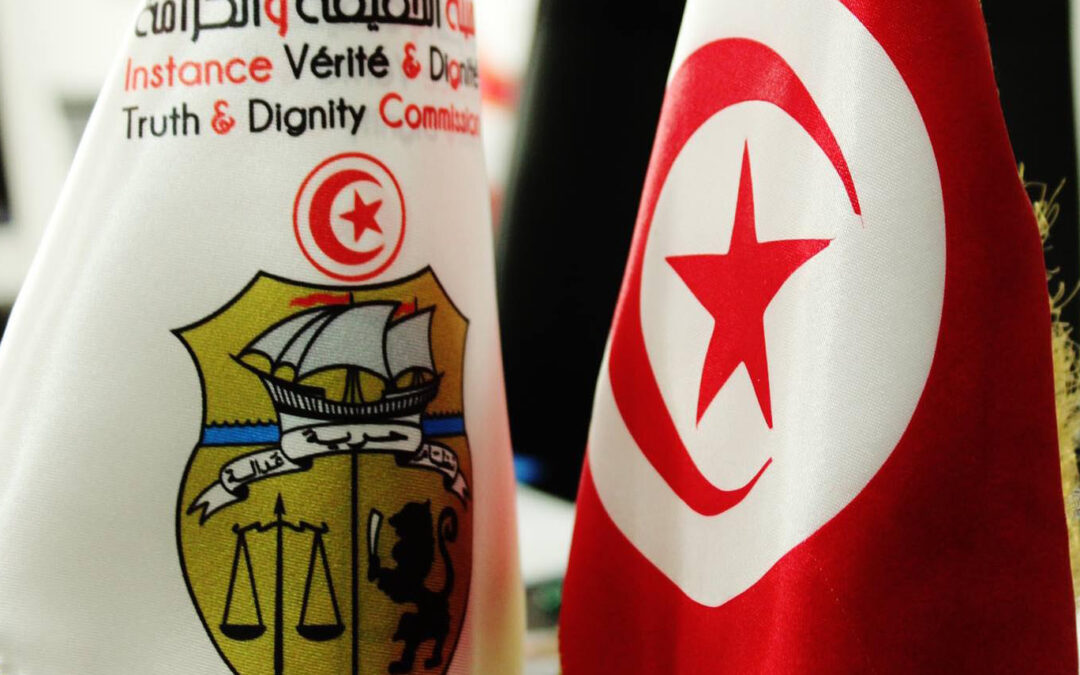
A l’occasion de la Conférence de clôture de l’Instance Vérité Dignité (IVD), les organisations de la société civile félicitent l’Instance qui a abouti à l’achèvement de ses travaux, malgré un contexte politique manifestement hostile au processus.
Aussi, les organisations signataires dénoncent fermement l’absence des trois Présidences au pouvoir à ce rendez-vous historique pour le pays.
Lire la totalité de l’article ci-dessous:
Tunisia-Truth and Dignity Commission Tunisia-News-Press Release-2018-FRE (version française, PDF)
Tunisia-Truth and Dignity Commission Tunisia-News-Press Release-2018-ARA (version arabe, PDF)
Dec 14, 2018 | News
The Egyptian authorities should immediately and unconditionally release human rights lawyer Mohamed Ramadan and drop the charges against him or otherwise charge him with a recognizable crime consistent with international law, said the ICJ today.
Mohamed Ramadan was arrested, by plainclothes security officers on 10 December 2018, after attending proceedings concerning the renewal of a detention order against one of his clients. The client, Ayman Mahmoud, himself had been evidently detained for political reasons, and charged with joining and promoting an “illegal group” and “spreading false news on Facebook and Twitter to harm State interests.”
Following his arrest, Mohamed Ramadan was detained overnight in the National Security Agency Office. Ramadan’s family and lawyers did not know of his whereabouts until he was brought before the Alexandria Prosecutor on 11 December 2018.
According to information available to the ICJ, the Prosecutor charged Ramadan with joining a terrorist group, promoting its ideology including through social media and possession of publications supporting the group’s purpose (Case No. 16576/2018 Montaza), and ordered that he be detained for 15 days.
The charges appear to be to intended to prevent Ramadan’s exercise of freedom of expression and work as a lawyer. One of the lawyers who attended Ramadan’s interrogation on 11 December 2018 informed the ICJ that Ramadan had been informed by the Prosecutor to stop representing political detainees.
“The Egyptian authorities have engaged in a pattern of arresting, detaining and charging lawyers, human rights defenders and others perceived as opponents on unsubstantiated or illegitimate charges and in violation of their rights, typically under the pretext of fighting its ‘war on terrorism’,” said Saïd Benarbia, ICJ MENA Director. “The authorities should stop using laws that are purportedly designed to counter terrorism to silence persons exercising their human rights and lawyers carrying out their proper professional functions.”
According to lawyers who attended Mohamed Ramadan’s interrogation on 11 December, the Prosecutor alleged Ramadan possessed flyers opposing Egyptian President Sisi and multiple yellow vests. A credible news source reported that, prior to his arrest, Ramadan had posted a photograph on Facebook in which he wore a yellow vest to mock the government’s restriction on the sale of them.
According to media reports, earlier this month Egyptian authorities restricted the sale of yellow vests until the end of January 2019, in fear that opponents might be influenced by the French gilet jaunes protests to hold similar protests during the anniversary of the 2011 uprising against Hosni Mubarak next month.
Mohamed Ramadan is one of a number of lawyers who have been targeted in connection with carrying out their professional functions or for being perceived as opposing the Egyptian authorities.
“Imprisoning human rights lawyers, charging them for posting comments online, and deterring them from defending clients hampers the independent role they should play as a lawyer and as a last line of defence against the authorities’ abuses,” said Said Benarbia. “Egypt must protect these lawyers and safeguard their security, not muzzle their voices through abusive criminal proceedings.”
Background
In April 2017, the Alexandria Criminal Court convicted Ramadan in absentia of inciting terrorism, and sentenced him to ten years’ imprisonment followed by five years’ house arrest and a five year ban on using the internet, for posting comments attributed to him on fake Facebook profiles which were critical of the Egyptian President. His retrial is suspended until the Supreme Constitutional Court decides on the constitutionality of the Counter-Terrorism Law.
Any person arrested has the right to inform, or have the authorities notify, someone that they have been arrested and where they are being held. Detainees must be given access to a lawyer, a doctor and their family, from the time they are taken into custody, including police custody.” Restrictions on communicating with a laywer during detention also undermines the rights to liberty and to a fair trial, including under articles 9 and 14 of the International Convention on Civil and Political Rights (ICCPR), to which Egypt is a party.
Articles 19, 22 and 25 of the ICCPR protect the rights to freedom of expression, to freedom of association and to participate in public affairs. The United Nations Declaration on Human Rights Defenders commits States to generally protecting such rights exercised by HRDs and requires states to protect HRDs from violence, threats, retaliation, de facto or de jure adverse discrimination, pressure or any other arbitrary action for the lawful exercise of such rights.
Paragraphs 16 and 18 of the UN Basic Principles on the role of Lawyers require states to ensure lawyers are able to perform of their professional functions without intimidation, hindrance, harassment or improper interference, are not prosecuted or threatened with prosecution for any action taken in accordance with recognized professional duties, standards and ethics, and can exercise freedom of expression.
The ICJ has previously expressed concern over the arbitrary arrests and enforced disappearance of human rights defenders, lawyers, and political activists and persons otherwise providing support to political detainees.
In June 2018, the ICJ also expressed its concerns about Egypt’s repeated renewals of the State of Emergency since April 2017, and the use of the state of emergency to suppress the activities of and persecute students, human rights defenders, political activists, union members and those suspected of opposing the government.
Egypt-MohRamadan-News-web stories-2018-ARA (full story in Arabic, PDF)
Nov 28, 2018 | News
The Egyptian authorities must drop the charges against nine detainees arrested on 1 November 2018 and immediately and unconditionally release them and at least 31 others arrested and in some cases “disappeared” since late October 2018, or otherwise charge them with a recognizable crime consistent with international law, the ICJ said today.
Those arrested in the present sweeps include human rights defenders (HRDs), lawyers, and political activists and persons otherwise providing support to political detainees. Reports indicate that at least some of those detained are connected to the Muslim Brotherhood. The ICJ is concerned that many if not all of these detainees are being held solely for political reasons.
On Wednesday 21 November, nine detainees held since 1 November 2018—Hoda Abdel Moneim, Mohamed Abu Hurayra, Bahaa Auda, Aisha Al Shater, Ahmed El Hodeiby, Mohamed El Hodeiby, Somaya Nassef, Marwa Madbouly and Ibrahim Atta—were interrogated by the State Security Prosecution, who ordered they be held in pre-trial detention for 15 days.
According to information available to the ICJ, the prosecution charged the nine with joining and funding a terrorist organization and incitement to harm the national economy under Egypt’s Counter-Terrorism Law No. 94/2015 (Case No. 1552/ 2018).
Lawyers representing the detainees were not permitted to access the case files, nor were they allowed to speak with the defendants in private. One of the detainees interrogated on 21 November was also interrogated on 19 November 2018 without the presence of a lawyer. It is unclear when the State Security Prosecution ordered their pre-trial detention.
At least three other detainees also appear to have been interrogated on 24 November 2018, including Ahmed Saad, Ahmed Ma’touk and Sahar Hathout. No information is known about whether an order for their pre-trial detention has been issued.
“These arbitrary arrests and trumped up charges are yet another example of the relentless assault by the military and government on the exercise of the rights to freedom of expression and association and to take part in political activity,” said Said Benarbia, ICJ’s MENA Programme Director. “Targeting anyone having any connection to opposition groups under the government’s ‘war on terrorism’ erodes the rule of law in Egypt, undermines human rights, and means there’s now very little, if any, room to carry out human rights work.”
According to public reports, at least 31 others were arrested by Egyptian authorities in raids in late October or early November 2018. Despite repeated calls on the authorities to provide information regarding their location, their whereabouts remain unknown, raising serious concerns for their health and safety. After human rights lawyer Hoda Abdel Moneim—one of the nine now charged—was held incommunicado for 21 days, her family issued a statement expressing concern about her “dire [physical and psychological] health condition.”
It is well established that the Egyptian authorities engage in the widespread and systematic use of torture. Although Egypt’s Constitution, Criminal Procedure Code and Penal Code require that detainees be held in official places of detention with judicial oversight and prohibit torture and other mistreatment, these safeguards have proven ineffective in practice.
The United Nations Committee Against Torture previously reported on the torture of hundreds of people disappeared by the Egyptian authorities. The ICJ is concerned about the high probability that these detainees have been tortured.
“The authorities should unconditionally and immediately release those arrested solely for exercising their human rights and fundamental freedoms, bring any others immediately before a judge to review whether there is any lawful basis for their detention and for any charges brought, and ensure that all those deprived of their liberty are protected against torture and other ill-treatment,” said Said Benarbia.
Contact:
Said Benarbia, Director of the ICJ Middle East and North Africa Programme, t: +41-22-979-3817; e: said.benarbia(a)icj.org
Background
Among those arrested in late October and early November 2018 were human rights lawyer and former spokesperson of the ECRF, Mohammed Abu Hureira, and his wife, Aisha al-Shater, daughter of imprisoned deputy chairman of the Muslim Brotherhood, Khairat al-Shater, as well as human rights lawyer Hoda Abdelmoniem, a former member of the National Council for Human Rights, who was arrested at her home after it was raided without warrant. At least eight of the 40 arrested are women. Reports from local human rights lawyers and organizations suggest that the number of persons arrested and arbitrarily detained could be higher.
The arrests are part of Egypt’s orchestrated crackdown on human rights work, in which human rights defenders and critics are arbitrarily arrested and detained, subjected to enforced disappearance, prosecuted in unfair trials, and sometimes sentenced to death. Two other members of the ECRF, including its Executive Director, were arrested in March 2018 and forcibly disappeared in September after an Egyptian Court ordered their release. Following the latest arrests, the ECRF—which documents enforced disappearances and Egypt’s increasing application of the death penalty—suspended its operations in protest.
On 10 September 2018, the Cairo Criminal Court convicted 739 defendants for their participation in the Raba’a Al Adaweyya square protests in August 2013 after a grossly unfair trial, sentencing 75 defendants to death and 658 defendants to life or five to 15 years’ imprisonment.
On 24 April 2018, following an unfair trial, the Cairo military court convicted former judge and former head of the Central Auditing Authority, Hisham Geneina, to five years in prison for “publishing false information harmful to the national security.”
The arrests place Egypt in breach of its international legal obligations, including under the International Convention on Civil and Political Rights (ICCPR). Article 9 of the ICCPR protects freedom from arbitrary arrest and detention and imposes an obligation on States to ensure a number of protections in respect of detention.
These include the requirement that detainees be brought promptly before a judge so their detention can be reviewed; have the right independently to challenge the lawfulness of their detention; and have the right to access legal counsel. Article 14 of the ICCPR also requires states to ensure detainees have access to legal counsel. Judicial oversight of detention is particularly necessary to protect detainees from torture and cruel, inhumane and degrading treatment.
Articles 19, 22 and 25 of the ICCPR also protect the rights to freedom of expression, to freedom of association and to participate in public affairs. Articles 5-8 of the United Nations Declaration on Human Rights Defenders similarly protects such rights exercised by HRDs and Article 12 requires states to protect HRDs from violence, threats, retaliation, de facto or de jure adverse discrimination, pressure or any other arbitrary action for the lawful exercise of such rights.
Under Egyptian Law, Article 56 of the Constitution and Articles 41-42 of the Criminal Procedure Code require that detainees be held in official places of detention and subject to judicial supervision, including judicial power to inspect places of detention and review each detainee’s case. Articles 51-52 and 55 of the Constitution, Article 40 of the Criminal Procedure Code and Article 126 of the Penal Code prohibit torture and other mistreatment.
In June 2018, the ICJ expressed its concerns about Egypt’s repeated renewals of the State of Emergency since April 2017, and the use of the state of emergency to suppress the activities of and persecute students, human rights defenders, political activists, union members and those suspected of opposing the government.
Egypt-November Arrests-News-Web Story-2018-ARA (PDF in Arabic)