
The CommissionThe Commissioners are 60 eminent judges, lawyers and legal academics – from all...
Search results

Principles and Guidelines on Human Rights and Public Health Emergencies featured in new documentary film and blog symposium
Today, the short documentary film titled “Beyond Siracusa: Human Rights in Times of Public Health Emergencies,” will be launched. The film looks at the 2023 Principles and Guidelines on Human Rights Public Health (PHE Principles), developed by experts through a process led by the International Commission of Jurists and the Global Health Consortium (GHLC). The film looks at the underlying motivation for the PHE Principles, including the imperatives for action compelled by the onslaught of the COVID 19 Pandemic, as well as the drafting process itself.
VIDEO: Beyond Siracusa: Human Rights in Times of Public Health Emergencies
“One of the important lessons learned from the COVID-19 experience is that a unified, cohesive elaboration of international law and standards prescribing how States should and should not respond to pandemics was lacking and sorely needed,” said Tim Fish Hodgson, ICJ’s Senior Legal Adviser. “The 1984 Siracusa Principles, also developed by the ICJ, elaborated a framework for a human rights-compliant response to emergency measures. The PHE Principles build on Siracusa and affirm the proactive measures that are required to secure human rights in times of public health emergency.”
The Principles, which address such questions as access to vaccines, lockdowns, and fortification of public health systems to prepare for future pandemics, expressly identify a number of responsibilities of States in the context of public health emergencies, including that they act in furtherance of:
- Universal enjoyment of human rights;
- International solidarity;
- The Rule of law;
- Equality and non-discrimination;
- Human rights protection from the conduct of non-State actors;
- Transparency and access to information;
- Meaningful and effective participation; and
- Accountability and access to justice for those harmed by human rights violations and abuses.
Elaborated by international experts through a three-year consultative process, and to date endorsed by over 50 leading experts, the Principles also provide a foundation upon which further human rights standards in public health emergency prevention, preparedness, response, and recovery may emerge and evolve. In the spirit of such evolution, the ICJ co-convened a blog symposium between October and December 2023 on the Petrie-Flom Center for Health Law Policy, Biotechnology, and Bioethics at Harvard Law School’s Bill of Health, which will culminate with a webinar on 18 January 2024.
“The Principles aim to be more than static guidelines. Their essence thrives through interpretation, application, and discourse among communities of scholars, advocates, practitioners and human rights defenders,” said Roojin Habibi, a law professor at the University of Ottawa and a member of GHLC. “We extend an open invitation to all interested parties to collaborate on the implementation of these Principles, from local to global settings.”
In 2024, the World Health Organization is set to continue its work in drafting a “Pandemic Treaty,” expected to culminate with the International Negotiating Body (INB) appointed by the WHO submitting its “final outcome” to the World Health Assembly in May 2024. At the same time, a process is under way to amend the 2005 International Health Regulations stemming from experiences of their (non)application during COVID-19.
“It is our hope that the content of the Principles inform all processes currently under way within the WHO to develop and consolidate international law and standards,” Fish Hodgson said. “We reiterate the consistent calls of civil society to ensure that the WHO’s processes are fully and meaningfully participatory, resulting in the development of a Pandemic Treaty and International Health Regulations that are grounded in human rights, providing States with clear guidance on their obligations,” he concluded.
Event
Register to join the webinar discussing the Principles on 18 January at 16.00 (CET) featuring Justice Zione Ntaba (Judge of the Malawian High Court), Alicia Ely Yamin (Harvard University), Paul Hunt (New Zealand Human Rights Commission), Kayum Ahmed (Human Rights Watch) and Luisa Cabal (UNAIDS) at this link.
Links
VIDEO: Beyond Siracusa: Human Rights in Times of Public Health Emergencies
PHE PRINCIPLES: ICJ & GHLC – Human Rights & Public Health Emergencies (2023). A one page overview of the Principles is available here: One Pager – Principles and Guidelines on HR & PHE.
SIRACUSA PRINCIPLES: The Siracusa Principles on the Limitation and Derogation Provisions in the International Covenant on Civil and Political Rights (September 1984) are available here.
SYMPOSIUM: Posts from the Blog Symposium From Principles to Practice: Human Rights and Public Health Emergencies are available here.
ICJ, Amnesty International, GI-ESCR and Human Rights Watch Draft “Pandemic Treaty” fails to comply with human rights (July 2023), available here.
ICJ, Amnesty International, GI-ESCR and Human Rights Watch Joint Public Statement: The Pandemic Treaty Zero Draft Misses The Mark On Human Rights, February 2023, available here.
For more information:
Timothy Fish Hodgson timothy.hodgson@icj.org
Roojin Habibi rhabibi@uottawa.ca
ICJ makes submission on the decriminalization of homelessness and extreme poverty to UN Special Rapporteurs
On 5 October, in response to a call for input from the UN Special Rapporteur on the right to adequate housing and the UN Special Rapporteur on extreme poverty, the International Commission of Jurists (ICJ) filed a submission on the decriminalization of homelessness and extreme poverty.
The ICJ’s submission is based, in part, on “The 8 March Principles”, a new set of legal principles elaborated by jurists for a human rights-based approach to criminal laws, including criminal offences proscribing conduct associated with sex, reproduction, drug use, HIV, homelessness and poverty, which the organization published earlier this year.
In this regard, the ICJ submission focuses, in particular, on Principle 21 on the criminalization of “life-sustaining activities in public places and conduct associated with homelessness and poverty”. In addition, the submission draws on the ICJ’s analysis of legal frameworks, including criminal laws, and practices that are at odds with general principles of criminal law, and that continue to violate the human rights of marginalized and disadvantaged persons, including in India, Malawi, Nepal, Pakistan, Sri Lanka, South Africa, Uganda and Zimbabwe.
The submission outlines various examples of laws criminalizing poverty or homelessness either explicitly or as result of their enforcement. Among those, the ICJ has recommended the repeal of:
- Laws criminalizing begging, public nuisance, soliciting and “living on the earnings of prostitution” in India.
- Laws criminalizing begging, vagrancy and public nuisance generally and laws criminalizing similar conduct by transgender persons, in particular, in Pakistan.
- Laws criminalizing vagrancy, “living on the earnings of prostitution” and soliciting in public in Sri Lanka.
- Laws criminalizing poverty by extensively prohibiting broad swathes of conduct described as public nuisance and laws criminalizing homelessness by prohibiting a wide range of conduct associated with unlawful occupations of land in South Africa.
- Laws criminalizing vagrancy and informal traders’ efforts to making a living in Uganda.
In its submission, the ICJ has also expressed concern about laws implemented in a manner that criminalizes informal traders’ efforts to make a living in Malawi and Nepal.
The ICJ’s submission recalls how international human rights law and standards require States to address the root causes of homelessness and poverty and to provide support to those experiencing them. States’ failure to do so often amounts to violations of their international human rights law obligations to realize a range of human rights, including the rights to adequate housing, work and social security, for example, under the International Covenant on Economic Social and Cultural Rights.
Under international human rights law, States are legally obliged to address the plight of those experiencing homelessness and those living in poverty. Very often, however, States not only fail to comply with these obligations but, making matters worse, subject people experiencing homelessness and poverty to harsh criminal law sanctions solely for conduct that is critical to their survival. In this context, the ICJ is particularly concerned that in many national jurisdictions people commonly continue to be imprisoned if they are unable to pay fines for minor “criminal infractions”.
Overall, decriminalizing homelessness and extreme poverty is not only consistent with general principles of criminal law and States’ legal obligations under international human right law, but it also a necessary step to begin addressing the root causes of the violations of economic and social rights of particularly marginalized persons. The ICJ submission underscores that, instead of enacting and enforcing criminal laws with a disproportionate impact on such persons, under international human rights law, States are required to provide all people with the opportunity to rebuild their lives and fully integrate into society while respecting their dignity and human rights.
Download:
[Submission] ICJ’s submission to the UN Special Rapporteurs
Background
The ICJ is a member of the Campaign to Decriminalize Poverty and Status, which is a coalition of organizations from across the world advocating for the repeal of laws that target people based on poverty, status or for their activism and campaigning against the overuse and abuse of criminal law across the world in keeping with international law and standards.
The 8 March Principles for a Human Rights-Based Approach to Criminal Law Proscribing Conduct Associated with Sex, Reproduction, Drug Use, HIV, Homelessness and Poverty, recently published by the ICJ, offer a clear, accessible, and operational legal framework and practical legal guidance for a variety of stakeholders, including judges and legislators, on the application of criminal law to conduct associated with consensual sexual activities, such as consensual same-sex sexual relations and sex work (Principles 16 and 17); the criminalization of sexual orientation, gender identity and gender expression (Principle 18); drug use (Principle 20); as well as homelessness and poverty (Principle 21). Principle 21, in particular, states that “no one may be held criminally liable for engaging in life-sustaining economic activities in public places[…] or on the basis of their employment or means of subsistence or their economic or social status…”
Additional resources:
- International Commission of Jurists, Living with Dignity: Sexual Orientation and Gender Identity-Based Human Rights Violations in Housing, Work, and Public Spaces in India, June 2019, accessed at: https://www.icj.org/wp-content/uploads/2019/06/India-Living-with-dignity-Publications-Reports-thematic-report-2019-ENG.pdf
- International Commission of Jurists, “Unnatural Offences”: Obstacles to Justice in India Based on Sexual Orientation and Gender Identity, February 2017, accessed at: https://www.icj.org/wp-content/uploads/2017/02/India-SOGI-report-Publications-Reports-Thematic-report-2017-ENG.pdf
- International Commission of Jurists, Sri Lanka’s Vagrants Ordinance No. 4 Of 1841: A Colonial Relic Long Overdue for Repeal, 2021, available at https://www.icj.org/wp-content/uploads/2022/01/Sri-Lanka-Briefing-Paper-A-Colonial-Relic-Long-Overdue-for-Repeal-2021-ENG.pdf
- International Commission of Jurists “The 8 March Principles for a Human Rights-Based Approach to Criminal Law Proscribing Conduct Associated with Sex, Reproduction, Drug Use, HIV, Homelessness and Poverty” (8 March 2023), available: https://icj2.wpenginepowered.com/wp-content/uploads/2023/03/8-March-Principles-Report_final_print-version.pdf
- International Commission of Jurists, Pakistan: Transgender Persons (Protection of Rights) Act, 2018 : A briefing paper (March 2020), available : https://icj2.wpenginepowered.com/wp-content/uploads/2020/03/Pakistan-Transgender-Advocacy-Analysis-brief-2020-ENG.pdf
- International Commission of Jurists, Sri Lanka’s Vagrants Ordinance No. 4 of 1841: A Colonial Relic Long Overdue for Repeal : A briefing paper (December 2021), available: https://www.icj.org/wp-content/uploads/2022/01/Sri-Lanka-Briefing-Paper-A-Colonial-Relic-Long-Overdue-for-Repeal-2021-ENG.pdf

Africa region: Human rights advocates call on authorities to support the work of NGOs advancing the human rights of LGBTQI+ people in East and Southern Africa
On 11 April 2023, the International Commission of Jurists (ICJ) convened an online panel of five human rights advocates from East and Southern Africa to discuss the obstacles preventing organizations working to advance the human rights of lesbian, gay, bisexual, transgender, queer and intersex (LGBTQI) people in their countries from registering to operate. The webinar unpacked the advocacy and legal strategies that can, and indeed have been successfully used in some contexts, to challenge discriminatory laws and policies.
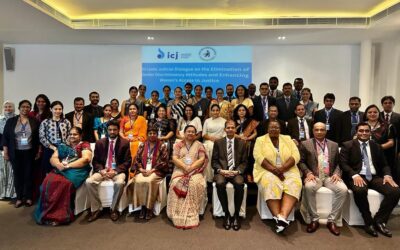
Sri Lanka: Judges affirm the need to address unconscious bias and gender stereotypes in the administration of justice
At a Judicial Dialogue on Access to Justice for Women conducted by the International Commission of Jurists in partnership with the Sri Lanka Judges’ Institute, participants agreed on the need to confront implicit biases and stereotypes that hamper substantive gender equality enhance women’s access to justice.
Eswatini: The judiciary can and should play a critical role in enhancing access to justice for persons with disabilities
Persons with disabilities in Eswatini often face discrimination and other barriers that inhibit their full and equal participation in the justice system. As magistrates courts are often the first port of call for those interacting with the justice system in Eswatini, magistrates are critical actors in ensuring that persons with disabilities are provided with the procedural and other accommodations necessary to fully engage in court proceedings.
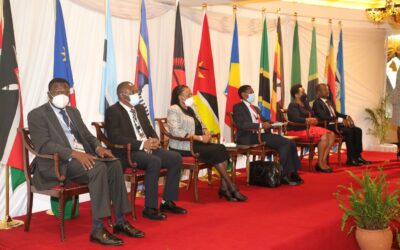
East and Southern African Chief Justices say more must be done to strengthen the fair administration of justice and the role of the judiciary in safeguarding human rights in the digital age
From 21 to 23 April 2022, the International Commission of Jurists (ICJ) and American Bar Association Rule of Law Initiative (ABAROLI) East Africa Programme, in collaboration with the Southern African Chief Justices Forum (SACJF), the Media Institute of Southern Africa, Africa Judges & Jurists Forum, Advancing Rights in Southern Africa and ICJ Kenya, held a regional symposium of Chief Justices in Nairobi Kenya, to discuss digital transformation of judiciaries and the critical role of the judiciary in protecting human rights online in East and Southern Africa.

Philippines: Immediately repeal SIM Card Registration Act that undermines online freedoms
The International Commission of Jurists (ICJ), along with 10 other human rights organizations, call on the Philippine legislature to repeal or substantially amend the fatally flawed SIM Card Registration Act, which is a substantial threat to the rights to privacy, freedom of expression and information, and non-discrimination in the Philippines.
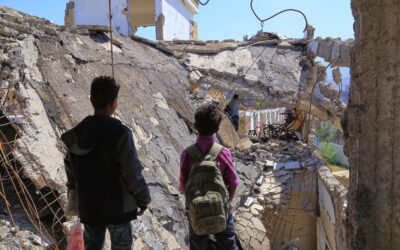
Human Right Council: States’ abject failure to renew Yemen investigation is a wake-up call
Civil society organizations condemn and express their profound disappointment at the United Nations Human Rights Council’s decision to discontinue the mandate of the Group of Eminent Experts on Yemen.
SADC Must Take Decisive Action on COVID-19 Vaccine Access at Summit
On Tuesday 17 August 2021, Amnesty International, the International Commission of Jurists and Oxfam issued a public statement requesting that SADC Member States use the opportunity presented by the 41st SADC Summit to adopt a resolution to ensure equitable COVID-19 vaccine access in the region.
Southern Africa: ICJ workshop highlights the courts and civil society’s vital role during COVID-19 pandemic
On 15 July 2021, the ICJ and the Southern Africa Litigation Centre (SALC) hosted a workshop on strategic litigation’s potential for ensuring equitable COVID-19 vaccines access in Southern Africa.

The unvaccinated: equality not charity in Southern Africa – new ICJ report
Southern African States have individually and collectively failed to provide sufficient and equitable COVID-19 vaccine access to meet their human rights obligations, the ICJ said today in a new briefing paper entitled The Unvaccinated: Equality not Charity in Southern Africa.
The paper focuses on the impact of COVID-19 on countries of the Southern African Development Community (SADC), a regional economic community comprising 16 Southern African countries whose goal is to enhance the standard and quality of life of the peoples in the region.
The publication considers SADC and its Member States’ collective failure to ensure access to COVID-19 vaccines despite more than 63,000 lives lost to the virus and countless others’ lives and livelihoods affected in the region.
This is due to a multitude of reasons, some common amongst the countries and others unique to individual Member States. While Tanzania and Madagascar denied the existence of the virus and rejected COVID-19 vaccines respectively, other countries with relatively greater resources, such as South Africa, failed to mobilize their resources adequately and equitably.
“COVID-19 is a global pandemic, but its impact was aggravated in southern Africa by the failure of governments to prepare and respond, individually or through SADC,” said Tim Fish Hodgson, ICJ’s Legal adviser on Economic, Social and Cultural Rights, in Johannesburg.
Combatting deadly communicable diseases like COVID-19 is one of the founding objectives under SADC’s founding treaty, and is also accounted for under the SADC Health Protocol. Yet, SADC has failed to provide almost any concrete guidance or coordinating role in regional procurement of COVID-19 vaccines since October 2020, prior to the availability of COVID-19 vaccines. While SADC’s chair, President Filipe Nyusi of Mozambique has encouraged a regional pooling of resources to facilitate procurement of necessary vaccines and distribution in a statement in January 2021, SADC has since taken no clear action towards this goal.
“While powerful global actors have erected roadblocks to equitable vaccine access in southern Africa, this should not conceal the burning need for SADC States to take essential measures to mobilize their collective resources towards efficient and equitable vaccine acquisition, allocation and distribution. As our research shows, they have failed to do so and SADC has been conspicuously silent,” Hodgson said.
These dire circumstances have led Fatima Hassan, South African human rights defender and director of the Health Justice Initiative, to observe that “philanthropy [and] benevolence cannot fund equality” in vaccine access. Indeed, the donation of vaccine doses through COVAX and other measures are not enough, and without rapid and adequate action to ensure equitable access to COVID-19 vaccines, it might be too late.
The ICJ’s research at a global and regional level have emphasized the urgent need for international institutions like the World Trade Organization and wealthier States to help countries to manufacture or otherwise acquire and distribute vaccines at affordable prices unimpeded by rigid intellectual property rights restrictions.
“All States should urgently heed the proposal by South Africa and India before the WTO for a waiver of the TRIPS intellectual property rules to allow faster, wider, and better distribution of COVID-19 vaccines,” Hodgson said.
“It is encouraging to see the United States end their opposition to the TRIPS waiver, and we hope that other States, in the European Union, Switzerland, Norway, and Brazil, will end their opposition and recognize that until everyone is safe, no one is truly safe.”
The ICJ emphasized that efforts by SADC and Southern African States is essential alongside ramped up global action.
“The pandemic is raging around the world even though a few countries, mostly the wealthiest, are now able to look beyond the worst of it. Most countries in Southern Africa remain unvaccinated, and in fact we are looking at new devastating waves of the illness. SADC should immediately improve efforts at collaboration and coordination to ensure compliance with their human rights obligation to provide everyone in the region with vaccine access as soon as possible,” Hodgson added.
The ICJ makes recommendations to specific States including Malawi, Tanzania, Madagascar, Zimbabwe and South Africa as well as a range of general recommendations to the SADC, including:
- The SADC Secretariat should urgently and actively facilitate and advance sub-regional COVID-19 vaccine procurement and distribution between the Member States.
- The SADC Secretariat should provide clear guidance to Member States on their human rights obligations pertaining to vaccine access. They should take effective action to address the failure of Member States to act according to their obligations under international law, including under regional agreements.
- All SADC member States should, as a matter of priority, develop, publish and publicize national vaccine acquisition and rollout plans and procurement strategies, detailing concrete measures to ensure non-discriminatory access to vaccines to all people.
Contact
Timothy Fish Hodgson, Legal Adviser on Economic, Social and Cultural Rights, timothy.hodgson(a)icj.org
Tanveer Jeewa, Legal and Communications Officer, tanveer.jeewa(a)icj.org
Download
Africa-The Unvaccinated-Publications-Reports-2021-ENG (full report, in PDF)

ICJ Co-Hosts Symposium on Judicial Independence in East and Southern
On 6-7 August the ICJ co-hosted a symposium on threats to judicial independence in East and Southern Africa.
The event was held with the collaboration of the Africa Judges and Jurists Forum, the Kenyan Section of the International Commission of Jurists Kenya Section, Open Society Initiative for Southern Africa, Southern Africa Development Community Lawyers Association, Malawi Law Society, Pan African Lawyers Association, East Africa Lawyers Association and the American Bar Association.
Recent actions taken to undermine judicial independence in East and Southern Africa include proposed constitutional amendments, executive interference with the functioning of the Judicial Service Commissions and verbal as well as physical threats against judges.
Participants in the symposium included judges, lawyers, academics and civil society representative. ICJ Commissioner and former Chief Justice of Kenya Dr Willy Mutunga, and Professor Jill Ghai of Katiba Institute delivered the key note addresses.
Dr Willy Mutunga speaking to challenges of judicial independence in the political context of Kenya in his keynote address, said “I believe that the independence of the judiciary… is about the integrity of the judicial officers… Building peoples’ confidence in the judiciary and the judicial officers depends on the integrity of the institution and its judicial officers and staff.”
In her address, Professor Jill Ghai evaluated various ways in which independence of the judiciary is undermined, taking into account examples from various countries.
“We must not relent in letting the Executive know that we are watching whenever there are attempts to undermine the judiciary,” Ghai said in closing.
ICJ Secretary General Sam Zarifi that judicial independence was facing genuine threats, not just in Africa but throughout the world.
“The issue of judicial independence has been at the heart of the ICJ’s work for the last 70 years almost… We have been defending the rule of law and human rights. For both of those the independence of the judiciary is absolutely essential,” Zarifi said.
On the second day of the symposium, participants into four groups discussed the nature of challenges and weaknesses in the Executive-Judiciary relations, litigation as a strategy for protecting judicial independence, strategies for increasing social and political activism in defence of judicial independence, and the prospects and strategies for regional and international advocacy in the age of COVID-19 respectively.
In his closing remarks, outgoing ICJ Regional Director Arnold Tsunga flagged Malawi as a recent case study where the judiciary had demonstrated its independence when the Constitutional Court nullified the 2019 presidential election results, citing widespread irregularities.
Watch the proceedings of the symposium here:
Contact:
Justice Mavedzenge (ICJ Legal Advisor) t: +27793889990 e: justice.mavedzenge(a)icj.org
Shaazia Ebrahim (ICJ Media Officer) t: +27716706719 e: shaazia.ebrahim(a)icj.org
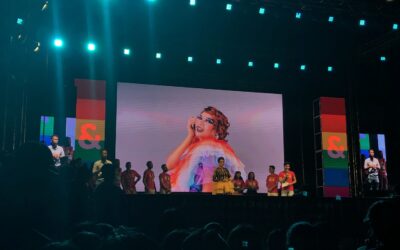
ICJ ran a SOGIE Facebook Live Campaign for Pride Month
The ICJ hosted live interviews with human rights defenders from Asia, Africa and Latin America to mark Pride Month, which is celebrated during the month of June in various parts of the world. The interviews took place from 22 June to 3 July 2020.
In total, 13 human rights defenders from 11 countries spanning three continents, who are working to uphold the human rights of of lesbians, gay, bisexual, transgender (LGBT) individuals, were interviewed.
The interviews discussed existing legal systems that discriminate on the basis of sexual orientation, gender identity and expression (SOGIE) and the impacts of COVID-19 on existing activism, .
The interviews aimed to provide quick snapshots of different country and regional contexts and a platform for LGBT activist voices on the varied and devastating impacts of COVID-19 on LGBT people.
Debunking cultural myths
In many countries around the world where people are criminalized or stigmatized as a result of harmful steretypes and prejudice on the grounds of their real or imputed SOGIE, public discourse tend to cast LGBT relationships and identities as threats to culture, religion or beliefs and the future of the nation. These interviews endeavoured to interrogate and debunk cultural and regional myths surrounding SOGIE identities as ‘Western’ constructs.
In a response to homosexuality being said to be ‘unAfrican’, Kutlwano Pearl Magashula, executive officer for program functions at the Other Foundation from Botswana, said:
“Utterances that suggest that homosexuality is unAfrican enforce stigma and violence and serve to carve deep roots in the consciousness of people around the world that breed discrimination and treating people differently.”
Devastating impacts of COVID-19 on LGBT people
Important impacts of COVID-19 on LGBT people were highlighted by different speakers, ranging from a loss of livelihood, vulnerability to violence at home and in public spaces, as well as challenges in accessing healthcare.
“There is violence against transgender women sex workers. The police arrest them, yell at them and shoot at them with rubber bullets. This is a recent episode here in Colombia and it is terrible. If they don’t work, they don’t have money to buy food and pay the rent. It is a difficult scenario,” Dejusticia researcher Santiago Carvajal Casas from Columbia said.
Pre-existing inequalities and landmark wins
Personal experiences of ‘life after’ important wins from around the world were shared. Some important gains from the decriminalization of consensual same-sex sexual relationships in Botswana and India, as well as the recent legalization of same-sex marriage in Taiwan must be celebrated. However, many of these wins may remain illusory for people who have been discriminated against on the basis of class, caste and other status inequality, or are without social support, especially in the face of COVID-19.
“What we really need is social protection, we need a safety-net for all those who are close to the poverty line and who are likely to go below the poverty line because of disasters like the COVID-19 epidemic or catastrophic out of pocket healthcare expenditures. We definitely need accessible healthcare for everyone and livelihood.” – Dr. L Ramakrishnan, public health professional and Vice-President of SAATHII, India
Watch the Facebook lives below:
Kutlwano Pearl Magashula, Executive Officer for Program Functions at the Other Foundation, on the board of LEGABIBO as the vice-chairperson and co-founder of the autonomous feminist collective Black Queer DocX (Botswana)
Busisiwe Deyi, Commissioner of CGE/ Lecturer of Jurisprudence (South Africa)
Letlhogonolo Mokgoroane, lawyer activist and podcaster (South Africa)
Lini Zurlia, advocacy officer at ASEAN SOGIE Caucus (ASEAN/Indonesia)
Yee Shan, member of Diversity Malaysia (Malaysia)
Sirasak Chaited, human rights campaigner, LGBT+ and sex worker rights activist (Thailand)
Santiago Carvajal Casas, Dejusticia researcher (Colombia)
Sih-Cheng (Sean) Du, Director of Policy Advocacy at Taiwan Tongzhi (LGBTQ+) Hotline Association (Taiwan)
Neeli Rana, transgender activist (Pakistan)
Riska Carolina, The Indonesian Plan Parenthood Association (IPPA) member (Indonesia)
Hla Myat Tun, Deputy Director from Colors Rainbow and Co-Director at &PROUD (Myanmar)
Dr. L Ramakrishnan, Vice President Saathii, activist, public health professional (India)
Nigel Mpemba Patel, Associate editor at the South African Journal on Human Rights and research consultant at ILGA World (Malawi)
***
Cover photo by Violaine Biex-Colors Rainbow, Myanmar.

Lesotho: ICJ and Lnfod hold judicial workshop to promote access to justice for persons with disabilities
From 1 to 3 October, the ICJ and the Lesotho National Federation of Organizations of the Disabled (Lnfod), an umbrella body of organizations for persons with disabilities, held a judicial training in Lesotho on the rights and access just to persons with disabilities.
The workshop was attended by judges, magistrates, disability law and policy experts, Lnfod and ICJ legal advisers and ICJ Commissioner Justice Charles Mkandawire.
At the workshop, the ICJ Legal Adviser Associate Nokhukanya Farise discussed on the UN international legal framework on access to justice for persons with disabilities at both the universal and regional levels. In this regard, the ICJ highlighted provisions related to access to justice of the International Convention on the Rights of Persons with Disabilities (CRPD), as well as the Protocol to the African Charter on Human and Peoples’ Rights on the Rights of Persons with Disabilities in Africa.
These instruments provide for a substantive right to access to justice for persons with disabilities under article 13.
In addition, they expand on the rights to non-discrimination and equality of persons with disabilities, as well as their right to equality and access to the physical environment, facilities, services and infrastructure required under article 9 of the CRPD.
Justice Charles Mkandawire of the High Court of Malawi and ICJ Commissioner, who attended the workshop and facilitated a session on the role of the judiciary, said: “The judiciary should be functional independently of the executive and legislature, and the relationship between all three should be characterised by mutual respect. The judiciary should also be impartial and independent to prevent the abuse of power.”
Lnfod has been actively working to secure access to justice for persons with disabilities in the criminal justice system of Lesotho. In the workshop, independent law and policy expert Dianah Msipa discussed the case of Koali Moshoeshoe and Others v DPP and Others, where Lnfod successfully challenged the constitutionality of Section 219 of the Criminal Procedure & Evidence Act No.9 of 1981 in the High Court (Constitutional Division).
That provides that persons with intellectual/psychosocial disabilities are not competent witnesses, denying them equal access to justice.
Lnfod explained the Court’s ruling that the legal barrier violated the right to equality before the law and was discriminatory on the basis of disability. It also disproportionately affected women and girls with intellectual and psychosocial disabilities as this rendered them vulnerable sexual abuse.
Lnfod indicated it hoped that the Koali Moshoeshoe case would act as a reformative judicial precedent which will be disseminated and implemented by the courts of law across the country.
“The shift towards the realization of the right to legal capacity for persons with intellectual/psychosocial presents a remarkable opportunity towards overall enjoyment of all the rights provided for in the United Nations Convention on the Rights of Persons with Disabilities on an equal basis with others,” Lnfod said in a statement delivered before the workshop.
At the workshop, independent disability law and policy expert Dianah Msipa explored the issues of understanding disability, the rights of access to justice for persons with disabilities, barriers to effective participation in the criminal justice system, and the use of accommodations in access to justice.
“The training was well-received by all the delegates and I am encouraged by the word of the delegates who stated that they would start providing accommodations to persons with disabilities,” Dianah Msipa said.
Contact:
Khanyo Farise, e: Nokukhanya.Farise@icj.org
Gambia: Declaration allowing access to African Court a major advance for access to justice
The International Commission of Jurists (ICJ) welcomes the formal declaration of the Gambia to allow individuals and certain non-governmental organizations with observer status access to complain of human rights violations against the Gambian State at the African Court on Human and Peoples Rights.
Gambia became the ninth African State to make the declaration to allow individual access the African Court on Human and Peoples Rights. The ICJ called on other States to follow suit rapidly.
“The Gambian government should be applauded, but more African States need to step up to reinforce their international human rights obligations by allowing victims of violations direct access to the Court and to empower the African Human Rights Court to do the work for which it was set up.” said Arnold Tsunga, Director of the ICJ African Regional Progamme. “It is only through extensive depositing of article 34(6) by the majority of African states that the court can be truly an African Court”.
In addition to granting access to individuals, the Declaration made under article 34(6) of the Protocol to the African Charter on Human and Peoples’ Rights triggers the courts jurisdictional competency under article 5(3) to allow for a limited number of NGOS access.
“The promise of human rights protection under the African human rights system can only be realized when political leaders match rhetoric with such action as allowing individuals to seek an effective remedy by direct access to regional human rights mechanisms like the African Court,” added Arnold Tsunga.
The ICJ emphasized that despite the significant human and material resources invested in the Court since its establishment in 2006, the African Court has been unavailable to great majority of Africans, since very few States had so far entered the declaration recognizing its competency.
Other States that have previously made declarations include Benin, Burkina Faso, Côte d´Ivoire, Ghana, Malawi, Mali, Tanzania and Tunisia.
Although, complaints of human rights violation can only be brought directly before the Court against the nine States that have made the declaration, victims of human rights violation of almost all African States can already bring claims against other states through the non-judicial communication procedure available at the African Commission on Human and Peoples´ Rights.
The ICJ stressed while access to the Commission’s procedures is important, it was not an adequate substitute for the kind of binding legal remedy that can be only ordered by a Court. The ICJ noted poor rate of compliance with decisions of the African Commission.
Contacts:
Arnold Tsunga, Director of the Africa Regional Programme, International Commission of Jurists C: +263 77 728 3248, E: arnold.tsunga(a)icj.org
Solomon Ebobrah, Senior Legal Advisor, Africa Regional Programme, International Commission of Jurists.C: +234 803492 7549, E: solomon.ebobrah(a)icj.org

ICJ discusses judicial selection and appointment in Southern and East Africa at UN network launch
The ICJ and its partner the Democracy Governance and Rights Unit (DGRU) of the University of Cape Town are holding a panel discussion on selection and appointment of judges within the auspices of the Launch of the Global Judicial Integrity Network.
This new Network is being launched by the UN Office on Drugs and Crime (UNODC) in Vienna, Austria on today.
The panel is aimed at discussing the implementation and monitoring of guidelines on the best practice for the appointment of judges (“guidelines”).
The Southern Africa Chief Justices’ Forum (SACJF) mandated the development of these guidelines through its Concluding Communiqué during the 2015 Annual Conference of East and Southern Africa Chief Justices, held at Victoria Falls in Zimbabwe.
The ICJ and the DGRU have been working on developing the guidelines, together with a subcommittee of the SACJF, with the aim of seeing them adopted at the SACJF’s annual general meeting to be held this year between August and September in Malawi.
“The UNODC Judicial Integrity Network launch in Vienna, Austria 9-10 April 2018 gives us an excellent opportunity to start thinking a bit further down the line, and identify, anticipate and develop responses to problems that may be experienced in implementing the guidelines at a national level,” said Arnold Tsunga, Africa Director of the ICJ.
While many very good standards have been developed and adopted in Africa in the field of human rights, rule of law, and good governance, a major challenge has been to see the standards implemented in practice.
“In addition to highlighting relevant global standards, the ICJ will also present its experiences from around the world in monitoring and overcoming obstacles to implementation of such guidelines,” said Matt Pollard the Director of the Centre for Independence of Judges and Lawyers at the ICJ.
“This should contribute to planning for effective implementation of the Southern African guidelines, and be of interest to the broader audience at the launch of the UNODC global network on judicial integrity.”
The panel to be moderated by Arnold Tsunga includes Hon. Sanji Monageng, ICJ Commissioner and Justice, International Criminal Court; Mr. Jan van Zyl Smit, Associate Senior Research Fellow, Bingham Centre for the Rule of Law; Mr. Christopher Oxtoby, Senior Researcher, Democratic Governance and Rights Unit, University of Cape Town; Mr Matt Pollard, Senior Legal Adviser and Director, CIJL, ICJ.
Fore more information contact Arnold Tsunga on arnold.tsunga@icj.org (+27716405926) or Matt Pollard on <matt.pollard@icj.org> (+41 79 246 54 75)
Universal – Vienna Panel on Selection – News – Webstory – ENG – 2018 (Further information in PDF)
Zambia: support International Criminal Court, ICJ and other groups say
Zambia should reaffirm its membership in the International Criminal Court to best advance justice for victims of atrocities, a group of African organizations and international nongovernmental organizations – including the ICJ – with a presence in Africa said today.
Zambia’s government began public consultations on the country’s ICC membership the week of March 27, 2017.
This was in response to the African Union summit’s adoption in January of an “ICC withdrawal strategy.”
An unprecedented 16 countries, including Zambia, entered reservations to this decision.
Zambia has been a role model on the continent in matters of peace, democracy, and human rights. Leaving the ICC would erode the country’s leadership and threaten respect for the rights of victims of the most brutal crimes across Africa, the group of organizations said.
As a member of the Southern Africa Development Community (SADC), Zambia has a proud history in the establishment of the ICC, they added.
SADC was active in the diplomatic conference in Rome in 1998 where the ICC’s treaty was finalized after six weeks of negotiations.
SADC members developed 10 principles for an effective, independent, and impartial court at a meeting in Pretoria in 1997.
The ICC is a groundbreaking achievement in the fight against impunity, the organizations said.
It is the first and only global criminal court that can prosecute individuals responsible for atrocities.
It is a court of last resort in that it has the authority to try genocide, war crimes, and crimes against humanity committed since 2002, but only when national courts are unable or unwilling to investigate and prosecute.
Since the court’s treaty opened for signature in 1998, 124 countries have become members.
Zambia signed the ICC’s Rome treaty on July 17, 1998, the day it opened for signature, and ratified the treaty on November 13, 2000.
The ICC faces many challenges in meeting the expectations of victims of mass atrocities and member countries, the organizations said.
Its inability to reach crimes committed in some powerful countries and their allies is a cause for deep concern, even as claims that the ICC is targeting Africa are not supported by the facts.
The court’s reach is limited to crimes committed on the territories of countries that have joined the court or offered the court authority on its territory, absent a referral by the United Nations Security Council.
The majority of ICC investigations in Africa have arisen in response to requests or grants of authority by governments in the countries where the crimes were committed – as in Central African Republic, Côte d’Ivoire, Democratic Republic of Congo, Mali, and Uganda – or through referrals by the UN Security Council – as in Darfur, Sudan and Libya.
The ICC has faced backlash from some African leaders since it issued arrest warrants for Sudanese President Omar al-Bashir for alleged genocide, war crimes, and crimes against humanity in Darfur in 2009 and 2010.
In 2016, evidence of the backlash reached new heights when South Africa, Burundi, and Gambia announced they would withdraw from the court, the first countries to take such action.
Gambia has rescinded its withdrawal and South Africa is also re-examining withdrawal, making Burundi the only country to have maintained its withdrawal.
Under the ICC Statute, withdrawal goes into effect one year after the state party submits a notification to the UN Secretary-General.
In the wake of the announced withdrawals, many African countries – including Botswana, Burkina Faso, Côte d’Ivoire, Democratic Republic of Congo, Ghana, Lesotho, Mali, Malawi, Nigeria, Senegal, Sierra Leone, Tanzania, and Tunisia – have affirmed their commitment to remain in the ICC and to work for any reform as ICC members.
The organizations encourage Zambia to reaffirm its support for the court, particularly in the absence of any functioning regional criminal court that can hold perpetrators to account.
The groups expressing support for Zambia’s continued ICC membership are:
Africa Legal Aid
Africa Centre for International Law and Accountability–Ghana
Centre for Accountability and Rule of Law–Sierra Leone
Centre for Democratic Development–Ghana
Centre for Human Rights and Rehabilitation (Malawi)
Civil Resource Development and Documentation Centre (Nigeria)
Coalition for the International Criminal Court
Fédération Internationale des Droits de l’Homme
Human Rights Watch
Institute for Security Studies
International Commission of Jurists
JEYAX Development and Training (South Africa)
Kenya Section of the International Commission of Jurists
Kenya Human Rights Commission
Nigerian Coalition for the ICC
Parliamentarians for Global Action
Southern African Centre for the Constructive Resolution of Disputes (Zambia)
Southern Africa Litigation Centre (South Africa)
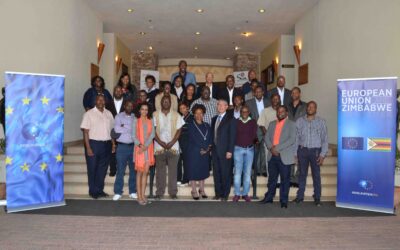
Zimbabwe: ICJ convened 2-day workshop on Business and Human Rights for East and Southern African lawyers
The workshop took place from 22-24 June in Victoria Falls and had a special focus on children’s rights as a particularly vulnerable group.
Its primary objective was to create a pool of jurists and activists with the knowledge and ability to undertake strategic litigation before national or regional courts in the interest of victims of human rights abuse by business enterprises in the Southern/Eastern Africa region.
To this end the meeting brought together legal practitioners and Human Rights Defenders involved in human rights legal accountability of business enterprises.
This workshop gathered together a selected group of human rights advocates from Malawi, Zambia, Botswana, Zimbabwe, Uganda, Kenya and Tanzania working on cases relating to business’ human rights abuse.
In East and Southern African countries mining represents a significant part of the national economies and annual GDP.
Tanzania, Malawi, Zambia, South Africa, Botswana and Mozambique have seen the inflowing investments grow in recent years, but it is not clear that this trend has meant improvements in the realization of human rights, especially economic and social rights.
Child labour is endemic, and its occurrence in tobacco plantations subject children to additional hazards to their health and wellbeing.
Mining and oil exploration creates problems to local communities who are not properly consulted or benefit from the activity and usually bear the brunt of environmental degradation and pollution associated with those extractive industries.
Business enterprises are in many instances complicit with State’s violations of human rights.
The meeting also sought to provide legal and other tools to community representatives and litigators who want to start strategic litigation in the public interest.
This flows from the realisation that effective remedy and reparation for victims of business human rights abuses, especially in a transnational context, remains elusive as ever and confronts a series of legal and procedural obstacles.
Access to effective remedy and justice is a priority objective in the context of work relating to the human rights responsibilities of business enterprises.

Swaziland: ICJ mission to examine independence and accountability of the judiciary
From 11-15 May 2015, the mission will meet with a variety of stakeholders, including officials in the executive, the Ministry of Justice, the judiciary, members of Parliament, the legal profession, media, political analysts and civil society.
The International Fact Finding Mission in Swaziland (IFFM-SZ) is led by the ICJ, in collaboration with the Africa Judges and Jurists Forum (AJJF), Judges for Judges Netherlands (J4J) and the Commonwealth Magistrates’ and Judges’ Association (CMJA).
The mission aims, among other things, to:
- Assess the domestic legal framework (constitutional, legislative and administrative) and practice as it pertains to the independence of the judiciary and the legal profession in Swaziland;
- Identify obstacles posed – legal, structural, and practical – by the state of the independence of the judiciary to the capacity of the judiciary to fairly administer justice, including in relation to the protection of human rights;
- Gather information on and assess the relations between the critical stakeholders in the justice delivery chain;
- Gather information and assess the operations of the Chief Justice’s office in key delivery areas, such as the case management system (including the allocation and tracking of cases);
- Consider practice directives on administration of justice;
- Evaluate systems and practices for the appointment and disciplining of judicial officers and support staff;
- Assess whether an adequate programme of continuous legal education is in place for judicial officers; uphold the institutional and individual independence of the judiciary; and
- Assess the availability of access to justice.
The mission will rely on international human rights law and standards.
After the completion of the field meetings and interviews, ICJ will release a report detailing its findings and recommendations directed to key stakeholders for their consideration and implementation.
The ICJ is committed to supporting all stakeholders in strengthening the independence of the judiciary, the legal profession and observance of the rule of law in Swaziland.
The mission comes against the background of a number of recent developments of concern for the independence and accountability of the judiciary in the country.
Read also:
Swaziland: arrest of judges raises serious concerns
Leading legal voice intervene at UN level in the case of detained Swazi lawyer Thulani Maseko
Additional information:
The mission team is composed of Judge Moses Chinhengo (of Ruwa, Harare, Zimbabwe, retired High Court Judge Botswana and Zimbabwe; ICJ Commissioner; Interim Chair AJJF, Head of the IFFM-SZ) ; Judge Charles Mkandawire (of Lilongwe, Malawi, High Court Malawi; ICJ Commissioner; Regional President-CMJA and member of the IFFM-SZ) ; Judge Oagile Dingake (of Gaborone, Botswana, Professor of Public Law at University of Cape Town, Judge Residual Special Court of Sierra Leone, Judge High Court Botswana; member of the IFFM-SZ) ; and Judge Tamara Trotman (of The Hague, Netherlands, Judge of Court of Appeal in The Hague, Chair Judges for Judges, member of the IFFM-SZ).
The judges are supported by technical staff: Laurens Hueting (Legal Adviser, ICJ-Centre for Independence of Judges and Lawyers), Otto Saki (Senior Legal Adviser, ICJ-Africa Regional Programme) and Justice Mavedzenge (ICJ Consultant and University of Cape Town PhD Candidate and Rapporteur).
Contact:
Arnold Tsunga, Director, ICJ Africa Regional Programme Director, t: +27731318411 ; e: arnold.tsunga(a)icj.org
Picture by Darron Raw
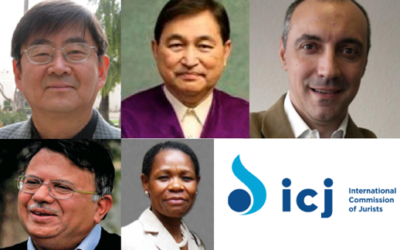
Five new Commissioners join the ICJ
The ICJ is delighted to announce five new Commissioners: Professor Kyong-Wahn Ahn (Republic of Korea), Justice Adolfo Azcuna (Philippines), Professor Miguel Carbonell (Mexico), Justice Yvonne Mokgoro (South Africa) and Justice Ajit Parkash Shah (India).
Workshop on the right to fair trial in South Sudan
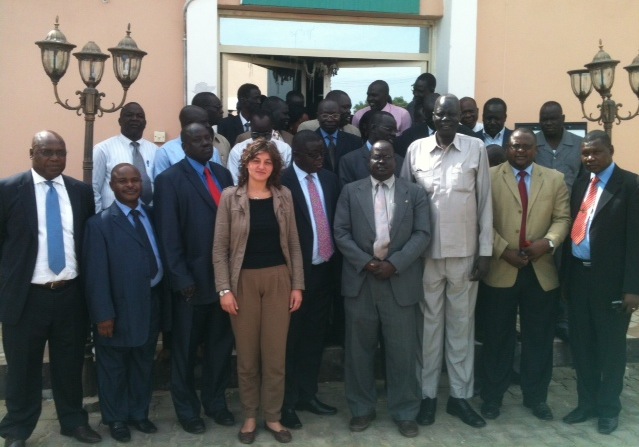 The ICJ is holding a workshop on access to justice and the right to fair trial from 22 to 24 October in Juba, South Sudan.
The workshop, organized in collaboration with the South Sudan Law Society, is aimed at judges, prosecutors, lawyers, and legal staff of the Ministry of Justice. It covers inter alia general fair trial standards, the role of the prosecutor and an independent legal profession, and specific standards applicable to arrest, pre-trial detention and trial proceedings. An ICJ delegation consisting of Judge Charles Mkandawire (ICJ Commissioner and Registrar of the SADC Tribunal), President Judge Anaclet Chipeta (High Court of Malawi), former Judge Thomas Masuku (High Court of Swaziland), Arnold Tsunga (ICJ Africa Regional Programme Director) and Ilaria Vena (CIJL Associate Legal Adviser) lead the training and debate sessions, together with representatives of the South Sudan Law Society.
SouthSudan-WorkshopFairTrial-Agenda-October2012 (download the agenda of the workshop)

ICJ statement on the independence of judges and lawyers
At the 60th session of the United Nations Commission on Human Rights, the ICJ’s Centre for the Independence of Judges and Lawyers participated to the general debate under item 11 by submitting a statement on the independence of judges and lawyers.

UN Human Rights Sub-Commission: achievements in the face of increasing marginalisation
The ICJ welcomes the significant achievements in a difficult political climate taken by the UN Sub-Commission on the Promotion and Protection of Human Rights during its 55th session, which concluded on Friday.