Nov 11, 2016 | Agendas, Events
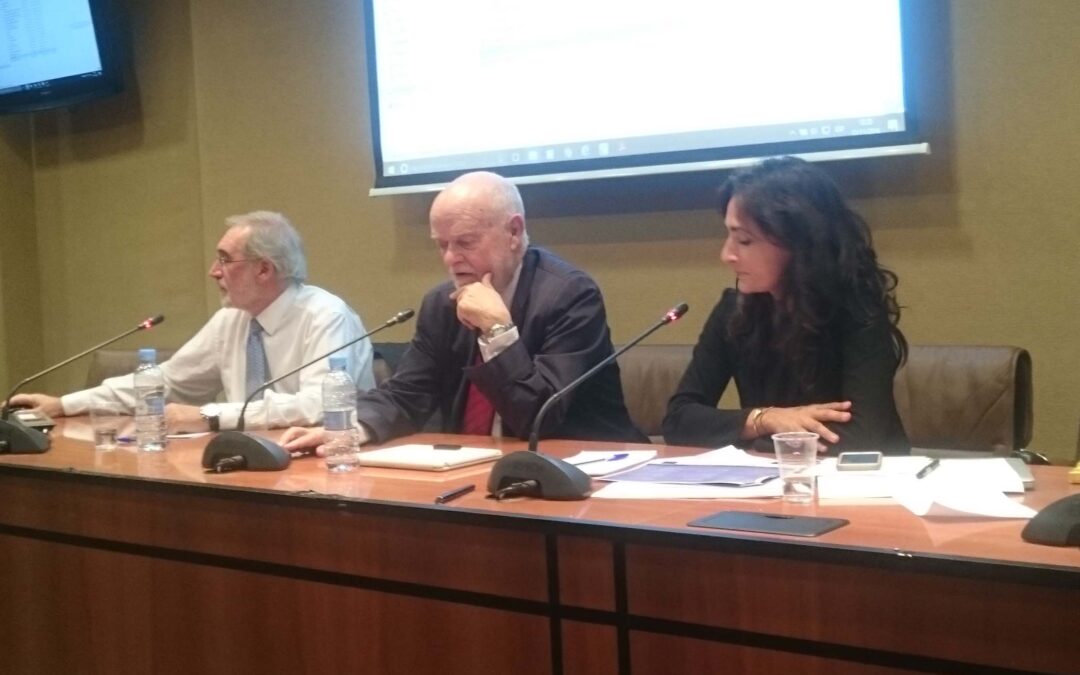
The ICJ and Foundation Raices are holding a training on the rights of migrant children and on accessing international human rights mechanisms from 11 to 12 November in Madrid (Spain).
The training aims to support the strategic use of national and international mechanisms to foster children’s access to justice.
The training will focus on accessing the international mechanisms in order to protect and promote the rights of migrant children, the child’s right to be heard and related procedural rights, the best interests of the child, age assessment and the presumption of minority.
Trainers will include representatives of the ICJ and Foundation Raices, as well as experts from the Committee on the Rights of the Child, the Spanish Constitutional Court and the office of the Spanish Ombudsman.
The training is based on draft training materials prepared by the ICJ (to be published in the second half of 2017) and the ICJ Practitioners Guide no. 6: Migration and International Human Rights Law.
The training is organized as part of the FAIR project co-funded by the Justice and Equality Programme of the EU and OSIFE.
Download the agenda of the training here:
spain-fair-training-events-agenda-2016-eng (in PDF)

Nov 9, 2016 | News
The ICJ welcomes the judgment of the European Court of Human Rights in Schukurov v Azerbaijan, finding that the right to petition the Court had been violated by the search of a lawyer’s premises and seizure of documents.
The ICJ submitted a third party intervention in the case, outlining international law and standards relevant to legal professional privilege and the seizure of legal documents.
The case files were seized as part of a criminal investigation opened against the lawyer, Intigam Aliyev, who was representing the applicants in the case. The Court found that the search and seizure by the Azeri authorities had violated article 34 of the Convention, which stipulates that States must not hinder in any way the effective exercise of the right of individual application to the Court.
The ICJ notes that the Court’s judgment follows its earlier finding of a violation of article 34 in the case of Annagi Hajibeyli v Azerbaijan, which arose from the same incident.
The ICJ stresses that these searches of lawyers’ premises are contrary to international standards on the role of lawyers. It is particularly worrying that they form part of a pattern of harassment of lawyers in Azerbaijan, including abusive disciplinary proceedings and criminal prosecutions. Such harassment damages the ability of lawyers to protect human rights through the judicial process, and undermines the independence of the legal profession.
The decision of the Court should now be fully and promptly executed, the ICJ said.

Oct 20, 2016 | Advocacy, Analysis briefs, News
In a paper published today, the ICJ recommends a series of substantive elements that it considers as key to an effective treaty on business and human rights.
The ICJ is publishing this paper as the second session of the open ended intergovernmental working group on transnational corporations and other business enterprises with respect to human rights (OEIWG) will be held next week (24-28 October).
On 26 June 2014, the United Nations Human Rights Council (HRC) adopted Resolution 26/9 establishing an “open ended intergovernmental working group on transnational corporations and other business enterprises with respect to human rights” (OEIWG) with the mandate to “elaborate an international legally binding instrument to regulate, in international human rights law, the activities of transnational corporations and other business enterprises”.
The first session of the OEIWG took place from 6 to 10 July 2015.
The ICJ supports the objective of establishing an international legally binding instrument on transnational corporations and other business enterprises, with a focus on business accountability and access to effective remedies for human rights abuses by business enterprises.
There is a substantial international protection gap to be filled in this respect, on which the ICJ has previously commented extensively.
It is with a view to closing this gap and ensuring that international human rights law can optimally fulfil its protective function that the ICJ is engaging in the present treaty process.
The key elements in the ICJ paper are a contribution to the ongoing discussions about the future instrument, without being exhaustive as to such elements.
The ICJ has already published a paper focused on issues of scope of businesses to be addressed in the treaty, in particular the meaning or “transnational corporations (TNCs) and other business enterprises” a question which remains unresolved and is contentious in the OEIWG discussions.
The present paper will focus on the possible content of the prospective treaty.
universal-oewg-session-2-icj-submission-advocacy-analysis-brief-2016-eng (full text in PDF)
Jul 12, 2016 | News
The Indian Supreme Court’s recent decision reiterating the importance of accountability for human rights violations by police and security forces, in particular where unnecessary or excessive force is alleged to have been used, is a welcome step and must be immediately implemented.
In the case of EEVFAM v Union of India, petitioners alleged that 1,528 killings by the police and security forces in the Indian state of Manipur had amounted to unlawful extrajudicial executions. Manipur is the site of a long-running armed insurgency.
In 2013, a court-appointed commission – the Santosh Hegde Commission – conducted an inquiry into six of the cases mentioned in the petition, and found all the six killings to be unlawful.
“This judgment is a strong signal from the Court that human rights violations by security forces will not be tolerated in the name of national security or anti-terror policies,” said Sam Zarifi, the International Commission of Jurists (ICJ) Asia Director.
“It’s crucial for the government now to follow through on this ruling to bring the families of the victims of these and other extra judicial executions mentioned in this petition closer to truth, justice and accountability”.
The killings mentioned in the petition all took place in areas considered “disturbed” under the Armed Forces Special Powers Act (AFSPA). Once an area is declared “disturbed” under the AFSPA, armed forces are given a range of “special powers”, which include the power to arrest without warrant, to enter and search any premises, and in certain circumstances, use force, to cause death.
Under the AFSPA, governmental permission, or sanction, is required before any member of the armed forces can be prosecuted for crimes in a civilian court, thus effectively shielding armed forces from accountability for human rights violations.
“These, and other allegations, of human rights violations under the AFSPA only reiterate the urgent need to repeal this draconian and undemocratic law,” Zarifi said. “The allegations in this case are evidence of the culture of impunity that the AFSPA has perpetuated”.
In the present judgment, the Supreme Court made some welcome observations:
- It emphasized the need for accountability for human rights violations by security forces, reiterating the principles laid down in previous landmark cases. It said “every death caused by the armed forces, including in the disturbed area of Manipur should be thoroughly enquired into if there is a complaint or allegation of abuse or misuse of power”.
- It dismissed the government’s argument that legal safeguards would not fully apply to anyone considered an “enemy” under Indian law. The Court held that at least all Indian citizens were equally entitled to the enjoyment of the fundamental rights in the Constitution, stating “If members of our armed forces are deployed and employed to kill citizens of our country on the mere allegation or suspicion that they are ‘enemy’, not only the rule of law but our democracy would be in grave danger”.
- It noted that it did not have sufficient information about each of the 1,528 cases mentioned in the petition. It has directed parties to present detailed information about the status of each case.
“This judgment references India’s obligations under international human rights law, which requires the government to respect and protect the right to life and ensure access to effective remedies,” Zarifi said. “Accountability for all human rights violations is a key aspect of these rights”.
The ICJ called for independent, impartial and thorough investigations into all the cases mentioned in the petition, in line with international standards.
It said that persons responsible should be brought to justice in fair trials in civilian courts, and the family of victims should be accorded an effective remedy and reparation for any violations.
The ICJ will continue to follow the case, which will continue in four weeks. Several key issues remain to be addressed, which the court will look at in subsequent hearings.
First, how should the specific cases be investigated? The petitioners have asked for the constitution of a Special Investigation Team, comprising police officers from outside the state of Manipur, to investigate the allegations, to ensure that the enquiry is fair, independent and thorough.
Second, in what forum should trials take place? The Indian Army Act allows for army personnel on active duty to be tried by a court martial (military court) instead of a civilian court for all offences, including gross human rights violations.
International standards call for military personnel accused of gross human rights violations to be put on trial before a civilian court. The Court has left this question open for the allegations in the present petition, stating: “The law is therefore very clear that if an offence is committed even by Army personnel, there is no concept of absolute immunity from trial by the criminal court”.
Third, the Court will also consider the efficacy of the National Human Rights Commission; in particular whether its guidelines are binding or only advisory. Under Indian law, the NHRC has limited jurisdiction where human rights violations by the armed forces are concerned.
Contact
Sam Zarifi, ICJ Asia Pacific Regional Director (Bangkok), t: +66 807819002; e:sam.zarifi(a)icj.org
Dec 22, 2015 | News
The upcoming Supreme Court verdict in the case of Somchai Neelapaijit is an important test of Thailand’s treatment of cases of enforced disappearance, the ICJ said today.
The Supreme Court is expected to rule on whether the Court of Appeal was correct in overturning the conviction of one police officer for coercion and upholding the acquittals of four other police officers, and whether Somchai Neelapaijit’s family should be permitted to participate in the proceedings as plaintiffs.
The case concerns the 2005 trial of five police officers for coercion and gang-robbery after Somchai Neelapaijit, a leading Thai lawyer and human rights defender, was last seen on 12 March 2004 being pushed into a car by several men in Bangkok.
In March 2014, the ICJ published a report in Thai and English, which summarises the history of the case and provides a background to the upcoming decision, which will be delivered in Bangkok on 29 December 2015.
“This decision is an important milestone in the long and torturous history of this case,” said Sam Zarifi, the ICJ’s Regional Director for Asia and the Pacific.
“But whatever the result, Thailand must not waver from its repeated commitments to promptly and effectively investigate this enforced disappearance, to seek to identify those responsible and bring them to justice, and to provide the family with full remedies and reparation,” he added.
The police never charged the five police officers with more serious crimes – despite the statements of numerous officials, including past Prime Minister Thaksin Shinawatra, expressing certainty about his death – as Somchai Neelapaijit’s body or remains were never found.
The Department of Special Investigations (DSI), often described as the FBI of Thailand, is still conducting an investigation into his fate or whereabouts.
Angkhana Neelapaijit, Somchai Neelapaijit’s wife and now Commissioner of the Thai Human Rights Commission, told the ICJ: “Ensuring that all victims of enforced disappearance have their rights fully recognised by the Thai courts is equally important to me as seeking justice in my own case. My long battle through Thailand’s justice system has shown me Thailand’s laws are currently inadequate to deal with cases of enforced disappearance and that significant reforms are needed before the rights of victims are fully recognized.”
Contacts
Sam Zarifi, Regional Director, Asia-Paicific Programme, sam.zarifi(a)icj.org, +66 (0) 80 781 900
Kingsley Abbott, International Legal Adviser for Southeast Asia, Asia-Pacific Programme, kingsley.abbott(a)icj.org, +66 (0) 94 470 1345
Additional information:
On 11 December 2015, the ICJ published an English version of its Practitioners Guide “Enforced Disappearance and Extrajudicial Execution: Investigation and Sanction”, originally published in Spanish in March 2015.
Thailand-Somchai Verdict-News-Press releases-2015-ENG (full text, in PDF)