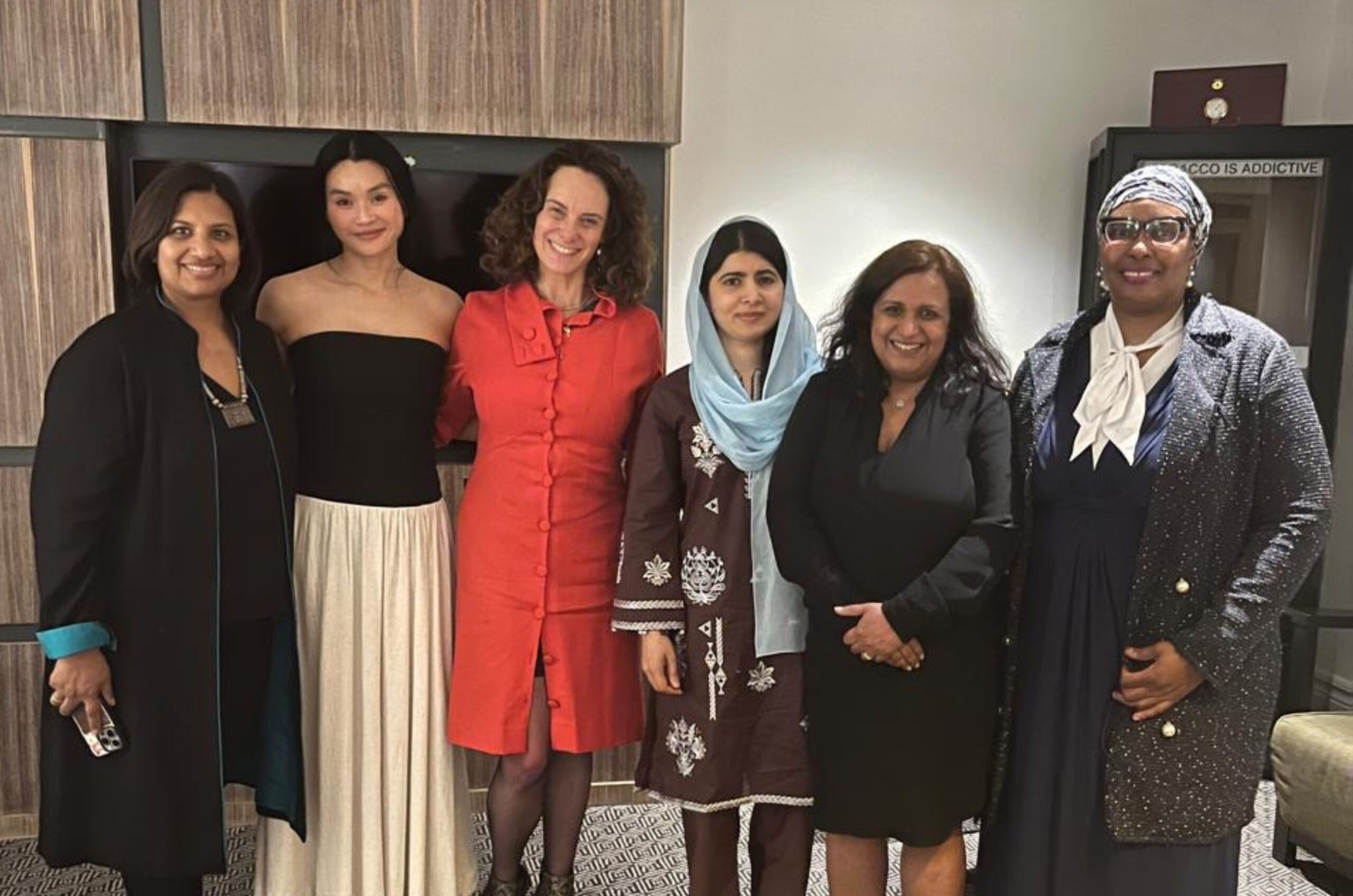
Picture: Nobel Peace Laureate Malala Yousafzai with members of the South Africa Gender Apartheid Working Group.
On 5 August 2026, the International Commission of Jurists – jointly with Lawyers for Human Rights, the Centre for Human Rights, the Malala Fund, and the End Gender Apartheid Campaign – hosted a roundtable discussion in Johannesburg, South Africa, on the ongoing negotiation of the Convention on the Prevention and Punishment of Crimes against Humanity.
Unlike genocide and war crimes, no global standalone treaty addresses crimes against humanity comprehensively, including by obligating States parties to prevent and punish such crimes. To date, no comprehensive convention requires States parties to prevent, criminalize, cooperate on, or ensure remedies and reparations for these crimes. Since most atrocity crimes perpetrated around the world today amount to crimes against humanity, this gap is not merely theoretical; it is a real and pressing impediment to access to justice and effective remedies for victims and survivors.
The roundtable discussions focused on key substantive and procedural issues in the negotiation process, including the imperative of ensuring that diverse civil society from around the world can meaningfully inform and participate in the process, and how to ensure that the eventually adopted Convention be responsive to the lived experiences of both historical and today’s victims and survivors of crimes against humanity. Since the treaty negotiation process began, UN Member States, civil society representatives, and other stakeholders have underscored the importance of ensuring a gender-competent, victim- and survivor-centric, and intersectional approach to both the negotiations and substance of the treaty–one that acknowledges not only past atrocities, but the egregious harms perpetrated in the world today, and those that may yet be committed. With the treaty negotiation process underway, these commitments must be translated into action through advocacy, mobilization, and expertise.
Global feminist advocacy and civil society participation were decisive in the negotiation of the Rome Statute of the International Criminal Court (ICC), securing the codification of sexual and gender-based crimes, including offences like gender persecution and forced pregnancy, as capable of falling within the ICC’s jurisdiction.
In Johannesburg, the roundtable speakers underscored that the same sustained engagement is needed now. At a time when international law is under constant attack, a Convention on crimes against humanity offers a rare chance not only to reaffirm the existing framework of international law, but also to strengthen it by adequately addressing egregious harms long ignored and others that may still be emerging, with a view to securing a transformative outcome for the many victims and survivors who have either been left out or at the margins of existing international law frameworks, including women, girls, and lesbian, gay bisexual, transgender, queer and intersex (LGBTQI+) individuals.
The development of a robust Convention, one that reflects advancements over the past decades and commitments to inclusivity, requires the full and effective participation of a broad range of civil society. Thus, it is imperative that States ensure broad civil society involvement in the run-up to and at the negotiating conference in 2028 and 2029.
Recent submissions from UN Member States proposing potential amendments to the International Law Commission’s Draft Articles on the Prevention and Punishment of Crimes Against Humanity–the baseline for treaty negotiations–reveal both key opportunities for progress, as well as areas of potential regression of existing international law standards. Areas of progress include: pressing issues of gender justice; child justice; the incorporation of the slave trade and environmental destruction crimes; strengthened provisions for victims’ rights; and the creation of a treaty monitoring and prevention mechanism. Areas of regression include: a push for a binary definition of gender–or the wholesale substitution of “sex” for “gender”–and weakened standards for universal jurisdiction and immunities. Other issues, such as colonialism as a standalone crime against humanity, have been raised but have yet to garner formal State support. The roundtable discussions noted that the South African government has yet to make any formal proposals.
The ICJ’s presentation provided an overview of UN Member States’ proposals to create a treaty body and underscored the importance of civil society engagement for ensuring meaningful implementation of the future Convention.
The roundtable speakers at the event included: Kayan Leung, Lawyers for Human Rights; Melissa Hendrickse, Amnesty International; Akila Radhakrishnan, Independent Human Rights & Gender Justice Expert; Kaajal Ramjathan-Keogh, International Commission of Jurists; Azadah Raz Mohammad, End Gender Apartheid Campaign; and Tamika Thumbiran, Centre for Human Rights.
Following the roundtable, Malala Yousafzai, the youngest Nobel Laureate, together with Nabila Aguele, the Malala Fund CEO, and a delegation of Afghan women leaders and human rights defenders, including Horia Mosadiq, Mariam Safi, Dr. Shakardokht Jafari, Azadah Raz Mohammed, and Gaisu Yari, met South Africa’s President, Cyril Ramaphosa, on the sidelines of South Africa’s Women’s Day Celebrations. Ms Yousafzai and the Afghan delegation are leading a campaign to have gender apartheid recognized as a crime against humanity under international law and included in the future Crimes Against Humanity treaty. Both representatives from the Department of International Relations and Cooperation and President Ramaphosa were broadly in support of their proposition. Ms Yousafzai and the Afghan women leaders underscored the urgency of confronting the Taliban’s system of gender apartheid and ensuring Afghan women’s voices are at the centre of international efforts for justice and accountability. The South Africa Gender Apartheid Working Group is also working towards this same goal and has offered solidarity and support for the work of the Malala Fund and the Afghan delegation.