Apr 28, 2014 | News
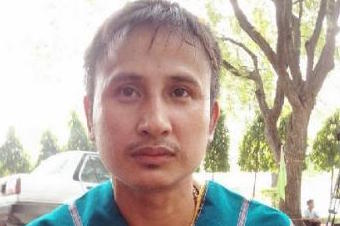
The ICJ and other rights groups today demanded the Royal Thai Government carry out a thorough and impartial investigation into the “disappearance” of Pholachi “Billy” Rakchongcharoen.
Apr 26, 2014 | News
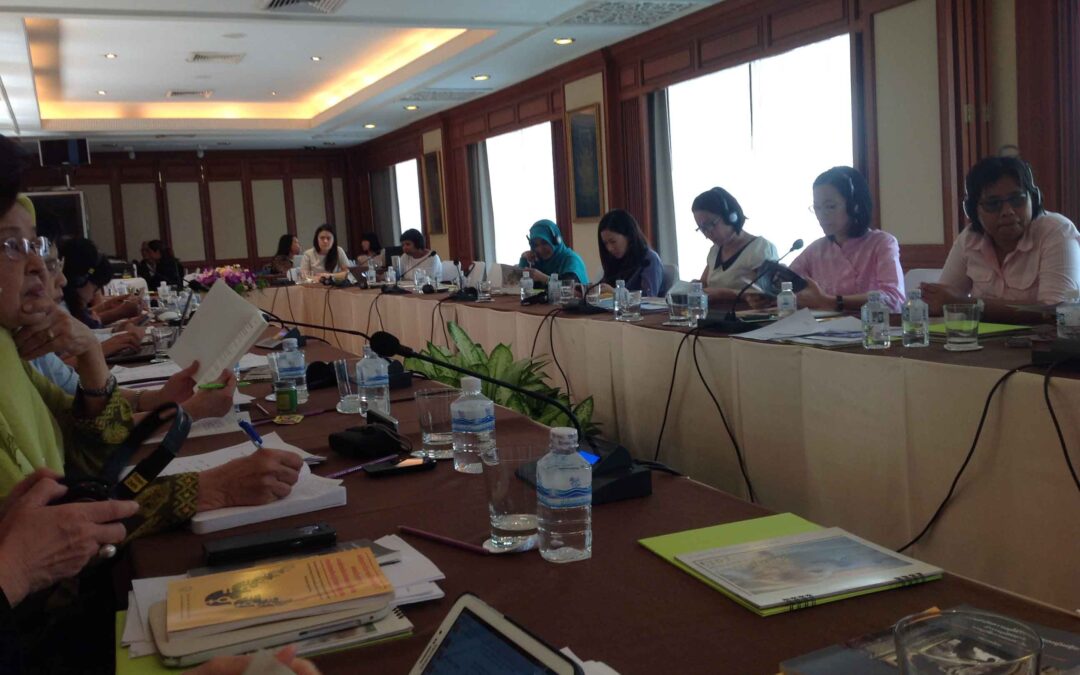
The ICJ recently organized a Legal Seminar for Thai Lawyers and Women Human Rights Defenders on the Optional Protocol to the Convention on the Elimination of all forms of Discrimination Against Women.
On 25 April 2014 Thai lawyers and human rights defenders participated in a legal seminar on using international complaints mechanisms to advance women’s access to justice and human rights protection.
The ICJ seminar enabled global experts to provide local actors with practical guidance and strategic advice on using the Optional Protocol to the Convention on the Elimination of All Forms of Discrimination against Women (CEDAW).
The Protocol, which was ratified by Thailand in 2004, allows women who believe their rights under CEDAW have been violated, to submit a complaint to the UN Committee on the Elimination of Discrimination against Women and seek the Committee’s deliberation and views on the matter.
The legal seminar was part of ongoing ICJ work to empower women lawyers and human rights defenders and advance women’s access to justice in Thailand.
Mar 31, 2014 | News
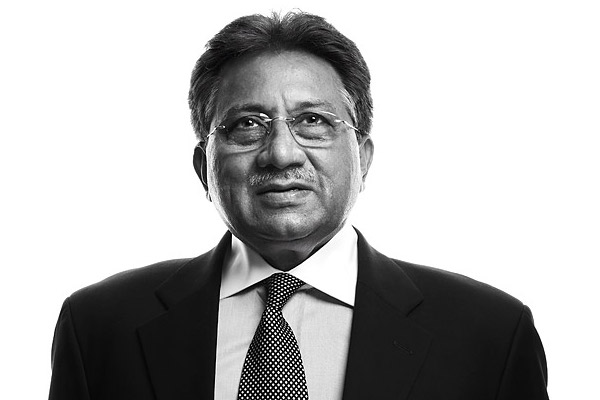
The indictment of General Pervez Musharraf on charges of treason marks a milestone for Pakistan’s judiciary, which must ensure his trial fully complies with international standards, the ICJ said in a briefing paper released today.
“General Musharraf’s treason trial is unprecedented in Pakistan’s political and legal history,” said Sam Zarifi, ICJ’s Asia Director. “This is an opportunity for Pakistan’s judiciary to demonstrate that no-one is above the law and that everyone accused of an offence has the right to a trial that is, and is seen to be, impartial, independent and expeditious.”
In its briefing paper, the ICJ highlights the legal framework and political context of the high treason trial against Pakistan’s former president and army general, Pervez Musharraf, in a Question and Answer format.
The Pakistan Government has established a special court to try General Musharraf for high treason on charges relating to his allegedly unconstitutional imposition of emergency rule and unlawful dismissal of judges on 3 November 2007. Under the law, high treason is punishable by death or life imprisonment.
On Monday, 31 March, Pervez Musharraf was formally indicted on five charges. He pleaded not guilty on all charges.
“This trial marks the first time a senior Pakistani military figure could be held to account for trampling on the rule of law and human rights in the country,” Zarifi said. “General Musharraf should be facing a proper trial for the many human rights violations that took place during his rule and under his command. But this case is at least a start.”
The lead-up to the trial has been marked by confusion, including erroneous reports last week suggesting that Justice Faisal Arab had quit the three-member special court, a move that could possibly have aborted the trial.
There have been many hurdles in the proceedings so far, including General Musharraf’s health, security threats, and concerns about whether he can be guaranteed a fair trial.
Many in Pakistan are celebrating the trial as a victory of rule of law, but others have expressed reservations about the selective nature of the proceedings: General Musharraf is only being tried for imposition of emergency rule on 3 November 2007, not for the military coup through which he usurped power in October 1999.
There are also serious allegations that widespread gross violations of human rights, including enforced disappearances, extrajudicial killings and torture, were carried out by the security forces while General Musharraf was the head of State and the military, yet no case has been instituted in relation to these gross violations of human rights thus far.
“Every effort must be taken to ensure that General Musharraf’s rights as an accused are protected and that the trial complies with Pakistani and international fair trial standards. If convicted of high treason he should be sentenced to life imprisonment, rather than the death penalty.”
The ICJ considers the death penalty in all cases to constitute a violation of the right to life and the right not to be subjected to cruel, inhuman or degrading punishment.
To read the full text of the ICJ Briefing Paper, click on the following PDF file
icj pakistan – musharraf – Q&A
Contacts:
Sam Zarifi, ICJ Asia Pacific Regional Director (Bangkok), t: +66 807819002; email: sam.zarifi(a)icj.org
Reema Omer, ICJ International Legal Advisor for Pakistan (London), t: +447889565691; email: reema.omer(a)icj.org
Mar 25, 2014 | News
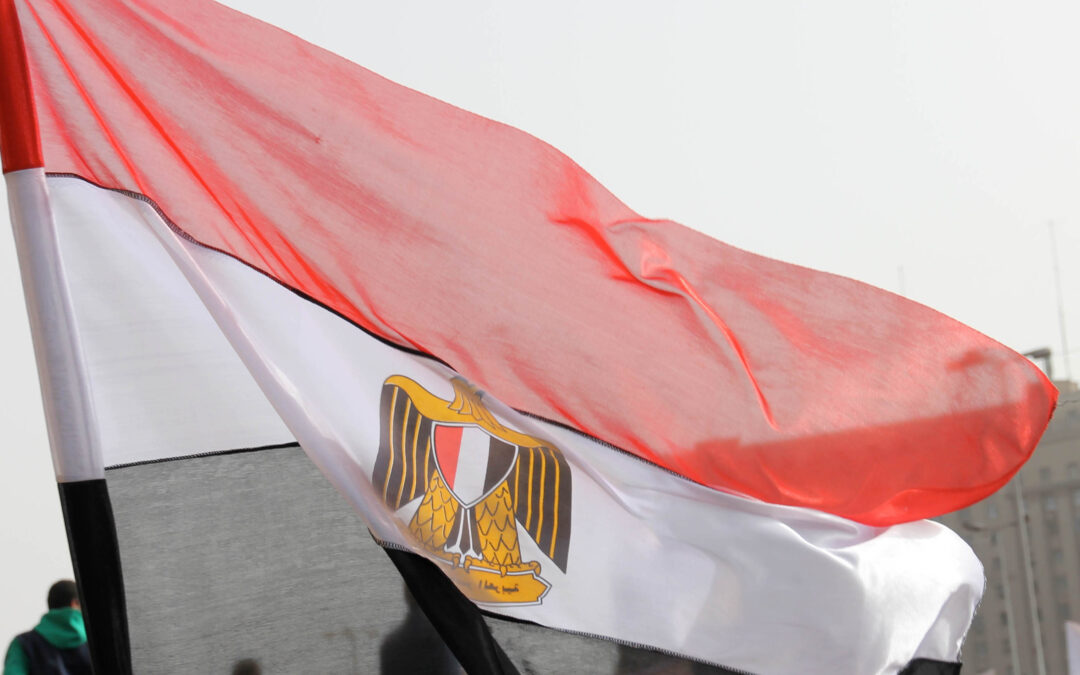
The ICJ today strongly condemned the decision of the Criminal Court of Minya to convict 529 individuals and to sentence them to death.
The individuals were sentenced for “participating in an attack on a police station in Minya,” “murder of a police officer,” “attempted murder of two other officers,” “seizing weapons” and “damaging public property”.
The verdict comes against a backdrop of a continuing crackdown on individuals suspected of supporting the ousted President, Mohamed Morsi, or being members of the Muslim Brotherhood, an organization officially designated by the military and other transitional authorities as a terrorist organization.
The verdict followed a two-day trial that disregarded fundamental fair trial standards.
The first hearing lasted 30 minutes, while the second lasted one hour.
International law is clear: the imposition of the death penalty following an unfair trial violates the right to life.
The ICJ calls on the Egyptian authorities to extinguish the convictions resulting from this trial and ensure that those arrested, prosecuted and convicted for the legitimate exercise of their rights to freedom of association and assembly are immediately released.
“The Minya trial made an absolute mockery of justice, violating basic human rights, including the rights to life, to liberty, to be presumed innocent and to defence,” stated Said Benarbia, Director of the ICJ Middle East & North Africa Program. “Even with Egypt’s long history of unfair trials and systematic politicization of the judiciary, the Minya trial sets a new low, and could be dangerous precedent for mass convictions following mass trials against government critics.”
The ICJ is deeply concerned that this trial is a part of a deliberate policy by the Egyptian authorities to use the courts and the Office of the Public Prosecutor to arrest, prosecute, convict, and imprison opponents of the current authorities.
The ICJ is also concerned that this policy effectively shields from accountability police, security, and military officers responsible for human rights violations committed in the context of the crackdown that followed the ouster of President Morsi, including the killings of more than 1200 people, in particular during the dispersal of the Rabaa Al-Adawyia and Annahda pro-Morsi sit-ins on 14 August.
No effective investigation has yet been conducted into these killings, and the perpetrators remain unpunished.
“In times of crisis, judges and prosecutors must safeguard and uphold human rights and fundamental freedoms, not act as tools of repression by prosecuting and convicting individuals for the legitimate exercise of their rights” said Benarbia.
“The Egyptian authorities must respect the independence of judges and prosecutors and refrain from any undue, inappropriate or unwarranted interference in judicial matters,” Benarbia concluded.
Contact:
Said Benarbia, ICJ Director of the Middle East and North Africa Programme, tel: 41 22 979 38 17, e-mail: said.benarbia(a)icj.org
Mar 18, 2014 | News
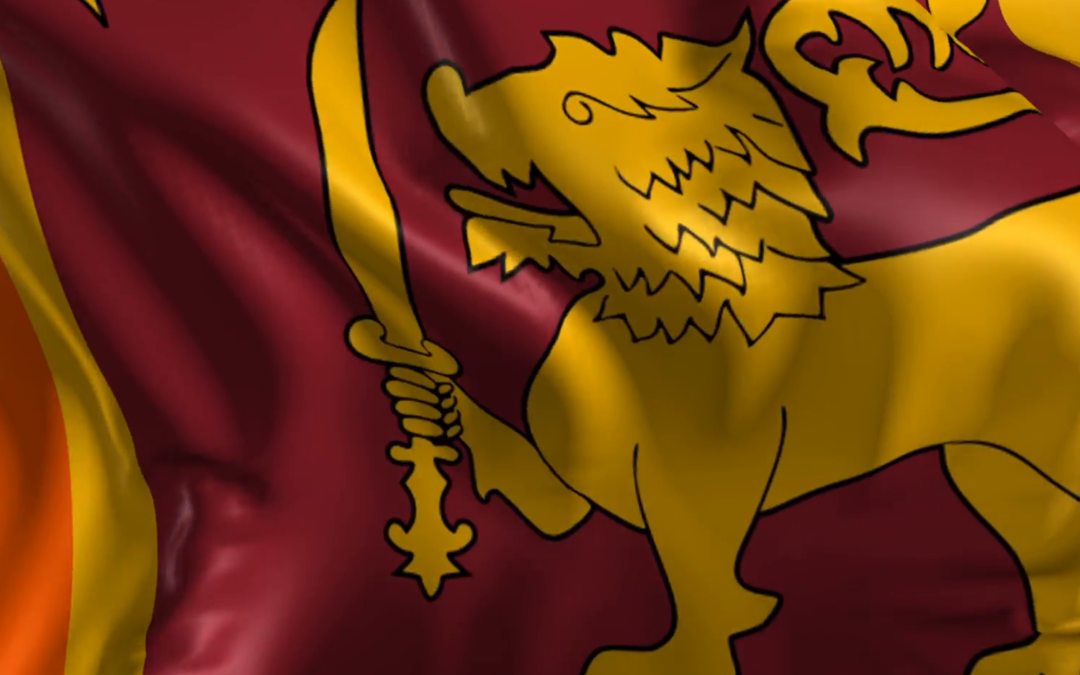
The arbitrary arrest and detention of prominent human rights defenders is an attempt to silence criticism and divert the spotlight from ongoing abuses, leading global and Asian human rights monitors said today in a joint statement.
The statement was issued by Amnesty International, Forum Asia, Human Rights Watch, the International Crisis Group, and the International Commission of Jurists.
Ruki Fernando of the Colombo-based INFORM and Father Praveen Mahesan, a Catholic priest, were arrested in Kilinochchi on March 16, and are believed to be detained without formal charges under Sri Lanka’s notoriously draconian Prevention of Terrorism Act (PTA).
“The Sri Lankan authorities need to release Fernando and Father Praveen, and end the ongoing state harassment of human rights defenders,” said David Griffiths, Amnesty International’s deputy director for Asia Pacific. “How can the international community take Sri Lanka’s claims to respect rights seriously when rights defenders continue to face intimidation and criminal charges for demanding accountability and human rights protection?”
The police Terrorism Investigation Division (TID) detained and questioned Ruki Fernando and Father Praveen after they sought to ensure the welfare of 13-year-old Balendran Vithushaini, who had been ordered into probationary care following the arrest of her mother, Balendran Jeyakumari, on March 13. Both mother and daughter are active opponents of enforced disappearances in Sri Lanka and have been prominently featured in international media coverage of demonstrations by families of the disappeared, most recently in Jaffna in November 2013 during a visit by British Prime Minister David Cameron.
Fernando and Father Praveen were questioned separately in two different buildings for more than three hours by several TID officers. Lawyers acting on their behalf were given contradictory information about the arrests and the reasons for their detention. The most recent information is that Fernando and Father Praveen have been taken to police Terrorism Investigation Division headquarters in Colombo, and their lawyers are still seeking access to them.
Fernando and Father Praveen have not been charged to date, but according to Sri Lankan Police spokesperson Senior Superintendent Ajith Rohana, they will be charged with “attempting to create instability among communities” and “allegedly promoting separatism” under the Prevention of Terrorism Act.
The PTA has been widely criticized by Sri Lankan civil society, international monitoring organizations, and United Nations bodies. In its report, Authority without Accountability: The Crisis of Impunity in Sri Lanka, the International Commission of Jurists documents how provisions of the PTA have resulted in arbitrary detention, contravened suspects’ right to a fair trial and due process, and facilitated torture and other ill-treatment and enforced disappearances
The human rights groups said that the arrests are particularly disturbing since a resolution on Sri Lanka’s failure to address accountability is under discussion and will be voted on soon at the ongoing Human Rights Council (UNHRC) sessions in Geneva. The international community has long called for Sri Lanka to take meaningful steps to end its culture of impunity.
“This ongoing campaign of reprisals against those speaking out against human rights violations shows the extent of the government’s impunity,” said Sam Zarifi, Asia director at the International Commission of Jurists. “The international community, through its voting at the Human Rights Council, must judge Sri Lanka not by its promises, but by its actions.”
In spite of two prior resolutions by the UNHRC in 2012 and 2013, Sri Lanka has taken no measurable steps towards ensuring justice for the victims of its civil war, and has instead launched an aggressive campaign against those who advocate for accountability. Human rights defenders, activists, journalists, and civil society members who are critical of the government have regularly been threatened and harassed. Those who have an international profile, such as Fernando, face particular government hostility.
“Sri Lankan authorities systematically clamp down on those who seek to reach out to the international community, especially around significant events such as the Human Rights Council sessions or the Commonwealth Heads of Government Meeting,” said Evelyn Balais-Serrano, the executive director of Forum-Asia. “Instead of protecting human rights defenders, the latest arrests show the Sri Lankan government is stepping up its aggressive stance towards those seeking justice and answers.”
The arrests also call into question the Sri Lankan government’s stated commitment to improving respect for human rights since the end of the armed conflict with the Liberation Tigers of Tamil Eelam in 2009, the groups said.
“Arresting peaceful activists known for their work with victims of rights violations from all ethnic communities is not a way to build trust and restore relationships damaged by the war,” said Jonathan Prentice, the International Crisis Group’s chief policy officer. “If sustainable peace is to be more than an illusion, the rights of Sri Lanka’s victims and human rights defenders to speak freely and safely must be protected.”
The organizations stressed that Fernando and Father Praveen should be given full rights while they remain in detention. Under international law, including the International Covenant on Civil and Political Rights, to which Sri Lanka is a state party, people deprived of their liberty must be promptly informed of the reasons for their detention, be given prompt and regular access to lawyers, and be promptly brought before a judge or judicial officer.
“Human Rights Council members should demand the immediate release of Fernando and Father Praveen and be clear that this will not deter them from adopting a necessary resolution on Sri Lanka,” said Brad Adams, Asia director at Human Rights Watch. “The arrest of these human rights defenders shows just how important it is for the international community to stand up for human rights in Sri Lanka.”
Signed by:
- Amnesty International
- FORUM-ASIA
- International Commission of Jurists
- International Crisis Group
- Human Rights Watch
For more information, please contact:
In London, for Amnesty International
In Bangkok, for International Commission of Jurists, Sam Zarifi: +66-857-200-723; orsam.zarifi@icj.org
In Bangkok, for International Commission of Jurists, Sheila Varadan: +66-857-200-723; or sheila.varadan@icj.org