Jan 23, 2014 | News
The ICJ criticized the Phnom Penh Municipal Court’s decision to deny bail to 23 people who were arrested and detained earlier this month following protests by garment factory workers seeking a higher minimum wage.
The detainees’ lawyers told the ICJ that the court denied bail for the first nine detainees, arrested on 2 January 2014, in order to “guarantee their presence for further legal proceedings”, “to preserve public order” and “to prevent instability that results from the commission of crimes”.
The remaining 13 detainees, arrested on 3 January 2014, were denied bail in order to “end crime”, “prevent new crime” and “ensure detainees are available for trial”.
The decision to deny bail to the 22 detainees followed the Court’s decision on 13 January 2014 to deny bail to Vorn Pao, President of the Independent Democracy of Informal Economy Association (IDEA).
Considering his application separately from the others, the court, similarly, provided the same reasons as in the case of the first nine detainees.
“International law is clear that pre-trial detention could only be exercised in exceptional situations, and avoided if suitable alternatives are possible,” said Sam Zarifi, ICJ’s Regional Director for Asia and the Pacific. “The reasons presented by the Court don’t justify holding these activists in prison right now.”
All 23 of those whose bail applications have been denied have been charged with causing intentional violence and damage to property. Three face additional charges for violent resistance against a public official, as well as a traffic offence.
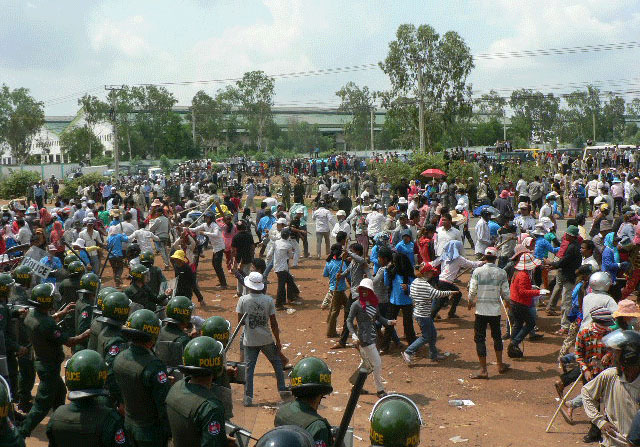
They were arrested as part of the government’s response to striking garment workers and demonstrators protesting the 28-year-rule of Prime Minister Hun Sen (photo).
Security forces shot and killed at least four protesters on 3 January. The government has banned further protests.
Article 9(3) of the International Covenant on Civil and Political Rights (ICCPR), to which Cambodia is a party, guarantees the right to liberty. It states, “It shall not be the general rule that persons awaiting trial shall be detained in custody, but release may be subject to guarantees to appear for trial”. Such guarantees include bail.
“There are alternatives to the detention, such as bail or other conditions the court could impose on these 23 detained activists if the Court is concerned, on the basis of substantiated and objective grounds that there is a risk that each of them will abscond before the trial or interfere with the investigation,” said Zarifi. “In the absence of such proof and the serious consideration of alternatives the continued pre-trial detention of each of the 23 individuals would amount to arbitrary detention under international human rights standards.”
Vorn Pao’s lawyers filed an appeal on 14 January 2014 and the Court is expected to issue a decision on his appeal by 3 February 2014.
According to the Cambodian Centre for Human Rights, Vorn Pao appears weak and continues to suffer pain from the head injuries he sustained.
Lawyers for the other 22 detainees have also expressed their intention to appeal the Court’s decision to deny them bail.
Contact:
Sam Zarifi, ICJ Asia-Pacific Regional Director, (Bangkok), t:+66 807819002, e-mail: sam.zarifi(a)icj.org
Craig Knowles, ICJ Media & Communications, (Bangkok), t:+66 819077653, e-mail: craig.knowles(a)icj.org

Jan 21, 2014 | News
The ICJ is deeply concerned by reports that the President of Nauru has prevented the island nation’s Chief Justice from returning to the country and expelled the sole Resident Magistrate in violation of international standards on the independence of the judiciary.
According to media reports, Nauru President Baron Waqa on January 19 removed Resident Magistrate Peter Law in violation of an injunction issued by Chief Justice Geoffrey Eames. Subsequently, Chief Justice Eames, who was in Australia at the time, had his visa cancelled. Both judicial officials are Australian citizens.
Australia administered Nauru as a dependent territory until 1968 and the two countries retain strong bilateral relations. Australian judges and magistrates often serve on Nauru Courts.
“Removing judges from office, without any process whatsoever, breaches clear international standards on the independence of the judiciary,” said Sam Zarifi, ICJ’s Regional Director for Asia and the Pacific. “It also jeopardizes the right of people in Nauru, especially those currently engaged in legal proceedings, to have a fair trial.”
Nauru is an island state in Micronesia in the South Pacific.
The ICJ’s Centre for the Independence of Judges and Lawyers (CIJL) is monitoring developments.
Contact:
Sam Zarifi, ICJ Asia-Pacific Regional Director, (Bangkok), t:+66 807819002, e-mail: sam.zarifi(a)icj.org
Craig Knowles, ICJ Media & Communications, (Bangkok), t:+66 819077653, e-mail: craig.knowles(a)icj.org

Oct 2, 2013 | Events
The ICJ today welcomed the launch of the OSCE/FBA Handbook for Monitoring Administrative Justice as a tool able to contribute to the open administration of justice.
Noting that trends throughout the world see administrative cases dealt with in a manner that lacks transparency and fails to comport with the open administration of justice, the ICJ expressed the hope that the tool will be used by practitioners and officials to make an impact on the ground. The ICJ pointed to several reasons why the open administration of justice, in all forms of proceedings, is important to human rights and the rule of law:
- As a starting point, it is widely recognised, including by the UN Human Rights Committee in its General Comment on the right to a fair trial, that the open and transparent administration of justice is an important safeguard for the interests of both the individual and society at large.
- The conduct of administrative and other proceeds in an open and transparent manner helps to ensure the integrity of such proceedings and protect against potential abuse.
- Publicly accessible documentation, including timely and reasoned decisions, protects individuals from being subject to arbitrary decisions.
- Transparency and openness contributes to accountability by enabling parties to determine the viability of any appeal or review, including the possibility of taking a case to regional or international mechanisms.
- In all these ways, the open administration of justice also helps guarantee the right of individuals and society to access justice, including remedies and reparation.
The Handbook is a publication arising from a joint initiative of the Folke Bernadotte Academy (FBA) Rule of Law Unit and the OSCE Office for Democratic Institutions and Human Rights. Work began on the Handbook in May 2011. The ICJ participated in expert meetings on the development of the Handbook in 2011 and 2012.
OSCE/FBA Handbook for Monitoring Administrative Justice
Sep 2, 2013 | News
The ICJ today called on the Bangladesh authorities to immediately withdraw the contempt of court notice issued against the international human rights organization Human Rights Watch.
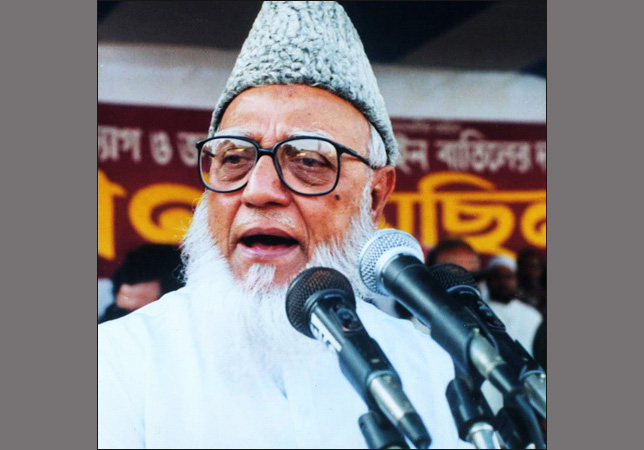
The charges are in response to well documented concerns by Human Rights Watch that the trial of Ghulam Azam (photo), former head of the Islamist group Jamaat-e-Islami Azam’s trial was “deeply flawed” and failed to meet international fair trial standards.
“Silencing voices that highlight the shortcomings of the International Crimes Tribunal impede rather than advance the enormously important task of ensuring that those responsible for committing atrocities during Bangladesh’s war of liberation are brought to justice in a process that complies with international law and standards”, said Alex Conte, Director of the ICJ’s International Law and Protection Programmes.
On 2 September 2013, the International Crimes Tribunal (ICT) in Bangladesh issued a show cause notice asking Human Rights Watch to explain why contempt of court proceedings should not be initiated against it for its allegedly ‘biased’, ‘scandalous’ and ‘inaccurate’ statements about the ICT. Human Rights Watch has to respond within three weeks, or possibly face trial and conviction in absentia.
“Assessing the conduct of administration of justice in judicial proceedings, including where it entails criticism of judicial performance is an important means of ensuring accountability,” said Conte. “Judges and prosecutors should defend the right to freedom of expression, not use their discretionary powers to muzzle criticism”.
Contact:
Alex Conte, Director, International Law & Protection Programmes, t: +41 79 957 2733; email: alex.conte(a)icj.org
Additional information:
The Bangalore Principles on Judicial Conduct clarify that “since judicial independence does not render a judge free from public accountability, and legitimate public criticism of judicial performance is a means of ensuring accountability subject to law, a judge should generally avoid the use of the criminal law and contempt proceedings to restrict such criticism of the courts”.
The Commonwealth (Latimer House) Principles on the Accountability of and the Relationship Between the Three Branches of Government also stress that “criminal law and contempt proceedings should not be used to restrict legitimate criticism of the performance of judicial functions”.
The UN Declaration on Human Rights Defenders underscores that “everyone has the right, individually and in association with others, to promote and to strive for the protection and realization of human rights and fundamental freedoms at the national and international levels”.
The Declaration also highlights that human rights defenders have the right to “freely to publish, impart or disseminate to others views, information and knowledge on all human rights and fundamental freedoms” and to hold opinions and draw public attention to the observance of human rights.

Mar 27, 2013 | Agendas, Events
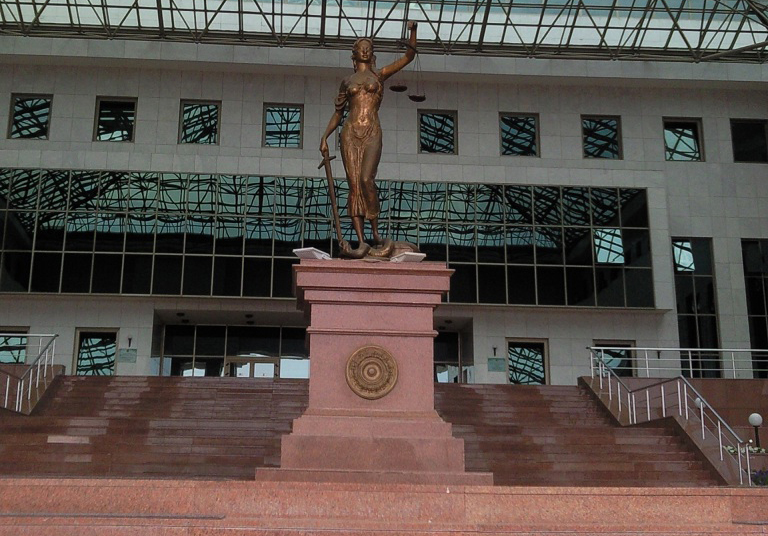 Lawyers from all five Central Asian countries participate in the seminar (28-29 March 2013) to discuss the independence of bar associations and problems faced by lawyers in working independently and effectively.
This ICJ roundtable seminar, organized in cooperation with the Central Asian League of Lawyers and to be held in Almaty, Kazakhstan, will address issues including the self-governance and organization of bar associations, their relationships with state bodies, lawyers and the public, entrance to the legal profession, lawyers’ codes of ethics, and disciplinary proceedings against lawyers.
It will also discuss problems faced by lawyers in criminal cases, in both the pre-trial and trial stages, and incidents of harassment or intimidation of lawyers.
Europe-CIS-ICJ Seminar Central Asia-event-agenda-2013 (full text in pdf)