Mar 6, 2019 | News
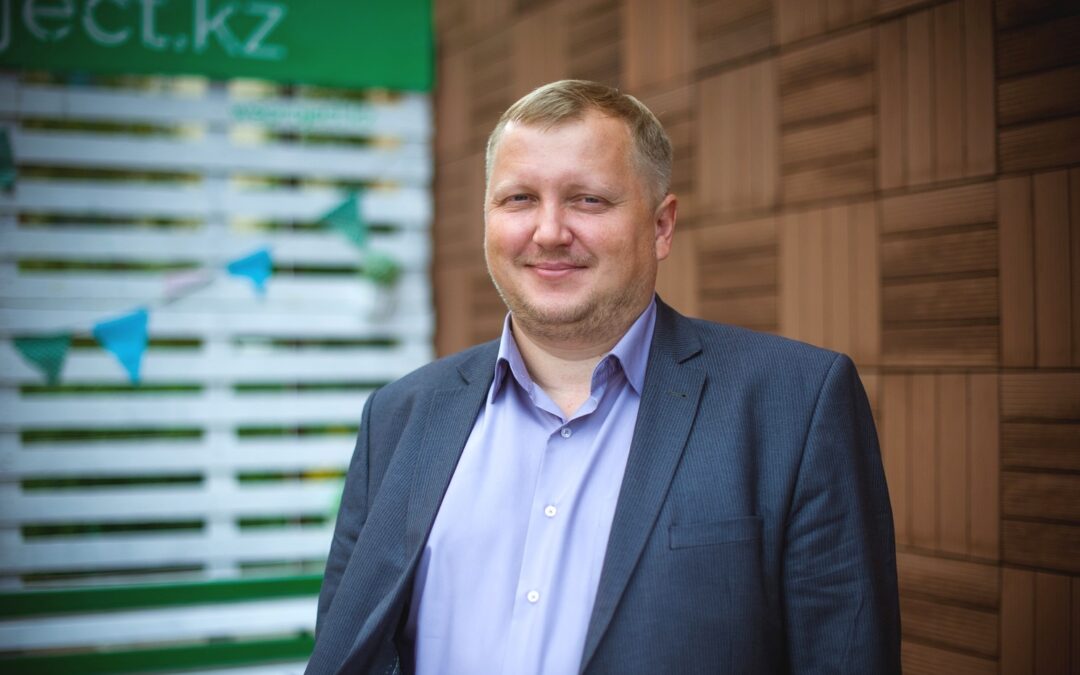
Today, the ICJ expressed concern at the initiation of disbarment proceedings by the Ministry of Justice of Kazakhstan against Sergey Sizintsev, former Executive Director of the National Bar Association and the newly-elected head of the Scientific-Consultative Board of the National Bar Association.
The official ground for disbarment of Sizintsev is his work as the Director the National Bar Association in 2016-2018 while continuing his legal practice at the same time.
On his facebook public account, however, Sizintsev alleged that this initiative is not related to the officially stated grounds, and that in fact continuing to practice while working as Director of the Bar Association is clearly permitted by the Kazakhstan’s law. Rather, he alleges, he is being pursued for his criticism of the law “On lawyers’ activity and legal aid” as well as his public statements in different international and national fora in regard to issues related to the independence of the legal profession.
The ICJ recalls that freedom of expression and association, in particular, constitute essential requirements for the proper and independent functioning of the legal profession and must be guaranteed by law and in practice.
According to Principle 23 of the UN Basic Principles on the Role of Lawyers, lawyers “[…] have the right to take part in public discussion of matters concerning the law, the administration of justice and the promotion and protection of human rights and to join or form local, national or international organizations and attend their meetings, without suffering professional restrictions by reason of their lawful action or their membership in a lawful organization. In exercising these rights, lawyers shall always conduct themselves in accordance with the law and the recognized standards and ethics of the legal profession.”
Sergey Sizintsev as Executive Director of the National Bar Association and as a member of the Parliament working group on the Law on Lawyers’ Activities, was expected to voice concerns of members of the legal position including on the new law which the legal profession consider to be restrictive.
Moreover, his position demanded that he expresses his position on behalf of the National Bar Association including to draw attention to legislative developments which can jeopardise the independence of the legal profession in Kazakhstan.
The ICJ is concerned that this initiative appears to constitute an attack on the independence of lawyers in Kazakhstan and may have a chilling effect on members of the legal profession.
The ICJ therefore calls on the Ministry of Justice to end this lawsuit immediately.
The ICJ will closely follow the case of Sergei Sizintsev and the proceedings at the Rayon Court in Petropavlovsk.
In December 2017, the ICJ organized a mission to Kazakhstan and raised concerns over the then planned reform.
In November 2018, the ICJ raised concern at the disbarment proceedings against Presidents of Aktybinsk and Pavlodar Bar Association as well as resignation of Anuar Tugel, the President of the National Bar Association of Kazakhstan, allegedly as a result of the pressure from the Ministry of Justice.
Mar 5, 2019 | News
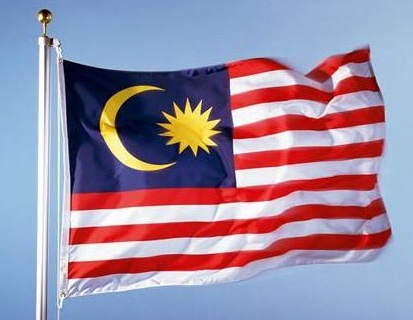
On 4 March 2019, Malaysia acceded to the Rome Statute of the International Criminal Court (ICC), making it the 124th State Party to the ICC.
“The decision by Malaysia’s government to become party to the Rome statute should be commended as a positive sign of its commitment to the rule of law and acceptance to work with the global community to end impunity and ensure accountability for some of the gravest crimes under international law,” said Frederick Rawski, the ICJ’s Asia-Pacific Director.
The ICJ considers the establishment of the ICC as a watershed achievement in the development of international law and the will and capacity of States to act in concert to address atrocities around the world that carry devastating consequences for the victims.
The aim to end impunity on a global scale requires that the Rome Statute be ratified universally.
The ICC was established in 2002 as a permanent international criminal court to investigate and, where warranted, put on trial individuals charged with the some of the most serious crimes of international concern, particularly the crime of genocide, crimes against humanity, war crimes and the crime of aggression.
The Rome Statute operates on the principle of complementarity, meaning that the ICC can only become engaged when the responsible States are unable or unwilling to investigate and prosecute allegations at the national level.
“Malaysia’s accession serves as an example for the entire Asian region, which has been significantly underrepresented at the ICC,” said Rawski.
“It sends a timely message of support for international accountability, at a moment when the actions of two of Malaysia’s neighboring countries – Myanmar and the Philippines – are the focus of preliminary investigations by the ICC, and after Philippines announced its intent to withdraw from the Statute last year,” he added.
In March 2018, the ICC was formally notified by Philippines of its intention to withdraw from the Rome Statute after the court initiated a preliminary examination into allegations of crimes committed in the context of the Philippines’ government’s “war on drugs” campaign since July 2016. The ICJ condemned this move as a blow to international justice.
In September 2018, the ICC launched a preliminary examination into allegations of forced deportations of Rohingya Muslims from Myanmar into Bangladesh, on the basis that the court had jurisdiction because Bangladesh is a State Party and the deportations occurred in part on Bangladeshi territory. The ICJ submitted an amicus curiae in support of such jurisdiction.
Contact
Frederick Rawski, ICJ Asia and Pacific Regional Director, e: frederick.rawski(a)icj.org
See also
Philippines: the Government should reconsider withdrawal from ICC
ICJ submits Amicus Curiae Brief to International Criminal Court
Mar 1, 2019 | News
On 28 February and 1 March, the ICJ met with senior officials of the Myanmar Police Force (MPF) and the Union Attorney General’s Office (UAGO) in Nay Pyi Taw.
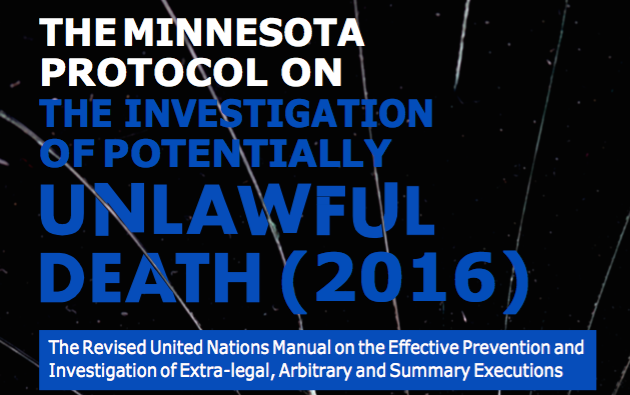
The purpose of these talks was to promote the conduct of effective investigations into potentially unlawful deaths and enforced disappearance in accordance with international human rights law and standards, particularly the Minnesota Protocol on the Investigation of Potentially Unlawful Deaths (“Minnesota Protocol”).
Under customary international law, the right to life, and the right to be free from torture and other ill treatment, is not to be restricted even during an armed conflict or declared public emergency. All States are obliged to investigate, prosecute and punish acts that constitute violations of the right to life, and to provide effective remedies and reparations to victims.
Published by the United Nations Office of the High Commissioner for Human Rights, the Minnesota Protocol provides guidance to authorities on investigating acts amounting to human rights violations, including when State actors may have been involved. Drawing upon international law and standards, including in relation to the rights of victims and their families, the Protocol includes detailed guidelines on crime scene investigation, interviews, exhumations and autopsies.
Since December 2017, the ICJ has co-hosted four regional workshops in Thailand focused on this topic. Attendees have included lawyers, academics and State authorities from Thailand, Cambodia, Nepal, India and Myanmar.
Frederick Rawski, Director for Asia and the Pacific, Sean Bain, Legal Adviser, and Ja Seng Ing, Legal Researcher, composed the ICJ delegation in Myanmar’s capital.
Frederick Rawski proposed opportunities to continue these discussions on international standards into investigative procedures and processes. The ICJ Team also provided updates about related activities undertaken regionally and in Myanmar.
The ICJ has worked with the UAGO since 2014 to provide assistance on prosecutorial independence and human rights in the context of Myanmar’s broader democratic and legal reforms. This was the third meeting with the MPF over the last twelve months to discuss the conduct of investigations inline with international human rights law and standards.
Members of UAGO and MPF received copies of the Minnesota Protocol and indicated these would be shared with officials involved in the conduct of investigations or in setting the standards for them under national law in Myanmar.
Jan 14, 2019 | News
Today the ICJ condemned the conviction of prominent Egyptian political activist Ahmed Douma and called for his immediate removal from solitary confinement and release from prison.
Ahmed Douma, political activist and founding member of the now banned 6 April pro-democracy movement established in 2008, was convicted by the South Cairo Criminal Court on Wednesday 9 January 2019.
The conviction, resulting in a sentence of 15 years in a maximum security prison and a six million Egyptian pounds (US$335,000) fine, followed a re-trial on charges under the Penal Code and Law No. 10 of 1914 on Illegal Assembly including using force and violence against military and police officers, disrupting traffic, participating in an illegal assembly for such purposes, burning the Egyptian Scientific Institute, vandalizing public property, and possessing Molotov Cocktails and rocks to vandalize public property.
The charges relate to his involvement in a three-week sit-in protest outside the Cairo Cabinet Offices in November and December 2011 against the Supreme Council of the Armed Forces’ decision to appoint Kamal Al Ganzouri as Prime Minister, and calling for a civilian government during the post-revolution transition period. The protest erupted in clashes between military forces and protestors on 16 December 2011, which lead to the death of 18 protestors by live ammunition, injury of more than 1900 others and property damage. Douma and 268 others were charged with all offences without distinction.
Ahmed Douma has been held in solitary confinement since late 2013 in connection with his conviction in another case.
Before handing down the sentence, Judge Mohamed Shereen Fahmy stated the country was “plagued by the intellectually defeated and the socially […] lost in the maze of life, seeking a position through which they can establish themselves as national symbols, liars, deceivers, and accomplices, […] who one would expect to be the homeland’s protectors, but in reality, they are its worst foes.”
“The harsh sentence is a clear message to all political activists that any political activity or dissent will not be tolerated under Egypt’s military dictatorship,” said Said Benarbia, Director of ICJ’s MENA Programme. “Judge Fahmy’s statement demonstrates he was never independent and impartial, but was implementing the political will of the al-Sisi led government. The Egyptian regime’s politicization of the judiciary means those with opposing views are unlikely to have a fair trial.”
On 22 December 2013, a Cairo Misdemeanor Court convicted Ahmed Douma in another case, along with two other political activists and founding members of the 6 April movement, Ahmed Maher and Mohamed Adel, for “illegally organizing a protest” under Law No. 107 of 2013 on the Right to Public Meetings, Processions and Peaceful Demonstrations. They were sentenced to three years’ imprisonment and fined 50,000 Egyptian pounds (US$7,239) each.
Since that conviction, Douma has been detained in solitary confinement, with minimal time outside his cell each day. Prolonged solitary confinement is prohibited under international law.
“The Egyptian Authorities are subjecting a political activist to severe ill-treatment in reprisal for his participation and his role in the pro-democracy uprisings of January 2011 and as a warning to others to take heed of what will happen should you dare to express your views. Ahmed Douma’s solitary confinement for more than five years is a breach of Egypt’s obligations under international law,” said Said Benarbia.
Contact:
Said Benarbia, Director of the ICJ Middle East and North Africa Programme, t: +41-22-979-3817; e: said.benarbia(a)icj.org
Egypt-Release Ahmed Douma-News-Web Story-2019-ENG Full press release (English, PDF)
Egypt-Release Ahmed Douma-News-Web Story-2019-ARA Full press release (Arabic, PDF)
Dec 17, 2018 | Communiqués de presse, Nouvelles
A l’occasion de la Conférence de clôture de l’Instance Vérité Dignité (IVD), les organisations de la société civile félicitent l’Instance qui a abouti à l’achèvement de ses travaux, malgré un contexte politique manifestement hostile au processus.
Aussi, les organisations signataires dénoncent fermement l’absence des trois Présidences au pouvoir à ce rendez-vous historique pour le pays.
Lire la totalité de l’article ci-dessous:
Tunisia-Truth and Dignity Commission Tunisia-News-Press Release-2018-FRE (version française, PDF)
Tunisia-Truth and Dignity Commission Tunisia-News-Press Release-2018-ARA (version arabe, PDF)