Mar 1, 2016 | Advocacy, News, Non-legal submissions
The ICJ joined today other prominent human rights organizations in urging the European Union and its Member States to respect and protect human rights and the rule of law in countering terrorism.
In their joint statement, the thirteen human rights organizations stressed the implications of Eu counter-terrorism laws and policies for human rights and the rule of law with regard to the right to be free from torture and cruel, inhuman or degrading treatment or punishment, the principle of non-refoulement, the right to liberty and security of the person, the right to a fair trial, the principle of legality, the principle of non-discrimination, the rights to freedom of expression and peaceful assembly, the right to privacy, the rights of asylum-seekers and migrants, the freedoms of movement, of religion or belief and other dimensions.
The human rights organizations that signed up to this statement are, apart from the International Commission of Jurists, the European Network Against Racism (ENAR), Amnesty International, the International Federation of Human Rights (FIDH), the Open Society European Policy Institute, the World Organisation Against Torture (OMCT), Fair Trials, European Digital Rights (EDRi), the Forum of European Muslim Youth and Student Organisations (FEMYSO), the International Federation of Action by Christians for the Abolition of Torture (FIACAT), the International Rehabilitation Council for Torture Victims (IRCT), the Association for the Prevention of Torture (APT), and the European Association for the Defense of Human Rights (AEDH).
EU-counter-terrorism&humanrights-jointstatement-2016-ENG (download the joint statement)
Mar 19, 2015 | Advocacy, Legal submissions, News
The ICJ and Amnesty International have presented a submission on the draft of an Additional Protocol supplementing the Council of Europe Convention on the Prevention of Terrorism.
In their submission, the ICJ and AI outlined before the Committee on Foreign Terrorist Fighters and Related Issues (COD-CTE) of the Council of Europe the general principles of human rights law related to the issue of foreign fighters and the implementation of Security Council resolution 2178(2014) and made observations on the draft criminal offences contained in the draft protocol.
The submission outlines positions and concerns with relation to:
- The lack of definition of central concepts like “terrorism”, “terrorist acts”, and “foreign fighters”
- The risk of introducing criminal offences lacking the clarity, accessibility and foreseeability required by the principle of legality
- The risk of conflation of of different legal regimes, notably of international humanitarian law and ordinary criminal law
- The need to investigate and prosecute existing crimes under international law
- The need to ensure that any criminalisation of acts or omissions must have a close connection to the commission of the principal criminal offence, with a real risk that such a principal criminal act would in fact take place
- Specific comments on the draft offences of participation in an association or group for the purpose of terrorism; receiving training for terrorism; travelling abroad for the purpose of terrorism; funding travelling abroad for the purpose of terrorism; organizing or otherwise facilitating travelling abroad for the purpose of terrorism.
CouncilofEurope-Submission-ForeignFighters-Advocacy-Legal Submission-2015-ENG (download the observations)
Mar 2, 2015 | Events
A major side event at the Human Rights Council, featuring current and former UN Special Rapporteurs together with human rights defenders from Swaziland and Zimbabwe, will discuss national security and human rights defenders, on 10 March.
The ICJ joins Article 19, FIDH, ISHR, and OMCT, in supporting the side event.
The panel discussion will feature:
- Michel Forst, UN Special Rapporteur on Human Rights Defenders
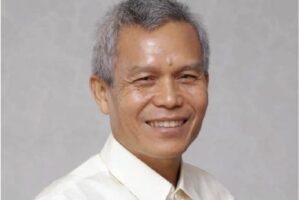
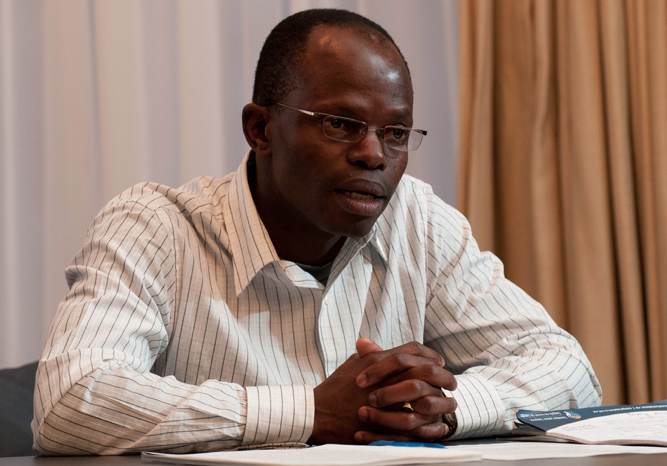
- Tanele Maseko, campaigner for the release of her detained husband, Swaziland lawyer Thulani Maseko (pictured – see recent submission on his case here)
- Jimena Reyes, Director of Americas Desk, FIDH
- Hina Jilani, Pakistani human rights lawyer and former UN Special Representative on Human Rights Defenders (and member of the ICJ Executive Committee)
- Roselyn Hanzi, Zimbabwe Lawyers for Human Rights
- Gerald Staberock, Director, World Organisation against Torture
The side event will take place Tuesday, 10 March, from 15h00 to 16h30, at Palais des Nations, Geneva, Room XI.

Jul 11, 2014 | News
The Protection of Pakistan Act 2014 signed today by the President will aggravate human rights violations in the country instead of helping to protect Pakistani people from attacks by armed groups, the ICJ says.

Jul 1, 2014 | Events, Uncategorized
The ICJ’s Director of International Law and Protection Programmes, Alex Conte, today addressed the Human Dimension Committee of the Organization for Security and Co-operation in Europe (OSCE) on the subject of human rights and terrorist listing and sanctions regimes.
The ICJ’s intervention:
- Provided an overview of the procedures for the listing and delisting of individuals or entities in the sanctions lists of the Security Council’s Al-Qaida and Taliban Sanctions Committee;
- Outlined the legal challenges and implications concerning the relationship between human rights and relevant Security Council resolutions, emphasising that regional courts have held States to account for any violation of human rights, irrespective of whether this comes about as a result of implementing Security Council listing and sanctions resolutions; and
- Identified some minimum safeguards applicable by States in their implementation of sanctions.