Tajikistan: ICJ calls for steps to ensure independence of the legal profession
Following a visit to the country from 15 to 19 November, the ICJ called on the government of Tajikistan to take meaningful steps to ensure that the institutional independence of the legal profession and the personal integrity of individual lawyers are secured.
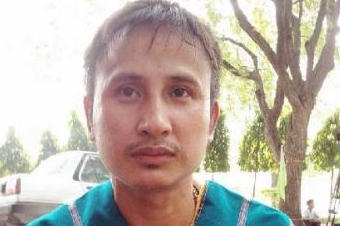
The ICJ expressed concern at the continued detention of lawyer Shukhrat Kudratov, on criminal charges. It welcomed the release of another lawyer, Fakhriddin Zokirov, who had been on trial on charges that appeared to constitute an act of retaliation for his work as a defence lawyer. He was released on 3 November as a result of an amnesty.
“While the release of Fakhriddin Zokirov is a positive step, we are concerned that Shukhrat Kudratov remains in detention pending trial on similar criminal charges. We have received credible information that the charges against him are linked to his representation of a client, contrary to international standards on the independence of lawyers”, said Róisín Pillay, Director of the Europe and CIS programme at the ICJ.
The ICJ reiterated its concern at aspects of the reform of the legal profession presently under consideration under the draft law on Advokatura.
Following a mission to Tajikistan in 2013, the ICJ expressed concerns that the independence of the legal profession would be undermined by requirements in the draft law that all lawyers go through a new qualification process, administered by a body in which the Ministry of Justice would play a prominent role.
Amendments recently introduced to the draft law have not altered the inappropriate role which the Ministry of Justice would play in regulating the profession.
Under the draft law, the Deputy Minister of Justice would serve as an ex officio Chair of the Qualification Commission which determines who may be accredited as a lawyer.
This significant role by a member of the executive would jeopardize the independence of the profession.
The ICJ also remains concerned that the draft law would still require requalification of many lawyers, with exemptions only for those with at least 15 years of professional experience as defence lawyers.
Such provisions are contrary to international standards on the independence of the legal profession, including the UN Basic Principles on the Role of Lawyers.
The ICJ recalls Tajikistan’s earlier commitment during the UN Human Rights Committee’s session of 2013 that the Qualification Commission would be placed under the Ministry of Justice only for a short transitional period. A provision to this effect has not yet been introduced in the draft law.
Contact:
Róisín Pillay, Director, ICJ Europe Programme, roisin.pillay(a)icj.org
Temur Shakirov, Legal Adviser, ICJ Europe Programme, temur.shakirov(a)icj.org
Notes:
From 15 to 19 November, an ICJ legal expert, Dr Stefan Strobl, visited Tajikistan and held meetings with a number of international and local civil society organizations and lawyers to discuss recent progress on the reform of the legal profession and the wide ranging challenges it faces.
The visit followed an ICJ mission to Tajikistan in November 2013.
Tajikistan-Independence of legal profession-News-webstory-2014-RUS (full text in PDF)