Jun 20, 2017 | News
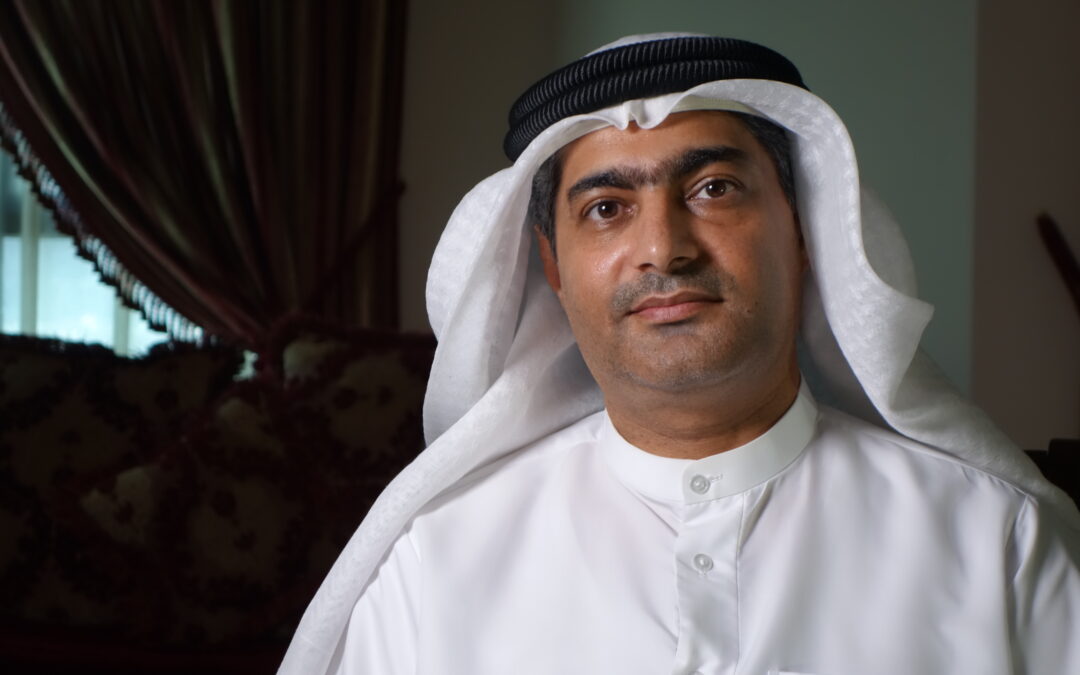
The Martin Ennals Foundation and the ten human rights organizations that make up the jury of the Martin Ennals Award for Human Rights Defenders (MEA), including the ICJ, today renewed their appeal to the UAE government to release immediately and unconditionally Ahmed Mansoor.
Ahmed Mansoor is the last remaining human rights defender in the UAE who had previously been able to criticize the authorities publicly, they say.
Ahmed Mansoor received the Martin Ennals Award for Human Rights Defenders in 2015.
Three months ago today, in the pre-dawn hours of 20 March about a dozen security officers arrested Ahmed Mansoor at his home in Ajman, about 150 kilometres northeast of Abu Dhabi, the capital of the UAE.
“We urge the UAE government to end the incomprehensible three-month imprisonment of Ahmed Mansoor. This is really about the UAE failing to respect basic principles of justice,” said Dick Oosting, Chairperson of the MEA Board.
“The purported case against Ahmed Mansoor beggars belief. States have the duty to bring to justice those whom they suspect of having committed criminal offenses,” he added.
“Yet what is clear is that the UAE authorities have arbitrarily deprived him of liberty and taken him away from his family for peacefully exercising his human right to freedom of expression. The three-month lapse and total lack of transparency indicates, likewise, that the authorities merely wanted to silence him,” he further said.
On 20 March, the UAE authorities stated that Ahmed Mansoor was accused of using social media websites, including to “publish false and misleading information that harm national unity and social harmony and damage the country’s reputation,” under the UAE’s repressive 2012 Cybercrime Law, which authorities have used to imprison numerous human rights activists and which provides for long prison sentences and severe financial penalties.
On 28 March, a group of United Nations human rights experts called on the UAE government to release him immediately, describing his arrest as “a direct attack on the legitimate work of human rights defenders in the UAE.” They expressed their fear that his arrest “may constitute an act of reprisal for his engagement with UN human rights mechanisms, for the views he expressed on social media, including Twitter, as well as for being an active member of organizations such as the Gulf Centre for Human Rights, and an active supporter of others, including Human Rights Watch.”
The next day, the UAE authorities responded directly to the statement, disputing the allegation that Ahmed Mansoor’s detention was arbitrary, and stating that he “has the freedom to hire a lawyer and that his family has full access to the place of confinement and is allowed to visit him.”
The government has detained Ahmed Mansoor in Abu Dhabi.
It is too far from his home for regular visits from his family, who have only been able to see him once in the last three months.
The authorities appear determined to isolate Ahmed Mansoor from his own family.
Despite government assertions that he is able to do so, it appears that he has not been able to appoint an independent lawyer of his own choosing.
This is a necessary component of the right to a fair trial.
The right to see a lawyer is a basic right of anyone detained as outlined in article 16 of the Arab Charter on Human Rights, which the UAE has ratified.
The ten human rights organizations that make up the jury of the Martin Ennals Award for Human Rights Defenders reiterate their call to the UAE authorities to release Ahmed Mansoor immediately and unconditionally, since the charges against him relate solely to his human rights work and his right to freedom of expression.
In the meantime, he should be granted immediate and regular access to his family and a lawyer of his choosing. The UAE must end their harassment of human rights defenders and critics of the authorities.
Signatories
Organizations forming the jury of the Martin Ennals Award:
Agency for Diakonia and Development, Germany
Amnesty International
FIDH
Front Line Defenders
Human Rights First
Human Rights Watch
International Commission of Jurists
International Service for Human Rights
HURIDOCS
World Organisation Against Torture (OMCT)
May 2, 2017 | News
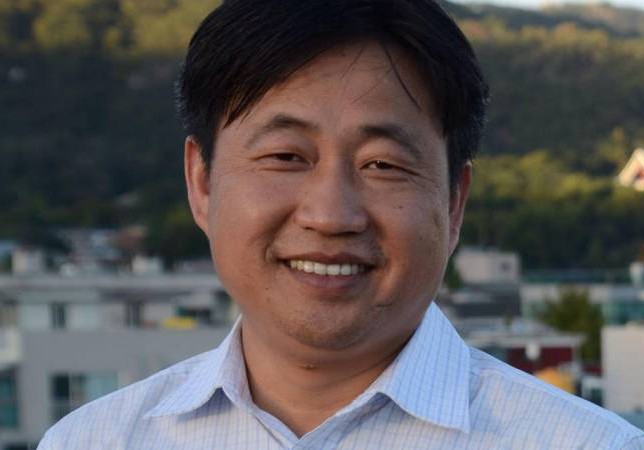
The ICJ today called on the Chinese government to release immediately Xie Yang, a prominent human rights lawyer who was arrested during the crackdown on human rights defenders in July 2015. Authorities have now canceled his scheduled trial without giving a reason.
He was charged on 16 December 2016 with inciting subversion of State power and disrupting court order. He is detained at an undisclosed location.
“Xie Yang’s arrest and prosecution seem to be in connection with his performing legitimate professional functions as a human rights lawyer,” said Sam Zarifi, ICJ’s Secretary General.
“No lawyer should ever be subject to persecution for carrying out their professional duties. Lawyers in China like Xie Yang are indispensable in ensuring human rights protection and upholding the rule of law in China,” he added.
Xie Yang had served as counsel of the family of Xu Chunhe, who was alleged to have been shot dead by police authorities in May 2015 in Heilongjiang Province.
He also acted as counsel for persons alleging religious persecution, alleged victims of unlawful land seizures, and outspoken critics of the government.
The ICJ emphasized that in the absence of evidence that he has committed a cognizable offence, the criminalization of which is consistent with international human rights law, Xie Yang should be immediately released.
In January 2017, the lawyers of Xie Yang alleged that he had been subjected to prolonged sleep deprivation, forced into stress position for more than 20 hours a day, verbally harassed and threatened, and subjected to regular beatings and other forms of torture and ill-treatment.
“The government should release Xie Yang immediately and conduct a prompt, thorough, and impartial investigation on the allegations that he has been subjected to torture,” Zarifi said.
The ICJ received information that Xie Yang has not been able to communicate with his lawyers ever since he reported to them his torture allegations by police authorities.
He has now been assigned State-appointed counsel.
The ICJ further called on the government to bring to justice any persons found to be responsible for the torture of Xie Yang.
Under no circumstances must any statement he may have made during his interrogation under torture or ill-treatment be admitted into evidence at his trial.
Contact:
Emerlynne Gil, ICJ’s Senior International Legal Adviser, t: +66 840923575 ; e: emerlynne.gil(a)icj.org
Additional information
Following his arrest, Xie Yang was detained for the first six months in an undisclosed location, but was subsequently transferred to the Changsa City No. 2nd Detention Center.
He was again transferred to an undisclosed location where he remains detained to this day.
The date and the reason for the transfer are unknown.
Xie Yang’s treatment comes amidst a much wider attack on lawyers and human rights defenders in China.
Since 9 July 2015, the government has launched an unprecedented nationwide crackdown – now commonly referred to as the “709 Crackdown” to mark the start of the crackdown – which resulted in the interrogation, detention, and/or criminal indictment of nearly 250 human rights lawyers and activists.
Photo credit: ChinaChange.com

Apr 26, 2017 | News
The ICJ today condemned the conviction and sentencing of Siti Noor Aishah Atam for possessing twelve books allegedly associated with terrorist groups, an act which is criminal under Malaysia’s Penal Code.
The ICJ calls for her immediate release from detention and for the authorities to take steps to quash or reverse her conviction.
The Kuala Lumpur High Court found Siti Noor Aishah Atam guilty under Section 130JB(1)(a) of the Penal Code which prohibits any “possession, custody or control of any item associated with any terrorist group or the commission of a terrorist act” and sentenced her to five years of imprisonment.
Siti Noor Aishah Atam contended that she was using the supposedly proscribed books for her thesis as a graduate student at Universiti Malaya, where she majored in Islamic Studies.
The High Court indicated, however, that they were applying the standard of strict liability to this case, meaning that the particular reason a person may have of possessing the books should not be taken into account.
If a person is found to have these books in their possession, for whatever reason, he or she will be penalized under the provision.
“The prosecution and conviction of Siti Noor Aishah Atam by Malaysian authorities is a violation of her right to freedom of expression, which includes the right to seek, receive, and impart information,” said Emerlynne Gil, ICJ’s Senior International Legal Adviser for Southeast Asia.
The ICJ notes that while the right to freedom of expression is not absolute, any restriction must be provided by law and be strictly necessary for a limited number of purposes, such as national security.
Any restriction must also be formulated with sufficient precision to enable an individual to regulate his or her conduct accordingly.
“The law under which Siti Noor Aishah Atam had been convicted is overly vague, since nobody would know what books or other material would be impermissible. The law is also certainly overbroad – having the effect of preventing potentially important academic research,” said Gil.
The twelve books found in the possession of Siti Noor Aishah Atam have not been specifically banned by the Malaysian government.
Indeed, these books may easily be bought at any number of bookstores in the country.
This unjust verdict illustrates the need for urgent legal reform, including the repeal or modification of Section 130JB(1)(a) of the Penal Code.
The ICJ also noted with profound concern that Siti Noor Aishah Atam has been subjected to prolonged detention under multiple laws, namely the Security Offences (Special Measures) Act 2012 (SOSMA) and Prevention of Crime Act 1959 (POCA).
“The Malaysian authorities appear to be abusing SOSMA and POCA by invoking them alternately to keep Siti Noor Aishah Atam in detention. This constitutes a denial of her right to be free from arbitrary detention,” Gil said.
The ICJ had previously called for the abolition of SOSMA, POCA, and similarly abusive laws.
Contact:
Emerlynne Gil, ICJ’s Senior International Legal Adviser, t: +66 840923575 ; e: emerlynne.gil(a)icj.org
Background
Siti Noor Aishah Atam is a former graduate student at Universiti Malaya, majoring in Usuluddin (Akidah) or Islamic Studies.
On 22 March 2016, the police raided the residence of Siti Noor Aishah Atam and arrested her.
She was taken into custody and detained for 28 days under SOSMA at an undisclosed detention facility while her trial was ongoing.
On 25 July 2016, she pleaded not guilty and stated that the books were used for her thesis on terrorism.
On 29 September 2016, the Kuala Lumpur High Court acquitted Siti Noor Aishah Atam.
The High Court had pointed to the Ministry of Home Affairs’ failure to ban the twelve books as one of the key reasons behind the acquittal.
On the day of her acquittal, she was again arrested and detained under POCA for 60 days and was subsequently ordered to be put under house arrest for two years.
In March 2017, the prosecution appealed the High Court’s decision. This allowed authorities to subject Siti Noor Aishah Atam to continued remand under SOSMA.
She was then detained in Kajang Prison until her conviction and sentencing today.
Apr 20, 2017 | News
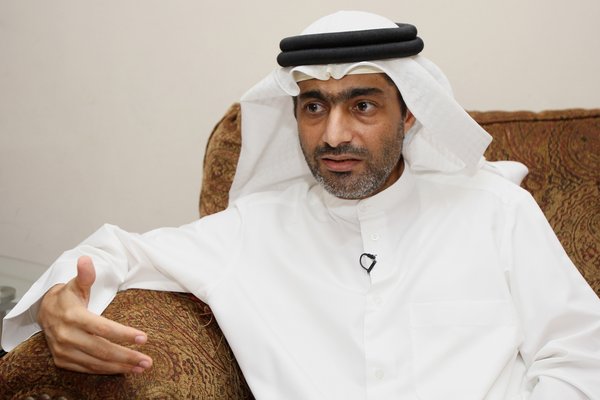
Authorities in the United Arab Emirates should immediately release Ahmed Mansoor, an award-winning human rights defender who is facing charges that violate his right to freedom of expression, a coalition of 18 human rights organizations, including the ICJ, said today, one month after his arrest.
Mansoor, who received the prestigious Martin Ennals Award for Human Rights Defenders in 2015, has been in detention since March 20, 2017 facing speech-related charges that include using social media websites to “publish false information that harms national unity.”
On March 28, a group of United Nations (UN) human rights experts called on the UAE government to release him immediately, describing his arrest as “a direct attack on the legitimate work of human rights defenders in the UAE.”
“Ahmed Mansoor has an unimpeachable record as a defender of rights and freedoms, and every day he remains in prison will constitute a black mark on the UAE’s human rights record,” said the organizations.
Mansoor was arrested at his home in Ajman in the pre-dawn hours of March 20.
Security officers conducted an extensive search and took away all of the family’s mobile phones and laptops, including those belonging to his young children.
His family had no information on his whereabouts until authorities issued an official statement on March 29, saying he was in detention in the Central Prison in Abu Dhabi.
The signatories understand that Mansoor’s family have been allowed only one short supervised visit with him which took place two weeks after his arrest on April 3, when authorities moved him from where he was being held, believed to be a detention facility adjacent to Al-Wathba Prison, to a prosecutor’s office in Abu Dhabi.
Informed sources told rights groups that Mansoor is being held in solitary confinement and has not spoken to a lawyer.
The UAE’s official news agency, WAM, said on March 20 that Mansoor had been arrested on the orders of the Public Prosecution for Cybercrimes and detained pending further investigation.
It said that he is accused of using social media websites to: “publish false information and rumors;” “promote [a] sectarian and hate-incited agenda;” and “publish false and misleading information that harm national unity and social harmony and damage the country’s reputation.”
The statement classified these as “cybercrimes,” indicating that the charges against him may be based on alleged violations of the UAE’s repressive 2012 cybercrime law, which authorities have used to imprison numerous activists and which provides for long prison sentences and severe financial penalties.
In the weeks leading up to his arrest, Mansoor had called for the release of Osama al-Najjar, who remains in prison, despite having completed a three-year prison sentence on charges related to his peaceful activities on Twitter.
Mansoor had also criticized the prosecution of Dr. Nasser bin-Ghaith, a prominent academic and economist, who was sentenced to 10 years in prison on March 29, for charges that included speech-related offenses, including peaceful criticism of the UAE and Egyptian authorities.
Mansoor had also used his Twitter account to draw attention to human rights violations across the region, including in Egypt and those committed by the Saudi-led coalition in Yemen.
He had also signed a joint letter with other activists in the region calling on leaders at the Arab Summit in Jordan at the end of March to release political prisoners in their countries.
“Ahmed has worked tirelessly, at great personal cost to himself, to advocate for human rights in the UAE and the wider region. He should be immediately released and the authorities should end their harassment of him once and for all,” the organizations added.
Signatories
ARTICLE 19
Amnesty International
Arabic Network for Human Rights Information
CIVICUS
FIDH, under the Observatory for the Protection of Human Rights Defenders
Front Line Defenders
Gulf Centre for Human Rights
Human Rights First
Human Rights Watch
Index on Censorship
International Commission of Jurists
International Service for Human Rights
Martin Ennals Foundation
PEN International
Reporters Without Borders (RSF)
Scholars at Risk
Vigilance for Democracy and the Civic State, Tunisia
World Organisation Against Torture (OMCT), under the Observatory for the Protection of Human Rights Defenders
UAE-Joint statement AMansoor-News-Press releases-2017-ENG (full statement in English, PDF)
Mar 30, 2017 | Advocacy
The ICJ submitted information to the UN Human Rights Council Working Group on the Universal Periodic Review (UPR) in advance of its review of Sri Lanka under the third cycle of the UPR mechanism during its 28th session in November 2017.
The ICJ submission focuses on concerns about Sri Lanka’s respect for its human rights obligations relating to ongoing issues of:
- Transitional justice;
- Enforced disappearance;
- Torture and other ill-treatment;
- Detention;
- Counter-terrorism; and
- Impunity.
SriLanka-UPR Submission March17-Advocacy-non legal submissions-2017-ENG (full text in PDF)