Oct 31, 2018 | News
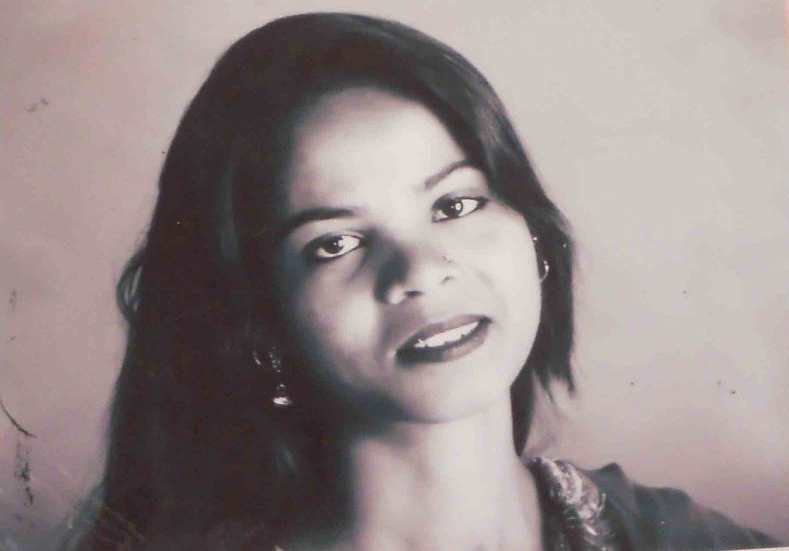
The ICJ today welcomed the Pakistani Supreme Court’s decision to acquit Asia Noreen (Asia Bibi) of blasphemy charges under section 295-C of the Pakistan Penal Code.
Asia bibi had been on death row since 2010, when a trial court convicted her of “defaming the Prophet Muhammad” and sentenced her to death. The Lahore High Court had upheld her conviction and confirmed her death sentence in 2014.
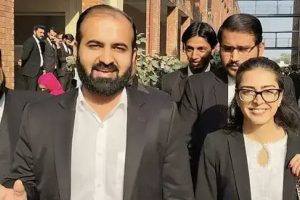
“All eyes were on the Supreme Court to respond to Asia bibi’s final plea for justice and undo the blatant wrongs done to her and her family for eight long years,” said Frederick Rawski, ICJ’s Asia Director.
“It is heartening to see that despite threats and external pressures, the SC fulfilled its role to protect human rights in this case.”
Certain Islamist groups have frequently held demonstrations calling for Asia bibi and other blasphemy accused to be hanged. After the Supreme Court announced its decision to acquit Asia bibi, the Tehreek-e-Labbaik Pakistan took to the streets condemning the decision.
“The Government should take notice of this pattern of threats and reprisals in blasphemy cases and ensure that judges and lawyers are given adequate security to perform their duties independently, impartially and without any external influence,” said Rawski.
Reasons for Asia bibi’s acquittal include an unexplained delay in the registration of the criminal complaint; material inconsistencies in the testimonies of prosecution witnesses; wrongful reliance on Asia bibi’s extra-judicial “confession”; and failure to take into account the circumstances of the blasphemy allegations, including a “quarrel”, possibly about Asia bibi’s faith.
The Supreme Court also noted that the context indicates the charges could have arisen from a “false allegation” of blasphemy, echoing concerns also raised by the ICJ that the blasphemy laws in Pakistan have typcially become an instrument of personal vendettas and malicious motivations.
Asia bibi’s appeal was the first blasphemy case being heard by the Supreme Court since 2002. The Court has so far not upheld any convictions for blasphemy under section 295-C of the Penal Code (defamation of the Prophet Muhammad), though dozens of people have been convicted by trial courts and a number of appeals are pending before various appellate forums.
The ICJ has documented in detail systematic and widespread fair trial violations in proceedings related to blasphemy offences in Pakistan.
Courts in Pakistan have noted on multiple occasions that people accused of blasphemy suffer ‘beyond proportion or repair’ in the absence of adequate safeguards against misapplication or misuse of such blasphemy laws.
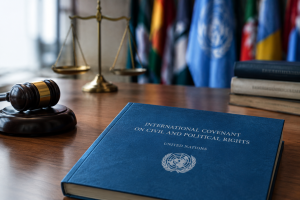
The ICJ underscores that laws that criminalize the exercise of freedom of expression are non-compliant with international law, including the International Covenant on Civil and Political Rights, to which Pakistan is a party. This includes the criminalization of expression in relation to religion.
The ICJ opposed the death penalty in all circumstances and considers that it constitutes a violation of the right to life and the right not to be subjected to cruel, inhuman or degrading punishment.
Contact:
Frederick Rawski (Bangkok), ICJ Asia Pacific Regional Director, e: frederick.rawski(a)icj.org
Reema Omer, ICJ International Legal Advisor (South Asia) t: +447889565691; e: reema.omer(a)icj.org
Additional information
In November 2015, the ICJ published a report documenting in detail systematic and widespread violations of the right to a fair trial in proceedings related to blasphemy offences in Pakistan, particularly in trial courts. The report confirmed concerns raised by the Supreme Court of Pakistan that individuals accused of blasphemy ‘suffer beyond proportion or repair’ in the absence of adequate safeguards.
The ICJ also made a number of recommendations to the Pakistani executive, legislative and judicial branches to address violations caused by application of the blasphemy laws, whether due to the legislative provisions themselves or at the investigative, prosecutorial, procedural, administrative and judicial levels highlighted in the report, including to ensure that those accused of blasphemy have a fair chance at defending themselves.
In a briefing paper published in October 2016, the ICJ assessed the fair trial violations in Asia bibi’s trial and appellate hearing. The ICJ found glaring omissions both in the appraisal of evidence as well as the application of laws that brought her conviction into question.
Mar 20, 2018 | News
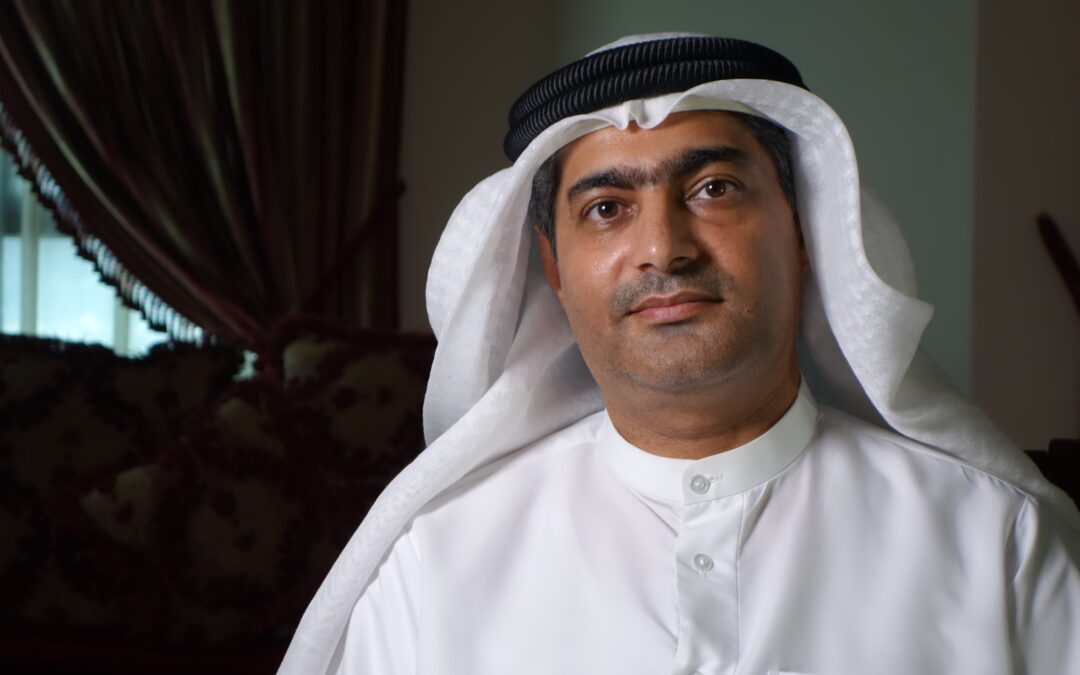
The authorities in the United Arab Emirates (UAE) should reveal the whereabouts of prominent human rights defender and citizen-journalist Ahmed Mansoor and release him immediately and unconditionally, two dozen human rights organizations, including the ICJ, said today.
Ahmed Mansoor is being held for his peaceful human rights work.
20 March 2018 marks one year since security forces arbitrarily arrested Mansoor, winner of the Martin Ennals Award for Human Rights Defenders in 2015, at his home in Ajman.
The UAE authorities have continued to detain him in an unknown location, despite condemnation from UN human rights experts and independent human rights organizations.
“The authorities have subjected Ahmed Mansoor to enforced disappearance since his wife last saw him in September 2017. They must reveal his whereabouts to his family and grant him immediate access to them and to a lawyer of his choosing,” said Khalid Ibrahim, Executive Director of the Gulf Centre for Human Rights (GCHR).
Following his arrest, the authorities announced that he is facing speech-related charges that include using social media websites to “publish false information that harms national unity.”
On 28 March 2017, a group of UN human rights experts called on the UAE government to release Mansoor immediately, describing his arrest as “a direct attack on the legitimate work of human rights defenders in the UAE.”
They said that they feared his arrest “may constitute an act of reprisal for his engagement with UN human rights mechanisms, for the views he expressed on social media, including Twitter, as well as for being an active member of human rights organizations.”
“Mansoor’s arbitrary detention is a violation of his right to freedom of expression and opinion. The UAE authorities must drop all charges against him and release him immediately,” said Carles Torner, Executive Director of PEN International.
Since his arrest, Mansoor has not been allowed to make telephone calls to his family and has been allowed only two short visits with his wife, on 3 April and 17 September 2017, both under strict supervision.
He was brought from an unknown place of detention to the State Security Prosecutor’s office in Abu Dhabi for both visits.
The authorities have refused to inform his family about his place of detention and have ignored their requests for further visits.
In February 2018, a group of international human rights organizations commissioned two lawyers from Ireland to travel to Abu Dhabi to seek access to Mansoor.
The UAE authorities gave the lawyers conflicting information about Mansoor’s whereabouts.
The Interior Ministry, the official body responsible for prisons and prisoners, denied any knowledge of his whereabouts and referred the lawyers to the police.
The police also said they had no information about his whereabouts. The lawyers also visited Al-Wathba Prison in Abu Dhabi following statements made by the authorities after Mansoor’s arrest, which suggested that he was being held there.
However, the prison authorities told the lawyers that there was nobody matching Mansoor’s description in prison.
“Pending his release, Mansoor must be granted immediate and regular access to his family, as well as to a lawyer of his choosing,” said Sima Watling, UAE Researcher at Amnesty International’s Middle East Regional Office.
UAE-one-year-Ahmed-Mansoor-remain-unknown-2018-ENG (Full text in PDF)
Nov 11, 2017 | Agendas, Events
Today begins in Istanbul (Turkey) a two-day training for lawyers and CSO practitioners representing and working with migrants, refugees and asylum-seekers.
This event is organized by ICJ, in cooperation with its partners Refugee Rights Turkey, the European Council on Refugees and Exiles (ECRE), Mülteci-Der (MD) and ICJ-EI, as part of the EU co-financed project Fostering Access to Rights for Migrants, Refugees and Asylum-Seekers in Turkey.
30 lawyers and civil society practitioners – representing nine different bar associations and relevant organisations from the Istanbul area and other nearby key migration and asylum locations – are taking part in the training on 11 and 12 November.
The training aims to update lawyers and CSOs on the international and national law on the rights of refugees, migrants and asylum-seekers in order to be effective in their work at both the national and international levels. It aims at an effective implementation of the Turkish legal framework on asylum and migration.
The main thematic areas to be discussed will be the principle of non-refoulement, international protection, detention and access to economic, social and cultural rights.
The training will use as a basis the draft training materials prepared by the ICJ and its partners (to be published an the end of 2019) and, among other sources, the ICJ Practitioners Guide no. 6: Migration and International Human Rights Law.
The project “Fostering Access to Rights for Migrants, Refugees and Asylum-Seekers in Turkey” is funded by the European Instrument for Democracy and Human Rights (EIDHR) of the European Union.
Turkey-Training-Agenda-MigrationAsylumIHRL-Istanbul-2017-eng (download the agenda)
Aug 15, 2017 | Advocacy
Tep Vanny, one of Cambodia’s most prominent land activists and human rights defenders, will have spent one year in prison on 15 August for defending her community and exercising her human rights.
The ICJ and other human rights organizations condemn her arbitrary imprisonment and call for her convictions to be overturned, for all ongoing politically motivated and unsubstantiated charges against her to be dropped, and for her immediate release from prison.
Tep Vanny has fought tirelessly to protect the rights of members of the Boeung Kak Lake community, following their forced eviction from their homes in Phnom Penh.
More recently, she played a leading role in the so-called ‘Black Monday” campaign, challenging the arbitrary pre-trial detention of five human rights defenders, Lim Mony, Ny Sokha, Yi Soksan, Nay Vanda, and Ny Chakrya (the “Freethe5KH” detainees).
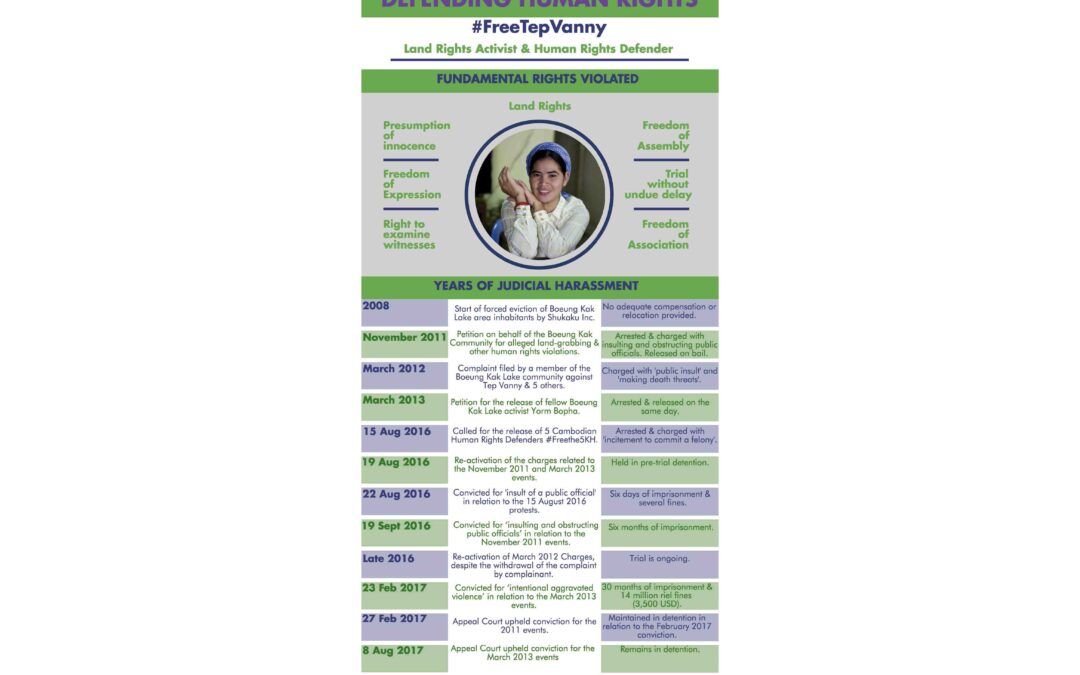
On 22 August 2016, following her arrest at a protest calling for the release of the five, she was convicted of ‘insulting of a public official’, and sentenced to six days in prison.
However, instead of releasing her based on time served, the authorities reactivated dormant charges dating back to a 2013 protest and kept her in detention.
“It is clear that the authorities are using the courts to lock me up, silence my freedom of expression and break my spirit,” said Tep Vanny. “They want to stop me from advocating and seeking a solution for the remaining people from Boeung Kak Lake as well as other campaigns to demand justice in our society.”
On 19 September 2016, Tep Vanny was sentenced, along with three other Boeung Kak Lake community activists, to six months imprisonment for “insulting and obstructing public officials” in a reactivated case related to a 2011 peaceful protest calling for a resolution to the Boeung Kak Lake land dispute, despite the absence of credible inculpatory evidence.
This conviction has since been upheld by the Court of Appeal on 27 February 2017.
On 23 February 2017, following proceedings which fell short of fair trial standards, Tep Vanny was convicted of “intentional violence with aggravating circumstances”, sentenced to a further 30 months in prison and fined more than 14 million riel (about US $3,500 – or twice the annual minimum wage in Cambodia) for having peacefully participated in protests calling for the release of her fellow activist Yorm Bopha, back in 2013.
While the #FreeThe5KH human rights defenders were released on bail on 29 June 2017, after having spent 427 days in arbitrary detention, Tep Vanny remains in prison.
She is currently on trial in a third reactivated case, facing charges of “public insult” and “death threats” brought by another member of the Boeung Kak Lake community, despite the complaint having been dropped by the community member.
On 8 August 2017, the Court of Appeal upheld her February 2017 conviction.
Cambodia-Joint Statement Tep Vanny-Advocacy-2017-ENG (full statement in English, PDF)
Cambodia-Joint Statement Tep Vanny-Advocacy-2017-KHM (full statement in Khmer, PDF)
Cambodia-Infographic TV Case Overview-Advocacy-2017-KHM (Infographic in Khmer, PDF)

Jul 13, 2017 | News
The ICJ today mourns the passing of Chinese human rights defender and Nobel Peace Prize winner, Liu Xiaobo. Liu Xiaobo was awarded the Nobel Peace Prize in 2010 and was described as the “foremost symbol of the struggle for human rights in China.”
He passed away today at the First Hospital of China Medical University, while still in the custody of Chinese authorities.
He has been imprisoned since 2009, after being found guilty for “subverting state power”, for calling for a new constitution in China. His wife, poet Liu Xia, remains under house arrest in Beijing.
In May 2017 authorities announced that he had been diagnosed with late-stage liver cancer.
Chinese authorities refused calls that he be allowed to travel to receive medical treatment abroad.
The ICJ honors Liu Xiaobo for his peaceful and unrelenting pursuit for human rights in China, and calls on the government to end the house arrest, and guarantee the freedom of movement, of Liu Xia.
Sam Zarifi, ICJ’s Secretary General said: “Liu Xiaobo will continue to serve as an inspiration not only for those fighting for human rights in China, but also for all human rights defenders working to promote and protect human rights all over the world.”
The ICJ believes that the death of Liu Xiaobo should serve as a wake up call to the Government of China that they cannot simply and brutally silence dissenting voices.
Liu Xiaobo’s death only serves to amplify his call for human rights and upholding the rule of law in China.
The ICJ has consistently called upon the Chinese government to end the harrassment and unlawful detention of lawyers and human rights defenders.