Jul 2, 2014 | Advocacy, Position papers
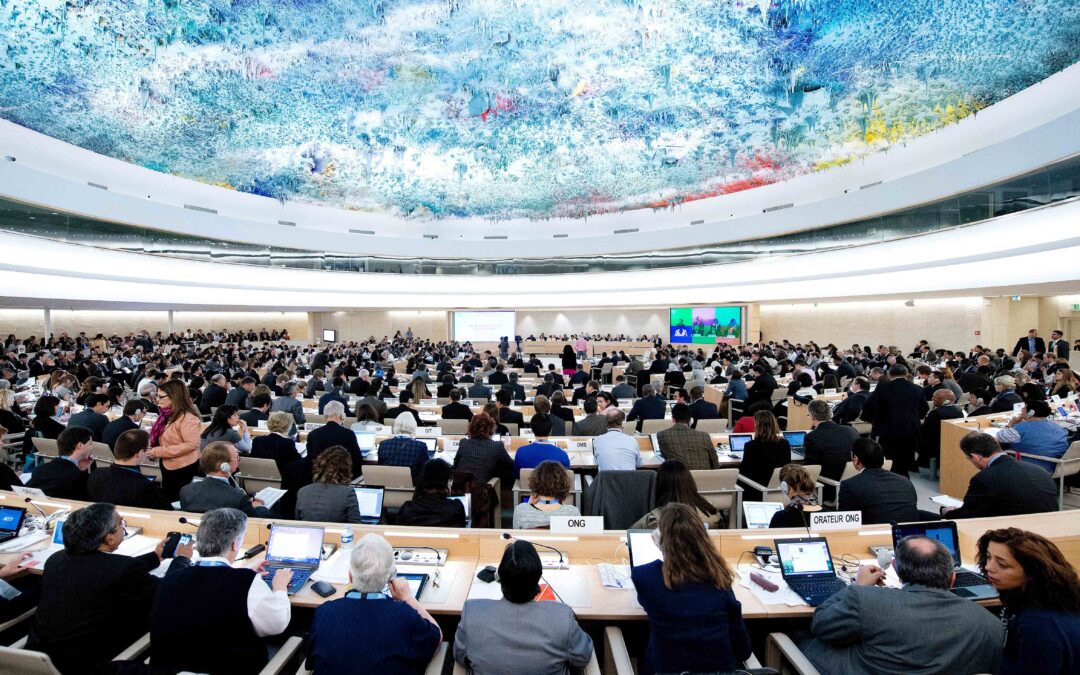
The ICJ and other NGOs have issued a joint statement urging the UN Human Rights Council to ensure that a discussion of “protection of the family” in September will reflect diversity and focus on human rights.
The ICJ is concerned, due to the way the resolution to establish the Panel discussion has been pursued, that some States will seek to exploit it as a vehicle for promoting a narrow, exclusionary and patriarchal concept of “the family” that denies equal protection to the human rights of individuals who belong to the various and diverse forms of family that exist across the globe.
Previous UN resolutions on the family include language, agreed by all States, that recognized that “various forms of the family exist”. The authors of the resolution deliberately omitted this language, despite this issue being consistently raised by other States throughout the negotiations.
A wholly inappropriate procedural tactic was used by some states to block discussion of a proposed amendment that would have restored the “various forms” language.
Efforts to ensure that the resolution clearly acknowledged and addressed the fact that the family is also a setting in which human rights abuses sometimes take place were partially successful.
The Panel topic will be “on the protection of the family and its members to address the implementation of States’ obligations under relevant provisions of international human rights law and to discuss challenges and best practices in this regard” (emphasis added).
The resolution reaffirms “that States have the primary responsibility to promote and protect the human rights and fundamental freedoms of all human beings, including women, children and older persons”. Unfortunately, however, the text of the resolution still does not give enough emphasis to this important aspect.
The organizations affirm that they will continue to insist on recognition that various forms of the family exist, and that individuals should not be discriminated against as a result of the form of family to which they happen to belong.
States should not fail to promote and protect the rights of persons because they belong to particular forms of family.
The organizations will continue to insist that the promotion and protection of the human rights of individuals within all families must be of the paramount importance to the UN Human Rights Council.
The joint statement may be downloaded in PDF here: HRC26-Joint statement family resolution-Advocacy-Position paper-2014
Jun 27, 2014 | Advocacy, Non-legal submissions
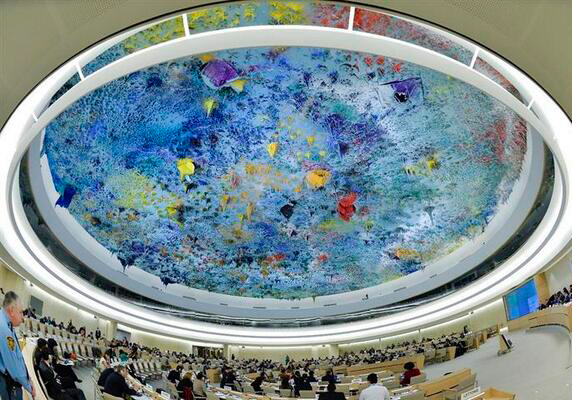
The ICJ and other civil society organizations highlighted progress in relation to accountability in the field of business and human rights, together with some continuing concerns, and unacceptable procedural tactics including in relation to a resolution on “protection of the family”.
Jun 11, 2014 | Advocacy, Non-legal submissions
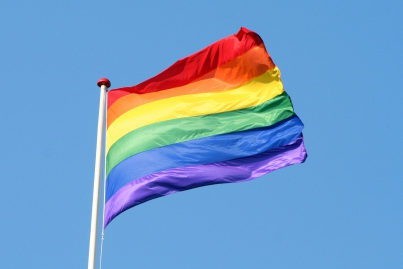
The ICJ, together with the International Lesbian and Gay Association (ILGA) and on behalf of ARC International, today delivered an oral statement to the Human Rights Council during an interactive dialogue with the UN Special Rapporteur on peaceful assembly and association.
The report of the Special Rapporteur addressed challenges faced by groups at risk, including lesbian, gay, bisexual, transgender and intersex persons.
The statement welcomed the report by the Special Rapporteur.
It referred to the Nigerian Same Sex Marriage (Prohibition) Act (which in fact criminalizes a much broader range of human rights-protected activities than its title would necessarily suggest), Uganda’s Anti-Homosexuality Act, and Ukraine’s draft law on “propaganda of homosexual relations”. All of these laws impede freedom of peaceful assembly of LGBTI persons. The Nigerian law also interferes with freedom of association, as it bans registration, funding and activities of “gay” organizations.
It also referred to Russia’s ban on “propaganda of non-traditional sexual relations”.
It emphasised the detrimental impact of such laws on the work of LGBTI human rights defenders and the activities of health care providers. It stressed that laws directly targeting the freedom of peaceful assembly or association of LGBTI individuals solely because of their sexual orientation or gender identity are inconsistent with international human rights law.
UN-HRC26-AssociationLGBTI-OralStatement-advocay-non legal submission-2014 (full text in pdf)
The report of the Special Rapporteur is available here.
Apr 26, 2014 | News
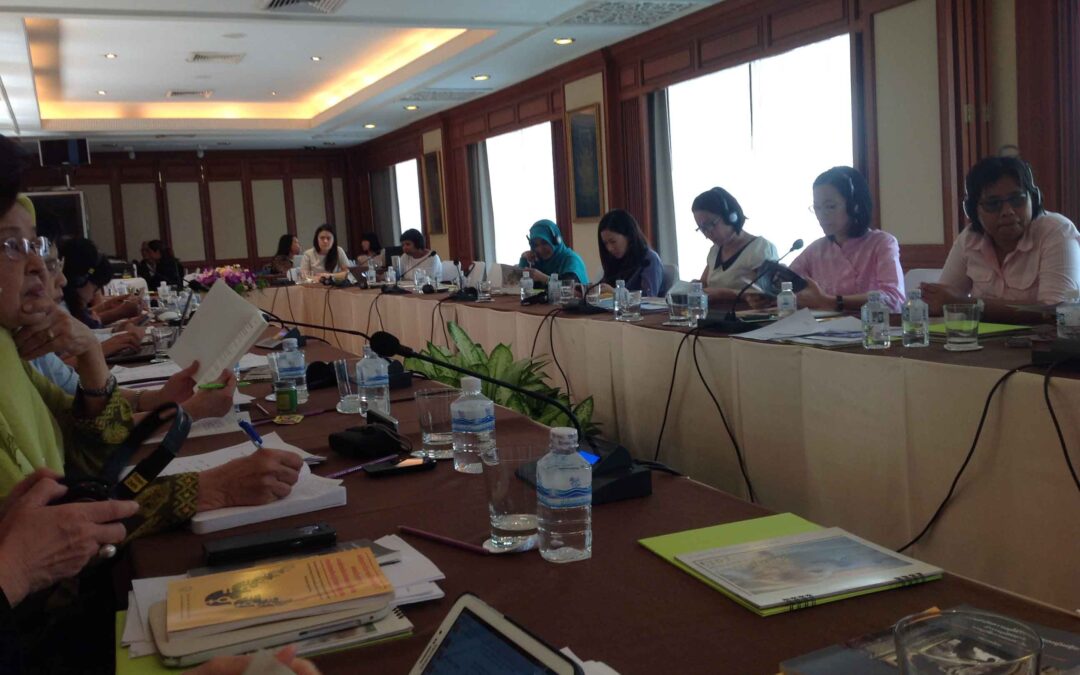
The ICJ recently organized a Legal Seminar for Thai Lawyers and Women Human Rights Defenders on the Optional Protocol to the Convention on the Elimination of all forms of Discrimination Against Women.
On 25 April 2014 Thai lawyers and human rights defenders participated in a legal seminar on using international complaints mechanisms to advance women’s access to justice and human rights protection.
The ICJ seminar enabled global experts to provide local actors with practical guidance and strategic advice on using the Optional Protocol to the Convention on the Elimination of All Forms of Discrimination against Women (CEDAW).
The Protocol, which was ratified by Thailand in 2004, allows women who believe their rights under CEDAW have been violated, to submit a complaint to the UN Committee on the Elimination of Discrimination against Women and seek the Committee’s deliberation and views on the matter.
The legal seminar was part of ongoing ICJ work to empower women lawyers and human rights defenders and advance women’s access to justice in Thailand.
Apr 24, 2014 | News
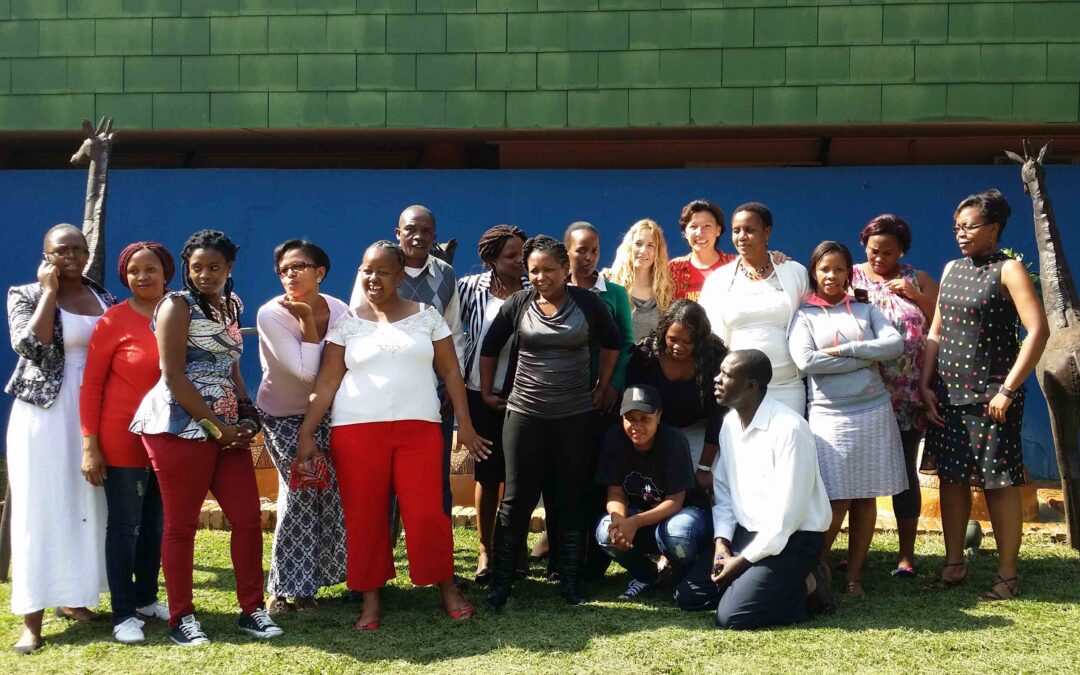
On 22 and 23 April 2014 Swazi women’s rights organizations and human rights defenders participated in a workshop on women’s human rights organised by the ICJ and Swazi partners in Mbabane.
Participants discussed a range of issues including gender-based violence, sexual and reproductive health, customary law and constitutional protection for gender equality.
The workshop was designed to assist and facilitate civil society engagement in the forthcoming review by the Committee on the Elimination of Discrimination against Women (the Committee) of Swaziland’s implementation of the Convention on the Elimination of All Forms of Discrimination against Women (CEDAW).
Swaziland ratified CEDAW in 2004.
In July 2014 the country’s combined first and second report under the Convention will be reviewed by the Committee which will issue recommendations as to how Swaziland can improve its implementation of the Convention.