Mar 25, 2014 | News
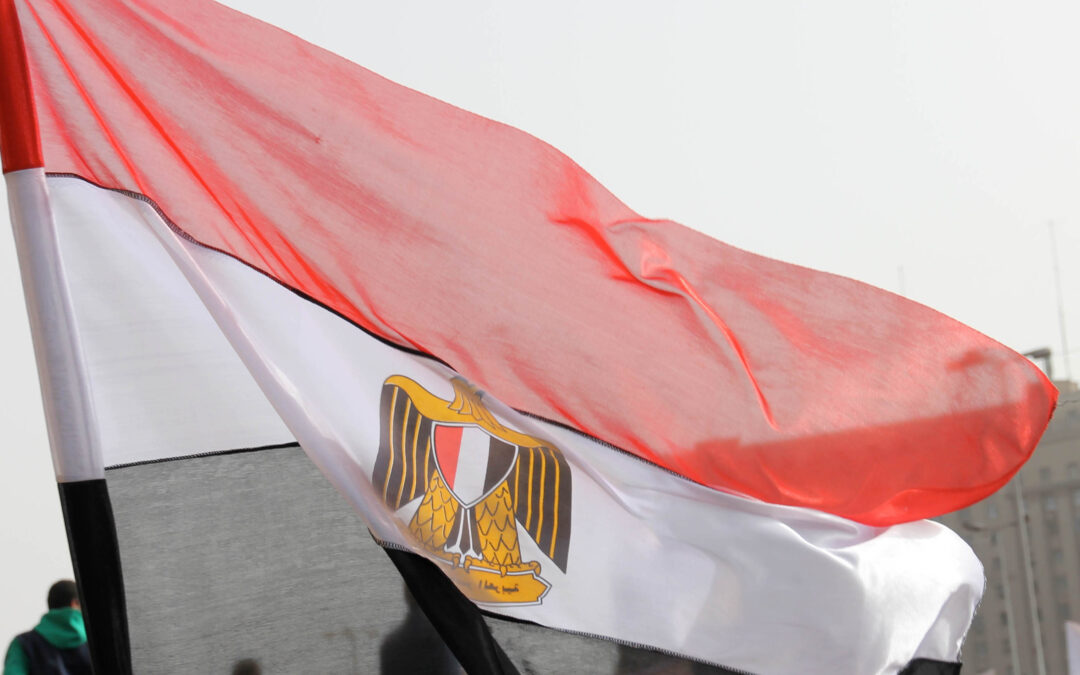
The ICJ today strongly condemned the decision of the Criminal Court of Minya to convict 529 individuals and to sentence them to death.
The individuals were sentenced for “participating in an attack on a police station in Minya,” “murder of a police officer,” “attempted murder of two other officers,” “seizing weapons” and “damaging public property”.
The verdict comes against a backdrop of a continuing crackdown on individuals suspected of supporting the ousted President, Mohamed Morsi, or being members of the Muslim Brotherhood, an organization officially designated by the military and other transitional authorities as a terrorist organization.
The verdict followed a two-day trial that disregarded fundamental fair trial standards.
The first hearing lasted 30 minutes, while the second lasted one hour.
International law is clear: the imposition of the death penalty following an unfair trial violates the right to life.
The ICJ calls on the Egyptian authorities to extinguish the convictions resulting from this trial and ensure that those arrested, prosecuted and convicted for the legitimate exercise of their rights to freedom of association and assembly are immediately released.
“The Minya trial made an absolute mockery of justice, violating basic human rights, including the rights to life, to liberty, to be presumed innocent and to defence,” stated Said Benarbia, Director of the ICJ Middle East & North Africa Program. “Even with Egypt’s long history of unfair trials and systematic politicization of the judiciary, the Minya trial sets a new low, and could be dangerous precedent for mass convictions following mass trials against government critics.”
The ICJ is deeply concerned that this trial is a part of a deliberate policy by the Egyptian authorities to use the courts and the Office of the Public Prosecutor to arrest, prosecute, convict, and imprison opponents of the current authorities.
The ICJ is also concerned that this policy effectively shields from accountability police, security, and military officers responsible for human rights violations committed in the context of the crackdown that followed the ouster of President Morsi, including the killings of more than 1200 people, in particular during the dispersal of the Rabaa Al-Adawyia and Annahda pro-Morsi sit-ins on 14 August.
No effective investigation has yet been conducted into these killings, and the perpetrators remain unpunished.
“In times of crisis, judges and prosecutors must safeguard and uphold human rights and fundamental freedoms, not act as tools of repression by prosecuting and convicting individuals for the legitimate exercise of their rights” said Benarbia.
“The Egyptian authorities must respect the independence of judges and prosecutors and refrain from any undue, inappropriate or unwarranted interference in judicial matters,” Benarbia concluded.
Contact:
Said Benarbia, ICJ Director of the Middle East and North Africa Programme, tel: 41 22 979 38 17, e-mail: said.benarbia(a)icj.org
Mar 8, 2014 | News
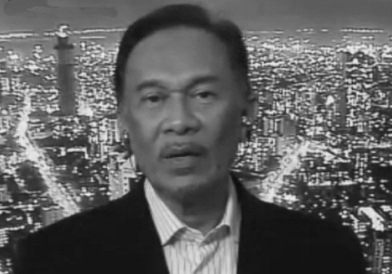
The ICJ today condemned as a miscarriage of justice, Malaysian opposition leader Anwar Ibrahim’s conviction on sodomy charges.
The ICJ said the overturning of his 2012 High Court acquittal — following an appeal by the Malaysian government — by a Court of Appeal panel contravenes international human rights standards and the rule law.
“The ICJ condemns the use of the colonial-era Article 377B of the Malaysian Penal Code, which prohibits consensual same-sex sexual conduct, in conflict with international standards regarding respect for the right to privacy,” said Sam Zarifi, ICJ’s Regional Director for Asia and the Pacific.
“This article is seldom used in Malaysia, but this is the second time it has been used to convict Anwar, and both times its use seemed clearly motivated to hobble his ability to challenge the government as a politician.”
The sodomy charges against Anwar, which date back to 2008, were dismissed by the High Court on 9 January 2012, but the Court of Appeal today overturned that acquittal and instead sentenced Anwar to five years’ imprisonment. The Court of Appeal ruling took less than two hours.
The ICJ has been observing the proceedings in what has been called Anwar’s ‘Sodomy 2’ trial. ICJ Commissioner Justice Elizabeth Evatt AC, from the Australian High Court and a former member of the United Nations Human Rights Committee, was at the Court of Appeal today on behalf of the ICJ.
“This decision certainly casts doubts on the independence and impartiality of the Malaysian judiciary and tarnishes the reputation of the country’s legal system,” said Zarifi.
The judgement means Anwar will not be able to run for election in a local state seat later this month.
After sentencing, Anwar’s lawyers were successful in arguing for a stay in execution and bail, pending appeal.
CONTACT
Sam Zarifi, ICJ Asia-Pacific Regional Director, (Bangkok), t:+66 807819002, e-mail: sam.zarifi(a)icj.org
Craig Knowles, ICJ Media & Communications, (Bangkok), t:+66 819077653, e-mail: craig.knowles(a)icj.org
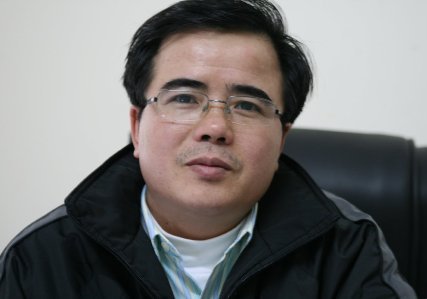
Feb 18, 2014 | Advocacy, News, Non-legal submissions
The ICJ condemned the decision by the Court of Appeal of the Supreme People’s Court in Hanoi to uphold the conviction and sentencing of lawyer and human rights defender Le Quoc Quan to 30 months imprisonment.
The ICJ called on Viet Nam authorities to release him immediately.
“The decision of the Court of Appeal is regrettable but not unexpected,” said Sam Zarifi, ICJ’s Regional Director for Asia and the Pacific. “The ICJ has repeatedly criticized the lack of independence of the courts in Viet Nam. This is a political case and the government of Viet Nam has again used the courts to punish a significant critical voice.”
Today’s appellate hearing lasted for four hours. Thirty minutes after the hearing ended, the court released its decision upholding Le Quoc Quan’s conviction.
Le Quoc Quan, a lawyer who was illegitimately barred from practice for challenging government human rights violations, was convicted on 2 October 2013 of tax evasion under section 161 of the Vietnamese Penal Code. The ICJ had criticized Le Quoc Quan’s conviction, pointing out that he did not receive a fair trial.
The Court of Appeal upheld Le Quoc Quon’s sentence with time served since his arrest on 27 December 2012 to be taken into account.
The Court of Appeal also upheld the earlier order made by the People’s Court of Hanoi for Le Quoc Quan’s company to pay 645 million VND (approximately USD30,000) and a fine of 1.3 billion VND (approximately USD60,000), for alleged unpaid taxes.
Le Quoc Quan has been on a hunger strike protesting his conviction since 1 February 2014. He was so weak that it was difficult for him to stand up during the hearing.
“Le Quoc Quan’s faulty trial violated right to an independent, impartial tribunal, and the appeal process also fell short of international fair trial standards, including under the International Covenant on Political and Civil Rights, to which Vietnam is a party,” Zarifi said.
The public was barred from entering the courtroom during today’s hearing and only Le Quoc Quan’s wife, mother, and lawyers were allowed inside.
Le Quoc Quan was also not allowed to meet with his lawyers in the last few days leading up to the appeal hearing.
His lawyers tried to visit him in prison at least twice last week, but they were barred from seeing him.
Le Quoc Quan’s lawyers also confirmed to ICJ that Le Quoc Quan was not allowed to meet and communicate with his lawyers immediately after his conviction by the People’s Court of Hanoi and had to file an appeal on his own.
In drafting his appeal, all legal documents and files pertaining to his case were withheld from him.
The UN Human Rights Committee has emphasized that all convicted persons like Le Quoc Quan must be given copies of a duly reasoned, written judgment of the trial court, as well as other documents such as transcripts, so that they may be able to effectively enjoy their right to appeal.
Under Viet Nam’s laws, lawyers of convicted persons cannot file an appeal on behalf of their clients.
It is only after the appeal has been filed and accepted by the appellate court that the convicted person may identify the lawyer of his choice.
The chosen lawyers are recognized and allowed to participate in the case only after the court approves their application for a “defence counsel’s certificate” or “advocacy certificate”.
The UN Basic Principles on the Role of Lawyers provide that no court shall refuse to recognize the right of a lawyer to appear before it on behalf of his client, unless the lawyer has been disqualified in accordance with domestic law.
“Viet Nam’s courts operate in violation of international standards that clarify that lawyers must be allowed to assist their clients in filing an appeal,” Zarifi said.
Le Quoc Quan cannot appeal the decision of the Court of Appeal under the article 248(3) of the Criminal Procedure Code of Vietnam, which states that decisions of the Court of Appeal are final and legally binding from the date of their pronouncement.
The lawyers of Le Quoc Quan, however, are said to be considering filing a petition on procedural issues on this case.
On 14 February, the ICJ submitted a written statement to the Human Rights Council (see below) under the title “Violations of the right to counsel of Viet Nam human rights defender Le Quoc Quan”.
In the statement, the ICJ called on the UN Special Rapporteur on the Independance of Judges and Lawyers to reiterate her request to the Government of Viet Nam to extend an invitation to her mandate to undertake a mission to the country.
The ICJ also called on Viet Nam to amend its laws expressly to ensure that anyone deprived of liberty, including human rights defenders, are given access to counsel from the moment of deprivation of liberty or at latest within 24 hours of detention.
Viet Nam should also consider including in its laws penalties for law enforcement authorities who do not honour such provisions.
Contact:
Emerlynne Gil, ICJ International Legal Adviser for Southeast Asia, t +66 2 619 8477; email: emerlynne.gil(a)icj.org
Craig Knowles, ICJ Media Consultant, t +66 81 9077653; email: craig.knowles(a)icj.org
Viet Nam-Human Rights Council-ICJWrittenStatement-advocacy-2014 (full text in pdf)
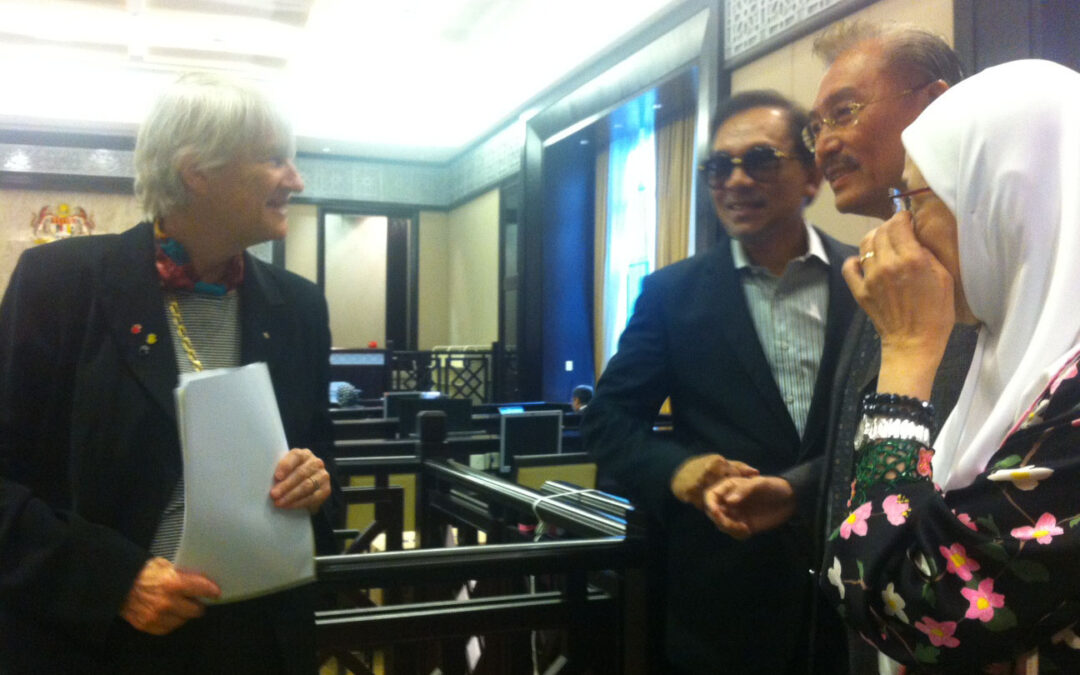
Feb 13, 2014 | News
The ICJ continued its observation of the trial of Malaysian opposition leader Anwar Ibrahim on sodomy charges under the colonial-era Section 377B of the Penal Code, which criminalizes consensual same-sex sexual relations.
ICJ Commissioner Justice Elizabeth Evatt AC, the first woman judge to be appointed to an Australian Federal Court and a former member of the United Nations Human Rights Committee, observed a hearing on the appeal of Anwar Ibrahim at the Court of Appeal in Putrajaya yesterday.
“The ICJ will continue to monitor this case and evaluate the fairness of the proceedings in light of relevant international standards,” said Emerlynne Gil, ICJ international legal advisor for Southeast Asia. “The ICJ will also assess whether the prosecution under Section 377 is being used in this case to suppress political dissent, contrary to the right to freedom of expression.”
The hearing is an appeal against the High Court’s decision on 9 January 2012, which acquitted Anwar Ibrahim of sodomy.
“The ICJ has previously condemned Malaysia’s continuing use of colonial-era criminal charges of ‘sodomy’ to cover even consensual sexual relations between adults,” Gil said. “The ICJ believes that Article 377B of the Malaysian Penal Code is inconsistent with respect for the right to privacy under international standards.”
The Court of Appeal heard and eventually dismissed an interlocutory application filed by the lawyers of Anwar Ibrahim seeking to recall for testimony Jude Blacious s/o Pereira, the investigating officer and key witness in the sodomy case.
Pereira was recently found unfit to be a practicing lawyer in another case in a High Court decision of 10 January 2014.
In that decision, the High Court relied on a 2009 Human Rights Commission of Malaysia’s (SUHAKAM) report, which determined Pereira to be an unreliable witness in a public inquiry established to investigate the arrest and detention of 5 legal aid lawyers.
The Court of Appeal dismissed the application on the grounds that Anwar Ibrahim had failed to satisfy the court that additional evidence in the appellate stage was necessary in dispensing justice and that it fell in the category of “most exceptional” cases, particularly as the SUHAKAM report had already been available since 2009.
The Court of Appeal postponed the hearing on the appeal itself to allow Anwar Ibrahim’s lawyers to file a notice of appeal with the Federal Court on the dismissal of the interlocutory order.
Anwar Ibrahim’s counsel immediately filed a notice of appeal to the Federal Court on the dismissed interlocutory application.
The case management for the sodomy appeal has been fixed on 28 February 2014.
The appeal proper was initially scheduled on 17 and 18 September 2013 but has faced continuous delays due to a series of interlocutory matters.
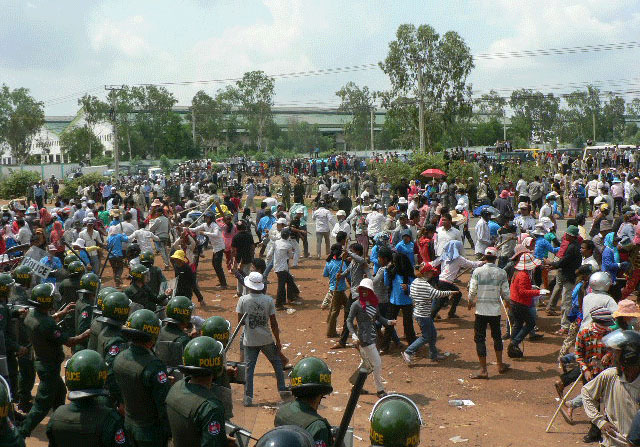
Jan 23, 2014 | News
The ICJ criticized the Phnom Penh Municipal Court’s decision to deny bail to 23 people who were arrested and detained earlier this month following protests by garment factory workers seeking a higher minimum wage.
The detainees’ lawyers told the ICJ that the court denied bail for the first nine detainees, arrested on 2 January 2014, in order to “guarantee their presence for further legal proceedings”, “to preserve public order” and “to prevent instability that results from the commission of crimes”.
The remaining 13 detainees, arrested on 3 January 2014, were denied bail in order to “end crime”, “prevent new crime” and “ensure detainees are available for trial”.
The decision to deny bail to the 22 detainees followed the Court’s decision on 13 January 2014 to deny bail to Vorn Pao, President of the Independent Democracy of Informal Economy Association (IDEA).
Considering his application separately from the others, the court, similarly, provided the same reasons as in the case of the first nine detainees.
“International law is clear that pre-trial detention could only be exercised in exceptional situations, and avoided if suitable alternatives are possible,” said Sam Zarifi, ICJ’s Regional Director for Asia and the Pacific. “The reasons presented by the Court don’t justify holding these activists in prison right now.”
All 23 of those whose bail applications have been denied have been charged with causing intentional violence and damage to property. Three face additional charges for violent resistance against a public official, as well as a traffic offence.
They were arrested as part of the government’s response to striking garment workers and demonstrators protesting the 28-year-rule of Prime Minister Hun Sen (photo).
Security forces shot and killed at least four protesters on 3 January. The government has banned further protests.
Article 9(3) of the International Covenant on Civil and Political Rights (ICCPR), to which Cambodia is a party, guarantees the right to liberty. It states, “It shall not be the general rule that persons awaiting trial shall be detained in custody, but release may be subject to guarantees to appear for trial”. Such guarantees include bail.
“There are alternatives to the detention, such as bail or other conditions the court could impose on these 23 detained activists if the Court is concerned, on the basis of substantiated and objective grounds that there is a risk that each of them will abscond before the trial or interfere with the investigation,” said Zarifi. “In the absence of such proof and the serious consideration of alternatives the continued pre-trial detention of each of the 23 individuals would amount to arbitrary detention under international human rights standards.”
Vorn Pao’s lawyers filed an appeal on 14 January 2014 and the Court is expected to issue a decision on his appeal by 3 February 2014.
According to the Cambodian Centre for Human Rights, Vorn Pao appears weak and continues to suffer pain from the head injuries he sustained.
Lawyers for the other 22 detainees have also expressed their intention to appeal the Court’s decision to deny them bail.
Contact:
Sam Zarifi, ICJ Asia-Pacific Regional Director, (Bangkok), t:+66 807819002, e-mail: sam.zarifi(a)icj.org
Craig Knowles, ICJ Media & Communications, (Bangkok), t:+66 819077653, e-mail: craig.knowles(a)icj.org

![Smoke rises after an Israeli air strike on the village of Taybeh in southern Lebanon [Source: Al Jazeera]](https://www.icj.org/wp-content/uploads/2026/03/Screenshot-2026-03-20-at-15.56.24-300x200.png)