Feb 6, 2018 | News
The ICJ today condemned the Maldivian Government’s assault on the Supreme Court and its judges and the suspension of human rights protections under the state of emergency.
“President Yameen and his Government have dealt a grave blow to the rule of law and independence of the judiciary in the Maldives,” said Ian Seiderman, ICJ’s Legal and Policy Director.
“The actions by the government are a wildly unjustifiable and disproportionate response to the decision of the Supreme Court”, he added.
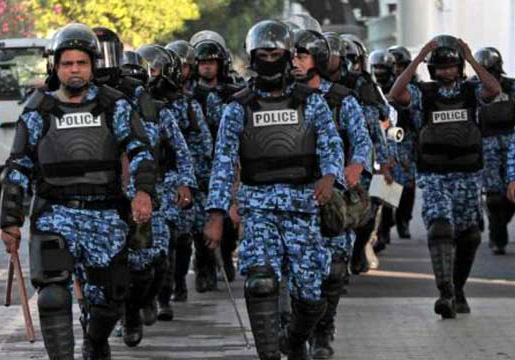
On 5 February, the Maldivian Government declared a 15-day state of emergency under Article 253 of the Constitution, suspending a range of human rights protections.
The declaration of emergency followed a Supreme Court judgment on 1 February that ordered the release of at least nine members of opposition parties, who were in detention on a number of charges.
The Government, however, refused to implement the Supreme Court’s judgment, which resulted in the outbreak of protests in the country.
The national defense forces also reportedly entered the premises of the Supreme Court and arrested at least two senior judges, including Chief Justice Abdulla Saeed.
“Summarily suspending basic rights protections and arresting judges whose decisions the President disagrees with is itself a display of sweeping lawlessness in the country,” Seiderman said.
According to the President’s office, the state of emergency was imposed because the Supreme Court order resulted in “disruption of the functions of the executive power, disruption of the functions of the state institutions…and infringement of national security and public interest.”
According to an unofficial translation of the emergency decree received by the ICJ, the constitutionally and internationally protected rights that have been suspended in part or in full during the state of emergency include, among others, the right to liberty; the right to freedom of assembly; the right to privacy; and the right to obtain remedy from the courts.
Basic safeguards surrounding arrest, detention, search and seizures have also been suspended.
In addition, laws providing certain immunities to judges and the right of judges to be informed if any action is taken against them have also been suspended.
“The complete suspension of constitutional protections for human rights such as the right to liberty and right to free assembly goes far beyond anything that could be justified by the alleged grounds cited by the government,” Seiderman added.
The ICJ notes that international law strictly regulates attempts by governments to suspend or otherwise derogate from human rights on the grounds of emergency.
The International Covenant on Civil and Political Rights (ICCPR), to which the Maldives is a State Party, expressly permits derogations only for certain human rights, and then only ‘in time of public emergency which threatens the life of the nation’.
Measures of derogation may only be taken to the extent necessary to meet a specific threat to the life of the nation.
“Maldivian authorities have not even come close to explaining how the current situation constitutes a threat to the ‘life of the nation’, the high threshold set by international law for the derogation of rights in times of emergency,” Seiderman said.
The ICJ urges the Government to immediately lift the state of emergency, release judges of the Supreme Court, implement the ruling of the Supreme Court and ensure the independence of the judiciary.
Contact
Ian Seiderman, ICJ Legal and Policy Director, T: +41 22 979 38 37 ; e: ian.seiderman@icj.org
Reema Omer, ICJ International Legal Adviser for South Asia (London), t: +447889565691; e: reema.omer@icj.org
Additional information
Under international standards, including the UN Basic Principles on the Independence of the Judiciary, it is the duty of all governmental and other institutions to respect and observe the independence of the judiciary.
This means that there shall not be any inappropriate or unwarranted interference with the judicial process and judges shall be free to decide cases without any restrictions, pressures, threats or interferences.
In August 2015, following a joint fact-finding mission to the Maldives, the ICJ and South Asians for Human Rights (SAHR) documented the breakdown of the rule of law and human rights in the Maldives in a 35-page report, Justice Adrift: Rule of Law and the Political Crisis in the Maldives.
Feb 2, 2018 | News
Cambodia should halt efforts to radically limit the right to freedom of expression through adoption of lèse-majesté legislation which would criminalize the exercise of some expression, said the ICJ today.
The Spokesperson for the Cambodian Council of Ministers, Phay Siphan, reportedly announced on Facebook today that the Council of Ministers had approved an amendment to the Cambodian Criminal Code which would make it a crime to insult the Cambodian King, carrying a penalty of one to five years imprisonment and/or a fine of two million Riel (USD 500) to ten million Riel (USD 2,500).
“The Cabinet’s approval of a lèse-majesté law appears to be a further attempt by the Government to ‘weaponize’ the country’s legislation against its perceived opponents,” said Kingsley Abbott, ICJ’s Senior International Legal Adviser.
“The Government’s ongoing misuse of the law is particularly concerning given the lack of independent and impartial judges to provide appropriate checks and balances on its power,” he added.
The ICJ has previously raised concerns about abuses arising from the lèse-majesté law in neighboring Thailand to curb freedom of expression.
Exercises of expression which are critical to a democratic society under the rule of law, including commenting on public policy and political questions, are sometimes stifled and punished under these laws.
The right to freedom of expression is protected under international law and should never be subject to criminal penalties, let alone imprisonment, which is a manifestly disproportionate penalty for the exercise of the fundamental right to free expression, the ICJ said.
Contact
Kingsley Abbott, Senior International Legal Adviser, ICJ Asia Pacific Regional Office, t: +66 94 470 1345, e: kingsley.abbott(a)icj.org
Background
Article 19 of the International Covenant on Civil and Political Rights (ICCPR), to which Cambodia is a State party, protects the right to freedom of expression. This right includes the “freedom to seek, receive, and impart information and ideas of all kinds.”
In its General Comment No. 34 on article 19, the United Nations Human Rights Committee (HRC), the body that monitors compliance of State parties with the ICCPR, expressed concern about the use of lèse-majesté laws and asserted that “imprisonment is never an appropriate penalty” for defamation.
The HRC further clarified that “all public figures, including those exercising the highest political authority such as heads of state and government, are legitimately subject to criticism and political opposition” and that “laws should not provide for more severe penalties solely on the basis of the identity of the person that may have been impugned”.
In February 2017, the United Nations Special Rapporteur on the promotion of freedom of opinion and expression, David Kaye, urged Thailand to refrain from using the lèse-majesté law as a “political tool to stifle critical speech” and asserted that “(l)esè-majesté provisions have no place in a democratic country”.
The legislative amendments ratified by the Council of Ministers will now be sent to the National Assembly, the lower house of the Parliament of Cambodia, for approval.
Upon approval by Parliament, the amendments would come into force when signed by the King.
At the same time as approving a lèse-majesté law, the Council of Ministers reportedly approved other constitutional amendments which appear to impose impermissible restrictions on the rights to free association and freedom of assembly, also protected under the ICCPR.
These legislative amendments reportedly include provisions that (i) the right to vote or the right to stand as an election candidate can be restricted by domestic legislation, (ii) the right to form a political party would require “placing the nation’s interests first”, (iii) prohibit individuals from “undermining the interests of the nation” and (iv) allow Secretaries of the State to be appointed by Royal Decree rather than by Parliamentary vote.
Read also
ICJ’s October 2017 Report: Achieving Justice for Gross Human Rights Violations in Cambodia
Jan 18, 2018 | News
The ICJ today expressed concern about the impacts on freedom of expression of a decision by the Securities and Exchange Commission (SEC) that would shut down Rappler, an online news source in the Philippines.
On 11 January, after a year-long investigation, the SEC of the Philippines revoked the Certificate of Incorporation of Rappler, Inc.
The ICJ is concerned that the decision to target Rappler may have been retaliatory and politically motivated.
The investigation was initiated by a letter transmitted by the Solicitor General to the SEC requesting the latter to investigate allegations of foreign ownership of Rappler, Inc.
“The cancellation of the Certificate of Incorporation of Rappler, Inc. constitutes a significant restriction on freedom of expression,” said Emerlynne Gil, ICJ’s Senior International Legal Adviser.
“The Courts must give rigorous scrutiny both to the specific basis the authorities offer for the decision concerning Rappler, Inc., and the scope and application of the foreign equity provision more generally, including an inquiry whether the law is being applied in a proportionate and non-discriminatory manner,” she added.
If such restrictions on freedom of expression are enforced with the actual aim of punishing or preventing critical political expression, or are enforced only against some political or other opinions and not others, this would violate the rights to freedom of expression and non-discrimination under the Philippine Constitution and international human rights law, the ICJ adds.
Further, under international human rights law any restriction on freedom of expression must be limited to what is necessary and proportionate both in relation to the legitimate aim it pursues and in relation to its impacts.
For instance, it would not be consistent with international human rights law to prohibit all foreign ownership of mass media or mass-media-owning entities, unless the government was able to demonstrate that the same legitimate aim could not reasonably be achieved by prohibiting only majority foreign ownership.
Contact
Emerlynne Gil, ICJ Senior International Legal Adviser for Southeast Asia, t: +662 619 8477 (ext. 206) ; e: emerlynne.gil@icj.org
Philippines-Rappler-News-Web stories-2018-ENG (Full text in PDF)
Jan 16, 2018 | News
Tunisian authorities must respect and protect the right to freedom of assembly and of expression of everyone in Tunisia, the ICJ said today.
They also must regulate the use of force against protestors according to international law standards, and ensure that those who are arbitrarily deprived of their liberty, including as a result of the legitimate and peaceful exercise of these rights, are immediately released, the ICJ added.
Over the past week, protesters took to the streets challenging the government’s recentausterity measures, including a rise in prices and tax increases.
Sporadic cases of violence, looting and vandalism occurred, including incidents that targeted police stations.
Over 800 people were subsequently arrested. Further, one protestor died on Monday 8 January 2018 in Tebourba, 30km west of Tunis.
“The acts of sporadic violence committed by a few people do not justify the scale or character of interference with the freedom of peaceful assembly of others,” said Said Benarbia, Director of the ICJ Middle East and North Africa Programme.
“The Tunisian authorities must immediately release those arrested for peacefully exercising their right to freedom of assembly, and provide due process guarantees to those allegedly responsible for punishable acts,” he added.
In policing public assemblies, Tunisian authorities should comply with their obligations under international human rights law, including not only the freedoms of expression, association and peaceful assembly, but also those relating to the rights to life, to be free from torture or other cruel, inhuman or degrading treatment or punishment, and the right to liberty and security of person (and to be free from arbitrary arrest or detention).
To that end, security forces should use force in accordance with the principles of necessity, proportionality, and precaution, and in a manner that respects and ensures people’s lives and safety.
The ICJ expresses its concern that violations of human rights of this kind would take place now despite the many reform efforts during the seven years since the revolution.
Contact
Said Benarbia, Director of the ICJ Middle East and North Africa Programme, tel: +41 798783546, e-mail: said.benarbia(a)icj.org
PR Recent Events in Tunisia ARA (Arabic version in PDF)

Dec 18, 2017 | News
The ICJ today called on Myanmar authorities to immediately disclose the whereabouts of two journalists who have been detained incommunicado for nearly one week, and to grant prompt access to lawyers and families.
Reuters reporters Wa Lone and Kyaw Soe Oo have not been heard from since they were arrested by police in Yangon on Tuesday 12 December.
“Fair trial rights violations seriously undermine the rule of law in Myanmar. All detainees must be allowed prompt access to a lawyer and to family members,” said Frederick Rawski, the ICJ’s Asia-Pacific Regional Director.
“Authorities are bound to respect these rights in line with Myanmar law and the State’s international law obligations,” he added.
The right to legal counsel is a bedrock rule of law principle that is set out in a range of international human rights laws and standards, including in article 11 of the Universal Declaration of Human Rights.
Sean Bain, Legal Adviser for the ICJ, said that jurists should assess if the journalists’ detention conforms to applicable laws.
“Their situation appears to constitute arbitrary detention,” he said. “The judiciary should immediately review the lawfulness of detention and demand their release if it is indeed unlawful.”
“Judges and lawyers in Myanmar have an opportunity to assert their independence by challenging the unlawful actions of officials. Such blatant violations of fair trial rights should not go unanswered,” he added.
State media reports the journalists were charged under the 1923 Official Secrets Act in connection with their work investigating actions of security forces in Rakhine State.
More than 650,000 people, mostly Rohingya Muslims, fled to Bangladesh as a result of military operations following attacks on police posts in August by the Arakan Rohingya Salvation Army.
Reuters has reported from both sides of the Myanmar-Bangladesh Border.
“The treatment of these reporters threatens freedom of expression. The harsh penalties they face sends a clear message to other journalists that they could face the same consequences for doing their job,” said Rawski.
In Myanmar, colonial-era laws were invoked to bring criminal charges against journalists in at least three jurisdictions in 2017.
Offences in these laws are often broadly defined, carry harsh penalties, and are open to abuse by authorities.
Journalists who received ten-year jail terms in 2014 under the Official Secrets Act were later released in a Presidential amnesty.
Amendments proposed at the time in parliament were rejected.
“The abuse of archaic laws like the Official Secrets Act must end. It is within the power of the National League for Democracy-dominated legislature to review these laws with a view to aligning them with the rights reflected in Myanmar’s constitution and in international law,” Rawski added.
Contact
Frederick Rawski, ICJ Asia Pacific Regional Director, t: +66 6 4478 1121 ; e: frederick.rawski(a)icj.org
Sean Bain, ICJ International Legal Adviser, e: sean.bain(a)icj.org
Background
The UN Basic Principles on the Role of Lawyers emphasize that, “Governments shall further ensure that all persons arrested or detained, with or without criminal charge, shall have prompt access to a lawyer, and in any case not later than 48 hours from the time of arrest or detention.”
Sections 19 and 375 of the Myanmar Constitution also guarantee the right of legal defense, as does Myanmar’s Code of Criminal Procedure (section 340), Courts Manual (section 455(1)), the Police Manual (section 1198c) and the Prisons Act (section 40).
Sections 21(c) and 376 of the Constitution and section 61 of the Code of Criminal Procedure state that persons cannot be detained for more than 24 hours without a judge’s order.
The right to legal defense implies the right to access legal counsel during this 24-hour period.
Under section 403 of the Courts Manual, a detainee can be remanded only once he or she has appeared before a judge. It is unknown if the two Reuters journalists have appeared in court.
Competent judges are empowered to compel a search for a detainee if they have reason to believe the person is confined unlawfully, as per section 100 of the Criminal Procedure Code.
Lawyers and family members may also request the courts to review the lawfulness of detention, by submitting a habeas corpus petition to the High Court and or to the Supreme Court.
The Tshwane Principles on National Security and the Right to Information, which address the right to access and to share information, as an aspect of freedom of expression in the context of national security, affirm that journalists “should not be prosecuted for receiving, possessing or disclosing classified information to the public, or for conspiracy or other crimes based on their seeking or accessing classified information.”
Read also
Handbook on Habeas Corpus in Myanmar
Right to Counsel: The Independence of Lawyers in Myanmar
Myanmar-Reuters Journos-News-Press releases-2017-BUR (Story in Burmese, PDF)