Nov 27, 2017 | News
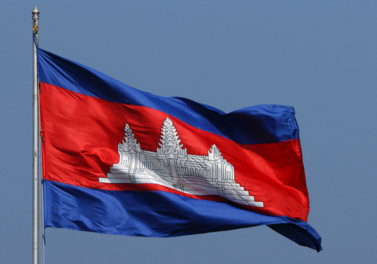
Today, the ICJ called on the Royal Government of Cambodia (RGC) to end the escalating repression of civil society in Cambodia and reverse the rapidly deteriorating rule of law and human rights crisis in the country.
Yesterday, it was reported that Prime Minister Hun Sen called for the shut down of one of Cambodia’s leading, independent NGOs, Cambodian Centre for Human Rights (CCHR), and directed the Ministry of Interior to investigate CCHR for its alleged engagement with “foreigners”.
The Prime Minister’s statement appeared to allude to alleged involvement of CCHR in a supposed foreign-backed “colour revolution” to overthrow the government.
“The Cambodian Center for Human Rights plays an essential, independent role in promoting and protecting human rights in Cambodia and must be able to continue its important work without fear of retaliation, reprisal or other unjustified interference,” said Kingsley Abbott, the ICJ’s Senior International Legal Adviser for Southeast Asia.
“Everyone has the right to form and participate in organizations established to work on human rights, and States have a corresponding duty to protect the ability of such organizations and their participants to carry out their work to promote and defend human rights,” he added.
This latest development comes amidst a severe clampdown by the RGC on perceived dissenting voices including civil society, activists, the independent media and political opposition including through the recent dissolution of the major opposition party, the Cambodia National Rescue Party (CNRP), in what appeared to be a highly politicized Supreme Court proceeding, and the arrest and detention of its leader, Kem Sokha.
“This new, targeted focus on the Cambodian Center for Human Rights by the Government should make it clear that the human rights and rule of law crisis gripping Cambodia is not showing any signs of abating and requires the urgent attention of the international community,” said Abbott.
“All legal, political and economic options should be on the table,” he added.
Contact
Kingsley Abbott, Senior International Legal Adviser, ICJ Asia Pacific Regional Office, t: +66 94 470 1345, e: kingsley.abbott(a)icj.org
Background
CCHR was founded by Kem Sokha in 2002 before he left the organization in 2007 to pursue a career in politics.
Yesterday, CCHR released a statement “reaffirming its absolute non-partisanship and independence from all political parties” and emphasizing “strict independence” as a core value of its organization. CCHR also asserted in its statement that an “independent and impartial investigation would find no wrongdoing whatsoever on the part of the organization” and called for “meaningful dialogue” with the RGC.
Articles 19 and 22 of the International Covenant on Civil and Political Rights (ICCPR), to which Cambodia is a State Party, guarantees the rights of all persons to freedom of expression and opinion and to freedom of association with others.
The UN Declaration on Human Rights Defenders, adopted by a consensus of States at the UN General Assembly, including Cambodia, affirms the right of everyone to form and participate in NGOs to promote and protect human rights. The Declaration further dictates that states should take all necessary measures to protect human rights defenders from retaliation and other forms of arbitrary action as a consequence of their legitimate work.
On 18 October 2017, the ICJ released a report which found that the RGC was increasingly “weaponizing” the law to restrict dissent and attack democracy. The report recorded that the “single largest problem facing the Cambodian justice system is the lack of independent and impartial judges and prosecutors,” which includes “an endemic system of political interference in high-profile cases and an equally entrenched system of corruption in all others”.
On 23 October 2017, the 26th anniversary of the 1991 Paris Peace Conference on Cambodia, the ICJ, together with 54 other organizations, issued an open letter to the United Nations Secretary-General and the Conference’s co-chairs calling for the reconvening of the members of the Conference and other concerned stakeholders for an emergency summit to address the human rights crisis in the country.
Nov 16, 2017 | News
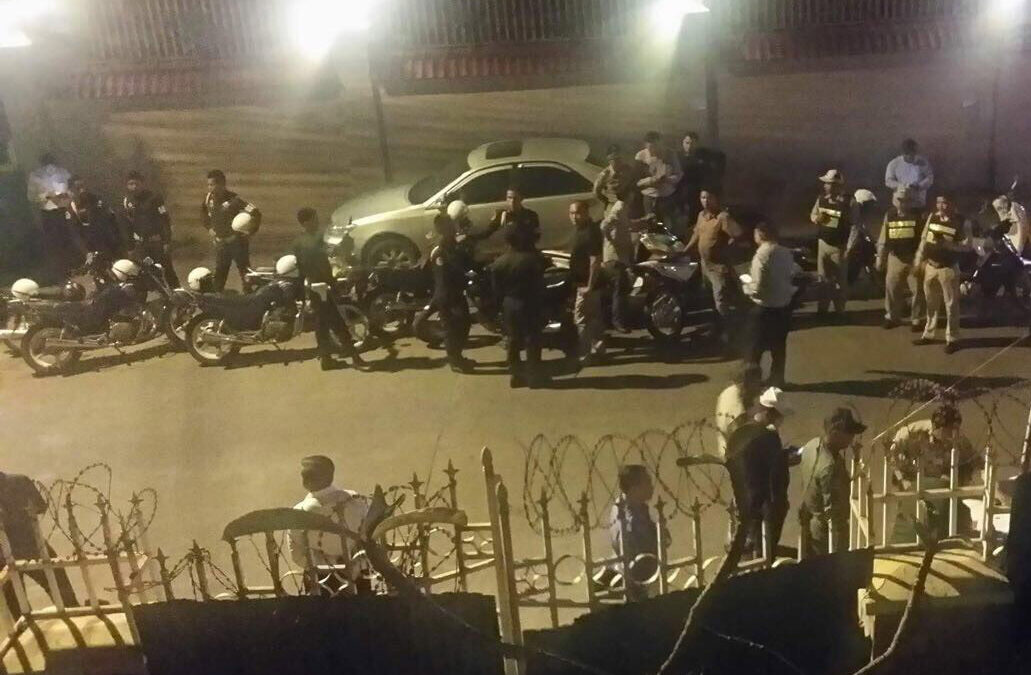
Today’s decision of the Supreme Court to dissolve the main opposition political party, the Cambodia National Rescue Party (CNRP), has significantly heightened the human rights and rule of law crisis within the country, the ICJ said.
The Supreme Court has also banned 118 of CNRP politicians from political activity for five years.
“By dissolving the main opposition party and banning 118 CNRP politicians from political activity for five years, the Supreme Court is irreparably interfering with the rights of potentially millions of Cambodians to freely choose their political representatives and vote for them in the upcoming elections,” said Kingsley Abbott, the ICJ’s Senior International Legal Adviser for Southeast Asia.
“The fact that the Law on Political Parties was amended to enable the Supreme Court to dissolve political parties shortly before it dissolved the CNRP strongly suggests the entire ‘legal process’ was nothing more than political theatre, inconsistent with human rights and the rule of law.”
A full bench of nine judges of the Supreme Court, including the President, unanimously decided to dissolve the CNRP pursuant to powers contained within Article 44 (new) of the Law on Political Parties (LPP), which was controversially amended twice this year, in February and July 2017.
The lawyers representing the CNRP were not present at Court after electing to boycott the proceedings in protest at their legitimacy.
Furthermore, the President of the Supreme Court, Justice Dith Munty, who read out the decision, is reportedly a member of the ruling Cambodian People’s Party (CPP) and sits on both its Standing and Permanent Committees, raising serious doubts about the independence and impartiality of the Court.
“It makes a mockery of fair justice to have someone in a leadership position within one political party sit in judgment on the conduct of that party’s main opposition. There can be no starker example of an inherent conflict of interest,” Abbott said.
“At an absolute minimum, the President should have recused himself from any role in relation to the case, as should have any other judge sitting on the bench if they hold a similar position within the CPP,” he added.
These concerns are consistent with the ICJ’s findings in a report it released last month, in which it found that the “single largest problem facing the Cambodian justice system is the lack of independent and impartial judges and prosecutors.”
“The problem is two-fold: an endemic system of political interference in high-profile cases and an equally entrenched system of corruption in all others.”
On 23 October 2017, the 26th anniversary of the 1991 Paris Peace Conference on Cambodia, the ICJ and 54 other organizations wrote an open letter to the Secretary-General of the United Nations and the Conference’s co-chairs calling on them to reconvene the members of the Conference, along with other concerned stakeholders, for an emergency summit to discuss the human rights crisis within the country.
“The dissolution of the CNRP sends a strong signal to the international community and all Cambodians that a red-line has been crossed, which makes reconvening the Paris Peace Conference to address the human rights and rule of law crisis within the country all the more urgent,” said Kingsley Abbott.
Contact
Kingsley Abbott, Senior International Legal Adviser for Southeast Asia, ICJ, t: +66 94 470 1345 ; e: kingsley.abbott@icj.org
Background
It has been reported that, on 4 and 5 October 2017, the Cambodia Youth Party and the Funcinpec Party, respectively, filed complaints with the Ministry of Interior (MOI) alleging that the CNRP had violated Articles 6 (new) and 7 (new) of the Law on Political Parties, and asked the MOI to file a complaint with the Supreme Court to dissolve the CNRP.
On 6 October 2017, the MOI filed a complaint with the Supreme Court pursuant to Article 38 (new) of the LPP to dissolve the CNRP.
Article 25 of the International Covenant on Civil and Political Rights (ICCPR), to which Cambodia is a State Party, guarantees the rights of all persons, without any unreasonable restrictions, “to take part in the conduct of public affairs, directly or through freely chosen representatives; and to vote and to be elected at genuine periodic elections which shall be by universal and equal suffrage and shall be held by secret ballot, guaranteeing the free expression of the will of the electors.”
Article 14 of the ICCPR affirms the principle that tribunals judging rights and obligations in legal proceedings be independent and impartial.
Detailed international standards on requirements for a court to be independent have been set out in the UN Basic Principles on the Independence of the Judiciary (1985), and requirements for judicial impartiality have been set out in the Bangalore Principles of Judicial Conduct and Commentary (2002/2007), which includes the standard that “All partisan political activity and association should cease upon the assumption of judicial office” (para 75 of the Commentary).
Nov 10, 2017 | News
As Pakistan is set to undergo its third Universal Periodic Review (UPR) on 13 November, the ICJ has urged Pakistani authorities to meaningfully engage with the process to improve the human rights situation in the country.
“Pakistan’s past engagement with the UPR has been characterized by denial and defensive posturing,” said Frederick Rawski, ICJ’s Asia Director.
“As a recently-elected member of the UN Human Rights Council, it is more important than ever for the Pakistan to show that it takes its human rights obligations seriously by engaging with the upcoming UPR in its true spirit,” he added.
During its second UPR in 2012, Pakistan received 167 recommendations, of which it rejected seven, noted 34, and accepted 126.
The seven recommendations rejected by Pakistan relate to some of the most serious human rights violations in the country, including recommendations to adopt an official moratorium on the death penalty with a view to abolishing capital punishment in law and practice, repeal blasphemy laws, and decriminalize adultery and non-marital consensual sex.
Even accepted recommendations have been largely ignored in the four years since the previous UPR, the ICJ notes.
Enforced disappearances are still not recognized as a distinct, autonomous crime; perpetrators of gross human rights violations continue to escape justice; there has been complete inaction to prevent abuse of so-called blasphemy laws; and freedom of expression is often restricted on vague grounds such as “national security” and “immorality”.
“Pakistan’s human rights situation has in many ways deteriorated since 2012,” Rawski added.
“Yet – as reflected by Pakistan’s national report for the upcoming UPR – the authorities apparently remain in a state of denial about the dire human rights implications of these new measures,” he said.
These measures include the lifting the informal moratorium on the death penalty and carrying out nearly 500 executions in less than three years – among the highest in the world; passing laws allowing military courts to try civilians for certain terrorism-related offences; and a new wave of crackdowns on NGOs, journalists and human rights defenders, including retaliating against NGOs for presenting “a very bleak picture” of the country’s human rights situation to the UN.
“UN member states on Monday should urge Pakistan to end the dangerous downward spiral on rights by ending repression, respecting fundamental freedoms, and holding perpetrators of violations responsible,” Rawski said.
Contact
Frederick Rawski, ICJ Asia Pacific Regional Director, t: +66 64 478 1121, e: frederick.rawski(a)icj.org
Reema Omer, ICJ International Legal Adviser for Pakistan (London), t: +447889565691; e: reema.omer(a)icj.org
Additional information
The UPR is a unique mechanism of the UN Human Rights Council aimed at improving the human rights situation of each of the 193 UN Member States. Under this mechanism, the human rights record of all UN Member States is peer-reviewed every four to five years by the UPR Working Group, consisting of the 47 UN Member States of the Human Rights Council; however, any UN Member State can take part in the discussions and the dialogue during the UPR of the reviewed States. States then make recommendations to the country under review, which has the option of accepting or noting the recommendations.
Oct 10, 2017 | Multimedia items, News, Video clips
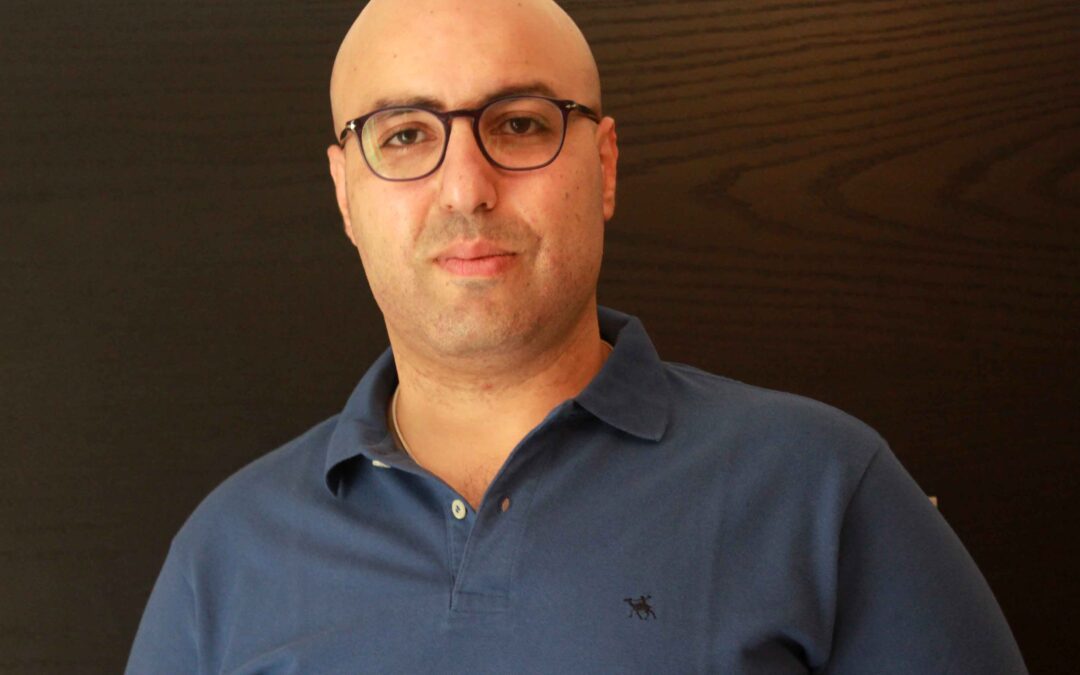
Selected by a jury of 10 global human rights organizations, including the ICJ, Mohamed Zaree is a devoted human rights activist and legal scholar whose work focuses on human rights advocacy around freedom of expression and association.
Mohamed Zaree is also known for his role as the Egypt Country Director of the Cairo Institute for Human Rights Studies (CIHRS), which works throughout the Arabic speaking world.
He assumed this role after government pressure on CIHRS prompted them to relocate their headquarters to Tunis in 2014.
The Egyptian government has been escalating its pressure on the human rights movement.
Human rights NGOs and defenders are confronted with a growing wave of threats, harassment, and intimidation, legal and otherwise.
Despite this, Mohamed Zaree is leading CIHRS’ research, human rights education, and national advocacy initiatives in Egypt and is shaping the media debate on human rights issues.
During this critical period for civil society, he is also leading the Forum of Independent Egyptian Human Rights NGOs, a network aiming to unify human rights groups in advocacy.
Zaree’s initiatives have helped NGOs to develop common approaches to human rights issues in Egypt.
Within the context of the renewed crackdown on Egyptian human rights organizations, he has become a leading figure in Egypt’s human rights movement.
He is currently facing investigation under the “Foreign Funding Case” and is at high risk of prosecution and life imprisonment. The “Foreign Funding Case” highly restricts NGO activities.
Despite this, Mohammed Zaree continues to engage the authorities in dialogue wherever possible, arguing that respect for human rights will increase stability in Egypt.
He has been under a travel ban since May 2016 but remains present and active in Egypt and represents CIHRS inside the country.
“Mohamed Zaree is a leading voice for justice in Egypt. Honoring him with the Martin Ennals Award is a recognition of the courageous and tireless work done by Egyptian human rights defenders, individuals and NGOs, in their fight against all forms of intimidation, harassment and repression waged by the Egyptian military and government against them,” said Said Benarbia, Director of the ICJ Middle East and North Africa Programme.
FreeThe5KH (Cambodia) and Karla Avelar, the two other finalists, received Martin Ennals Prizes.
FreeThe5KH are five Human Rights Defenders who were recently released after 427 days of pre-trial detention.
They are awaiting trial and are banned from travel.
There were widespread international calls for their unconditional release, and a stop to judicial harassment of human rights defenders in Cambodia.
This comes in the context of an increasingly severe crackdown on civil society and the political opposition in Cambodia.
Karla Avelar, a transgender woman in El Salvador, founded the country’s first organization of transgender women – COMCAVIS TRANS.
She grew up on the streets, suffering discrimination, violence, sexual exploitation, rape, and attempted murder.
She works to change national legislation and the authorities’ practices, by publicizing violations suffered by LGBTI people.
Her advocacy helped prompt the authorities to segregate LGBTI prisoners for their own safety, and provide HIV treatment.
Background
The “Nobel Prize of Human Rights”, the Martin Ennals Award for Human Rights Defenders (MEA) is a unique collaboration among ten of the world’s leading human rights organizations to give protection to human rights defenders worldwide.
Strongly supported by the City of Geneva, the award is given to Human Rights Defenders who have shown deep commitment and face great personal risk.
Its aim is to provide protection through international recognition.
The Jury is composed of the following NGOs: ICJ, Amnesty International, Human Rights Watch, Human Rights First, Int’l Federation for Human Rights, World Organisation Against Torture, Front Line Defenders, EWDE Germany, International Service for Human Rights, and HURIDOCS.
Contact:
Michael Khambatta, Director, Martin Ennals Foundation, t: +41 79 474 8208, e: khambatta(a)martinennalsaward.org
Olivier van Bogaert, Director, ICJ Media and Communications, and ICJ Representative on the MEA Jury, t: +41 22 979 38 08, e: olivier.vanbogaert(a)icj.org
The Award will be presented by the United Nations Deputy High Commissioner for Human Rights at 18.15 on 10 October at the University of Geneva. The ceremony can be watched live on Martin Ennals Award Facebook page
Watch the movie on Mohammed Zaree
Oct 3, 2017 | Advocacy, Cases, Legal submissions
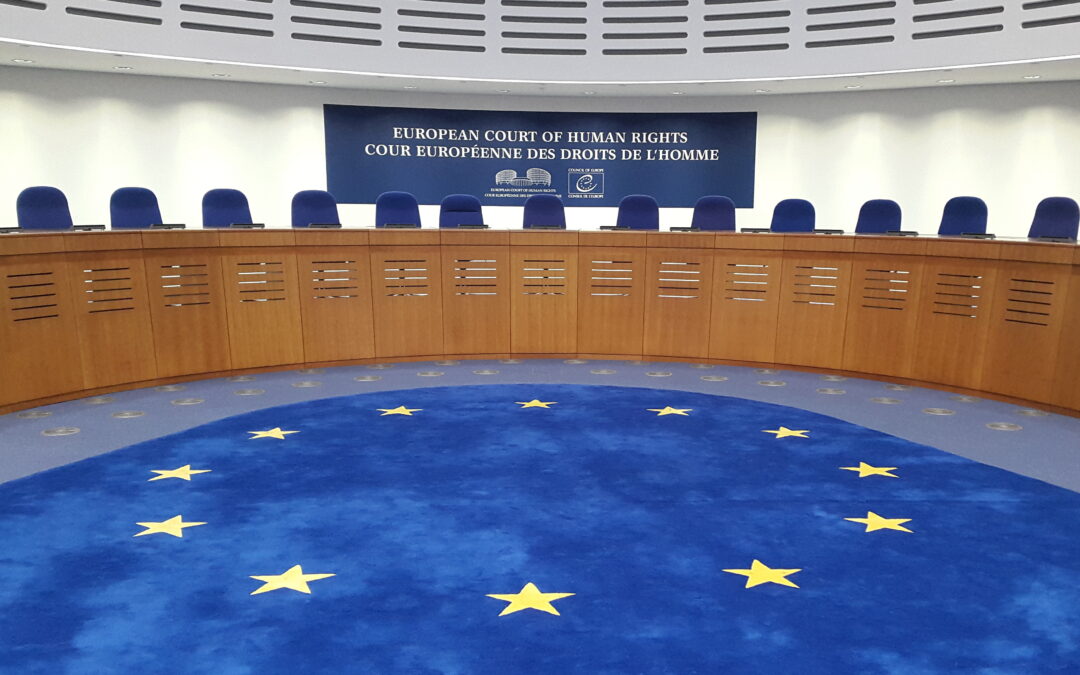
On 2 October, the ICJ and Amnesty International submitted an intervention before the European Court of Human Rights in the case Ecodefence and others v the Russian Federation, Application no. 9988/13 and 48 other applications, which concern labeling NGOs as foreign agents.
In this submission, the applicants provided the Court with an analysis, based on international law sources, of:
a) the scope of application of rights to freedom of expression and association guaranteed under Articles 10 and 11 of the European Convention on Human Rights (ECHR or the Convention) to restrictions on the activity of non-governmental organisations (NGOs);
b) application of the principle of legality to such restrictions;
c) the legitimacy of the aim, necessity and proportionality of measures regulating NGOs, including restrictions on funding, burdensome reporting requirements, sanctions and the stigmatizing effect of labelling NGOs as “foreign agents”; and
d) the scope of permissible restrictions under Article 18 of the ECHR, particularly the question of interferences used for purposes other than those which fall under Articles 10 and 11 of the Convention.
The submission addresses the obligations of State parties to the ECHR with account taken of the other international law obligations, such as those under the International Covenant on Civil and Political Rights (ICCPR) as well as other relevant standards under international law.
Russia-ECtHR-AmicusBrief-Ecodefence-legalsubmissions-2017-ENG (download the third party intervention)