Nov 21, 2016 | Advocacy, News
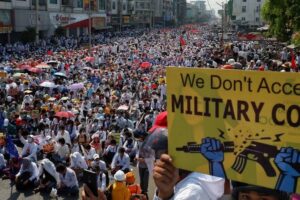
The ICJ and five other human rights groups are calling on the Malaysian authorities to drop all charges against the Bersih organizers and activists, return all items confiscated from their offices and stop making further arbitrary arrests in connection with these events.
Download the statement here:
malaysia-bersih-5-statement-advocacy-2016-eng (full text in PDF)
Nov 8, 2016 | News
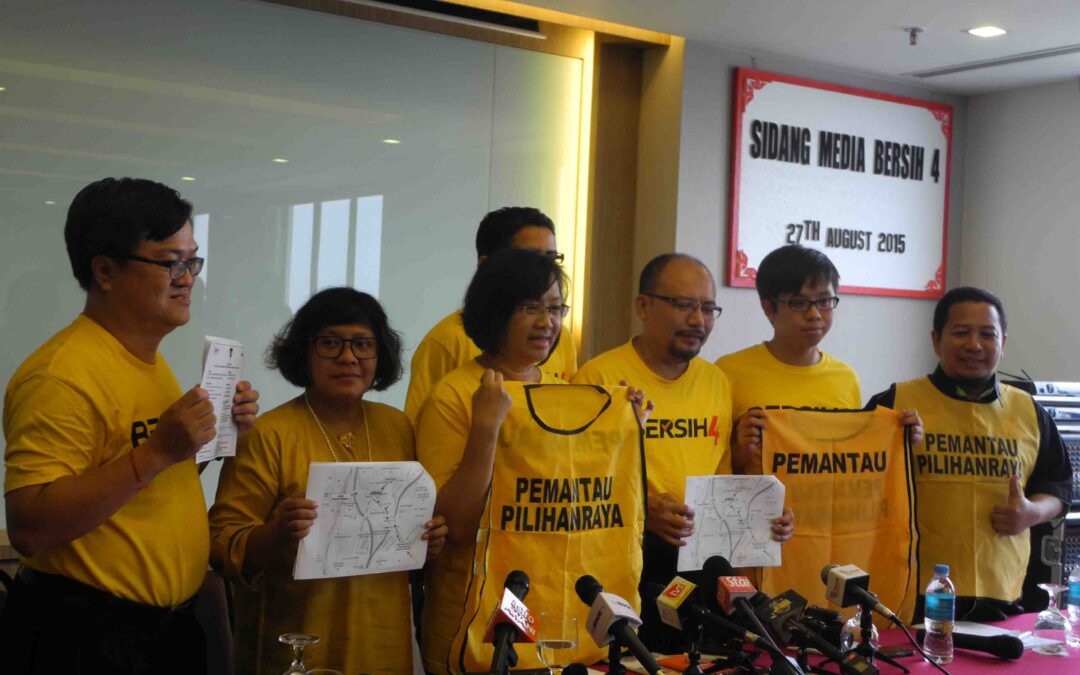
The Malaysian government must act to stop and redress the ongoing harassment, and death threats against the organizers of the Bersih 5.0 protest rally, scheduled for 19 November 2016, said the ICJ today.
The ICJ is calling on the authorities to conduct a thorough, impartial investigation into unlawful acts of intimidation against the organizers with a view to identifying and bringing to account those responsible.
The Bersih (or Gabungan Pilihanraya Bersih dan Adil) is a coalition formed in 2006 by Malaysian non-governmental organizations to call for free, clean and fair elections.
“The Malaysian government has the obligation to respect the right to freedom of expression and freedom of assembly,” said Sam Zarifi, ICJ’s Asia Director. “These rights are not only guaranteed under the Malaysian Constitution, but also under international human rights law.”
The ICJ recently received reports that Bersih leaders Maria Chin Abdullah, Mandeep Singh, and former Chairperson Ambiga Sreenevasan received death threats from unknown individuals.
Family members of Maria Chin Abdullah also received similar threats.
On 29 October 2016, police arrested Maria Chin Abdullah for distributing flyers promoting the forthcoming public assembly.
She was investigated on suspicion of having violated Section 11 of the Printing Presses and Publications Act 1984, which requires every publication printed or published within Malaysia to bear the name and address of the printer and publisher. Maria Chin Abdullah was subsequently released.
On 1 October 2016, men wearing the customary red shirts of ‘anti-Bersih’ groups and riding motorbikes tailed the convoy in Perak, kicked the cars and punched the vehicles’ side mirrors, while on 8 October 2016, unknown persons smashed the windows and slashed the tires of cars participating in a Bersih convoy in Sabah state.
Last week, police authorities launched investigations under Section 124C of the Penal Code against Bersih and other Malaysian NGOs that are alleged to have received foreign funding. Section 124C penalizes persons who are found to “attempt to commit activity detrimental to parliamentary democracy.”
“Section 124C is impermissibly vague and ambiguous, and allows authorities to engage in arbitrary prosecution, conviction, and punishment of people who are exercising their right to freedom of speech and assembly,” Zarifi said. “These claims against Bersih seem to be the latest effort by the Malaysian government, which is facing allegations of massive corruption, to repress political opposition.”
Contact
Emerlynne Gil, ICJ’s Senior International Legal Adviser, t: +66 840923575 ; e: emerlynne.gil(a)icj.org
Background
Over the years, Bersih has been organizing peaceful assemblies attended by thousands of Malaysians in Kuala Lumpur and other parts of the country.
Last year, monitors from the ICJ observed Bersih 4.0 and reported that it had been a peaceful assembly, in exercise of the right to freedom of assembly and that the organizers took careful measures to keep it orderly and free from violence. The ICJ will again be sending observers to this year’s Bersih rally in Kuala Lumpur.
Under Article 10(1)(b) of the Malaysian Constitution, “all citizens have the right to assemble peaceably and without arms.” Furthermore, the right to peaceful assembly is also guaranteed under several international human rights instruments, including the Universal Declaration of Human Rights.
In his 2012 report, the UN Special Rapporteur on the rights to freedom of peaceful assembly and of association emphasized that States “have a positive obligation to actively protect peaceful assemblies”. This State obligation includes “protection of participants of peaceful assemblies from individuals or groups of individuals, including agents provocateurs and counter-demonstrators who aim at disrupting or dispersing such assemblies.”
With regard to the use of Section 124C of the Penal Code to commence investigations against Bersih and other non-governmental organizations, the ICJ has emphasized that the ambiguity and vagueness of this provision makes it inconsistent with the principle of legality, a basic tenet of law. The principle of legality in the criminal law context requires that any offense must be established in law and defined precisely and unambiguously so as to enable individuals to know what acts will make them criminally liable.
Oct 25, 2016 | Advocacy
The ICJ, Amnesty International, FIDH, Fortify Rights and Lawyers’ Rights Watch Canada urge Thailand’s National Legislative Assembly (NLA) to reject currently proposed amendments to the 2007 Computer-Related Crime Act (CCA).
The full text of their statement can be dowloaded here:
thailand-cca-amendments-advocacy-2016-eng (in PDF)
thailand-cca-amendments-advocacy-2016-tha (Thai, in PDF)
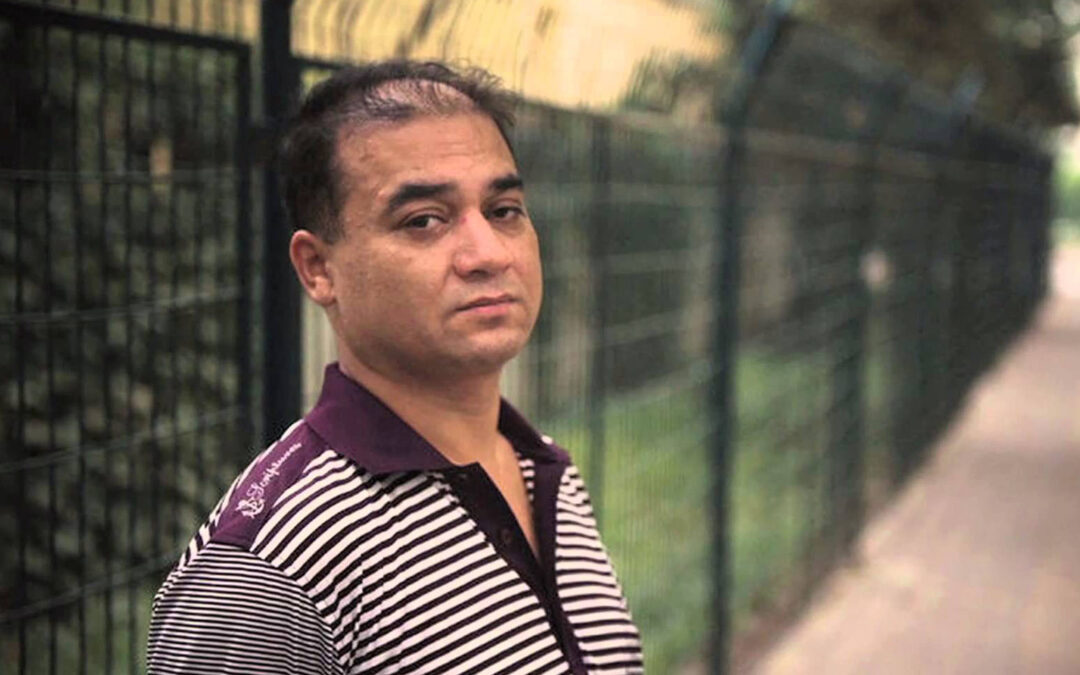
Oct 11, 2016 | Multimedia items, News, Video clips
Selected by a jury of 10 global human rights organizations, including the ICJ, Ilham Tohti has worked for two decades to foster dialogue and understanding between Uyghurs and Han Chinese. Detained in China, he could not travel to collect his prize in Geneva.
A renowned Uyghur intellectual in China, Ilham Tohti (photo) has rejected separatism and violence, and sought reconciliation based on a respect for Uyghur culture, which has been subject to religious, cultural and political repression in the Xinjiang Uyghur Autonomous Region.
In 1994 he began to write about problems and abuses in Xinjiang, which led to official surveillance.
From 1999 to 2003 he was barred from teaching.
Since then the authorities have also made it impossible for him to publish in normal venues.
As a response, he turned to the Internet to broaden public awareness of the economic, social and developmental issues confronting the Uyghurs.
In 2006 he established Uyghurbiz.net, a Chinese-language site, to foster dialogue and understanding between Uyghurs and Han Chinese.
Over the course of its existence, it has been shut down periodically, and people writing for it have been harassed.
In 2009, he was arrested for several weeks after posting information on Uyghurs who had been arrested, killed and “disappeared” during and after protests.
In the following years he was periodically subjected to house arrest, and in 2013, while bound to take up a post as a visiting scholar at Indiana University, USA, he was detained at the airport and prevented from leaving China.
On January 15, 2014, Ilham Tohti was arrested on charges of separatism and sentenced to life imprisonment, after a two-day trial.
Numerous statements were issued by Western governments and the European Union condemning his trial and sentence, and in early 2016 several hundred academics petitioned the Chinese leadership for his release.
Upon his nomination as a Finalist for the Martin Ennals Award earlier this year, his daughter stated: “My father Ilham Tohti has used only one weapon in his struggle for the basic rights of the Uyghurs of Xinjiang: Words; spoken, written, distributed, and posted. This is all he has ever had at his disposal, and all that he has ever needed. And this is what China found so threatening. A person like him doesn’t deserve to be in prison for even a day.”
Martin Ennals Foundation Chair Dick Oosting said: “The real shame of this situation is that by eliminating the moderate voice of Ilham Tohti the Chinese Government is in fact laying the groundwork for the very extremism it says it wants to prevent.”
The two other finalists received Martin Ennals Prizes.
Zone 9 Bloggers (Ethiopia) are nine young activists who called themselves ‘Zone 9’ as a symbol for Ethiopia as a whole (Kality prison in Ethiopia, has 8 zones and holds many journalists and political prisoners).
They document human rights abuses and shed light on the situation of political prisoners in Ethiopia.
Six of its members were arrested and charged with terrorism.
Although they have now been released, three are in exile while four of the six remaining in Ethiopia are still facing charges and banned from travel.
Razan Zaitouneh (Syria) has dedicated her life to defending political prisoners, documenting violations, and helping others free themselves from oppression.
She founded the Violations Documentation Center (VDC), which documents the death toll and ill-treatment in Syria’s prisons.
She had started to cover all sides in the conflict when she was kidnapped, alongside with her husband and two colleagues, on 9 December 2013. Her whereabouts remain unknown.
Background
The “Nobel Prize of Human Rights”, the Martin Ennals Award for Human Rights Defenders (MEA) is a unique collaboration among ten of the world’s leading human rights organizations to give protection to human rights defenders worldwide.
Strongly supported by the City of Geneva, the award is given to Human Rights Defenders who have shown deep commitment and face great personal risk. Its aim is to provide protection through international recognition.
The Jury is composed of the following NGOs: ICJ, Amnesty International, Human Rights Watch, Human Rights First, Int’l Federation for Human Rights, World Organisation Against Torture, Front Line Defenders, EWDE Germany, International Service for Human Rights, and HURIDOCS.
Contact:
Michael Khambatta, Director, Martin Ennals Foundation, t: +41 79 474 8208, e: khambatta(a)martinennalsaward.org
Olivier van Bogaert, Director, ICJ Media and Communications, and ICJ Representative on the MEA Jury, t: +41 22 979 38 08, e: olivier.vanbogaert(a)icj.org
china-mea-laureate-2016-news-press-releases-2016-chi (full text in Chinese, PDF)
Watch the Martin Ennals Award Ceremony 2016:
Watch the Ilham Tohti movie:

Sep 28, 2016 | News
The conviction of Member of Parliament Tian Chua under the 1948 Sedition Act increases already severe restrictions on freedom of expression in Malaysia, said the ICJ today.
The Malaysian government should drop all charges filed under this law and remove or amend this colonial era law to ensure compliance with international human rights law and standards, the ICJ added.
The Sessions Court in Kuala Lumpur convicted Tian Chua (photo) today under Section 4(1)(b) of the 1948 Sedition Act for allegedly uttering “seditious words.”
The allegedly “seditious words” spoken by Tian Chua were calling on Malaysians to “stand up and fight against racism and corruption.”
Tian Chua spoke these words at a public forum on 13 May 2013 at the Kuala Lumpur and Selangor Assembly Hall.
“Prime Minister Najib Razak promised in 2012 to abolish the 1948 Sedition Act, but until now, this promise has not been fulfilled,” said Emerlynne Gil, ICJ’s Senior International Legal Adviser.
“It now appears that the Malaysian government is holding on to this law to silence political opponents and human rights defenders who express critical views about what is happening in the country today,” she added.
Tian Chua received a penalty of three months’ imprisonment plus a fine of RM1,800 (approximately US$435).
Although he will still be entitled to keep his seat as Batu’s representative to the Malaysian Parliament, his conviction sends a clear and dangerous message that politically critical comments or dissenting opinions from anyone, including a Member of Parliament, will not be tolerated by the government, the ICJ says.
Several other people were also charged for sedition for their speeches at the same public forum where Tian Chua spoke: activists Adam Adli, Hishamuddin Md. Rais, Haris Fathillah Mohamed Ibrahim, and Safwan Anang.
All of them have already been convicted in the past few months under the same provision of the Sedition Act.
“By its very terms, the 1948 Sedition Act contemplates restrictions on the exercise of freedom of expression that are grossly overbroad and inconsistent with the basic rule of law and human rights principles,” said Gil.
The lawyers of Tian Chua, Latheefa Koya and N. Surendran, have confirmed that they will be seeking a stay order on the basis that they will be appealing the sentence and conviction.
The ICJ has repeatedly expressed its concerns regarding the restrictive effect the 1948 Sedition Act has on freedom of expression in the country.
The law criminalizes speech and publications considered to have “seditious tendencies”, a term that is very ambiguously and vaguely defined.
Last year, the ICJ expressed alarm over amendments made by the Malaysian Parliament strengthening the law and broadening its scope, making the “promotion” of hatred between religions an offence.
Contact:
Emerlynne Gil, ICJ’s Senior International Legal Adviser for Southeast Asia, t: +66840923575 ; e: emerlynne.gil(a)icj.org