Mar 31, 2016 | News
A Delhi Court acquitted human rights defender Irom Sharmila of an “attempt to commit suicide” charge. The government of Manipur must in turn immediately drop the charges against her, said the ICJ today.
Irom Sharmila, was charged under section 309 the Indian Penal Code.
She has been on a continuous hunger strike for over 15 years, demanding repeal of the Armed Forces Special Powers Act (AFSPA).
“This order is a welcome recognition that Irom Sharmila’s hunger strike is a form of peaceful dissent and protest protected by the right to freedom of expression,” said Sam Zarifi, ICJ’s Asia Director.
This week, Iron Sharmila was acquitted of the charges against her in Delhi. The case against her in Manipur is, however, still on-going.
The decision of the Delhi court is not binding on the courts in Manipur, but the charges are analogous, and similar reasoning should prevail, the ICJ says.
“The government of Manipur should drop the other charges under section 309 against her, and release her immediately and unconditionally,” said Zarifi.
On at least two occasions previously, courts in Manipur have directed that Irom Sharmila be released, saying that charges under section 309 were not applicable.
“The use of section 309 against Sharmila highlights the outdated and absurd nature of this law,” Zarifi said.
“The government should expedite the repeal of 309 and, instead of criminalizing Irom Sharmila’s protest, focus on the reason behind it and repeal the AFSPA,” he added.
The AFSPA gives armed forces a range of “special powers” in “disturbed areas”, which include the power to arrest without warrant, to enter and search any premises, and in certain circumstances, “fire upon or otherwise use force, even to the causing of death”.
Furthermore, under the AFSPA, governmental permission, or sanction, is required before any member of the armed forces can be prosecuted for crimes in a civilian court.
These provisions are inconsistent with a range of human rights, including the right to life and right to remedy.
They have also facilitated torture, rape and enforced disappearances in areas where operational, the ICJ notes.
“This law is inconsistent with India’s human rights obligations, and has led to human rights violations, wide-spread impunity, and immense grief and suffering in the areas where it operates”, Zarifi said.
“It is high time that it was taken off the books”.
Background
Irom Sharmila began a hunger strike in November 2000, calling for the repeal of the AFSPA, following the unlawful killing of 10 civilians by security forces purportedly acting under it in Malom.
She was arrested by the Manipur government in 2000 under section 309 of the Indian Penal Code, which prohibits an “attempt to commit suicide”.
Irom Sharmila has been in custody almost continuously since her initial arrest, and has continued her hunger strike.
She is fed through a nasal tube at the Jawaharlal Nehru hospital in Imphal where she is usually held.
The Delhi government also charged her on similar grounds with respect to an incident from 2006, when she held a protest in their jurisdiction.
In 2014, a Manipur court quashed charges under section 309 against Irom Sharmila, saying “The agitation of Irom Chanu Sharmila is a political demand through lawful means of repealing a valid statute. … she may continue with the fast till her demand is met politically by the Government”.
However, since she continued her hunger strike, she was immediately re-arrested on the same grounds.
In its 210th report, the Indian Law Commission has recommended that section 309 be repealed. In 2011, the Supreme Court said: “the time has come when [section 309] should be deleted by Parliament as it has become anachronistic.”
In 2014, the government announced that it was in the process of repealing 309.
The AFSPA applies to “disturbed areas” in the states of Arunachal Pradesh, Assam, Manipur, Meghalaya, Mizoram, Nagaland and Tripura.
An almost identical law is also applicable in Jammu and Kashmir.

Mar 29, 2016 | News
The ICJ expresses its grave concern at the 28 March 2016 conviction and sentencing of 17 Angolan activists to terms of imprisonment ranging from two years to more than eight years, for the peaceful exercise of their human rights of freedom of association and freedom of expression.
Following an unfair trial, they were found guilty of “preparatory actions of rebellion and association of evildoers” [malfeitores], based on having read and discussed reading material on nonviolent means for resisting dictatorship or being associated with others who did so.
The ICJ joins numerous civil society organizations in condemning the failure by the authorities in Angola to conduct the trial in a manner consistent with its obligations under international human rights law.
“Judicial persecution of opponents of the government in Angola must be stopped forthwith” said Arnold Tsunga, ICJ’s Africa Director.
“A worrisome trend and pattern is emerging where the authorities in Angola are increasingly using the law and legal system as an instrument of repression targeting critics of the government as well as human rights defenders,” he added.
The ICJ calls on the Angolan authorities to invalidate the conviction and sentences, and to take concrete measures to strengthen the rule of law by ensuring the independence of the judiciary and legal profession as well as fully implementing international human rights standards in the national legal system.
Contact
Arnold Tsunga, ICJ’s Africa Director, t: +27731318411 or +263777283249 ; e: arnold.tsunga@icj.org
Background
Fifteen of the Accused were arrested in June 2015 and later joined by another two accused.
They were initially charged with rebellion and a conspiracy to mount a coup against the President for studying and discussing reading material on nonviolent means for resisting dictatorship.
The prosecution later dropped the second charge but added a charge of “criminal association” or “association with evildoers”.
The defense maintains that the state did not manage to prove anything beyond the fact that the accused discussed politics, which is allowed under the Angolan constitution.
No independent observers were allowed to attend the trial, raising serious concerns about the right to fair trial.
The African Charter on Human and Peoples’ Rights and the International Covenant on Civil and Political Rights, treaties to which Angola is a party, recognize freedom of expression and freedom of association as human rights, and prohibit governments from arbitrarily or otherwise illegitimately interfering with them.
Domingos da Cruz was sentenced to 8 years and six months; Luaty Beirão to 5 years and 6 months; Nuno Dala, Sedrick de Carvalho, Nito Alves, Inocêncio de Brito, Laurinda Gouveia, Fernando António Tomás “Nicola”, Afonso Matias “Mbanza Hamza”, Osvaldo Caholo, Arante Kivuvu, Albano Evaristo Bingo -Bingo, Nelson Dibango, Hitler Jessy Chivonde e José Gomes Hata were all sentenced to 4 years and 6 months); while Rosa Conde e Jeremias Benedito got 2 years and 3 months in jail.

Mar 10, 2016 | News
The ICJ welcomes the decision of the Magistrate Court to dismiss the charges against Lena Hendry for her involvement in 2013 screening of No Fire Zone: The Killing Fields of Sri Lanka, an award-winning human rights documentary on the civil war in Sri Lanka.
Magistrate Mohamad Rehab Mohd Aris determined that the prosecution failed to prove a prima facie case against Lena Hendry (photo).
As a consequence, she did not have to enter her defense.
“We welcome the decision of the Magistrate’s Court to clear Lena Hendry from all charges,” said Emerlynne Gil, ICJ’s Senior International Legal Adviser.
“We must emphasize though that subjecting Lena Hendry in the first place to criminal prosecution simply for screening this documentary violated her human rights and contravenes Malaysia’s obligations to uphold freedom of expression,” she added.
“We should remember that the provision in the Film Censorship Act 2002 used against Lena Hendry remains on the books and still operative. It can still be used to stifle the voices of other human rights defenders in Malaysia,” Gil further said.
Lena Hendry was charged under section 6(1)(b) of the Film Censorship Act 2002 for allegedly showing the film without prior authorization by the Board of Censors.
The said provision prohibits any person to circulate, exhibit, distribute, display, manufacture, produce, sell, or hire any film or film publicity material that has not been approved by the Board of Censors.
If Lena Hendry had been found guilty, she could have faced a fine of up to RM30,000 (approximately US$6,900) and/or a sentence of up to three years imprisonment.
The ICJ reiterates its call to the Government of Malaysia to safeguard freedom of expression and uphold the right of individuals to elaborate and disseminate information, including on questions of public import and the documentation of human rights abuses.
Contact:
Emerlynne Gil, Senior International Legal Adviser for Southeast Asia, t: +66 840923575 ; e: emerlynne.gil@icj.org
Feb 24, 2016 | News
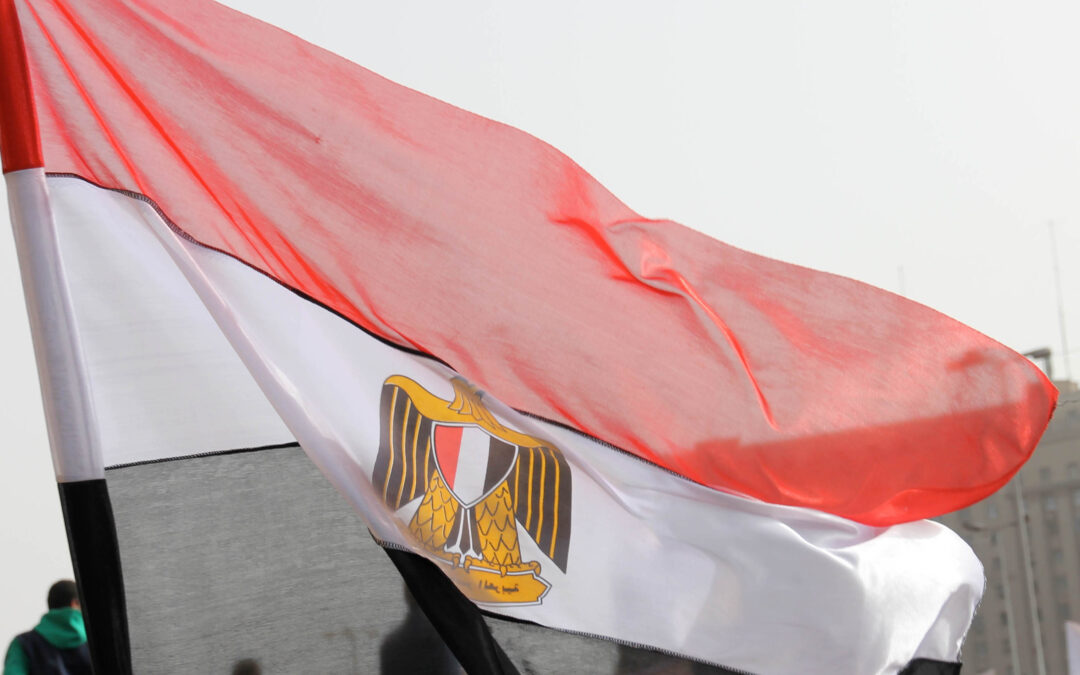
The ICJ today called on the Egyptian authorities to put an immediate end to their campaign to muzzle judges through unfair and arbitrary “unfitness” proceedings.
The Disciplinary Board, in hearings that tried dozens of judges at the same time, declared a total of 41 judges “unfit” for judicial office in 2015, forcing them into retirement.
The Supreme Disciplinary Board is currently reviewing these two cases.
The ICJ is concerned that many of the judges that have been subjected to these proceedings are leading advocates for judicial independence in Egypt and that the proceedings before both the Disciplinary Board and the Supreme Disciplinary Board were not fair.
Further, the cases stem from the judges’ exercise of freedom of association, belief, assembly and expression, and it appears that the Disciplinary Boards did not act in accordance with relevant international standards in this regard.
”Ending judges’ tenure following mass proceedings that are both arbitrary and unfair is inconsistent with Egypt’s obligations under international law,” said Said Benarbia, Director of the ICJ Middle East and North Africa Programme.
“With these assaults on individual judges, the Egyptian authorities are ensuring that their ongoing, sustained crackdown on fundamental rights and freedoms is extended to the very institution that is supposed to protect such rights and freedoms- the judiciary,” he added.
In the “July 2013 Statement Case”, 56 judges were subjected to disciplinary proceedings, following the Military seizure of power in July 2013, for endorsing a statement that called for the 2012 Constitution to be restored, for a dialogue between all stakeholders to be established within the framework of constitutional legitimacy, and for the right to peaceful demonstration to be respected.
The ICJ considers the statement to have been made consistent with the judges’ right to freedom of expression and association, exercised in a manner that preserved the dignity of their office and the impartiality and independence of the judiciary.
However, on 14 March 2015, the Disciplinary Board found that 31 of the 56 judges were not fit to hold judicial office and in effect removed them from office by forcing them into retirement.
The Board found there was not sufficient evidence that the other 25 judges had in fact endorsed the statement.
The ICJ is concerned that the procedures and hearings before the Disciplinary Board and the Supreme Disciplinary Board have not satisfied international standards of fairness.
In many instances, judges were not adequately notified of the dates of the hearings or of the courtrooms where such hearings took place.
In Egypt, judges facing disciplinary hearings are entitled to have another judge represent them; however, many of the judges were not permitted by Board officials to bring their representative to the hearings, without any reason being given for barring the representative, or because no representative could be secured as a result of fear of reprisals.
Further, many judges were not provided with adequate time and facilities to prepare their defense.
In another case, the “Judges for Egypt Case”, each judge had limited time to make his case before the Board during the hearings, though they were granted the right to submit at the final hearing written pleadings of no more than two pages .
At the final hearing in the case, while the judges waited all day in the Board’s premises, the hearing was held in the absence of all but one of them.
Furthermore, the Board refused to collect the written pleadings without giving any reasons.
On 22 February 2016, after protesting against the adjournment of his hearing, Judge Amir Awad was arrested and placed under detention for four days by the office of the prosecutor.
He is charged with insulting a public employee and forcibly entering his office.
“Both cases have been tainted by failures to ensure the fairness of the proceedings. The Egyptian authorities must nullify all decisions to remove judges resulting from these proceedings and put an immediate end to all forms of intimidation against and persecution of judges,” Benarbia added.
Contact:
Nader Diab, Associate Legal Adviser of the ICJ Middle East and North Africa Programme, t: +216 51727023; e: nader.diab(a)icj.org
Egypt-Attacks against judges-News-Web Stories-2016-ENG (full story in PDF, English)
Egypt-Attacks against judges- Press Release -2016- ARA (full story in PDF, Arabic)

Feb 5, 2016 | News
The ICJ today called on the Royal Thai Government to immediately drop criminal proceedings against human rights lawyer Sirikan Charoensiri.
On 2 February 2016, Sirikan Charoensiri received two summons to appear at the Chanasongkram Police Station on 9 February 2016 to be charged with two offences under the Criminal Code of Thailand: “giving false information regarding a criminal offence” and “refusing to comply with the order of an official”.
Such charges could result in punishment of up to two years’ imprisonment.
“The charges against Sirikan Charoensiri apparently relate to her efforts to protect the legal and human rights of her clients, students who never should have faced arrest or criminal proceedings for peacefully exercising their freedoms of expression and assembly in the first place,” said Matt Pollard of the ICJ’s Centre for the Independence of Judges and Lawyers.
“Prosecuting Sirikan Charoensiri for her efforts to defend human rights is totally unacceptable and will only put Thailand further in violation of its international obligations,” he added.
The charges appear to relate to the circumstances surrounding Sirikan Charoensiri’s provision of legal aid to 14 students who were arrested on 26 June 2015 after carrying out peaceful protests calling for democracy and an end to military rule.
Although the precise basis for the changes is not set out in the summonses, the complainant is named as Pol. Col. Suriya Chamnongchok, a police officer involved in the investigation of the 14 students.
Sirikan Charoensiri, a lawyer with Thai Lawyers for Human Rights (TLHR), has provided legal aid to many individuals, including activists and human rights defenders, since military rule was imposed in May 2014.
The ICJ first expressed concern about the Government’s targeting of Sirikan Charoensiri on 2 July 2015, after the Royal Thai Police threatened Sirikan Charoensiri with legal action, publically announced they were considering charging her with a crime, and visited her home and questioned her family.
These threats and harassment, like the currently pending charges, appeared to be in retaliation for her having refused consent for police to search her car after the students’ court hearing, and for having filed a complaint with the police when they proceeded to impound it.
The ICJ has brought the case to the attention of the United Nations Special Rapporteurs on the Independence of Judges and Lawyers, and on the Situation of Human Rights Defenders.
The situation of human rights in Thailand will be examined by the UN Human Rights Council in May 2016, as part of the Council’s Universal Periodic Review of all States.
“Ahead of Thailand’s human rights review by the United Nations in May, and against the background of the tabled ‘roadmap’ towards democratic rule, the need for the Royal Thai Government to restore respect for human rights only grows more urgent by the day,” said Pollard.
Contact
In Bangkok: Kingsley Abbott, International Legal Adviser for Southeast Asia, t +66 94 470 1345 ; e: kingsley.abbott(a)icj.org
In Geneva: Matt Pollard, ICJ Senior Legal Adviser, t: +41 22 979 38 12 ; e: matt.pollard(a)icj.org
Background
The International Covenant on Civil and Political Rights (ICCPR), to which Thailand is a Party, guarantees the right to peaceful assembly; the right to freedom of expression; the prohibition of arbitrary arrest or detention; the right to a fair and public hearing by a competent, independent and impartial tribunal established by law (including the right of prompt access to a lawyer and precluding jurisdiction of military courts over civilians in circumstances such as these); and the prohibition of arbitrary or unlawful interference with privacy, family, home and correspondence (which includes arbitrary searches or seizures).
The UN Declaration on Human Rights Defenders affirms the right of everyone peacefully to oppose human rights violations. It prohibits retaliation, threats and other harassment against anyone who takes peaceful action against human rights violations, both within and beyond the exercise of their professional duties. It protects the right of persons to file formal complaints about alleged violations of rights. The UN Basic Principles on the Role of Lawyers provide that governments are to ensure that lawyers are able to perform their professional functions without intimidation, hindrance, harassment or improper interference.
Thailand-Sirikan Charoensiri-News-Press releases-2016-THA (full text in PDF, Thai)