Jan 29, 2016 | News
The Myanmar authorities must immediately release and drop all charges or quash convictions against all people detained for allegedly having the “deliberate and malicious intention to insult religion,” said the ICJ today.
While President Thein Sein had declared an amnesty on 22 January for 102 prisoners, including 52 political prisoners, it is unclear exactly how many prisoners continue to be detained in prison under section 295A of the Penal Code and awaiting trials for blasphemy.
“Charging and imprisoning people on charges under Myanmar’s blasphemy laws is inconsistent with human rights including freedom of opinion and expression, freedom of thought, conscience, and religion, the right to liberty, and the right to equality before the law without discrimination,” said Sam Zarifi, ICJ’s Asia Director.
“The problem is compounded in Myanmar when courts have been convicting individuals in unfair trials and in the absence of evidence of any deliberate and malicious intent to insult religion,” he added.
Last week, President Thein Sein pardoned Philip Blackwood, a New Zealand citizen sentenced to two and a half years with hard labour for posting on Facebook a psychedelic image of the Buddha wearing headphones to promote a bar.
His colleagues Tun Thurein and Htut Ko Ko Lwin, Myanmar citizens, do not seem to have been released (although it is possible that they may have been granted amnesty as well).
Another detainee, Htin Linn Oo, a writer and National League for Democracy information officer who was sentenced to two years imprisonment with hard labour, has not been released.
U Nyar Na (aka) Moe Pyar Sayar Taw, a monk arrested in Kachin state in 2010 and charged under various provisions of the Penal Code, including section 295A, was sentenced to imprisonment for 20 years. His reported release during the amnesty last week remains unconfirmed.
These charges and convictions are in violation of international law, including a range of human rights guaranteed by the Universal Declaration of Human Rights and by international treaties, the ICJ says.
“The laws must be repealed or fundamentally changed, ongoing prosecutions ended, and those imprisoned for their beliefs or protected speech and other expression immediately and unconditionally released,” Zarifi said.
“These prosecutions seem to be a result of intense political pressure from extremist Buddhist political groups. As the Myanmar judiciary and legal system try to emerge from decades of political interference on with independence, it’s crucial that they act in the interests of justice and human rights,” he added.
The ICJ urges the Myanmar authorities to drop all charges against the accused persons who have not yet been tried; take immediate measures to secure the quashing of convictions under the law; and take effective measures to ensure the immediate and unconditional release of all detainees held pursuant Section 295A.
The ICJ also calls on the government to act to repeal or amend section 295A to bring it in line with international law and standards.
Contact:
In Bangkok: Sam Zarifi, ICJ Regional Director, Asia-Pacific Programme, t: +66807819002 ; e: sam.zarifi(a)icj.org
In Myanmar: Vani Sathisan, ICJ International Legal Adviser, t: +95 9250800301 ; e: vani.sathisan(a)icj.org
Additional information:
Myanmar’s Constitution guarantees the right to freedom of expression, conscience, and to freely profess and practice religion.
The UN Human Rights Committee established by the International Covenant on Civil and Political Rights (ICCPR) emphasizes that “Prohibitions of displays of lack of respect for a religion or other belief system, including blasphemy laws, are incompatible with the Covenant”. The only limited exception under the Covenant would be for proportionate and non-discriminatory measures to prohibit “advocacy of…religious hatred that constitutes incitement to discrimination, hostility or violence”. Section 295A falls far short of this threshold.
Dec 22, 2015 | News
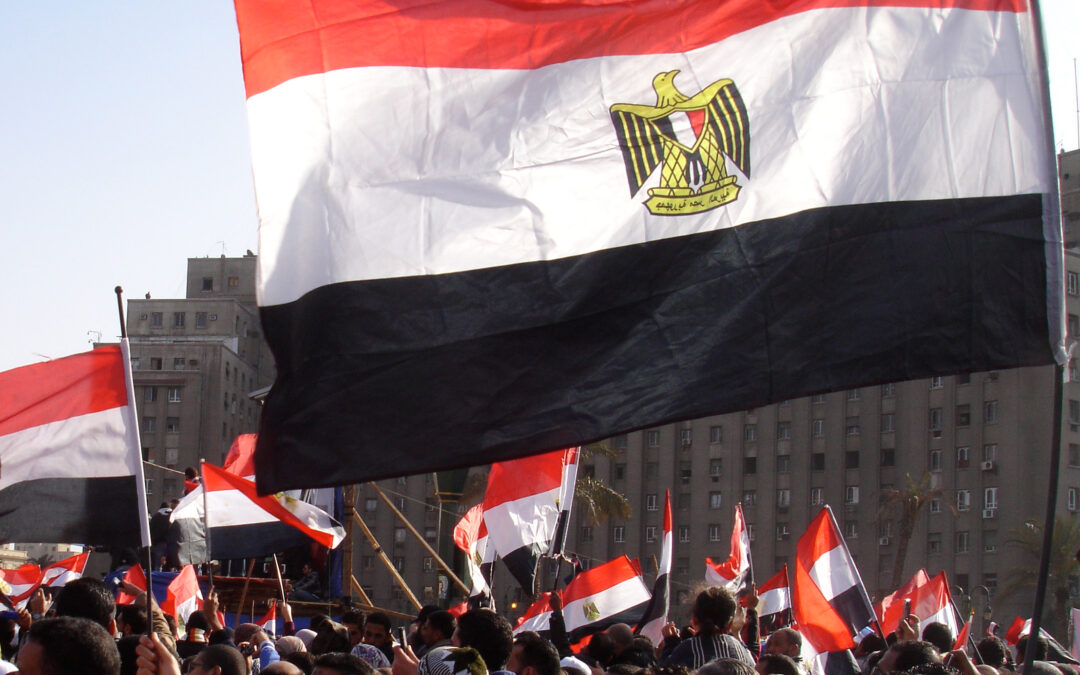
The ICJ today called on Egypt’s newly elected House of Representatives to amend or annul the web of repressive presidential decrees promulgated since the ouster of President Morsi.
“Egypt’s House of Representatives must dismantle the catalogue of repressive presidential decrees that have been used by the authorities to stifle dissent, curtail fundamental rights and freedoms and shield state officials from accountability in cases of human rights violations,” said Said Benarbia, Director of the ICJ’s Middle East and North Africa (MENA) Programme.
Article 156 of the Egyptian Constitution provides that decrees issued by the President while the House of Representatives is not in session must be discussed and approved by the new House of Representatives within 15 days of it convening.
Failure to do so results in the laws being automatically nullified with retroactive effect.
The ICJ and others have detailed how many of these presidential decrees, including the Demonstration Law (No.107 of 2013), the Counter-Terrorism Law (No.94 of 2015), the Terrorist Entity Law (No.8 of 2015), the Law on Military Courts (No.136 of 2014) and laws amending the Criminal Code (No.128 of 2014) and the Prison Law (No.106 of 2015), violate Egypt’s obligations under international law.
Key concerns relate to the right to life, the right to liberty and the right not to be subjected to arbitrary detention, fair trial rights, and the rights to freedom of expression, association and assembly.
These fundamental rights are protected by for instance the International Covenant on Civil and Political Rights, which Egypt ratified in 1982 and which today counts 168 states as parties.
Over the last two years, thousands of individuals have been prosecuted and convicted pursuant to such decrees, including the Demonstration Law, through proceedings that fell short of international fair trial standards.
Further, many of these decrees, in particular the Counter-Terrorism Law and the Demonstration Law, institutionalise the immunity of state officials from legal proceedings against any use of force committed in the course of their duties, including the use of lethal force when it is not strictly necessary to protect lives.
The decrees also fail to provide for any reparations mechanism for victims.
“Egypt’s parliament should, as a matter of urgency, ensure that those who have suffered human rights violations on the basis of these laws obtain effective remedy and reparations, remove all obstacles to justice and accountability, and address the impunity of state officials underpinned by these decrees”, Benarbia added.
Contact:
Alice Goodenough, Legal Adviser of the ICJ Middle East and North Africa Programme, t: +44 7815 570 834; e: alice.goodenough(a)icj.org
Nader Diab, Associate Legal Adviser of the ICJ Middle East and North Africa Programme, t: +41 229 793 804; e: nader.diab(a)icj.org
Egypt-New House of Representatives-News-Press releases-2015-ARA (full text in Arabic, PDF)

Dec 17, 2015 | News
The decision of the High Court of Singapore ordering blogger Roy Ngerng to pay damages to Prime Minister Lee Hsien Loong following a civil defamation suit brought in 2014 constitutes a major blow for freedom of expression in the country, said the ICJ today.
In a judgment released on 17 December 2015, the High Court ordered Roy Ngerng to pay SG$100,000 in general damages (approximately US$70,667) and SG$50,000 (approximately US$35,330) in aggravated damages.
This decision comes approximately six months after a three-day hearing on assessment of damages took place.
“Under international standards, individuals must not be the target of defamation actions over comments made about public figures, particularly where the subject matter is of public interest,” said Sam Zarifi, ICJ’s Regional Director for Asia and the Pacific.
“This decision sends a clear message that the people of Singapore are not in fact free to express their opinions about matters of public interest,” he added.
This suit against Roy Ngerng was brought by Prime Minister Lee who argued that Roy Ngerng, in his blog, suggested that the Prime Minister bore responsibility for criminal misappropriation of the Central Provident Fund (CPF), the social security savings plan of the citizens of Singapore.
In a summary judgment delivered in November 2014, the High Court found Roy Ngerng liable for defaming the Prime Minister. Roy Ngerng was later ordered by the court to pay Prime Minister Lee SG$29,000 (approximately US$22,300) for the legal fees and related expenses incurred pertaining the application for the summary judgment. Roy Ngerng did not appeal the High Court’s decision.
“The government’s ongoing use of defamation proceedings to silence critics is a deplorable practice that undermines the rule of law. It is very concerning to see measures imposed in the region that cast a chilling effect on freedom of expression of activists and human rights defenders,” said Zarifi.
The findings in this decision are inconsistent with international standards on freedom of opinion and expression that establish that pecuniary awards should be conferred only when non-pecuniary remedies, including apology, rectification and clarification are insufficient.
Background:
Roy Ngerng maintains a blog called The Heart Truths to discuss social issues. Many of the posts on his blog advocate for more transparency in the management of the Central Provident Fund.
On 15 May 2014, Ngerng published the allegedly defamatory post on his blog. A few days later, he was asked by the Prime Minister’s lawyers to take down the post, apologize and make a written offer of damages and costs, which Ngerng did within the following five days.
Despite these actions, the Prime Minister proceeded to sue the blogger for defamation. Prime Minister Lee later applied to the High Court to enter interlocutory judgment for damages to be assessed. The court ruled in his favor.
The hearing on the assessment of damages took place from 1-3 July 2015. At the end of the hearing, the High Court directed the parties to file written submissions to address issues that were raised during the three-day hearing.
In June 2015, the ICJ submitted a legal opinion to the High Court in support of certain aspects of the defendant’s position.
Contact:
Emerlynne Gil, ICJ’s Senior International Legal Adviser for Southeast Asia, t: +668 4092 3575 ;
e: emerlynne.gil(a)icj.org
Dec 7, 2015 | News
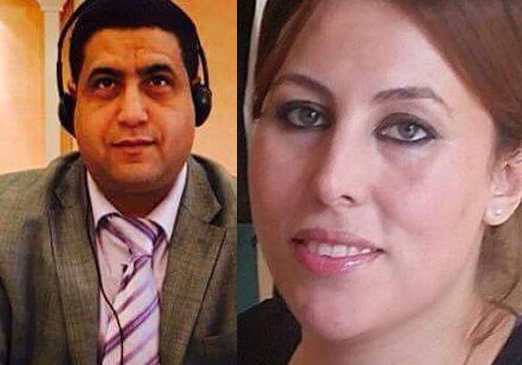
The ICJ today called on the Moroccan authorities to put an immediate end to the disciplinary proceedings initiated against judges Amal Homani and Mohamed Al-Haini.
The two were referred to the High Judicial Council by the Minister of Justice on unfounded allegations of “violating the duty of discretion” and “expressing opinions of a political nature”.
The charges stem from social media comments and media articles written by the judges in which they criticized the government’s Draft Law No. 100.13 on the Conseil Supérieur du Pouvoir Judiciaire and the Draft Law No 106.13 on the Statute for Judges, including provisions that appear designed to maintain executive branch control of the judiciary and the career of judges.
“Instead of subjecting judges who are promoting the rule of law and judicial independence to unjustified and arbitrary disciplinary proceedings, the Moroccan authorities must comply with their obligations under international standards to guarantee, protect and preserve judicial independence,” said Said Benarbia, Director of the ICJ Middle East and North Africa Programme.
“The disciplinary proceedings against judges Amal Homani and Mohamed Al-Haini are clearly without foundation and must be immediately and unconditionally terminated,” he added.
International standards are clear: members of the judiciary are, like other citizens, entitled to freedom of expression, belief, association and assembly.
The exercise of these basic human rights in a manner that preserves the dignity of their office and the impartiality and independence of the judiciary should not constitute a disciplinary offence, the ICJ says.
The social media comments and media articles by judges Amal Homani and Mohamed Al-Haini were clearly within the scope of their rights to freedom of expression, the Geneva-based organization adds.
Under the current legal framework, in particular Law No.1-74-467 of 1974 on the Statute for Judges, the Ministry of Justice has comprehensive and effective control over the entire judiciary, including the High Judicial Council, the career of judges and judicial administration.
Indeed, under the current framework, the Minister of Justice is the Vice-President of the High Judicial Council.
As such the impartiality and fairness of any disciplinary hearings initiated by the Minister of Justice based on statements perceived to criticize the executive branch, must be called into question, the ICJ says.
While provisions of the 2011 Constitution relating to the judiciary constitute an important step towards ending the executive’s control over the judiciary, Moroccan professional associations of judges and civil society organizations have expressed concern that the draft laws perpetuate such control as well as executive interference in judicial matters.
The ICJ has previously called on the Moroccan authorities to revise the two flawed draft laws to ensure their full compliance with international law and standards on judicial independence.
“The Moroccan authorities must end their attacks on judicial independence, including by revising flawed institutional and legal reforms and by ending politicized proceedings against judges,” Benarbia said.
Contact:
Theo Boutruche, Legal Adviser of the ICJ Middle East and North Africa Programme, tel: +961 70 888 961, e-mail: theo.boutruche(a)icj.org
Morocco-Judges Homani-El Haini-News-Press releases-2015-ARA (full press release in PDF, Arabic)
Nov 17, 2015 | News
Desde el año 2004, la CIJ ha señalado casos en los que el Estado de Guatemala dirige su poder punitivo en contra de defensores y defensoras de derechos humanos por su asociacion a actos pacíficos en defensa de los recursos naturales de distintas comunidades en el país.
Ante esta práctica, que socava el derecho a defender los derechos humanos, la CIJ expresa:
1. La criminalización de la protesta social se ha convertido en un fenómeno recurrente en Guatemala, en la que el Derecho Penal es utilizado como instrumento de represión y deslegitimación de la labor que las y los defensores de derechos humanos llevan a cabo en el país.
2. Especial preocupación causan las detenciones arbitrarias de las que son objeto defensores y defensoras de derechos humanos, que trabajan en áreas de alta conflictividad social y se vinculan a la protección de los recursos naturales, territorios o derechos de los Pueblos Indígenas. En algunos casos, el Estado de Guatemala ha optado por la suspensión de las garantías constitucionales en esas regiones, decretando estados de prevención o de sitio.
3. Con el objeto de conocer el impacto de esta práctica, la eurodiputada Marina Albiol, visitó Guatemala del 2 al 5 de noviembre del presente año. En dicha ocasión, la CIJ acompañó a su delegación en una visita in situ a los departamentos de Huehuetenango y San Marcos, para entrevistarse con defensores y defensoras de Derechos Humanos, así como para sostener reuniones con funcionarios de gobierno y movimientos sociales.
4. La delegación constató que frecuentemente las y los líderes comunitarios y defensores de derechos humanos, son sometidos a procesos penales injustos, práctica que consituye una herramienta para el acoso a dichas personas.
5. La delegación pudo constatar el caso de las detenciones arbitrarias de Ermitaño Bernardo López , Rigoberto Juárez y Domingo Baltazar, Francisco Pedro (Chico Palas), Adalberto Villatoro (Don Tello), Arturo Pablo Juan,Saúl Méndez y Rogelio Velásquez, todos ellos del Departamento de Huehuetenango; en los dos últimos casos mencionados, se ha dictado sentencia absolutoria, pero ambos continúan detenidos. Todos han padecido su privación de libertad , en la cárcel de Huehuetenango o en la prisión de la zona 18 de Guatemala, bajo condiciones extremadamente difíciles. Los anteriores no son los únicos, ya que junto a ellos se encuentran detenidas arbitrariamente otras defensoras y defensores de derechos humanos del departamento de Huehuetenango y de otros departamentos.
6. Asímismo preocupa la detención de Mauro Vay, dirigente y defensor de derechos humanos de la organización CODECA, quien se encuentra bajo medida sustitutiva, pero con restricciones que han afectado su derecho al trabajo y libertad de movimiento, durante todo el año 2015 en el departamento de Suchitepéquez.
7. La Comisión Interamericana de Derechos Humanos ha expresado que la protesta social pacífica, es una herramienta fundamental para la labor de defensa de los derechos humanos, esencial para la crítica política y social de los gobiernos. En tal sentido, los Estados están obligados a asegurar que ningún defensor o defensora de los derechos humanos sea impedido de reunirse y manifestarse públicamente en forma pacífica.
Ante estos hechos, Wilder Tayler, Secretario General de la CIJ expresó: “Urgimos a las autoridades del Estado de Guatemala a detener la criminalización de la protesta social y las detenciones arbitrarias que este fenómeno conlleva. Amendrentar y obstaculizar la labor de defensoras y defensores de derechos humanos constituye de por sí, una violación del derecho de las garantías individuales”.