Nov 11, 2015 | News
While welcoming the Maldives government’s revocation of the emergency yesterday, the arbitrary manner in which the emergency was first imposed and then suddenly revoked within the span of a week reflects a deeper erosion of the rule of law in the country, the ICJ said today.
On 10 November, a week after declaring a 30-day state of emergency, the Maldives lifted the emergency reportedly because authorities had arrested several people in connection with an alleged plot to “use dangerous weapons and explosives”, thereby neutralizing the purported national security threat cited as the grounds for the emergency.
Maldivian authorities have not provided any information as to who or how many individuals were arrested or the nature of the charges.
“The imposition of a state of emergency is not a political tool to be used willy-nilly as a matter of convenience to suspend human rights protections and suppress political opposition,” said Nikhil Narayan, ICJ’s South Asia Senior Legal Adviser.
“A state of emergency that suspends constitutional rights is not to be declared lightly,” he added. “It has serious implications for human rights and the rule of law in the country, and must only be invoked in the most extreme situations and in accordance with international law.”
International law expressly permits derogations of certain human rights only in times of public emergency which threatens ‘the life of the nation’.
“Declaring a 30-day emergency and then suddenly lifting it a week later only reinforces the serious concerns previously raised as to the legitimacy of the emergency in the first place, and speaks to the larger rule of law crisis in the country,” Narayan said.
The emergency decree issued by the Maldives government last week suspended several constitutional rights, including the right to freedom of peaceful assembly, and reduced the constitutionally mandated period for the vice president to respond to impeachment charges from 14 to 7 days.
The opposition Maldivian Democratic Party (MDP) had planned a public anti-government demonstration for 6 November, two days prior to which the emergency was declared.
Meanwhile, the vice president was removed from his post the day after the emergency decree, 5 November, in a swift and seemingly arbitrary impeachment hearing.
“The circumstances surrounding events in the Maldives this past week clearly suggest that the government was using the emergency as a ploy to prevent the planned opposition rally and to eliminate the vice president as a political threat,” said Narayan.
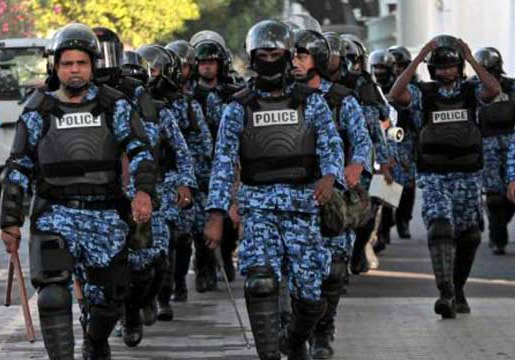
The emergency also granted sweeping powers of search, arrest and detention without warrant to the police, who reportedly raided several buildings and arrested an unknown number of individuals under its emergency powers over the past week.
“The Maldives government cannot flout international law by invoking emergency powers as a means to deny the due process rights of the vice president and others arrested or detained for alleged crimes,” added Narayan. “The government must ensure that the individuals arrested during the emergency are afforded their full fair trial and due process rights in accordance with international law.”
Additional Information:
The ICJ previously raised concerns that the alleged grounds for the emergency did not appear to establish a threat to the life of the as required by the high threshold set by international law, and could not in any event justify the complete suspension of constitutional rights.
In August 2015, following a joint fact-finding mission to the Maldives, the ICJ and South Asians for Human Rights (SAHR) documented the breakdown of the rule of law and human rights in the Maldives in a 35-page report, Justice Adrift: Rule of Law and the Political Crisis in the Maldives.
Contact:
Nikhil Narayan, ICJ Senior Legal Adviser for South Asia, t: +977 9813187821 ; e: nikhil.narayan(a)icj.org
Nov 4, 2015 | News
The government of Maldives must immediately revoke its suspension of human rights protections under the state of emergency declared today and restore the rule of law to the country, said the ICJ.
The Maldivian government suspended a range of constitutional protections under a 30-day state of emergency declared on 4 November, citing a threat to national security based on the allegation that “some groups are planning to use … dangerous weapons and explosives,” according to a translated version of the emergency decree obtained by the ICJ.
“The complete suspension of constitutional protections for human rights such as the right to liberty and right to free assembly goes far beyond anything that could be justified by the alleged grounds cited by the government,” said Nikhil Narayan, ICJ’s South Asia Senior Legal Adviser.
“International law strictly regulates attempts by governments to suspend or otherwise derogate from human rights on the grounds of emergency,” he added.
Article 4 of the International Covenant on Civil and Political Rights (ICCPR), to which the Maldives is a State Party, expressly permits derogations only for certain human rights, and then only ‘in time of public emergency which threatens the life of the nation’.
“Maldivian authorities have not come close to explaining how the current situation constitutes a threat to the ‘life of the nation’, the high threshold set by international law for the derogation of rights in times of emergency,” Narayan said.
According to the emergency decree, the constitutionally protected rights that have been suspended during the state of emergency are, among others:
- Article 19: “A citizen is free to engage in any conduct or activity that is not expressly prohibited by Islamic Shari’ah or by law. No control or restraint may be exercised against any person unless it is expressly authorised by law.”
- Article 24: “Everyone has the right to respect for his private and family life, his home and his private communications. Every person must respect these rights with respect to others.”
- Article 31: “Every person employed in the Maldives and all other workers have the freedom to stop work and to strike in order to protest.”
- Article 32: “Everyone has the right to freedom of peaceful assembly without prior permission of the state.”
- Article 41(a): “Every citizen has the freedom to enter, remain in and leave the Maldives, and to travel within the Maldives.”
- Article 45: “Everyone has the right not to be arbitrarily detained, arrested or imprisoned except as provided by law enacted by the People’s Majlis in accordance with Article 16 of this Constitution.”
- Article 47(a) and (b): “(a) No person shall be subject to search or seizure unless there is reasonable cause. (b) Residential property shall be inviolable and shall not be entered without the consent of the resident, except to prevent immediate and serious harm to life or property, or under the express authorisation of an order of the Court.”
“The basic prohibition against arbitrary detention and imprisonment can never be derogated from,” Narayan said.
The declaration of the state of emergency also seems to target the country’s vice president, whom the president appears to regard as a political threat. The vice president is facing impeachment proceedings for his alleged role in the boat explosion which the government claims was caused by a bomb as part of a deliberate assassination attempt.
The emergency decree reduces the period provided under Article 100 of the Maldives Constitution for the vice president to respond to the impeachment charges from 14 days to 7 days.
“There seems to be a clear political motive in arbitrarily reducing the vice president’s procedural rights in the impeachment process,” added Narayan.
Additional information
The alleged threat cited by the Maldivian government refers to the announcement that Maldivian security forces had discovered weapons and explosives in two areas, and that some additional weapons were missing.
These allegations followed the purported discovery of an explosive device near the president’s palace on Monday that, following closely on last month’s explosion on a boat carrying the president and his wife, the government claims is part of an alleged assassination attempt on the president.
The government rejected the findings of an FBI investigation into the earlier boat explosion which ruled out the possibility that it was caused by a bomb.
In August 2015, following a joint fact-finding mission to the Maldives, the ICJ and South Asians for Human Rights (SAHR) documented the breakdown of the rule of law and human rights in the Maldives in a 35-page report, Justice Adrift: Rule of Law and the Political Crisis in the Maldives.
Contact:
Nikhil Narayan, ICJ Senior Legal Adviser for South Asia, t: +977 9813187821 ; e: nikhil.narayan(a)icj.org
Oct 6, 2015 | Multimedia items, News, Video clips
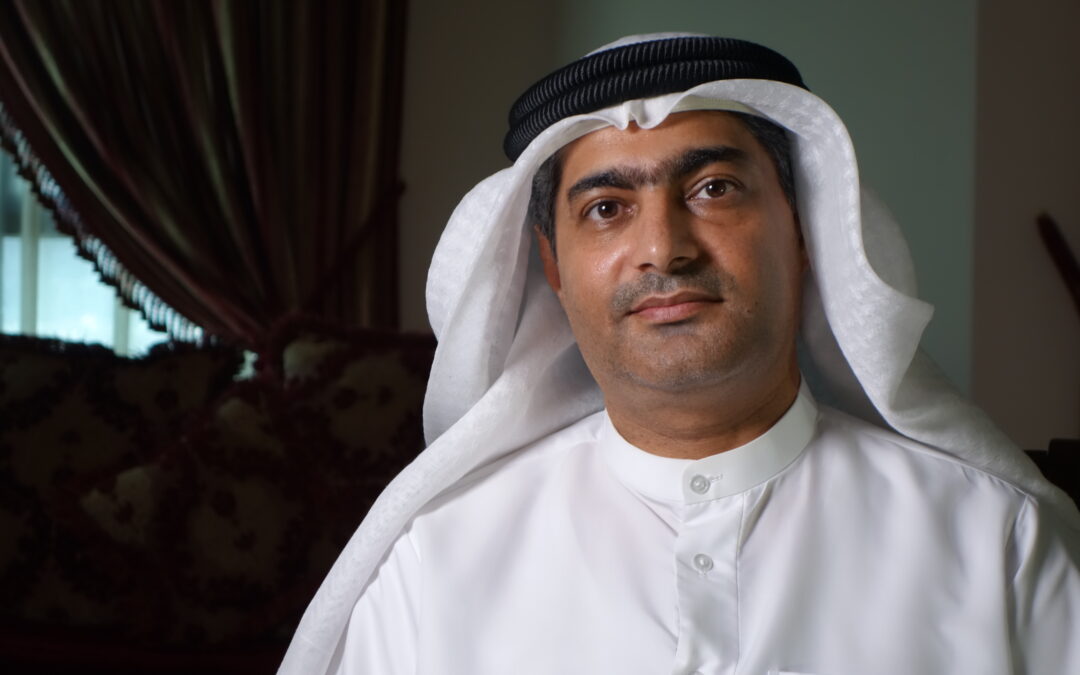
Selected by a jury of 10 Global Human Rights organizations, including the ICJ, Ahmed Mansoor could not come to Geneva to collect the 2015 Award, as he has been banned from travelling. Robert Sann Aung (Myanmar) and Asmaou Diallo (Guinea) receive Martin Ennals Prizes.
Emirati blogger and prominent human rights defender Ahmed Mansoor is one of the very few independent voices to whom international NGOs can turn for a credible independent assessment of human rights developments in the United Arab Emirates.
He regularly raises concerns on arbitrary detention, torture, international standards for fair trials, non-independence of the judiciary, and domestic laws that violate international law.
Since 2006, he has focussed on initiatives concerning freedom of expression, civil and political rights.
He successfully campaigned in 2006-2007 to support two people jailed for critical social comments, who were released and the charges dropped.
Shortly after, the Prime Minister of UAE issued an order not to jail journalists in relation to their work.
He has faced repeated intimidation and harassment, including imprisonment in 2011 after being convicted of “insulting officials” and sentenced to three years’ in prison, although he was released after eight months.
Since being jailed in 2011, he has been denied a passport and banned from travelling.
The Martin Ennals Jury has publically urged the government of the UAE to lift this travel ban and allow him to travel.
“Ahmed Mansoor continues to pay the price for speaking out on human rights issues in his country, we urge his government to lift the travel ban,” said Martin Ennals Foundation Chair Micheline Calmy-Rey.
“There is little attention for the massive crackdown on free expression and assembly in the UAE, and Ahmed Mansoor is one of the few independent voices who refuses to be silenced,” said Olivier van Bogaert, ICJ Director of Media and Communications, and ICJ Representative on the MEA Jury.
“Without him, we would probably not know that behind the UAE’s shopping malls, high-rise towers and tourism hub, there is a nasty underside, there are dark prisons where inmates are hidden for years without trial, and tortured,” he added.
Honored with a Martin Ennals Prize, Robert Sann Aung (Myanmar) has courageously fought against human rights abuses since 1974.
He has been repeatedly imprisoned in harsh conditions, physically attacked as well as regularly threatened. He was disbarred from 1993 – 2012.
Currently, he represents students detained for peacefully protests.
Asmaou Diallo (Guinea) founded l’Association des Parents et Amis des Victimes du 28 septembre 2009 (APIVA), after the Guinean military attacked peaceful demonstrators on that day.
APIVA assists those affected, and supports them to testify in court proceedings.
Background
The “Nobel Prize of Human Rights”, the Martin Ennals Award for Human Rights Defenders (MEA) is a unique collaboration among ten of the world’s leading human rights organizations to give protection to human rights defenders worldwide.
Strongly supported by the City of Geneva, the award is given to Human Rights Defenders who have shown deep commitment and face great personal risk. Its aim is to provide protection through international recognition.
The Jury is composed of the following NGOs: ICJ, Amnesty International, Human Rights Watch, Human Rights First, Int’l Federation for Human Rights, World Organisation Against Torture, Front Line Defenders, EWDE Germany, International Service for Human Rights, and HURIDOCS.
Contact:
Michael Khambatta, Director Martin Ennals Foundation, t: +41 79 474 8208, e: khambatta(a)martinennalsaward.org
Olivier van Bogaert, ICJ Director of Media and Communications, and ICJ Representative on the MEA Jury, t: +41 22 979 38 08, e: olivier.vanbogaert(a)icj.org
Watch the Martin Ennals Award Ceremony 2015:
Watch the Ahmed Mansoor film:
Oct 2, 2015 | News
The ICJ is concerned at the recent disbarment of lawyer Andriy Vishnevsky, Director of the Coordination Centre of Legal Aid of the Ministry of Justice of Ukraine.
The ICJ considers that his disbarment, which resulted from his public comments critical of the Ukrainian bar association, interferes with his capacity to freely discharge his professional functions as a lawyer.
Furthermore, it constitutes a violation of his right to freedom of expression, and risks unduly constraining lawyers in legitimate participation in public debate.
The ICJ calls on the Ukrainian bar association to reinstate Andriy Vishnevsky to the bar so that he can resume his status as an accredited lawyer.
Andriy Vishnevky was disbarred on 10 September, following a hearing before the Qualification-Disciplinary Commission of Kiev Region Advokatura. Disciplinary proceedings were initiated based on two separate complaints: one submitted by the Ukrainian national bar association on 24 June 2015; and the other by Ukrainian Parliament Member Rybalka S.V. on 22 June 2015.
The complainants alleged that Andriy Vishnevsky “humiliated the bar, every lawyer, destroyed respect of the society to the bar in the State, in contradiction with the European standards”.
They cited his comments made at a conference on 15 June 2015 at the premises of the Supreme Court of Ukraine, where he presented his report “The bar and free legal aid: approaches to the reform”.
He made a number of comments critical of the legal profession.
These included his assessment that the bar association was “in a dire state”; a reference to “low ethical standards and professional level of the bar”, including that lawyers are “the main corruption element”; and a claim that “the phenomenon of police lawyers is not counteracted by the national bar association and not commented upon in any way”.
The decision quoted him as saying that “if the bar is not reformed as soon as possible in accordance with the principles and standards of the Council of Europe, it can become a hindrance to the implementation of the judicial reform”.
The Disciplinary Chamber came to the decision that the statements of Andriy Vishnevsky were contrary to the law and the Code of Lawyers’ Ethics and that he should therefore be disbarred for the statements made during the conference.
The ICJ considers the Chamber’s decision to contravene fundamental and universal principles on the independence of the legal profession.
If applied generally, this interpretation of the Code of Ethics would effectively prevent lawyers from critically debating the governance of the legal profession.
The UN Basic Principles on the Role of Lawyers provide that while lawyers should “maintain the honour and dignity of their profession as essential agents of justice” they, like other persons, “shall have the right to take part in public discussion of matters concerning the law, the administration of justice and the promotion and protection of human rights.”
The right to freedom of expression is protected in international human rights law, including the International Covenant on Civil and Political rights and the European Convention on Human Rights, treaties to which Ukraine is a party.
Under the European Convention on Human Rights, where matters of public interest are discussed there is a particularly narrow scope for restriction of freedom of expression.
Disciplinary action against a lawyer, solely on the grounds of comments critical of the bar association, made at a conference convened to debate aspects of the justice system, amounts to an illegitimate interference with freedom of expression.
The ICJ is concerned that such punitive measures are likely to have a chilling effect on freedom of expression of lawyers in Ukraine and in particular on their ability to engage in debate on reform of the justice system.
It is important, for any justice system, that such debate take place with the active participation of the legal profession, as lawyers are amongst those best placed to identify and criticize the deficiencies of the justice system and make informed proposals for reform.
The ICJ calls on the Ukrainian bar association to reinstate Andriy Vishnevsky as a lawyer.
Furthermore, the ICJ recommends that the interpretation of the Code of Ethics should be reviewed and guidance should be issued to ensure that the Code of Ethics is not applied to stifle public debate among lawyers on ways to reform the justice system in Ukraine.
Contact:
Róisín Pillay, Director, Europe Programme, roisin.pillay(a)icj.org
Temur Shakirov, Legal Adviser, Europe Programme, temur.shakirov(a)icj.org
The full statement with background information can be downloaded here:
Ukraine-Lawyer Vishnevsky statement-News-web story-2015-ENG (in PDF)
Ukraine-Lawyer Vishnevsky statement-News-web story-2015-UKR (Ukrainian version, in PDF)
Sep 14, 2015 | News
The ICJ expressed disappointment over the decision made today by the Malaysian Federal Court to refer human rights defender Lena Hendry for trial, after dismissing the constitutional challenge on section 6(1)(b) of the Film Censorship Act 2002.
The ICJ said this provision is being applied in a manner inconsistent with the right to freedom of expression, which includes the right to seek and impart information of all kinds.
“The decision by the Federal Court is incompatible with the commitment to the rule of law and respect for human rights which was expressed by Malaysia during its last Universal Periodic Review at the UN Human Rights Council in 2013,” said Sam Zarifi, ICJ’s Regional Director for Asia and the Pacific.
“Lena Hendry is clearly a human rights defender and Malaysia has the special duty not only to respect her right to freedom of expression, but to protect her exercise of this right through the exposure of human rights violations in Sri Lanka,” he added.
The constitutional challenge was brought by the lawyers of Lena Hendry who was charged under section 6(1)(b) of the Film Censorship Act 2002 for screening the film “No Fire Zone: the Killing Fields of Sri Lanka” on 3 July 2013.
Authorities allege that she violated section 6(1)(b) of the law for showing a film that had not been approved by the Board of Censors.
The lawyers of Lena Hendry are now preparing for the trial before the Magistrate’s Court.
The ICJ calls on the Government of Malaysia to drop all charges against Lena Hendry and to undertake steps to make its laws consistent with the country’s obligations and commitments under international law.
Background:
Section 6(1)(b) of the Film Censorship Act 2002 states that “No person shall circulate, exhibit, distribute, display, manufacture, produce, sell, or hire any film or film publicity material, which has not been approved by the Board [of Censors].”
On 14 September 2015, the Federal Court of Malaysia dismissed the constitutional challenge on Section 6(1)(b) of the Film Censorship Act 2002. The question posed to the Federal Court was: “Whether section 6(1)(b) of the Film Censorship Act 2002 read together with section 6(2)(a) violates Article 10 read together with Article 8(1) of the Federal Constitution and therefore should be struck down and void for unconstitutionality.”
The Federal Court answered the question in the negative and ordered that the case be sent back to the High Court. The High Court, in turn, will transfer the matter back to the Magistrate’s court for trial. The Magistrate’s Court is where the matter initially originated.
If convicted, under section 6(2)(a) Lena Hendry could be fined up to RM30,000 (approximately US$6,900) and/or sentenced to up to three years imprisonment.
The right to freedom of expression is guaranteed in the Federal Constitution of Malaysia under Section 10(1)(a), which states that “every citizen has the right to freedom of speech and expression.”
The Universal Declaration of Human Rights and the UN Declaration on Human Rights Defenders also affirm the duty of all states to respect and facilitate freedom of expression, particularly as regards information or opinions about human rights.
Contact:
Emerlynne Gil, Senior International Legal Adviser of ICJ for Southeast Asia, t: +66 840923575 ; e: emerlynne.gil(a)icj.org