Jun 30, 2015 | News
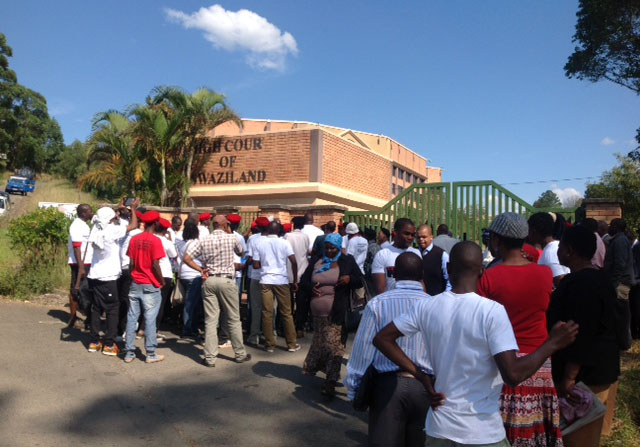
The ICJ welcomes the decision of the Supreme Court of Swaziland to uphold the appeal of imprisoned human rights defenders Thulani Maseko and Bheki Makhubu and ordering their immediate release.
“The decision marks a victory for the rule of law in Swaziland,” said ICJ Secretary-General Wilder Tayler. “We hope that this is but the first of many steps to come in restoring the integrity of the courts and reinforcing the respect for the rule of law that has undergone so much erosion in recent years.”
The ICJ considers that while the release of the two men is a necessary step for justice for the two men, alone it is not enough.
The government of Swaziland should ensure adequate reparation for their wrongful imprisonment.
More broadly, it must engage in legal and structural reforms necessary to ensure the fair and effective administration of justice, the independence of the judiciary and respect for human rights in the country.
Thulani Maseko and Bheki Makhubu were arrested on 17 March 2014 under contempt of court charges for having written articles criticizing the manner in which the then Chief Justice (CJ), Michael Ramodibedi, had handled the case of another defendant, Bhantshana Gwebu.
Mr. Gwebu had been arraigned before the CJ without legal representation, charge sheet or being informed of his rights to apply for bail.
The trial of Thulani Maseko and Bheki Makhubu was riddled with violations of basic due and fair trial principles, as affirmed by the UN Working Group on Arbitrary Detention (WGAD), which ruled on a complaint in Thulani Maseko’s case.
Background
The trial of Thulani Maseko and Bheki Makhubu resulted in their conviction and a two-year prison sentence It was improperly conducted before a presiding judge, Mpendulo Simelane, who was a potential witness and had a direct interest in the case.
They had been in custody since their arrest, save for a three-day release in June 2014, and were due for final release on the 17 July 2015.
The ICJ has previously issued a number of statements after conviction by the High Court, underscoring that the prosecution and trial Court’s judgment had constituted a breach of Swaziland’s obligations to respect the rights to freedom of expression and fair trial.
The UN WGAD opinion issued on 22 April 2015 held that the deprivation of liberty of the accused was arbitrary and in contravention of the Universal Declaration of Human Rights and Swaziland’s obligations under the International Covenant on Civil and Political Rights (ICCPR).
The WGAD also emphasized that Swaziland should release the accused and facilitate the enforceable right to compensation in accordance with article 9 of the ICCPR.
In the appeal hearing yesterday, the Crown conceded most of the legal arguments by defence counsel and in particular that Judge Simelane ought to have recused himself from presiding over the case.
The Supreme Court’s written judgment is expected to be issued at the end of the session of its sitting.
Read also:
Swaziland: ICJ condemns the harsh prison term imposed on Thulani Maseko and Bheki Makhubu
Swaziland: ICJ condemns the conviction of celebrated human rights lawyer and prominent journalist on charges of contempt of court
Swaziland: ICJ concerned at detention of human rights lawyer and journalist
American Bar Association’s statement
Contact:
Arnold Tsunga, Director, ICJ Africa Regional Programme, t +27 716 405 926 or +41 76 239 90 32 e: arnold.tsunga(a)icj.org
Matt Pollard, Senior Legal Adviser, ICJ’s Centre for the Independence of Judges and Lawyers, t: +41 22 979 38 12, e: matt.pollard(a)icj.org
Jun 21, 2015 | News
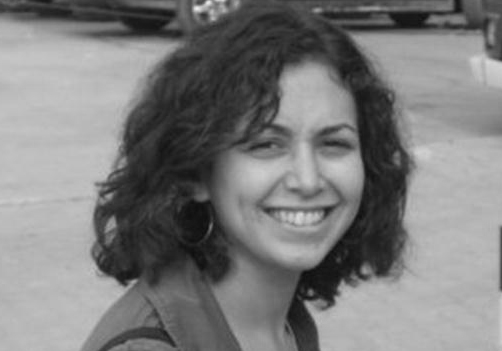
Today, one year on from the arrest and detention of human rights lawyer Yara Sallam and 22 peaceful demonstrators, the ICJ calls for their immediate and unconditional release.
On 21 June 2014, Yara Sallam, together with 22 others, was arrested and detained in the context of a peaceful demonstration in Heliopolis, Cairo.
“The Egyptian authorities must end their campaign to silence human rights defenders and all those suspected of opposing the military and the government through politically motivated prosecutions and trials,” said Said Benarbia, Director of the ICJ Middle East and North Africa Programme.
To this end, they must immediately and unconditionally release Yara Sallam and the 22 other detainees,” he added.
The demonstrators were calling for the revocation of Law No. 107 of 2013, on public meetings, processions and protests, and the release of all those detained under it.
They were forcibly dispersed by security forces and men in civilian clothes.
The ICJ has previously noted that this law is contrary to Egypt’s obligations under international law.
It imposes overly restrictive limitations on the exercise of the right to freedom of assembly and it grants sweeping powers to security forces to disperse non-violent protests, including authorizing the use of lethal force when it is not strictly necessary to protect lives, the Geneva-based organization says.
On 26 October 2014, the 23 accused were convicted by the Heliopolis Misdemeanour court and sentenced to three years in prison and three years of police monitoring on charges of, among other things, “participating in a procession of more than five people that put public safety in danger with the aim of committing the crimes of assault on people and property and influencing public authorities in their duties by using force and violence.”
Two months later, the Court of Appeal upheld the convictions, while reducing the sentence to two years imprisonment and two years of police monitoring. A challenge before the Court of Cassation is pending.
The trial of the 23 defendants violated their rights to a fair and public hearing under international law, including the International Covenant on Civil and Political Rights, a key human rights treaty ratified by Egypt in 1982.
Their lawyers were prevented from cross-examining witnesses. Members of the public, including family members, were prohibited from entering the courtroom, without any valid reason.
Further, based on its review of the case file and court judgments, the ICJ is also concerned that both courts convicted the accused in the absence of any substantial or credible evidence of the guilt of any of the 23 defendants, and without seeking to establish the personal criminal responsibility of each individual accused.
Contact:
Alice Goodenough, Legal Adviser of the ICJ Middle East and North Africa Programme, t: +44 7815 570 834 ; e: alice.goodenough(a)icj.org
Nader Diab, Associate Legal Adviser of the ICJ Middle East and North Africa Programme, t: +41 78 89 41 877 ; e: nader.diab(a)icj.org
Egypt-Release Yara-News-Press release-2015-Arabic (full text in PDF, Arabic)
Jun 10, 2015 | News
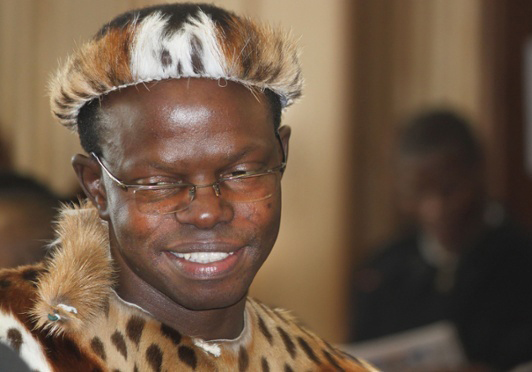
The ICJ today welcomed the opinion by The United Nations Working Group on Arbitrary Detention (UNWGAD) condemning as arbitrary the detention of prominent human rights lawyer Thulani Maseko and calling on the Government of Swaziland to ensure his immediate release.

Jun 1, 2015 | News
The Cambodian government should withdraw a proposed law that would severely limit the rights of non governmental organizations (NGOs) in Cambodia, the ICJ and 10 other international human rights groups said in a letter to 44 foreign governments and the European Union.
The groups urged donors and others to press the government not to revive a 2011 draft law that was shelved under domestic and international pressure because it threatened freedom of association and expression.
Cambodia’s Council of Ministers discussed the draft NGO law on May 29 and is scheduled to discuss it again on June 5 before sending the measure to the National Assembly, dominated by Prime Minister Hun Sen’s Cambodian People’s Party.
A new law is unnecessary because existing legislation already addresses legitimate government concerns about the operations of NGOs, the international organizations said.
The letter was signed by the ICJ, Article 19, Asian Forum for Human Rights and Development (Forum Asia), Civil Rights Defenders, Front Line Defenders, Global Witness, Human Rights Watch, International Federation for Human Rights (FIDH), Lawyers Rights Watch Canada, Protection International, and Southeast Asian Press Alliance.
Cambodia-Australia & Cambodia lango letter-Advocacy-Open letters-2015-ENG (full text in PDF)

May 24, 2015 | News
The ICJ signed a joint statement together with 35 other national and international NGOs calling for the immediate release of Vietnamese blogger Tran Huynh Duy Thuc.
Tran Huynh Duy Thuc was arrested on 24 May 2009 for “promoting anti-government propaganda” after posting a blog calling for political reform and respect for human rights.
On 20 January 2010, following a one day trial with three co-defendants, he was sentenced to 16 years imprisonment followed by five years house arrest.
On 29 August 2012, the United Nations Working Group on Arbitrary Detention found that Tran Huynh Duy Thuc and his three co-defendants’ detention violated the right to freedom of opinion and expression guaranteed by Article 19 of the International Covenant on Civil and Political Rights (ICCPR), to which Vietnam is a State Party, as well as the right to liberty and security of person (Article 9) and the right to freedom of association (Article 21).
The Working Group concluded by requesting Vietnam to release Tran Huynh Duy Thuc and provide him with compensation in accordance with Article 9(5) of the ICCPR.
Vietnam-Statement on blogger Duy Thuc-News-webstory-2015-ENG (full text of statement in PDF)