May 21, 2015 | News
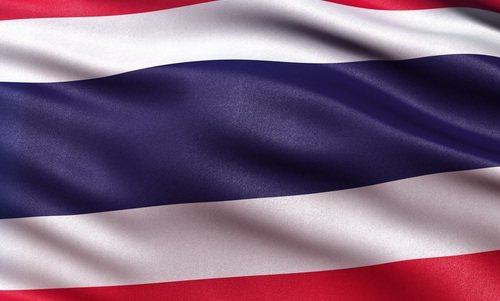
On the one-year anniversary of the military coup of 22 May 2014, the ICJ urges Thailand to restore democracy and the rule of law, revoke the repressive laws passed since the coup, and ensure that any revised Constitution meets international human rights and rule of law standards.
May 15, 2015 | News
Concluding a five-day mission today, an International Fact-Finding team of the ICJ observed that there are serious structural deficiencies in Swaziland’s justice system that need to be addressed systematically and in a structured way to ensure the country meet core rule of law principles.
The mission was conducted in collaboration with the Africa Judges and Jurists Forum, Judges for Judges (the Netherlands) and the Commonwealth Magistrates’ and Judges’ Association, with the aim to assess the state of independence of the judiciary and administration of justice in the country.
“Current developments are merely the symptoms of a systemic crisis,” said Mission leader retired Judge Chinhengo of Zimbabwe.
“There is a need for officials from all branches of government to adhere to the rule of law. The effect of denied justice and in Swaziland has made many victims. Its effect on the community has been devastating, as it has served to undermine respect for human rights and trust in the judiciary to act as a check on the other branches of the State,” he added.
The decision to convene the International Fact-Finding Mission coincided with highly troubling recent events, including the arrest of Judges Simelane and Annandale, Registrar Nhlabatsi and former Minister of Justice Shongwe, and the continuing stand-off between suspended Chief Justice Ramodibedi and governmental authorities.
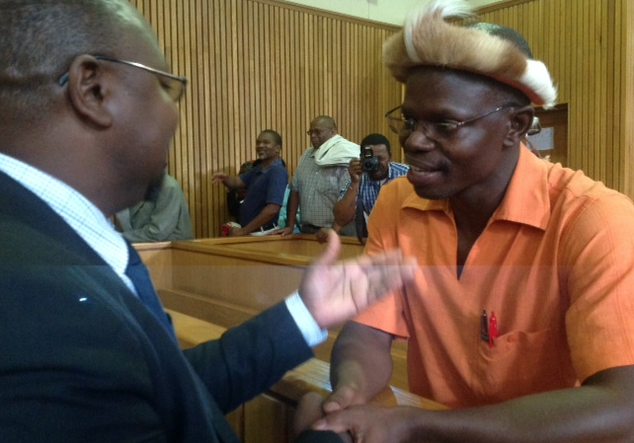
The Mission was also deeply concerned by the emblematic cases of the unfair dismissal of Judge Thomas Masuku in 2011 as well as the unfair trial and subsequent arbitrary detention of journalist Bheki Makhubu and lawyer Thulani Maseko (photo, on the right) in 2014.
The mission noted these developments were the culmination of a longstanding and deep-rooted systemic challenge that has to be adressed.
During its visit, from 11 to 15 May, the Mission met with key stakeholders in the administration of justice in Swaziland, including the Prime Minister and the acting Attorney General, the acting Chief Justice, the suspended Chief Justice and other members of the judiciary, and representatives of the Law Society and leading civil society actors.
The International Fact-Finding Mission will release a report with its observations and recommendations to the Swaziland authorities and the international community, providing concrete advice on strengthening the rule of law in the Kingdom.
Contact:
Arnold Tsunga, Director, ICJ Africa Regional Programme, t: +27 11 024 8268 or +27 73 131 8411: e: arnold.tsunga(a)icj.org,
May 13, 2015 | News
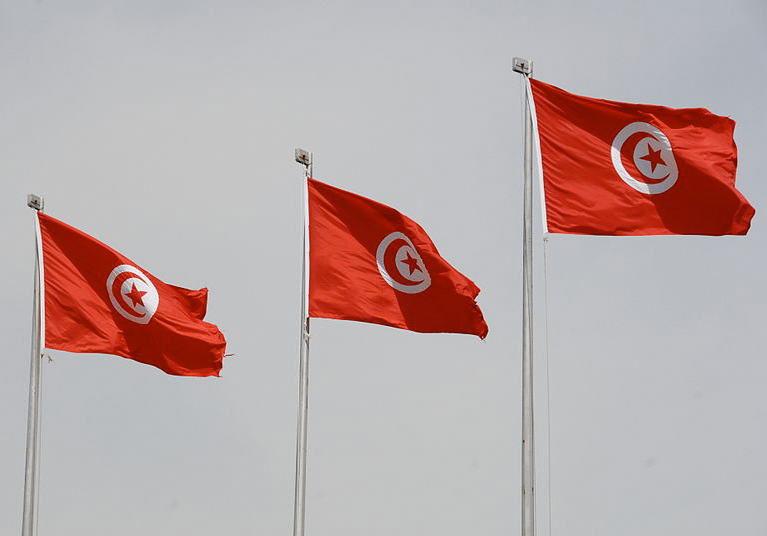
Provisions on State secrecy and “denigrating” security forces undermine free speech, the ICJ and 12 other rights organizations say.
The ICJ today joined 12 international organizations calling on the tunisian authorities to amend a controversial new Security Bill inconsistent with international standards, especially provisions that could criminalize the conduct of journalists, whistleblowers, human rights defenders, and others who criticize the police and that would allow security forces to use deadly force when it is not strictly necessary to protect lives.
Download the full statement:
Tunisia-Security Bill joint statement -News-Press releases-2015-ENG (PDF, English)
Tunisia-Security Bill joint statement -News-Press releases-2015-ARA (PDF, Arabic)
Apr 14, 2015 | News
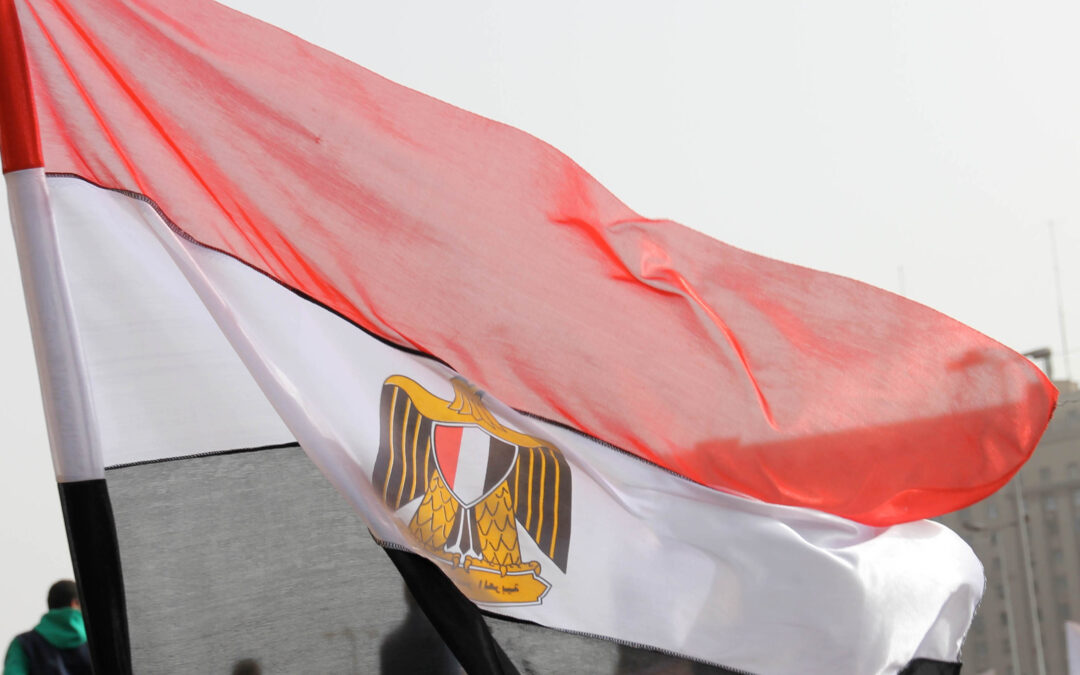
The ICJ is deeply concerned over the decision of the High Judicial Council and the President of the Cairo Court of Appeal to investigate two judges with a view to referring them to the disciplinary Council.
Media reports have indicated that Assem Abdel Jabar, deputy president of the Cassation Court, and Hicham Raouf, a judge in Cairo’s Appeal Court, are being investigated over their individual participation, together with other leading lawyers and legal experts, in a workshop organized by an Egyptian organization, United Group, to discuss and propose new legislation on the prevention of torture.
According to information available to the ICJ, the two judges have so far not been formally notified of any charges against them and have received no information about the allegations on which they are based.
The actions against these judges continue a pattern of intimidation and attempted silencing of judges who are seen by authorities as not aligning themselves with government objectives.
The apparent investigation is only the latest in a string of cases where judges have been subject to arbitrary disciplinary proceedings for legitimately exercising their rights to freedom of expression and assembly.
On 14 March 2015, the Disciplinary Council forced 31 judges into retirement for signing a statement, on 24 July 2013, which criticized the “attack on the constitutional legitimacy and the ouster of the legitimate president that was elected”.
The disciplinary proceedings against these judges were marred with violations of due process rights.
The judges were not adequately informed of the date and location of the hearings, defence witnesses were not called and requests by the judges that the hearings be public were disregarded.
On 4 April 2015, a disciplinary hearing took place against Zakaria Abdelaziz, former president of Egypt’s Judges Club and one of the leading advocates for judicial independence in Egypt.
The charges alleged “involvement in politics” and “breaking into the State Security Building during a demonstration on 5 March 2011”.
According to information available to the ICJ, the case files were not made available to Zakaria Abdeaziz until the first hearing despite repeated requests to obtain them.
Under international human rights law and standards, judges are guaranteed the right to freedom of belief, association, assembly and expression, including by commenting on matters of public concern and matters pertaining to the rule of law and human rights situation in a country.
“Instead of subjecting judges to arbitrary proceedings for lawfully exercising their rights, the Egyptian authorities should stop its sustained campaign to muzzle judges who are seen as not friendly to the authorities,“ said Said Benarbia, Director of the ICJ MENA programme. “The Egyptian authorities must reinstate all judges who were removed from office solely for exercising their rights to freedom of expression and assembly and drop all charges against those currently subject to disciplinary proceedings for charges stemming from the exercise of these rights.”
Contact:
Alice Goodenough, Legal Adviser of the ICJ Middle East and North Africa Programme, t: +44 7815 570 834, e-mail: alice.goodenough(a)icj.org
Nader Diab, Associate Legal Adviser of the ICJ Middle East and North Africa Programme, t: +41 229 793 804, e-mail: nader.diab(a)icj.org
Egypt-Judges harassed-News-web story-2015-ARA (full text in PDF)

Apr 9, 2015 | News
The ICJ today condemned the passing of the amendments to the archaic 1948 Sedition Act by Parliament’s House of Representatives.
The amendments broaden and deepen even further the scope for this law to be abused by authorities in order to violate human rights.
The amendments were passed after a final vote that saw 108 MPs in favour and 79 MPs against the proposal.
“The passed amendments were part of a series of bills that were rushed through Parliament this week, including the draft Prevention of Terrorism Act”, said Emerlynne Gil, ICJ’s International Legal Adviser. “It is unfortunate that Prime Minister Najib Razak has chosen to renege on his promise to abolish the Sedition Act and instead went ahead to make the law worse than it already is.”
“It is undeniable that these amendments would send a further chilling effect on the freedom of expression in Malaysia that is already restricted,” Gil added.
The amendments will now need to be passed by the Senate and thereafter, receive assent of the Malaysian King before it becomes law.
CONTACT:
Emerlynne Gil, ICJ International Legal Adviser, email: emerlynne.gil(a)icj.org or mobile: +66 84 092 3575