Mar 25, 2015 | Advocacy, Open letters
The ICJ today joined other NGOs in an open letter urging States at the UN Human Rights Council not to support a draft resolution on the ‘Effects of Terrorism on the Enjoyment of Human Rights’ in its present form and without substantial amendment.
The letter explains why the draft resolution, presented jointly by Egypt, Jordan, Algeria, Morocco and Saudi Arabia, is significantly unbalanced and suffers from four key and inter-related deficiencies:
First, the draft resolution calls for strengthening of counter-terrorism measures without sufficiently recognising that such laws and measures must be in conformity with international human rights, refugee and humanitarian law and refugee law.
Second, the resolution fails to call on States to ensure that laws and measures on counter-terrorism and national security do not hinder the work and safety of human rights defenders and other civil society actors; and to ensure that such laws and measures clearly identify which offences qualify as terrorist acts by defining transparent and foreseeable criteria.
Third, the text fails to recognise that support for a vibrant and pluralistic civil society and respect for the fundamental rights of freedom of expression, association and assembly are essential to combat extremism, counter terrorism and provide protection, support and justice to victims.
Fourth, while the draft resolution has been presented by the core group as taking a ‘victim-centered’ approach, the text fails to respond to what victims of terrorism have themselves expressed to the Council is needed to respect and fulfill their human rights. To the contrary, the resolution appears to continue the regrettable practice of invoking the suffering victims of terrorism to justify measures that too often are abused to violate human rights, without delivering real justice, remedy, and support to the victims themselves.
In conclusion, the letter urges delegations not to support the draft text without very substantial amendments, and suggests that a preferable approach may be to consider the concerns sought to be addressed in the present text when the Council comes to negotiate its traditional bi-annual resolution on human rights and countering terrorism at its 31st session in March 2016.
The Open Letter is signed jointly by: African Centre for Democracy and Human Rights, Amnesty International, ARTICLE 19, Asian Legal Resource Centre, Cairo Institute for Human Rights Studies, Centro de Estudios Legales y Sociales (CELS), East and Horn of Africa Human Rights Defenders Project, Egyptian Initiative for Personal Rights, FORUM-ASIA, Human Rights House Foundation, Human Rights Watch, International Commission of Jurists, International Federation for Human Rights (FIDH) and International Service for Human Rights.
The full letter may be downloaded in PDF format here: Universal-HRC28-TerrorismHumanRights-Advocacy-OpenLetter-2015-ENG
The draft resolution may be downloaded here: HRC28 Draft Terrorism Human Rights Resolution
Update 26 March 2015: The resolution was adopted, with an oral amendment, by vote of the Council (25 in favour, 16 abstentions, 6 against): Terrorism 2015 vote
Mar 23, 2015 | News
The arrest and criminal investigation today of prominent human rights Malaysian lawyer Eric Paulsen, apparently in connection to messages he sent on Twitter, is another move towards Malaysia’s accelerating use of the archaic and draconian Sedition Act, said the ICJ.
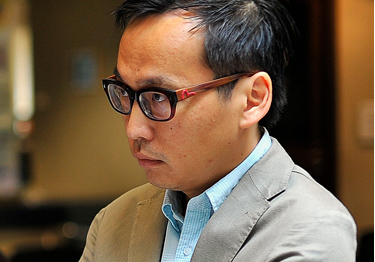
Eric Paulsen (photo), co-founder of Lawyers for Liberty, was arrested in the afternoon of 22 March 2015 at the Dataran Merdeka underground in Kuala Lumpur.
Although the exact basis of the arrest is not yet clear, his lawyers believe it was because of his Tweets criticizing efforts to introduce religion-based criminal offences and punishment (hudud) by the Kelantan state government.
Eric Paulsen was detained overnight and has yet to be charged with any offence. During the remand hearing on his case at noon today, the court denied an extension of his detention, but the police kept him in detention until 6pm today for questioning.
According to media reports, the postings “were seen as an insult which could disturb public peace,” one of the bases for invoking the Sedition Act.
“Malaysian authorities have been increasingly resorting to the Sedition Act to silence any political criticism, and now they’ve taken the alarming step of expanding it to cover even statements about religion,” said Emerlynne Gil, International Legal Advisor for Southeast Asia at the ICJ. “The Malaysian government is trying to position itself as the authority on religious matters, while at the same time violating the right to free expression as well as Malaysia’s Constitution.”
On 22 March 2015, Malaysia’s Inspector-General of Police (IGP) Tan Sri Khalid Abu Bakar, commented through his own Twitter account that the police “views seriously” comments on religion made by those who are “not experts on the subject.” He further said, that the police “ha[ve] no choice but to take action” against those people who comment on religion.
The IGP’s comments were made in relation to the launching of an investigation against the Business Radio Station (BFM) and its presenter, Aisyah Tajuddin, for criticizing the implementation of hudud in Kelantan.
In 2012, Prime Minister Najib Razak promised that the Government of Malaysia would abolish the Sedition Act.
This promise, however, was reversed when Najib Razak announced in November 2014, that the Act would instead be strengthened to include provisions to protect the sanctity of Islam and on the secession of the Sabah and Sarawak states.
“The Sedition Act of 1948 is archaic and it’s high time the government followed through on its promise to get rid of this legislation,” said Emerlynne Gil.
This is Eric Paulsen’s second investigation under the Sedition Act this year, as he was arrested in January and then charged in February under section 4(1)(c) of the Act for a Twitter comment regarding the Malaysian Islamic Development Department.
The ICJ underscores that the Government’s actions contravene Principle 23 of the UN Basic Principles on the Role of Lawyers, which states that “lawyers like other citizens are entitled to freedom of expression, belief, association and assembly.
In particular, they shall have the right to take part in public discussion of matters concerning the law, the administration of justice and the promotion and protection of human rights….”
Background:
The 1948 Sedition Act, originally enacted by the British colonial government and amended several times over the years, criminalizes speech and publications considered to have “seditious tendencies”.
The term “seditious tendencies” is ambiguously defined to mean any kind of speech or publication that causes “hatred or contempt, or excite disaffection” against any ruler or the government or promotes “ill will and hostility between the different races or classes”.
The law also considers “seditious” any speech or publication that questions the special privileges of the Malay people, as provided in the Constitution.
Furthermore, sedition is a strict liability offence in Malaysia, which means that the intention of a person allegedly making seditious statements is irrelevant.
For instance, a person making a statement may not have the intent to cause “hatred or contempt” towards the government, but may nonetheless be held liable for sedition if authorities believe that the person in fact incited such feelings.
The ICJ considers that the Act, by its very terms, contemplates restrictions on the exercise of freedom of expression that are grossly overbroad and inconsistent with basic rule of law and human rights principles.
Contact:
Emerlynne Gil, ICJ’s International Legal Adviser for Southeast Asia, e: emerlynne.gil(a)icj.org, t +66 2 619 8477 ext. 206 or +66 840923575
Mar 16, 2015 | News
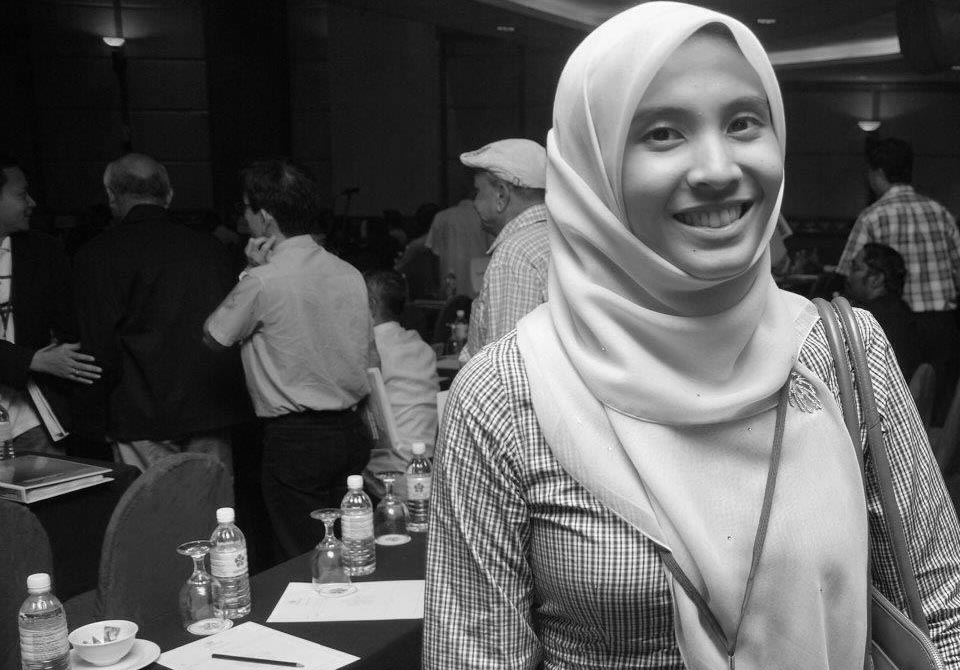
The ICJ today condemned the arrest and detention of Malaysian Member of Parliament and daughter of imprisoned opposition leader Anwar Ibrahim, Nurul Izzah Anwar, under section 4(1) of the colonial-era 1948 Sedition Act.
The arrest, which took place around 3.30pm at Dang Wangi police station in Kuala Lumpur, appears to be linked to a speech she gave in Parliament on 10 March 2015 that reportedly criticized the judges in her father’s sodomy II case.
It was reported that Nurul Izzah (photo) was at the police station today to provide statements for her involvement in a demonstration on 14 February, as well as her parliamentary speech.
She managed to complete part of her statement, but was arrested before she could provide a statement on the alleged seditious speech.
Nurul Izzah has yet to be formally charged and it is unclear as to whether the detention is in relation to a specific section of her speech or to the entire speech.
“The Malaysian authorities must stop the continued use of the offence of sedition to arbitrarily detain and stifle freedom of expression,” said Sam Zarifi, ICJ’s Regional Director for Asia and the Pacific.
On 10 February 2015, the Federal Court of Malaysia upheld the Court of Appeal’s decision to convict and sentence Anwar Ibrahim for sodomy under section 377B of the Penal Code.
Since then, a cartoonist has been charged under the Sedition Act, while several opposition politicians and lawmakers have been investigated for allegedly making seditious comments on the Federal Court’s decision.
The ICJ has previously denounced the use of the Sedition Act and repeatedly called for its abolition of the Act as its vague and overbroad provisions are incompatible with international human rights standards.
Nurul Izzah will reportedly remain in prison for the night and will have her remand hearing first thing in the morning on 17 March 2015.
The ICJ will continue to monitor her case.
The ICJ also calls on the Government of Malaysia to immediately release of Nurul Izzah and reiterates its call for the repeal of the Sedition Act.
Background
The 1948 Sedition Act, originally enacted by the British colonial government and amended several times over the years, criminalizes speech and publications considered to have “seditious tendencies”.
The term “seditious tendencies” is ambiguously defined to mean any kind of speech or publication that causes “hatred or contempt, or excite disaffection” against any ruler or the government or promotes “ill will and hostility between the different races or classes”.
The law also considers “seditious” any speech or publication that questions the special privileges of the Malay people, as provided in the Constitution.
Furthermore, sedition is a strict liability offence in Malaysia, which means that the intention of a person allegedly making seditious statements is irrelevant.
For instance, a person making a statement may not have the intent to cause “hatred or contempt” towards the government, but may nonetheless be held liable for sedition if authorities believe that the person in fact incited such feelings.
The ICJ considers that the Act, by its very terms, contemplates restrictions on the exercise of freedom of expression that are grossly overbroad and inconsistent with basic rule of law and human rights principles.
Contact:
Sam Zarifi, ICJ Regional Director of Asia and the Pacific, mobile: +668 07819002 or email: email: sam.zarifi(a)icj.org

Mar 3, 2015 | Advocacy
Thirteen human rights organizations, including the ICJ, call on the United Arabe Emirates government to release the activists jailed following the UAE 94 trial.
On the second anniversary of the start of the mass “UAE 94” trial that imprisoned dozens of government critics and reform activists in the United Arab Emirates (UAE), including prominent human rights defenders, judges, academics, and student leaders, a coalition of 13 organizations calls on the UAE government to release immediately and unconditionally all those imprisoned solely for peacefully exercising their rights to freedom of expression and association following this grossly unfair trial, as well as those who remain detained or imprisoned for publicizing concerns about it.
The organizations also call on the authorities to ensure that the allegations of torture and other ill-treatment that the individuals were subjected to prior to and following their trial are promptly, independently, impartially and thoroughly investigated, that those responsible are held to account, and that the victims have access to effective remedies and to reparation.
The organizations share the serious concerns raised since 2011 by several UN human rights bodies and human rights organizations regarding the UAE government’s continuing pattern of harassment, secret, arbitrary and prolonged incommunicado detention, torture and other ill-treatment, enforced disappearances, and unfair trials targeting activists and those critical of the authorities, as well as its increasing use of national security as a pretext to clamp down on peaceful activism and to stifle calls for reform.
The space for dissent in the UAE is increasingly shrinking. The repression has been entrenched with the enactment in 2012 of the cybercrimes law, which the government has used to silence social media activists and others who support and defend freedom of expression online, and the enactment of the 2014 counter-terror law.
The vague and overly broad definition of terrorism in the 2014 law, which treats a wide range of activities, including those protected by human rights standards, as amounting to terrorism, may be used to sentence human rights defenders or critics of the government to lengthy prison terms or even death.
The organizations call on the UAE government, which currently is a member of the UN Human Rights Council, to adhere to its obligations to uphold human rights at home, including respecting the rights to freedom of opinion and expression, and to freedom of association and peaceful assembly.
The full statement can be found here in English and Arabic:
United Arab Emirates-Release activists convicted at the UAE94 trial-Advocacy-2015-ENG (full text in PDF)
United Arab Emirates -Release activists convicted at the UAE94 trial-Advocacy-2015-ARA (full text in PDF)
Read also:
UAE: Fear that Anti-Terrorism Law will be used to curtail human rights and target human rights defenders, Gulf Centre for Human Rights, Front Line Defenders, Cairo Institute for Human Rights Studies, Arabic Network for Human Rights Information, 13 December 2014,
Mass convictions following an unfair trial: The UAE 94 case, an ICJ report, October 2013,
United Arab Emirates: ICJ condemns blatant disregard of the right to a fair and public trial, ICJ, 12 March 2013
Feb 17, 2015 | News
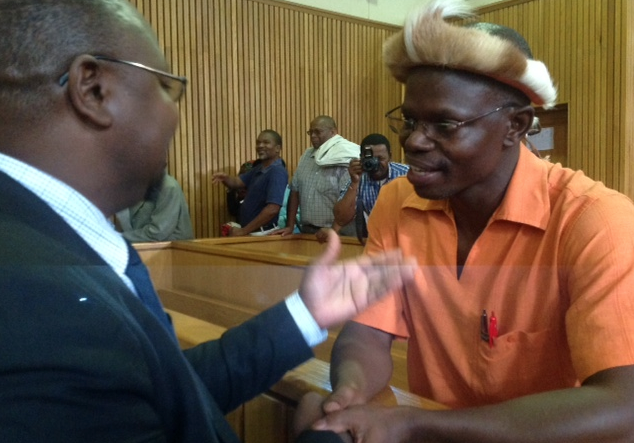
Alleging a range of human rights violations by Swaziland in the cases of Thulani Maseko and Bheki Makhubu, leading legal advocates today filed a petition with the UN Working Group on Arbitrary Detention (UNWGAD) in Geneva.
The American Bar Association’s Center for Human Rights, the global law firm Hogan Lovells and the ICJ jointly produced a petition calling for the UNWGAD to issue an opinion regarding the lawfulness of the continued incarceration of Thulani Maseko, an internationally recognized human rights lawyer and feature writer for The Nation magazine.
“The consequences of this arbitrary action against Thulani Maseko have not only violated his rights and exacted a heavy personal toll, but have also highlighted the rule of law deficit in Swaziland,” said Wilder Tayler, ICJ’s Secretary General. “Thulani Maseko has been denied his right to express an opinion on public affairs and the administration of justice, guaranteed under international law and affirmed in the UN Basic principles on the Role of lawyers.”
Thulani Maseko and journalist Bheki Makhubu were charged with two counts of contempt of court emanating from articles published in February and March 2014, in which they questioned circumstances surrounding the arrest of a government vehicle inspector.
They were sentenced to two years of imprisonment, without the alternative option of a fine at the end of a trial largely condemned by leading international rights groups as unfair and not complying with international standards on the right to a fair trial.
Some of the fair trial guarantees that have been breached, according to the legal petition filed with the UNGWAD, include the right to be tried by an independent and impartial tribunal; right to a public hearing; right to a legal counsel; right to the presumption of innocence; right to bail; and right to protection of the law.
“The use of contempt of court proceedings to suppress the right to freedom of expression is a violation of international human rights law,” said Marc Gottridge, partner at Hogan Lovells. “The right to freedom of expression is guaranteed in the Swazi constitution and international law, including treaties to which Swaziland is a party.”
“The general failings of the Swazi judiciary with respect to independence and impartiality makes it reasonable to conclude that there cannot be an effective domestic remedy for Thulani Maseko,” he added.
Contact:
Arnold Tsunga, Director, ICJ Africa Regional Programme, t +27 716 405 926 or +41 762 399 032, e arnold.tsunga(a)icj.org,
Matt Pollard, Senior Legal Adviser, ICJ, Centre for Independence of Judges and lawyers, t +41 22 979 38 12, e matt.pollard(a)icj.org
Marc Gottridge, Partner Hogan Lovells, t +1 212 918 3000, e marc.gottridge(a)hoganlovells.com
Ginna Anderson, Senior Counsel, Center for Human Rights, American Bar Association, t +1 202 442 3438, e ginna.anderson(a)americanbar.org
Background:
Thulani Maseko was arrested on 17th March 2014 following a warrant of arrest that was issued by the Chief Justice Michael Ramodibedi on his own motion.
This was after he had written an article titled “Where the Law Has No Place” criticising the courts for the way that a fellow Swazi citizen Mr Gwebu Bhantshana had been arrested and detained and the wider implications of that case on the rule of law in Swaziland.
Save for 3 days in April 2014 when he was released following Judge Mumcy Dlamini’s judgment declaring his arrest and detention wrongful and illegal, Thulani has been in custody since his initial arrest. Mr. Maseko was initially held at Sidwashini Correctional facility before he was taken to Big Bend Correctional facility, where he is currently lodged.
Further background material can be found here:
http://www.americanbar.org/news/abanews/aba-news-archives/2014/04/statement_of_jamesr.html
https://www.icj.org/swaziland-icj-condemns-the-harsh-prison-term-imposed-on-thulani-maseko-and-bheki-makhubu/
https://www.icj.org/swaziland-icj-condemns-the-conviction-of-celebrated-human-rights-lawyer-and-prominent-journalist-on-charges-of-contempt-of-court/
https://www.icj.org/swaziland-icj-concerned-at-detention-of-human-rights-lawyer-and-journalist/
Download the petition:
Swaziland-Maseko WGAD Petition-Advocacy-2015-Eng (full text in PDF)
The lawyers at Hogan Lovells US LLP who worked on this petition are Marc Gottridge, Dianne Milner, Allison Holt and Hans H. Hertell.