Malaysia: ICJ condemns lawyer’s arrest, calls for repeal of Sedition Act
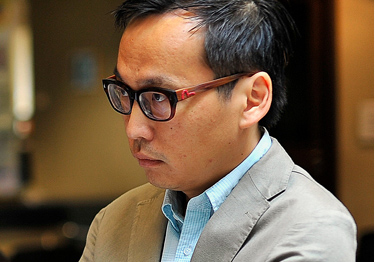
The ICJ today condemned the arrest and investigation of prominent human rights lawyer and co-founder of Lawyers for Liberty, Eric Paulsen, under the archaic 1948 Sedition Act.

The ICJ today condemned the arrest and investigation of prominent human rights lawyer and co-founder of Lawyers for Liberty, Eric Paulsen, under the archaic 1948 Sedition Act.
The ICJ deplores today’s murderous attack against journalists and others by armed assailants at the offices of the weekly satirical magazine Charlie Hebdo.

The December 2 conviction of journalist David Bergman on contempt charges by the International Crimes Tribunal (ICT) further shrinks the narrowing space for observers to comment on the war crimes proceedings, the ICJ, Amnesty International and Human Rights Watch said.
Bergman (photo) was sentenced to a symbolic “simple imprisonment till the rising of the court” and a fine of Taka 5,000 (about US$56) for comments he made in three separate blog postings regarding legal proceedings before the ICT.
The ICT is a specially constituted court set up to bring to account those responsible for grave violations of international law during the country’s 1971 war of independence.
Concerns over its statute, rules of procedure, and practices have been raised since its inception, including by international monitors and legal experts.
“The ICT is dealing with incredibly complex factual and emotional issues of tremendous interest to people in Bangladesh and across the world, and part of this process is establishing public confidence in the legal system,” said Sam Zarifi, ICJ’s Director for Asia. “Holding a credible and highly regarded journalist in contempt for raising important questions doesn’t end the debate surrounding the ICT’s performance, in fact it undermines confidence in the court’s commitment to justice.”
Download the full story in PDF here:
Bangladesh-Conviction of Journalist-News-Press release-2014-ENG

The ICJ today strongly condemned the decision by Prime Minister Najib Razak to retain and even strengthen the country’s 1948 Sedition Act despite having made a commitment in 2012 to repeal the Act.
The ICJ has repeatedly expressed its concern that the Sedition Act has been used to stifle and criminalize the exercise of freedom of expression and to silence human rights defenders, lawyers, political activists, among others.
The ICJ considers the Act as it stands to be incompatible with international human rights standards and to be made still more repugnant by the politically loaded manner in which it is typically applied.
In early September, the ICJ denounced the use of sedition against two members of the legal profession, Dr. Azmi Sharom (photo) and N. Surendran for commenting on questions of law and public policy.
On 20 September 2014, Edmund Bon a prominent human rights and constitutional lawyer, was questioned by the police regarding comments made in a based on the decision of a Malaysian Federal Court.
On 30 September 2014, Dr. Abdul Aziz Bari, a law professor at the University of Selangor, was summoned for a police interview over comments made about the selection process of the new Chief Minister by the Sultan of Selangor.
Background:
The 1948 Sedition Act, originally enacted by the British colonial government and amended several times over the years, criminalizes speech and publications considered to have “seditious tendencies”.
The term “seditious tendencies” is ambiguously defined to mean any kind of speech or publication that causes “hatred or contempt, or excite disaffection” against any ruler or the government or promotes “ill will and hostility between the different races or classes”.
The law also considers “seditious” any speech or publication that questions the special privileges of the Malay people, as provided in the Constitution.
Furthermore, sedition is a strict liability offence in Malaysia, which means that the intention of a person allegedly making seditious statements is irrelevant.
For instance, a person making a statement may not have the intent to cause “hatred or contempt” towards the government, but may nonetheless be held liable for sedition if authorities believe that the person in fact incited such feelings.
The ICJ considers that the Act, by its very terms, contemplates restrictions on the exercise of freedom of expression that are grossly overbroad and inconsistent with basic rule of law and human rights principles.

The ICJ calls for the convictions of Abdulrahman Al-Subaihi, Bandar Al-Nogithan and Abdulrahman Al-Rumaih, three prominent Saudi lawyers, to be quashed and for the Saudi authorities to end their sustained crackdown on lawyers and human rights defenders.
 South Sudan: Extend UN Investigations Amid Deteriorating Human Rights Crisis
 Nepal: Publish Reports on Violent Crackdowns on Protests
 EU: ICJ publishes strategic litigation guide on children and immigration detention
 Myanmar: Five years after the coup “justice system” remains an instrument of repression